Louisiana’s 2015 UTV Statute
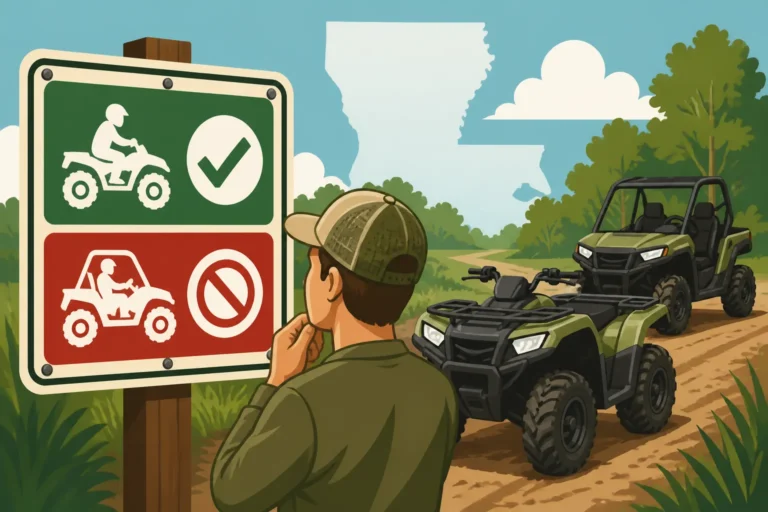
It’s a familiar story across Louisiana: you’ve got a capable UTV, perfect for everything from hauling feed on the farm to getting deep into the woods for a hunt, and you just wish you could legally take it down the road for a quick trip without trailering. For years, the rules around riding UTVs on public roads were a patchwork, leaving riders confused and often vulnerable to tickets. This guide dives deep into Louisiana's 2015 UTV Statute, explaining the foundational changes it brought to the table and why it was such a pivotal moment for off-road enthusiasts across the state.
Before 2015: A Wild West of Road Rules for UTVs
Before 2015, trying to figure out if you could legally ride your UTV on a public road in Louisiana felt like navigating a legal swamp. There was no clear, statewide statute specifically addressing these increasingly popular machines. This meant that local parishes and municipalities were largely left to their own devices, leading to a dizzying array of ordinances that often contradicted each other or, more commonly, simply didn't exist.
Imagine the frustration: you might be perfectly legal to drive your side-by-side down a gravel parish road in one part of the state, only to cross a parish line and suddenly be breaking the law. Riders were left guessing, relying on word-of-mouth, or simply taking their chances. This ambiguity wasn't just inconvenient; it created significant safety concerns and enforcement headaches for law enforcement, who also lacked a unified set of guidelines. Many UTV owners just wanted clarity, a consistent framework that acknowledged the utility and growing popularity of their machines, but also ensured safety for everyone on the road. This lack of a clear definition and consistent regulation was the primary driver for the legislative efforts that eventually led to the 2015 statute.
Local Ordinances and Their Conflicting Nature
In the absence of state law, local governing bodies—parish councils, police juries, and city councils—stepped in. Some enacted detailed ordinances, outlining specific roads where UTVs were permitted, or even dictating equipment requirements. Others had no provisions at all, leaving UTVs in a legal gray area, often lumped in with ATVs that had even stricter road prohibitions.
This created a logistical nightmare for anyone who lived near a parish border or frequented different recreational areas. A UTV that was perfectly legal to operate on the shoulder of a state highway near your hunting camp in one parish might earn you a hefty fine if you tried the same thing just a few miles down the road in another. It was almost impossible for riders to keep track, and the sheer inconsistency was a major source of frustration. This fragmented approach did little to promote safe riding practices or integrate UTVs smoothly into the existing transportation network.
The Desire for State-Level Consistency
Riders, manufacturers, and even some law enforcement agencies recognized the urgent need for statewide consistency. The booming popularity of UTVs meant more and more people wanted to use them for practical purposes, not just off-road recreation. Hunters needed to access leases, farmers needed to get between fields, and homeowners often found UTVs perfect for property maintenance.
A state statute would provide a baseline, a uniform set of rules that everyone could understand and abide by, regardless of which parish they were in. This consistency would simplify things for riders, making it easier to know where they stood legally. It would also empower law enforcement with clear guidelines, reducing the discretion and confusion at the roadside. The push for the 2015 UTV statute was essentially a plea for common sense and clarity in a rapidly evolving landscape of vehicle use.
Unpacking the Core of Louisiana's 2015 UTV Statute
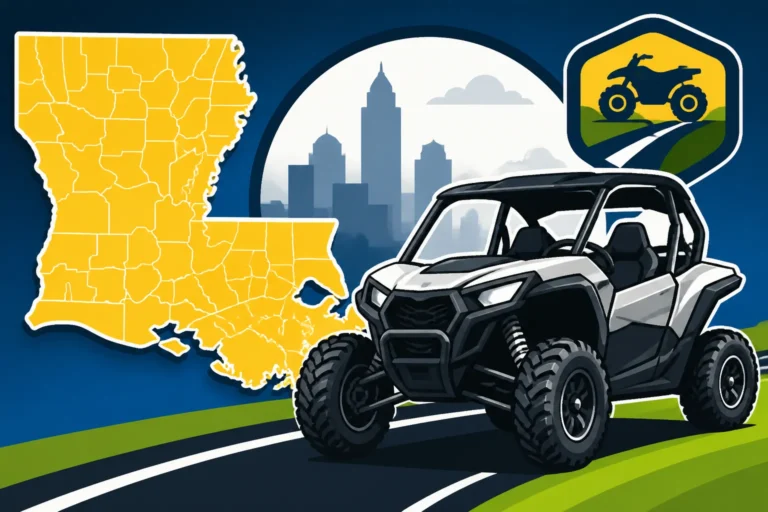
When Louisiana passed its UTV statute in 2015, codified largely under Louisiana Revised Statute 32:299.3, it was a game-changer. For the first time, there was a statewide framework that recognized UTVs as a distinct class of vehicle with specific rules for potential road use. The statute didn't suddenly make UTVs street legal everywhere, but it laid down the necessary groundwork, giving parishes and municipalities the authority to open their roads under certain conditions. It was a cautious but significant step toward integrating these versatile machines into the public road network in a more regulated manner. Riders breathed a collective sigh of relief, finally seeing some light at the end of the tunnel regarding the legal ambiguities they had faced for years.
Age, License, and Driver Requirements
One of the foundational elements of the 2015 statute was the establishment of clear requirements for who could actually operate a UTV on designated public roads. This wasn't a free-for-all; the state recognized the inherent risks of mixing off-road machines with traditional traffic. To legally drive a UTV on a designated road or shoulder under the 2015 statute, a person had to be at least 21 years old. This age requirement was a significant point of discussion at the time, reflecting concerns about driver maturity and experience when operating a vehicle that behaves differently from a standard car or truck.
In addition to the age requirement, the statute mandated that the operator possess a valid Class E driver’s license. This meant that simply having an off-road permit wasn't enough; you needed a full-fledged driver's license, signaling that the state expected UTV operators on public roads to adhere to the same basic traffic laws as other motorists. This ensured that anyone driving a UTV on a public road had demonstrated a baseline understanding of road rules and traffic safety, which was a welcome measure for many concerned citizens. [What a Class E License Lets You Do] provides more context on the privileges associated with this license type.
Mandatory Equipment for Road Use
The 2015 statute didn't just tell you who could drive; it also spelled out what condition your UTV needed to be in to qualify for road use on designated routes. The state understood that UTVs, in their stock form, often lacked many of the safety features found on street-legal vehicles. Therefore, to ensure a reasonable level of safety, the statute required UTVs to be equipped with a range of items.
This included at least one headlight and one taillight, crucial for visibility, especially during low-light conditions when accidents are more prone to occur. A working brake system was also non-negotiable, ensuring the driver could safely stop the vehicle. Beyond these basics, a horn was required, allowing drivers to signal their presence. A rearview mirror was mandated for visibility of traffic behind, and seat belts were required for all occupants, underscoring the importance of occupant protection. Mufflers were also necessary to control noise levels, especially important for residential areas. Many UTV owners found themselves needing to add aftermarket accessories to meet these requirements, and some turned to manufacturers like SuperATV for their wide range of UTV parts designed to enhance safety and compliance. Ensuring your machine meets these specifications is paramount; getting pulled over with inadequate equipment can lead to a citation even if you're on a designated road.
The Concept of Designated Roads and Signage
Perhaps the most crucial aspect of the 2015 UTV statute was its approach to where UTVs could be ridden. The state didn't simply declare all roads open. Instead, it empowered local governing authorities—parishes and municipalities—to designate specific public roads or parts of roads where UTV operation would be permitted. This was a significant point of local control, allowing communities to assess their own traffic patterns, road conditions, and safety concerns before opening their roadways to UTVs.
For a road to be legally designated, the local authority had to pass an ordinance or resolution to that effect. But the rules didn't stop there. Crucially, the statute mandated that any designated road had to be clearly marked with appropriate signs. These signs would typically indicate that UTVs were allowed, often specifying the conditions or hours of operation. Without these signs, even if an ordinance was passed, the road wasn't officially "designated" in a way that protected UTV riders. The responsibility fell on the local government to not only make the decision but also to visibly communicate it to both residents and visitors. This emphasis on clear signage was intended to prevent confusion for both UTV operators and other motorists, reducing the chances of accidents or misunderstandings. However, this aspect also became a source of some frustration, as implementation varied widely across the state. [Louisiana Parishes Must Designate and Sign Roads] provides further information on this process.
Where You Could (and Couldn't) Ride Under the 2015 Law
The 2015 UTV statute sought to create a balance, allowing for increased utility for UTV owners while still prioritizing public safety. This meant that even on designated roads, there were strict limitations on where and how UTVs could be operated. It wasn't a blanket permission to roam freely; rather, it was a carefully carved-out exception to the general rule that off-road vehicles belong off-road. Understanding these boundaries was, and still is, critical for any UTV owner wanting to avoid legal trouble. The nuances of shoulder riding versus main lane travel, for instance, were often misunderstood, leading to citations even on otherwise permissible routes.
Permitted Shoulder Riding and Road Crossings
Under the 2015 statute, even on designated roads, UTVs were generally restricted to riding on the shoulder of the public road, not in the main travel lanes. This was a key safety provision, intended to keep slower-moving UTVs separated from faster conventional traffic. The statute recognized that UTVs typically operate at lower speeds than cars and trucks, and mixing them in travel lanes could create dangerous situations. So, if a parish designated a road, it usually meant shoulder access.
However, the statute did allow for UTVs to cross public roads at intersections, provided such crossings were made safely and without unduly impeding traffic. This "incidental crossing" provision was essential for riders who needed to access property on the opposite side of a road or to connect designated segments. But even these crossings had to be performed with extreme caution, yielding to all other traffic. It wasn't an invitation to weave across multiple lanes or make unprotected turns into high-speed traffic. [Louisiana Rules for Crossing a Highway] delves into the specific requirements for these maneuvers.
The Infamous Orleans Parish Exemption
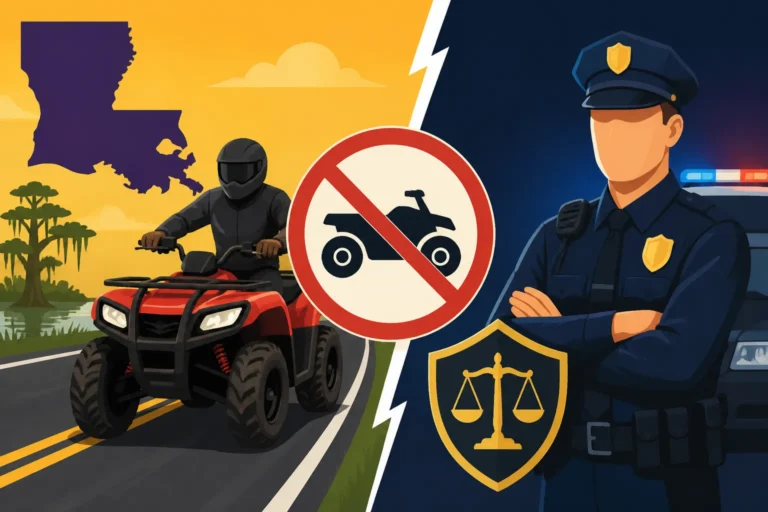
One notable exception in the 2015 UTV statute, and indeed in much of Louisiana's off-road vehicle legislation, was Orleans Parish. The statute explicitly stated that its provisions, particularly those related to UTV road use, did not apply within Orleans Parish. This means that even if every other parish in the state decided to designate roads for UTVs, Orleans Parish maintained its own distinct rules, which typically amounted to a much stricter prohibition on UTVs on public roads.
This exemption often baffles riders from other parts of the state, but it stems from a recognition of Orleans Parish's unique urban environment. With dense traffic, narrow streets, and a historical context that differs greatly from Louisiana's more rural parishes, the legislature determined that the statewide UTV road use framework was not appropriate for New Orleans. So, if you're planning a trip to the Crescent City, leave the UTV on the trailer – the statewide allowances for designated roads simply don't apply there. [Orleans Parish Is Exempt From Louisiana's ATV Statute] touches on this specific carve-out.
Other Prohibited Zones for UTVs
Even beyond Orleans Parish, the 2015 statute maintained several crucial prohibitions for UTVs, regardless of local designation. The intent was clear: UTVs were not designed for high-speed, high-traffic environments. Therefore, they were strictly banned from interstates and other controlled-access highways. These roads are engineered for high-speed vehicular traffic, and introducing slower-moving UTVs would pose a severe safety hazard.
Furthermore, the statute reinforced the existing prohibitions against riding on public levees, battures, and canal banks, unless specifically authorized by the controlling authority (like a levee district). These areas often serve critical infrastructure or environmental purposes, and unauthorized off-road activity can lead to damage, erosion, or interference with vital operations. So, while the 2015 statute opened some doors for UTV use, it very clearly kept others firmly shut, particularly in environments where safety risks were deemed too high or where sensitive infrastructure was at stake. Adhering to these prohibitions is not just about avoiding a ticket; it's about protecting yourself and crucial public assets. [Louisiana Levee Riding Is Prohibited] further clarifies these restrictions.
The Real-World Impact and Rider Experience with the 2015 Statute
While the 2015 UTV statute was a landmark piece of legislation that brought much-needed clarity, its implementation in the real world wasn't without its challenges. For many UTV owners, the promise of legal road access was exciting, but the reality often involved navigating a maze of local politics, inconsistent enforcement, and unexpected costs. It was a step forward, but one that highlighted the complexities of regulating a diverse and passionate community of off-road enthusiasts across a state with varied landscapes and local governance styles. The statute provided the framework, but how that framework was built upon at the parish level varied significantly, leading to a mixed bag of experiences for riders.
Local Control Challenges and Inconsistent Implementation
The decision to allow UTVs on public roads under the 2015 statute was largely left to individual parishes and municipalities. While this local control was intended to allow communities to tailor the rules to their specific needs, it inadvertently led to a continued patchwork of regulations, albeit a more structured one. Some parishes quickly embraced the new flexibility, passing ordinances to designate numerous roads, especially in rural areas where UTVs are common for farm work or hunting access. Others were hesitant, either due to public safety concerns, lack of resources for signage, or simply a slow legislative process.
This meant that even after 2015, riders still faced inconsistencies. You might find yourself in a parish where UTVs were widely accepted on designated roads, only to cross into a neighboring parish where no roads had been designated at all. This lack of uniform adoption, despite the statewide statute, continued to be a source of frustration for riders who valued consistency. It also meant that if you frequently traveled with your UTV, you still had to be diligent about checking local ordinances wherever you planned to ride. [Louisiana Parish Ordinance Lookups] offers guidance on how to research these local rules.
Costs and Compliance for UTV Owners
Beyond the legalities of where they could ride, the 2015 statute also brought new considerations for UTV owners in terms of cost and compliance. Meeting the mandatory equipment requirements, such as adding turn signals, mirrors, or proper lighting, often required an investment in aftermarket parts. While many riders already upgraded their machines for performance or aesthetics, these new mandates meant that certain accessories became essential for legal road use. Companies like SuperATV offered solutions, but the cost still fell on the owner.
Additionally, while the 2015 statute laid out the framework, it also implied that UTVs used on roads might be subject to other regulations typically associated with street-legal vehicles, such as [Louisiana UTV Registration Before Road Use] and potentially [Louisiana UTV Insurance Minimums] if a parish required it. These were new layers of bureaucracy and expense that many off-road-only riders hadn't anticipated. It meant that the dream of taking your UTV on the road for errands came with a practical price tag, beyond just the fuel. Understanding all these potential costs was crucial for any owner considering legal road use.
Confusion at Traffic Stops and Enforcement Issues
Even with the statute in place, the early years post-2015 were often marked by confusion at traffic stops. Not all law enforcement officers were immediately familiar with every nuance of the new law, especially concerning the varying local designations. A deputy in one parish might be well-versed in their local ordinances, while a state trooper patrolling a different jurisdiction might not immediately know which specific roads were designated.
This sometimes led to situations where compliant riders, on a legally designated and signed road with all the required equipment, still found themselves having to explain the law and local ordinance to an officer. While most encounters were resolved amicably, it was a source of stress and inconvenience for riders who believed they were doing everything by the book. The onus was often on the rider to prove their compliance, sometimes by carrying copies of local ordinances or by pointing out the required signage. This practical friction highlighted that passing a law is one thing, but educating everyone involved – riders, local officials, and law enforcement – is an ongoing process. [What a Louisiana State Trooper Can Ask to See] provides general guidance on interactions with law enforcement.
Looking Beyond 2015: The Call for Further Refinement
The 2015 UTV statute was a monumental step for Louisiana, providing a much-needed legal foundation for UTV use on public roads. It acknowledged the growing role of these machines in both recreation and utility, and it established a framework for responsible integration. However, like any pioneering legislation, it wasn't perfect. As UTVs continued to evolve in design and capability, and as more parishes began to grapple with implementation, certain limitations and unforeseen challenges emerged. These experiences, both positive and negative, laid the groundwork for further discussions and eventual refinements to the law.
The statute's reliance on local designation, while offering flexibility, also perpetuated some of the inconsistencies riders had hoped to avoid. The age restriction, while intended for safety, also drew questions from some parts of the UTV community, especially those with experienced younger riders. As the UTV market continued its rapid growth, the sheer variety of machines, from compact utility models to large, multi-passenger side-by-sides, also pushed the boundaries of the 2015 definitions.
Ultimately, the 2015 statute was a critical learning experience for the state. It proved that a statewide approach was feasible and necessary, but also revealed where the initial framework could be improved to better serve both the riding community and the broader public interest. It set the stage for subsequent legislative efforts aimed at making Louisiana's UTV laws even clearer, more consistent, and more adaptable to the evolving landscape of off-road vehicle ownership.
| Feature / Requirement | Pre-2015 Situation | 2015 UTV Statute Provision | Rider Impact (Post-2015) |
|---|---|---|---|
| Road Use Legality | Mostly Prohibited/Ambiguous | Permitted on Designated Roads | Limited, but clearer, access |
| Authority for Road Use | Local Ordinances (if any) | State Framework, Local Designation | Empowered local authorities |
| Driver Age Minimum | N/A (no state law) | 21 Years Old | Restricted younger riders |
| Driver License | N/A | Class E Driver's License | Required valid auto license |
| Equipment | Varies by Local Ordinance | Headlights, Taillights, Brakes, Horn, Mirror, Seat Belts, Muffler | Mandated specific safety upgrades, potential aftermarket costs |
| Road Types | Varies (if any access) | Shoulders of Designated Public Roads (not main lanes) | Defined where to ride, maintained safety separation |
| Signage | N/A (if any local signs) | Required for Designated Roads | Crucial for legality, but varied implementation |
| Orleans Parish | No specific state law | Explicitly Exempted | Continues strict prohibitions |
Disclaimer
This article is for general informational purposes only and does not constitute professional advice. Laws, prices and regulations vary by location and change over time. Consult a qualified professional for guidance on your specific situation.