Reading Posted Land Signs on a Parish Road
It’s a scenario many of us have faced: you’re enjoying a peaceful ride down a winding Louisiana parish road, the dirt kicking up just right, when you suddenly spot a weathered sign nailed to a tree. Is it "Private Property"? "No Trespassing"? Or something more ambiguous? Misinterpreting these signs, or worse, ignoring them, can quickly turn a relaxing outing into a stressful encounter with a landowner, law enforcement, or even legal trouble. This guide will walk you through the nuances of reading posted land signs on parish roads in Louisiana, helping you understand your rights and responsibilities as an ATV or UTV rider to ensure your adventures stay enjoyable and legal.
Understanding Louisiana's Posted Land Laws for Off-Roaders
Louisiana's landscape is a beautiful tapestry of public roads, private fields, and managed forests. For ATV and UTV riders, this often means navigating areas where the lines between public access and private property can feel blurry. However, the law is quite clear, and understanding it is your first line of defense against accidental trespass.
The "No Trespassing" Sign: More Than Just a Suggestion
When you see a "No Trespassing" sign in Louisiana, it's not a polite request; it's a legal directive. This sign communicates that the land beyond it is private and entering it without express permission from the owner is illegal. For off-road vehicle operators, this means not only are you prohibited from riding on the marked land, but even dismounting your machine and stepping onto it can constitute trespass. Imagine you're riding a parish road, and a particularly tempting mud hole appears just off the shoulder, behind a "No Trespassing" sign. Even if you think you’ll just dip a tire in, you’re breaking the law. A landowner, or even a game warden, could see this as a direct violation, potentially leading to citations, fines, or even the impoundment of your machine under [Louisiana Penalties for Illegal Road Riding] or general trespass statutes.
The consequences of ignoring these signs can range from a verbal warning to significant legal penalties. Louisiana takes private property rights seriously, especially in rural areas where hunting leases, agricultural operations, and timberland are prevalent. Landowners often have these signs posted for very good reasons – protecting their crops, livestock, or simply maintaining their privacy and property value. Crossing that boundary, even inadvertently, can create animosity and complicate future access for all riders. It's not just about avoiding a ticket; it's about respecting the land and the community.
Furthermore, a "No Trespassing" sign implies no implied invitation. Unlike some areas where an open gate might suggest permission, in Louisiana, if the land is posted, it means "keep out" unless you have explicit permission. This is especially critical when exploring new areas or taking a shortcut you’re unsure about. Your best bet is always to err on the side of caution. If there's a sign, respect it.
How Louisiana Defines Private Property on Parish Roads
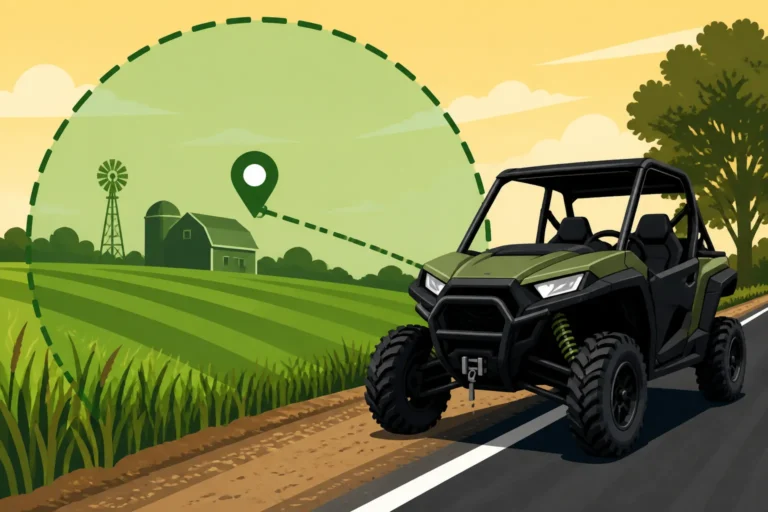
One of the trickiest aspects of riding on parish roads is understanding where the public right-of-way ends and private property begins. Parish roads, particularly in rural Louisiana, often lack clear shoulders or ditches, making it seem like the adjacent land is part of the road itself. However, the public right-of-way typically extends only so far, and anything beyond that is private, whether it's fenced or not. This invisible line can be just a few feet from the gravel edge, or sometimes even less. For an ATV or UTV, which is wider than a motorcycle and often leaves the defined path more easily, staying strictly within the public right-of-way is paramount.
Consider a situation where a parish road cuts through a large field. The road itself is public, but the field immediately adjacent to it is almost certainly private. Even if the farmer hasn't put up "No Trespassing" signs every few feet, that doesn't grant you permission to ride into their field, drive alongside their crops, or even turn around on their turf. The law assumes private ownership in many cases, especially when the land is clearly being used for agriculture or timber. [Louisiana Rules for Riding a Field Road] highlights that even on unpaved roads, the adjacent land is rarely public access. Many landowners have their property surveyed and clearly marked, but these markers might be subtle, like small survey pins, specific trees, or even changes in the type of fence.
For example, I once saw a rider get a hefty fine for cutting a corner through what he thought was an open field, only to find it was a landowner's freshly planted soybean crop, just beyond the gravel road's edge. The farmer had no fence, but the crop itself was a clear indicator of private use. This is where your judgment and a good map come into play. Always assume that land immediately adjacent to a parish road is private unless you have definitive proof otherwise, such as signage explicitly designating it as public access or a specific recreational trail.
The Role of Written vs. Verbal Permission
When it comes to accessing private land in Louisiana, permission is key. But not all permission is created equal. While a handshake and a "go ahead" might feel sufficient in a close-knit community, relying solely on verbal permission can lead to misunderstandings, especially if the landowner's memory fades, or if ownership changes hands.
Written permission is always the gold standard. A simple, signed document from the landowner, specifying who can ride, what machines they can use, the dates or duration of permission, and the specific areas allowed, provides undeniable proof of consent. This protects both you and the landowner. If a game warden or sheriff's deputy approaches you on the property, producing a written permission slip instantly resolves any potential trespass issues. Without it, even with verbal permission, you might find yourself trying to explain a conversation that happened weeks ago, which can be challenging to verify on the spot. [Getting Written Permission From a Louisiana Landowner] delves deeper into the specifics of what this document should include, such as the landowner's contact information, a description of the land, and the scope of the permission granted.
Imagine you've been given verbal permission by "Mr. Smith" to ride his timber trails. You're out one weekend, and a new property manager, unfamiliar with your arrangement, confronts you. Without written proof, you have no immediate way to verify your claim. The manager might call the sheriff, and you could face an uncomfortable situation. A simple piece of paper could have prevented all that. This is particularly relevant if you're riding with a group or allowing others to use your machine on someone else's property; written permission ensures everyone is on the same page and protected.
Identifying Different Types of Posted Land Signs in Louisiana
Louisiana's rural landscape is dotted with various signs, each conveying a specific message about land use and access. For the astute ATV or UTV rider, learning to interpret these signs accurately is crucial for legal and responsible riding.
Common Signage and Their Meanings
Beyond the straightforward "No Trespassing" sign, you’ll encounter a variety of markers on private land. Each sign is a specific message from the landowner or leaseholder about how that property can be used:
- "Private Property": This is often synonymous with "No Trespassing" but sometimes implies a broader sense of ownership rather than just prohibiting entry. It means the land belongs to an individual or entity, and you need permission to enter. Riding your SuperATV UTV past one of these without permission is a direct violation.
- "No Hunting," "Hunting Lease," or "Lease Boundary": These signs are common in areas managed for hunting. "No Hunting" might mean the landowner doesn't allow hunting, while "Hunting Lease" indicates that specific individuals or clubs have exclusive hunting rights. "Lease Boundary" signs are vital for riders to recognize, as crossing them, even if you have permission to be on an adjacent lease, can lead to conflict with the other leaseholders. These boundaries often follow natural features or survey lines and can be less obvious than a public road.
- "Keep Out," "Authorized Personnel Only," or "Posted": These are all variations of "No Trespassing," emphasizing restricted access for any reason. They might be found near industrial sites, active logging operations, or sensitive agricultural areas.
- "Road Closed to Public Access": While this sign typically refers to vehicular traffic, for ATVs and UTVs, it means the same thing. Often found on private logging roads or oilfield access roads that intersect with parish roads. Do not assume "public" doesn't apply to your off-road vehicle.
These signs are usually prominently displayed at entry points, along fence lines, or at regular intervals where property borders a public thoroughfare. The color, size, and font might vary, but the message is almost universally clear: this land is private, and you need permission to enter. It's a good idea to always carry [Carrying Papers on a Parish Road], including any written permission slips, to ensure you can quickly clarify your status if questioned.
Unmarked vs. Markings: The Implications for Riders
What happens when there are no signs at all? Does that mean the land is public or open for riding? In Louisiana, the absence of a "No Trespassing" sign does not automatically grant you access to private land. The general rule in Louisiana is that unless land is explicitly designated as public (like a state park, WMA, or designated recreation area), it should be presumed private. This is a critical distinction that many riders misunderstand.
Imagine you're driving your SuperATV equipped rig down a remote gravel road, and you see an inviting trail heading off into the woods, completely unmarked. Your first thought might be, "Cool, a new trail!" However, without clear signs indicating public access, this trail is almost certainly on private property. Entering it would be an act of trespass. Louisiana's trespass laws don't require land to be posted to be considered private. In many rural settings, landowners might not bother posting signs if their property is somewhat secluded or if they simply expect common courtesy and respect for private ownership. This is especially true for working farms or timber tracts.
The implications for riders are significant. Relying on the absence of a sign as an indicator of public access is a risky gamble. If you are caught on unmarked private land without permission, you can still face trespass charges. The best practice is to always seek out official maps or landowner permission before venturing off a clearly public road or trail. Never assume an unmarked path is an open invitation. This cautious approach is part of responsible riding and helps maintain good relationships with rural communities.
Recognizing Property Markers Beyond Signs
While signs are the most obvious indicators, private property boundaries in Louisiana are often marked in other, more subtle ways that ATV and UTV riders should learn to recognize. These physical markers can be just as legally significant as a printed sign.
- Fences and Gates: Even if a fence or gate is old, broken, or seemingly easy to cross, it generally marks a property boundary. A closed gate, even if unlocked, signifies restricted access. Riding around or through a gate without permission is a clear act of trespass.
- Painted Trees or Posts: In many timber-heavy areas, landowners or forestry companies mark property lines with specific colors of paint on trees or wooden posts. These are often called "blaze" marks. A common practice is for the paint color to indicate a specific boundary line. While the colors can vary by region or even by landowner, recognizing this pattern is key. These aren't just for decoration; they legally delineate private holdings.
- Changes in Land Use: A sudden shift from a dense forest to a cultivated field, or from one type of timber to another, can often signal a property line. Similarly, changes in fencing style, road surface, or even vegetation types can indicate a boundary.
- Survey Markers: While less common for casual observation, you might occasionally spot small metal pins, concrete monuments, or wooden stakes that surveyors use to mark corners and lines. These are definitive boundary markers.
Being aware of these less obvious indicators is vital, especially when you're exploring areas where formal signage might be sparse or have fallen into disrepair. For riders relying on GPS systems, cross-referencing your location with available property line data (often found on county or parish GIS maps online) can provide an extra layer of certainty. However, nothing beats direct observation and, when in doubt, turning around. Just as you'd check your tire pressure or fuel levels before a ride, mentally "scanning" the landscape for these boundary clues should become a habit.
Navigating Parish Roads Responsibly and Legally
Riding your ATV or UTV on Louisiana parish roads can be a fantastic way to experience the outdoors, but it comes with a strict set of rules and responsibilities. Understanding how to legally use these roads and interact with surrounding private land is crucial for a hassle-free experience.
Staying on the Right Side of the Law While Riding Parish Roads
In Louisiana, the rules for operating ATVs and UTVs on public roads are specific and generally restrictive. Most ATVs are prohibited from public roads entirely, with limited exceptions. UTVs, however, have specific provisions under [Louisiana UTV Road Rules Under 32:299.3], allowing parishes to designate certain roads for their use. Even on a designated parish road, your machine must typically be equipped with lights, brakes, mirrors, and sometimes even turn signals, much like a street-legal vehicle. Always ensure your SuperATV accessories meet any required specifications.
The most critical aspect for off-road riders is to stay strictly on the public right-of-way of the parish road. This means avoiding the shoulders, ditches, and certainly any adjacent fields or woods, unless those areas are explicitly marked as public access or you have verifiable permission. Even pulling over to the side of the road to take a picture can be risky if you inadvertently step onto private property. Landowners in rural Louisiana are often very protective of their land, and a vehicle even slightly off the defined road can be perceived as trespass.
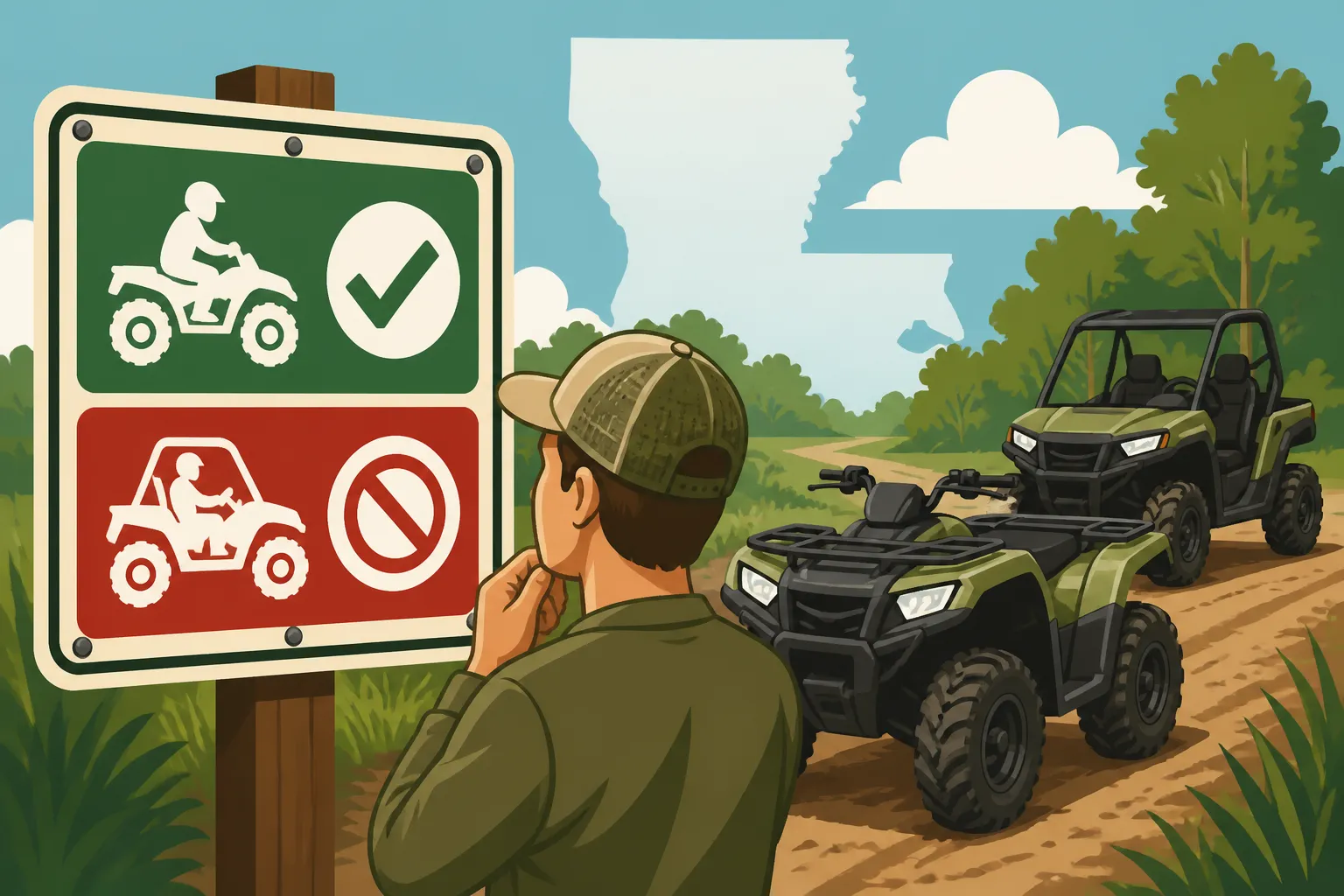
Furthermore, remember that [Louisiana ATV Road Rules Under 32:299] generally restricts ATVs to designated off-road trails and private property. This means that if you're on an ATV, most parish roads are off-limits, regardless of posted signs. For UTVs, it's essential to confirm if the specific parish and road you're on has been designated for UTV use. Many parishes require specific ordinances to be passed and signage to be posted before UTVs can legally operate on their roads. Always check [Louisiana Parish Ordinance Lookups] before you ride to confirm local regulations. Without that designation, you're running the risk of a ticket, even if you're well-equipped.
What to Do If You Encounter Ambiguous Signage or Unclear Boundaries
It's inevitable: you'll eventually encounter a situation where the signs are confusing, faded, or simply absent, and the property lines are unclear. In these moments, your best course of action is almost always to assume the land is private and proceed with extreme caution, or better yet, turn around.
- When in Doubt, Turn Around: This is the golden rule. If you can't definitively determine if an area is public or if you have permission, do not proceed. The risk of trespass, confrontation, and legal penalties far outweighs the curiosity of exploring an unknown path. It's always easier to retrace your steps than to deal with the aftermath of an infraction.
- Do Not Assume Implied Permission: An open gate, a worn-down fence, or a track that looks like other vehicles have used it does not mean you have permission. These could be private access roads for logging, farming, or oil and gas operations.
- Contact Local Authorities (if necessary and safe): If you genuinely believe there's a discrepancy or you need clarification, you could contact the local sheriff's office or parish administrative office. They often have maps or knowledge of designated public access points. However, understand that they are there to enforce property laws, so don't ask them if you can bend the rules. You can also research property lines through parish assessor's office websites, which sometimes provide GIS maps.
- Identify the Landowner (if possible and appropriate): If you're really interested in riding a specific piece of land, try to identify the landowner (again, through parish records) and seek direct, written permission. Approaching a landowner respectfully can open doors to new riding opportunities. However, do not knock on doors unannounced or trespass to find out who owns the land.
The goal is to avoid an encounter where a [Louisiana State Trooper Can Ask to See] your papers because you've crossed a line. Always prioritize clear, undeniable legality over ambiguous exploration.
The Importance of Local Knowledge and Planning Ahead
Preparation is key to a successful and legal ATV/UTV adventure in Louisiana. Relying on local knowledge and thorough planning can prevent most trespass issues before they even arise.
- Talk to Locals: Residents who have lived in an area for a long time often possess invaluable knowledge about local land ownership, traditional access routes, and which roads are truly public. A friendly chat with a store owner, a gas station attendant, or even fellow riders can shed light on permissible riding areas and local etiquette. This kind of grassroots information can be more current than some official maps.
- Utilize Maps and Technology: Before heading out, consult detailed maps. Publicly available GIS (Geographic Information System) maps from parish assessor's offices can often show property lines. Apps like OnX Offroad or similar mapping tools can overlay public land boundaries and private property lines directly onto your device. While these tools are excellent, remember they are only as accurate as their last update, so always use them in conjunction with your own observations. Know your route, and know your bail-out points.
- Scout Areas in Advance: If you're planning a trip to a new area, consider driving through it in your truck first, rather than immediately unloading your off-road machine. This allows you to observe signage, identify clear boundaries, and get a feel for the lay of the land without the risk of immediate trespass. Look for things like [What a Hunting Lease Says About Quad Use] signs, changes in fencing, or painted trees that indicate private land.
- Understand Seasonal Access: Some areas, particularly those managed for timber or agriculture, may have seasonal restrictions. For instance, logging roads might be open certain times of the year and closed during active harvesting. Hunting leases are strictly enforced during deer season, and farmers will be highly protective of their fields during planting and harvest. Understanding the local rhythm can inform your riding schedule.
By combining respectful inquiry, technological aids, and proactive scouting, you can drastically reduce the chances of inadvertently trespassing. Responsible riding isn't just about avoiding penalties; it's about building and maintaining positive relationships within the communities you ride through, ensuring that access to public roads and private lands (with permission) remains open for all who respect the rules.
Disclaimer
This article is for general informational purposes only and does not constitute professional advice. Laws, prices and regulations vary by location and change over time. Consult a qualified professional for guidance on your specific situation.