Planning an OMV Counter Visit So It Takes One Trip
There are few things more frustrating than taking time out of your busy schedule to handle essential paperwork, only to be turned away because you're missing one tiny detail. When it comes to titling or registering your ATV or UTV at the Louisiana Office of Motor Vehicles (OMV), this scenario is all too common. This guide will help you meticulously prepare for your OMV counter visit, ensuring you have every document, form, and fee ready so you can make it a one-trip success.
The Frustration of Multiple Trips: Why Planning is Key
We've all been there. You carve out precious time, rearrange your workday, find childcare, or even burn a vacation day, all to get to the OMV. You wait in line, finally get to the counter, and then the clerk says those dreaded words: "You're missing X, Y, or Z." Suddenly, your entire afternoon is wasted, and you have to start the process all over again. It’s not just the lost time; it’s the gas, the inconvenience, and the sheer irritation of a task unfinished. For ATV and UTV owners, the paperwork can feel even more complex, often leading to these exact headaches.
The Common Pitfalls of Underpreparation
The biggest trap riders fall into is assuming they know what's needed based on past experience with cars or trucks. Off-road vehicles often have slightly different requirements, especially regarding sales tax proof for private sales or specific forms for new machines. Imagine you’ve just bought a sweet new side-by-side, excited to hit the trails at Muddy Bottoms or Kisatchie. You drive to the OMV in Shreveport, wait an hour, and then find out you forgot the original Manufacturer's Statement of Origin (MSO), or maybe your bill of sale isn't notarized, which is often a sticking point for private transactions. Now, you have to go track down the seller again, or worse, make another appointment and burn another half-day. This isn’t just an inconvenience; it can delay your ability to legally ride your machine, as Louisiana requires you to [You Have 30 Days to Affix the Decal] once your title is processed.
This ripple effect can truly mess up your plans. A missed document might mean another trip to your bank for loan documents, another phone call to a private seller, or even a scramble to find a notary at the last minute. Each one of these detours adds stress, consumes more of your valuable time, and can even cost you more money in gas or lost wages. The goal here is to gather everything upfront, meticulously, so that your OMV visit is efficient and painless, letting you get back to what you really want to do: riding your machine.
Understanding the OMV's Role and Requirements
The Louisiana Office of Motor Vehicles is the central authority for titling and registering your ATVs and UTVs. While you might associate off-road vehicles with the Department of Wildlife and Fisheries, it's actually the OMV that handles the formal ownership documents. [The OMV Titles ATVs, Not the Wildlife Department] They have a very specific set of rules, forms, and fees that must be adhered to, and they are generally not able to make exceptions. These rules are in place to ensure proper ownership, collect necessary taxes, and keep a clear record of every vehicle.
The OMV clerks are there to process your paperwork according to these guidelines. They are not there to interpret complex situations or guess what you might need. If a document is missing, improperly filled out, or if the required fees aren't ready, they simply cannot complete your transaction. This isn’t them being difficult; it’s them following protocol. Understanding this strict adherence to procedure is the first step in successful preparation. Knowing exactly what they expect will empower you to walk in with confidence, knowing you have everything in order. This proactive approach saves both you and the OMV staff a lot of time and frustration.
Essential Documents You'll Need for Your ATV or UTV
Walking into the OMV without your full complement of documents is like heading to a mud park without your snorkel kit – you’re going to hit a wall. Gathering these papers meticulously beforehand is the cornerstone of a successful, single-trip visit. Each piece of paper serves a crucial purpose in proving ownership, confirming identity, and ensuring all taxes and fees are handled correctly.
Proof of Ownership: New vs. Used Machines
The type of machine you’re titling dictates the primary ownership document you’ll need to present. This is often where confusion arises, so let’s break it down clearly:
- For a Brand New Machine: If you’re buying a shiny new quad or side-by-side straight from a dealer, your primary proof of ownership will be the Manufacturer's Statement of Origin, often abbreviated as an MSO. This is essentially the birth certificate for your machine, issued by the manufacturer and assigned to the dealer, who then assigns it to you. It's a critical document and must be the original, not a copy. [Louisiana Requires an MSO for a New Machine] The dealer should provide this to you, often with the "Assigned To" section already filled out with your name. Make sure it's accurate!
- For a Used Machine: When purchasing a used ATV or UTV, the original title is your golden ticket. The seller must properly assign this title over to you. This usually involves signing and dating specific lines on the back of the title certificate. [Louisiana Requires an Assigned Title for a Used One] Pay close attention to this section; if the seller misses a signature, dates it incorrectly, or leaves a blank, the OMV may reject it. It’s always a good idea to ensure all owners listed on the title have signed it over if there were multiple owners.
- What if the Title is Missing? This is a tricky situation. If you’ve bought a used machine and the seller doesn’t have the title, or if it was lost, you're in for a more complex process. You cannot title a machine without proof of ownership. You might need to go through a "bond for title" process or obtain a court order, which can be time-consuming and costly. If you’re considering buying a machine without a title, be extremely cautious and understand the hurdles you'll face. In some cases, a bill of sale, even a notarized one, might not be enough on its own to establish ownership for titling purposes if a previous title existed and is now missing. [Louisiana Title Without a Bill of Sale] Always try to obtain a proper, assigned title if at all possible.
Sales Tax Documentation
Sales tax is a significant component of your ATV or UTV purchase, and the OMV will demand proof that it has been paid, or they will collect it themselves. [Louisiana Requires Proof of Sales Tax First] This is a non-negotiable step before any title can be issued.
- From a Dealer Purchase: If you bought your machine from a licensed dealer in Louisiana, they are legally obligated to collect and remit the sales tax on your behalf. They will provide you with an itemized dealer invoice that clearly shows the purchase price, the sales tax collected, and any other fees. This invoice serves as your proof of sales tax payment. [Louisiana Itemized Dealer Invoices] Ensure this document is original and clearly itemized.
- From a Private Sale: This is where many people stumble. When you buy a used ATV or UTV from a private seller, you are responsible for paying the sales tax directly to the OMV. To do this, you'll need a clear, accurate, and preferably notarized bill of sale. This document should detail the buyer's name, seller's name, the machine's make, model, VIN, and the agreed-upon purchase price. Without a notarized bill of sale, the OMV might use a standard valuation for the machine, which could potentially be higher than what you actually paid. A reputable online service like LawDepot can provide customizable bill of sale templates that help ensure all necessary fields are included and can then be properly notarized. [Louisiana Notarized Bills of Sale]
- Out-of-State Purchases: If you bought your ATV or UTV from a dealer or private seller outside of Louisiana and are bringing it into the state, you'll still need to address sales tax. If you paid sales tax in another state, you'll need to show proof of that payment (like an invoice from an out-of-state dealer). Louisiana will typically credit you for taxes paid in another state, but you might owe the difference if Louisiana’s combined state and parish sales tax rate is higher. If no sales tax was paid, you’ll be assessed a use tax at the OMV counter. This applies whether it was a dealer or private sale outside Louisiana. [Louisiana Tax on an Out-of-State Machine] The OMV needs this tax squared away before they'll issue your title.
Personal Identification and Residency Proof
To complete any transaction at the OMV, you need to prove who you are and that you reside in Louisiana. This is standard procedure for all vehicle registrations and titles.
- Valid Photo Identification: You will need to present a current, valid photo ID. This is typically your Louisiana driver's license or a state-issued identification card. Ensure it is not expired and that the information on it matches the information you are providing for the title. [Louisiana Photo ID at the Counter] If your name has recently changed (e.g., due to marriage), make sure your ID reflects that change or bring supporting legal documents.
- Proof of Louisiana Address: The OMV needs to confirm your residential address in Louisiana. Your driver's license usually suffices if it reflects your current address. However, if you've recently moved or your license address is outdated, you may need to bring additional proof. This could include a utility bill (electricity, water, gas), a lease agreement, or a mortgage statement that clearly shows your name and current Louisiana residential address. [Louisiana Title and Proof of Address] Having one or two recent utility bills in your name is generally a safe bet.
Forms and Fees: What to Expect and How to Prepare
Beyond the foundational documents, the OMV has specific forms that need to be completed and a set of fees that must be paid. Being prepared for these financial and bureaucratic hurdles will streamline your visit significantly. Don't assume anything; confirm every form and fee requirement.
Navigating the OMV Forms
The OMV uses standardized forms for all vehicle transactions, and your ATV or UTV is no exception. While most of the necessary information will come from your ownership documents, these forms are how the OMV officially captures it.
- The Primary Vehicle Application Form (DPSMV 1799): This is the most crucial form you'll complete. It’s essentially your application for the title and registration. You can often download this form from the Louisiana OMV website and fill it out ahead of time. It asks for details about your machine (make, model, VIN, year), your personal information (name, address, driver's license number), and information about the sale (purchase price, seller's name). Take your time filling this out, ensuring all information is accurate and legible. [Louisiana Form DPSMV 1799 Explained] Any errors could lead to delays or the need to re-do the form.
- Other Potential Forms: Depending on your specific situation, you might encounter other forms. For example, if you're titling an inherited machine, you might need an affidavit of heirship. If someone else is handling the transaction for you, a power of attorney form would be required. While you can find general legal forms for affidavits or powers of attorney on platforms like LawDepot, always ensure that if the OMV provides its own specific version of such a form, you use their version. It's often best to check the OMV website or call ahead to see if any supplementary forms apply to your unique circumstances. [Louisiana Titles for an Inherited Machine]
- Completing the Forms: Fill out all sections that apply to you. If a section doesn't apply, it's often best to write "N/A" (Not Applicable) rather than leaving it blank, to avoid any ambiguity. Double-check VINs, names, and addresses. It's easy to transpose numbers or misspell a name, and those small errors can halt the entire process.
Understanding the Costs Involved
The OMV is a revenue-collecting agency, so you should expect to pay several fees during your visit. These aren't just arbitrary charges; they cover the administrative costs of processing your paperwork and contributing to state programs. Budgeting for these in advance ensures you aren't caught off guard.
- Title Fee: This is a one-time fee associated with issuing a new title certificate for your ATV or UTV. Currently, Louisiana charges a specific amount for this service. [Louisiana Title Fee of $68.50] This fee covers the cost of processing and recording your ownership.
- Handling Fee: In addition to the title fee, the OMV also collects a small handling fee for each transaction. This covers the general administrative overhead of the OMV offices. [Louisiana Handling Fee of $8] It’s a standard charge for most services.
- Decal Fee: For off-road vehicles, Louisiana requires a yearly off-road decal. This decal allows you to legally operate your ATV or UTV on designated trails and specific roadways. While the decal is annual, the OMV collects a fee that covers a four-year cycle for off-road vehicles. [Louisiana ORV Decal Cost] So, while the cost is small per year, you typically pay for four years upfront when you first register your machine.
- Sales Tax/Use Tax: As mentioned earlier, this is a significant part of your cost. Whether you’re showing proof of tax paid to a dealer or paying use tax on a private sale, this amount will likely be the largest portion of your overall expense. [Louisiana Sales Tax Proof at the Counter] Be prepared for the combined state and parish sales tax rate, which can often be substantial depending on where you reside.
- Payment Methods: The OMV typically accepts cash, checks, money orders, and major credit/debit cards. However, it's always wise to confirm the accepted payment methods at your specific OMV location beforehand, especially if you plan to pay a large amount in cash or with a specific card type. Some locations might have limitations or preferences. [Louisiana Title Payment Methods] Having a backup payment option is always a good idea.
Here’s a quick summary of potential costs you might encounter:
| Fee Type | Description | Typical Amount (Approximate) | Notes |
|---|---|---|---|
| State Sales Tax | Due on purchase price (or NADA value for private sales without proof) | Varies (e.g., 5% state rate) | Plus parish add-on rates; check local OMV for combined total. |
| Parish Sales Tax | Additional local sales tax based on your residential parish | Varies (e.g., 4-7% parish) | Paid at OMV if not collected by dealer. |
| Title Fee | For issuing a new Certificate of Title | $68.50 | Standard fee for most motor vehicles. |
| Handling Fee | Administrative fee for processing the transaction | $8.00 | Standard OMV service charge. |
| ORV Decal Fee | Four-year off-road vehicle decal | $12.00 ($3/year) | Required for all ATVs/UTVs operating off private land. |
| Lien Recording Fee | If financing, lender may require lien to be recorded | $15.00 | If applicable. |
| Notary Fee | For notarizing a private bill of sale (if required) | Varies ($10-25) | Not paid to OMV, but a necessary expense for some private sales. LawDepot can assist with securing notary services or documents requiring notarization. |
Please note: These figures are provided for illustrative purposes only. Actual fees and tax rates can change and vary by location. Always confirm current rates directly with the Louisiana OMV.
Pre-Visit Checklist and Smart Strategies
You've gathered your documents and understood the fees. Now, it’s time to double-check everything and equip yourself with some smart strategies to ensure your OMV visit is as smooth as riding on fresh pavement. The goal is to eliminate any surprises and walk out with your title and decal in hand.
Before You Leave the House
The moments before you head out the door are critical for a final review. This is your last chance to catch any missing links in your paperwork chain.
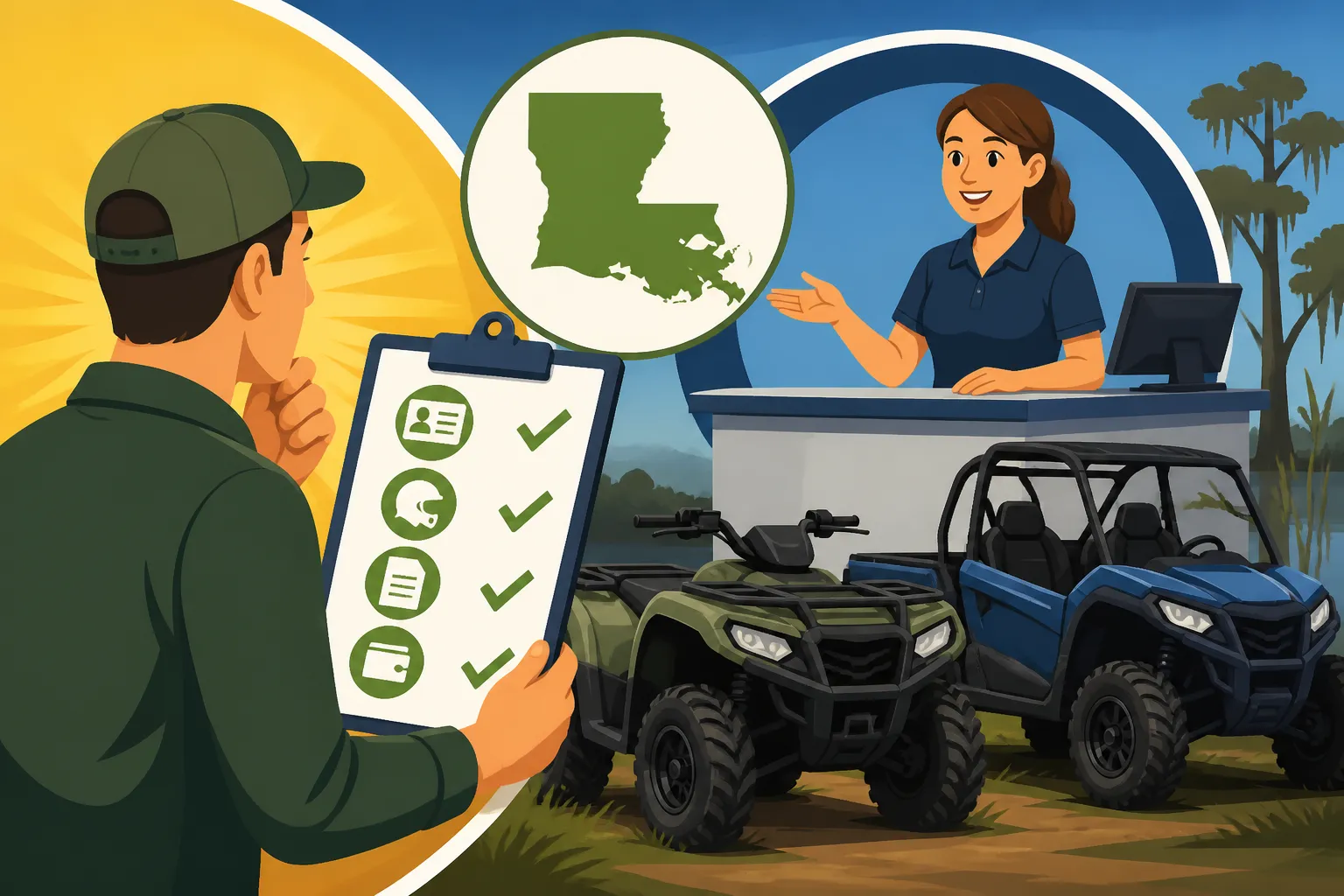
- Double-Check All Documents: Go through your stack of papers one by one. Does your MSO (for new machines) have your name correctly filled in as the assignee? Is the previous owner's signature on the back of the title clear and complete (for used machines)? Is your bill of sale fully filled out, showing the VIN, purchase price, and names of both buyer and seller? For private sales, is it notarized if required by your parish or to ensure valuation accuracy? Ensure your photo ID is current and matches the name on your paperwork. Is your proof of address recent?
- Make Copies of Everything: Before you hand over your originals, make photocopies of every single document. This includes your MSO, assigned title, bill of sale, dealer invoice, ID, and proof of address. These copies serve as your personal record and can be invaluable if anything gets misplaced or if you need to reference details later. You might not need them at the counter, but it’s always better to have them and not need them.
- Call Ahead to Your Local OMV or Check Their Website: OMV office hours, accepted payment methods, and even specific requirements can sometimes vary slightly by location, or policies can change. Before making the drive, it’s wise to check the website for your specific OMV office or call them directly. Ask if there are any current alerts or specific documents they recommend for ATV/UTV titling. This simple step can prevent a wasted trip due to an unexpected closure or policy update. [Questions Worth Asking an OMV Office]
- Ensure All Signatures Are in Place: This cannot be stressed enough, especially for used machines. Every required signature on the title, bill of sale, or any other transfer document must be present and correctly dated. For private sales, if you are using a bill of sale, ensure it has been properly notarized if that’s a local requirement or your preference to avoid valuation issues. Services like LawDepot can help you generate comprehensive legal documents and can often point you towards notary services if needed for your bill of sale. A missing signature means the OMV cannot legally complete the transfer, sending you right back to the seller.
What to Do at the OMV Counter
You’ve prepared diligently, and now it’s time for the actual transaction. A calm, organized approach at the counter can make a big difference.
- Be Polite and Patient: OMV staff deal with a high volume of customers and a lot of paperwork. Approach the counter with a friendly demeanor and patience. A positive attitude can go a long way, especially if there are any minor questions or clarifications needed.
- Have All Documents Organized: Don't just hand over a messy stack of papers. Have your original ownership document (MSO or assigned title) on top, followed by your sales tax proof, then your ID and proof of address. Keep your filled-out DPSMV 1799 application form easily accessible. Being organized shows you're prepared and helps the clerk process your request efficiently.
- Ask Questions if Something Is Unclear: If the clerk asks a question or references a policy you don't understand, don't hesitate to politely ask for clarification. It's better to understand the process fully than to guess or make an assumption that leads to future problems. For example, if you're unsure about the effective date of your new decal, ask.
- Verify All Information Before Leaving: Once the transaction is complete and you receive your new title and decal, take a moment at the counter to review everything. Check your new title for accuracy: Is your name spelled correctly? Is the VIN correct? Is the address accurate? Is the lienholder (if any) correctly listed? Ensure your decal is issued and that you understand where to affix it to your machine. [Louisiana Decal Placement on a Machine] Catching an error before you leave the OMV office is much easier than trying to correct it later.
Following these steps will vastly improve your chances of a successful, single-trip visit to the Louisiana OMV, getting you back to the trails with all your paperwork in order.
Disclaimer
This article is for general informational purposes only and does not constitute professional advice. Laws, prices and regulations vary by location and change over time. Consult a qualified professional for guidance on your specific situation.