Louisiana Lighting Rules on a Machine
Navigating the specific lighting requirements for your ATV or UTV in Louisiana can feel like trying to find your way through a cypress swamp in the dark – confusing, full of hidden pitfalls, and if you’re not careful, you could end up in a heap of trouble. Many riders just want to know what they need to stay safe and legal, whether they're cruising a private trail after sunset, retrieving game from a WMA, or just making a quick, legal crossing of a parish road. This guide will shine a light on Louisiana's lighting rules, helping you understand what’s required, what’s smart, and how to avoid those frustrating tickets.
The Basics of Louisiana's Lighting Requirements for Off-Road Machines
When you first get into the world of ATVs and UTVs in Louisiana, you quickly realize that while these machines are fantastic for off-road adventures, they aren't meant for public roads in the same way your truck is. This distinction heavily influences the lighting rules. For machines primarily used off-road, the focus is on basic visibility and safety in specific low-light situations.
When Lights Are Required: Dawn, Dusk, and Beyond
Louisiana law recognizes that even off-road machines might encounter low-light conditions. The key phrases you’ll often hear revolve around "thirty minutes after sunrise" and "thirty minutes before sunset." This window is crucial for any vehicle operating on or crossing public roads, even if it’s just the shoulder or a quick jaunt from one field to another. If you're on a designated road shoulder under the [Louisiana's Shoulder-Only Farm Exception], for example, and it falls outside of this daylight window, your machine needs to be lit up.
Think about those early morning duck hunts or late evening trips back from the deer stand. While you might be operating mostly on private land, there’s often a short stretch of gravel road or a public road crossing involved. If you're going to touch any public right-of-way during these low-light periods, functional headlights and taillights are non-negotiable. It’s not just about avoiding a ticket; it’s about making sure that oncoming traffic, or even a fellow hunter, can see you before it’s too late. The visibility provided by proper lighting can prevent a serious accident, especially when you consider the speeds and sizes of other vehicles on the road. Without adequate lighting, your machine becomes a hazard, a shadow waiting to surprise an unsuspecting driver.
Essential Lighting Components: Headlights, Taillights, and Reflectors
For most off-road machines that aren't specifically modified for extensive road use, the basic requirements are fairly straightforward. You need a white headlight or headlights visible from the front and a red taillight or taillights visible from the rear. Additionally, red reflectors are often required on the rear of the machine. These are the bare minimums designed to ensure that you can see where you're going in dim conditions and, more importantly, that others can see you.
Beyond these basics, functional brake lights are a huge plus, even if they aren't always explicitly mandated for every single off-road scenario. When you're slowing down or stopping, especially if you're interacting with any kind of traffic (even a single other vehicle on a camp road), brake lights communicate your intentions clearly. Imagine riding in a convoy on a dusty trail; without brake lights, the rider behind you might not realize you're stopping until it's nearly too late. While a farm-exempt quad may not need a full suite of turn signals for its limited road use, having bright, functioning headlights and taillights is fundamental. Some riders add [Reflective Tape Worth Adding to Your Quad] to further enhance their visibility, particularly on older machines that might not have the brightest stock lighting. It's an extra layer of protection that can make a real difference, especially for machines used in rural areas where streetlights are non-existent.
Specific Lighting Rules for Road-Legal UTVs in Louisiana
This is where things get a bit more complex. While ATVs are largely restricted from public road use, UTVs have a pathway to limited road legality in certain areas of Louisiana under specific conditions. If you're looking to make your side-by-side truly street-legal, even in a limited capacity, the lighting requirements jump significantly.
Meeting Street-Legal Standards: Beyond the Basics
If your goal is to operate your UTV on designated public roads, you're going to need more than just a headlight and a taillight. The state's statutes, particularly [Louisiana UTV Road Rules Under 32:299.3], lay out a comprehensive set of requirements that mirror those of other motor vehicles. This includes, but isn't limited to:
- Headlights: Must be white, properly aimed, and capable of both high and low beam functionality.
- Taillights: Red and visible from a specific distance, similar to a car.
- Brake Lights: Essential for signaling deceleration, typically two red lights that illuminate when the brakes are applied.
- Turn Signals: Amber or red, front and rear, to indicate turns.
- Hazard Lights: A system that flashes all turn signals simultaneously for emergency situations.
- License Plate Illumination: A white light to make the license plate visible after dark.
- Reflectors: Red reflectors on the rear, and sometimes amber reflectors on the sides.
It’s a significant upgrade from basic off-road lighting, and frankly, it needs to be. When you’re sharing the road with cars and trucks, your UTV needs to communicate its presence and intentions just as clearly as any other vehicle. Some parishes and municipalities might even have additional requirements, so checking [Louisiana UTV Street Legal Rules by Parish] is always a good idea. Manufacturers and aftermarket companies understand this need, offering comprehensive kits. SuperATV, for instance, provides a range of street-legal kits that include all the necessary lighting components – turn signals, horn, mirrors – to help you convert your UTV to meet these more stringent requirements. They understand that riders want to transition seamlessly from trail to pavement, even if it's just for a short distance.
Auxiliary Lighting: When More Is Too Much (or Just Right)
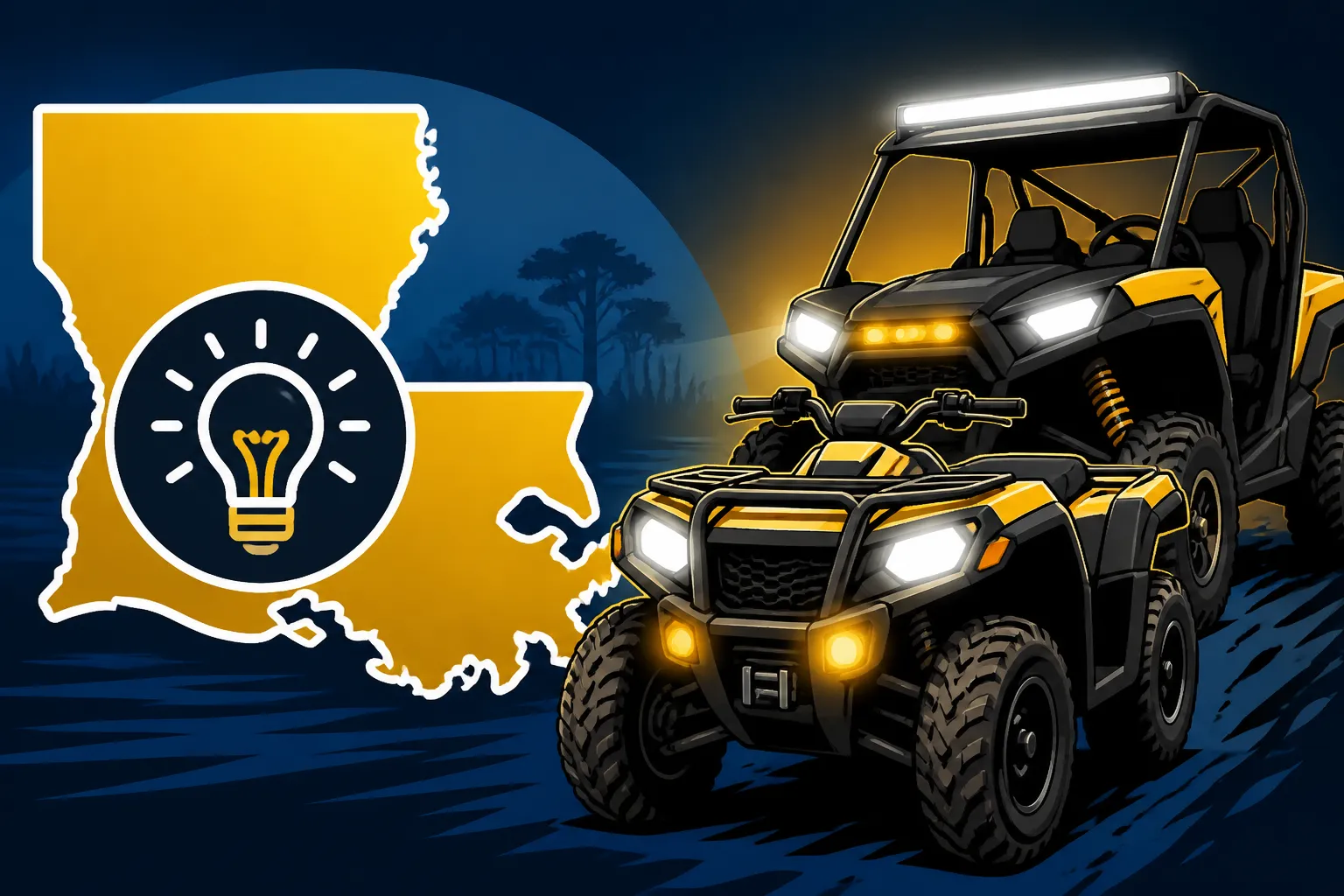
Auxiliary lighting, such as large LED light bars, spotlights, and rock lights, is incredibly popular among off-road enthusiasts. These lights can dramatically improve visibility on dark trails, illuminating obstacles and making night riding safer and more enjoyable. However, the rules for using these powerful lights on public roads are very different.
Generally, auxiliary lights that are excessively bright or can cause glare are prohibited on public roads. Many states, including Louisiana, have laws against operating vehicles with "dazzling" or improperly aimed lights. While a massive LED light bar might be perfect for blazing a path through the Kisatchie National Forest after dark, activating it on a public road, even a quiet parish road, is likely illegal and certainly dangerous for oncoming drivers. You could easily blind someone, leading to a serious accident and a hefty [Louisiana Ticket Costs for Road Riding]. The general rule of thumb is: if it's brighter than a standard headlight, it's probably for off-road use only.
However, auxiliary lights can be "just right" when used responsibly and in the appropriate environment. For example, amber running lights or small, subtle rock lights used off-road can enhance visibility and safety without being overwhelming. When considering aftermarket additions, it's always wise to differentiate between lights designed for off-road dominance and those suitable for public road interaction. SuperATV offers a wide variety of auxiliary lighting, from powerful light bars to more discreet work lights. The key is knowing when and where to use them. For those moments when you briefly cross a public road, ensure only your primary, street-legal lights are active. Save the high-powered stuff for the mud park or the deep woods.
Practical Considerations and Common Mistakes
Understanding the letter of the law is one thing, but applying it in the real world and avoiding common pitfalls is another. Many riders inadvertently run afoul of lighting regulations due to oversight or a lack of awareness about practical aspects.
Maintenance, Placement, and Visibility
Just having the lights isn't enough; they need to be in good working order and positioned correctly. A common mistake is neglecting maintenance. Mud, dust, and water are the natural enemies of electrical components. A layer of caked-on mud can reduce your headlight's output by more than half, making it almost useless. Regularly cleaning your light lenses and checking connections is crucial. Wiring harnesses can fray, bulbs can burn out, and fuses can blow, often at the least convenient times. Carrying spare fuses and knowing how to check basic electrical components can save you from being stranded in the dark or facing a citation.
Placement also matters significantly. Headlights should be aimed properly to illuminate the path ahead without blinding oncoming traffic (if you're allowed on a road). Taillights need to be clearly visible from the rear, not obscured by cargo racks, flags, or aftermarket accessories. Some riders, especially those with custom builds, get creative with their lighting. While aesthetically pleasing, if the lights aren't in a position to be seen clearly by others, they fail their primary safety function. [Louisiana Lighting Rules on a Machine] dictate these aspects of placement for good reason. Investing in a good quality set of lights from a reputable brand can also mean better seals against the elements, increasing longevity and reliability. Even reflective tape, strategically placed on the sides or rear, can add a layer of passive visibility, especially if your primary lights fail.
Consequences of Non-Compliance: Tickets and Safety Hazards
Ignoring Louisiana's lighting rules, whether intentionally or not, carries both legal and safety consequences. On the safety front, inadequate lighting dramatically increases your risk of an accident. Riding after dark or in low visibility conditions without proper lights makes you virtually invisible to other vehicles, pedestrians, or even wildlife. A collision could result in serious injury or even fatality, not to mention extensive damage to your machine. It’s a gamble that’s simply not worth taking.
Legally, a Louisiana State Trooper or local law enforcement officer can stop you for insufficient lighting, especially if you're operating on a public road or right-of-way. They are trained to conduct [Louisiana Equipment Checks by Troopers] and will quickly spot a machine that doesn't meet the standards. Depending on the infraction, you could face fines, known as [Louisiana Ticket Costs for Road Riding]. In some cases, particularly for egregious violations or repeat offenses, your machine could even be impounded. The cost of a ticket, plus potential [Louisiana Court Costs for a Citation] and the hassle of retrieving an impounded vehicle, far outweighs the cost and effort of ensuring your machine is properly lit. Remember, the rules aren't just arbitrary; they are designed to protect everyone on and around the roads.
Upgrading Your Machine's Lighting for Safety and Compliance
Whether you're looking to meet basic safety needs or aiming for full road-legal compliance, upgrading your machine's lighting is a smart move. Stock lighting can sometimes be underwhelming, especially on older models or machines that see heavy use in challenging conditions.
Aftermarket Lighting Options and Quality
The aftermarket for ATV and UTV lighting is absolutely booming, offering a vast array of options far superior to what often comes from the factory. LED technology, in particular, has revolutionized off-road lighting. LEDs are brighter, last longer, draw less power, and are far more durable than traditional incandescent bulbs. You can find everything from direct-replacement LED headlights and taillights to full conversion kits that include turn signals, brake lights, and even license plate lights.
When shopping for aftermarket lights, prioritize quality and durability. The off-road environment is tough, with vibrations, water, mud, and debris constantly putting components to the test. Look for lights with robust housings, good sealing (IP67 or IP68 ratings are excellent), and strong mounting hardware. Cheap, flimsy lights might save you a few dollars upfront, but they'll likely fail quickly, leaving you in the dark and needing to replace them sooner. Companies like SuperATV are well-regarded for their commitment to quality and ruggedness in off-road accessories, including their extensive lighting lineup. They understand that a rider needs lights that can withstand the rigors of a Louisiana mud bog or a rocky trail without flickering or failing. From powerful light bars that turn night into day on the trails to comprehensive street-legal kits, choosing a reputable brand ensures you're getting a product that performs when you need it most.
DIY vs. Professional Installation
Deciding whether to install new lighting yourself or hire a professional depends largely on your mechanical skill, electrical knowledge, and the complexity of the upgrade. For simple bulb replacements or adding a basic auxiliary light, most riders with a decent set of tools and some patience can handle it. There are countless online tutorials and guides that can walk you through the process step-by-step.
However, for more involved installations, especially those required for street-legal conversions (which often involve integrating multiple new components, relays, and switches), professional installation might be the smarter choice. Wiring, in particular, can be tricky. Improper wiring can lead to blown fuses, short circuits, battery drain, or even fire hazards. A professional shop that specializes in ATV/UTV accessories will have the expertise, tools, and experience to ensure everything is wired correctly, securely mounted, and fully functional. They can also ensure that the lights are aimed properly and meet all local regulations. While it might cost a bit more upfront, the peace of mind and assurance of a safe, compliant installation are often worth the investment, especially if you're not confident in your electrical skills. When you're dealing with something as critical as visibility and safety, getting it right the first time is paramount.
Here's a quick comparison of common lighting requirements:
| Feature | Standard ATV/Off-Road UTV (Minimum for Public Interaction) | Road-Legal UTV (for Designated Roads) |
|---|---|---|
| Headlights | White, visible from front | White, high/low beam, properly aimed |
| Taillights | Red, visible from rear | Red, visible from rear, properly positioned |
| Brake Lights | Recommended, often not strictly mandated | Required, two red lights |
| Turn Signals | Not typically required | Required, amber or red, front and rear |
| Hazard Lights | Not typically required | Required |
| Reflectors | Red, on rear | Red on rear, sometimes amber on sides |
| License Plate Light | Not applicable | Required, white light |
| Auxiliary Lights | Permitted off-road (use responsibly) | Generally prohibited on public roads (unless low power/aimed) |
| Visibility Window | Low light conditions (30 min before sunset/after sunrise) | Any time on public roads |
Disclaimer
This article is for general informational purposes only and does not constitute professional advice. Laws, prices and regulations vary by location and change over time. Consult a qualified professional for guidance on your specific situation.