Louisiana Equipment Checks by Troopers
It's a familiar scenario for many Louisiana riders: you're enjoying a quick jaunt down a parish road, maybe heading from one hunting camp to another, or just cutting across to a friend's place. Suddenly, you see those flashing blue lights in your rearview. Your stomach drops because you know exactly what's coming next: an equipment check. The uncertainty of what a state trooper or local deputy is going to scrutinize on your ATV or UTV can be a real headache, and getting caught unprepared can mean a hefty fine or worse. This guide will walk you through what law enforcement in Louisiana is typically looking for when they pull over an off-road machine on a public road, helping you understand the legal requirements and avoid unnecessary trouble.
What Louisiana Troopers Look For: Initial Checkpoints
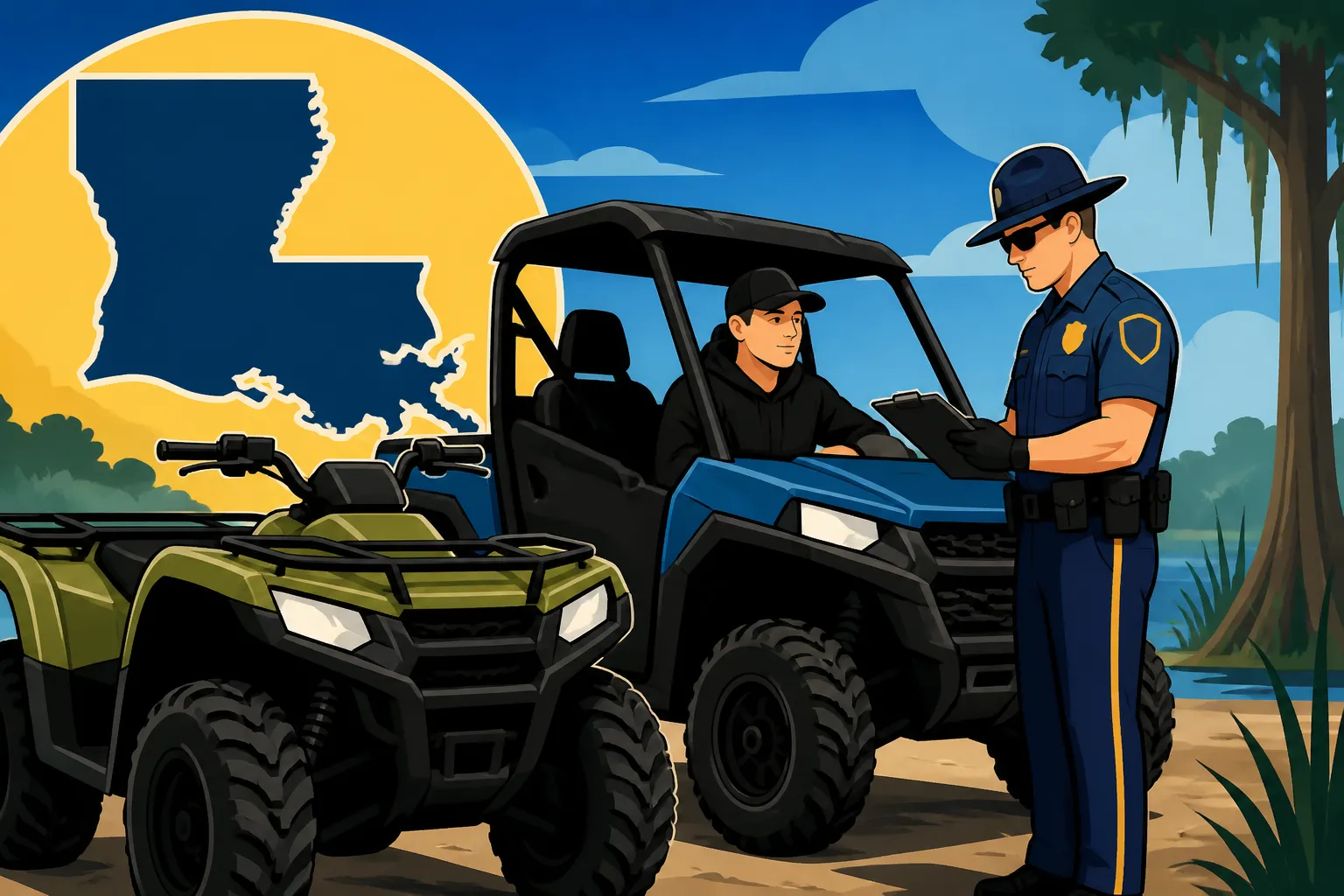
When a Louisiana State Trooper or a local sheriff's deputy spots an ATV or UTV on a public road, their primary concern is usually safety and compliance with the state's very specific off-road vehicle laws. They're not just pulling you over to be difficult; they're looking for quick visual cues that indicate whether your machine is legally equipped for even limited road use. Understanding these initial checkpoints can help you ensure your machine is ready before you ever leave private land.
Why Equipment Checks Happen on Rural Roads
The reality in Louisiana is that while many rural areas feel like wide-open spaces, any road maintained by the state, parish, or municipality is still a public thoroughfare. Even if you're only riding the shoulder for a short distance or crossing a less-traveled road, you're subject to traffic laws. Law enforcement officers are trained to identify vehicles that don't meet basic safety standards for road operation, and this absolutely extends to ATVs and UTVs. They are especially vigilant in areas known for off-road vehicle use, like near popular hunting grounds, fishing spots, or even just long stretches of gravel roads where riders might be tempted to cut corners. It’s about public safety, plain and simple.
Sometimes, these checks are proactive, part of a targeted enforcement effort, particularly during hunting seasons or long holiday weekends when more riders are out. Other times, it's a routine stop initiated by a minor infraction, like not using a turn signal or riding in a travel lane, which then leads to a full equipment inspection. Remember, these machines are generally designed for off-road use, and any deviation onto public roads puts them under a different set of rules. You can learn more about [Louisiana ATV Road Rules Under 32:299] to get a clearer picture of what's allowed.
Common Visible Infractions That Get Noticed
Before a trooper even asks for your paperwork, several things on your machine can immediately catch their eye. Missing or non-functional lights are a huge red flag. If your ATV or UTV is being operated on a public road and doesn't have working headlights, taillights, brake lights, or turn signals, it's an instant reason for a stop. Another common one is a lack of mirrors; without them, you can't properly see traffic behind you, which is a major safety hazard. A visible lack of an ORV decal, even if you just bought the machine, can also prompt a stop.
Beyond lights and mirrors, officers might quickly assess your tires. While many off-road tires are perfectly fine, extremely aggressive treads or tires that are obviously damaged could raise concerns. Loud aftermarket exhausts that exceed local noise ordinances might also draw unwanted attention. Even the general condition of your machine – such as missing body panels, exposed wiring, or overloaded racks – can contribute to an officer's decision to initiate a stop and conduct a thorough equipment check. For UTVs, the rules can be a bit different, so it's worth reviewing [Louisiana UTV Road Rules Under 32:299.3].
Understanding the Trooper's Discretion
While there are specific laws regarding ATV and UTV equipment on public roads, a trooper's discretion plays a significant role. They might see a minor issue but let you off with a warning if you're otherwise compliant and respectful. However, they might also be less lenient if they detect other issues, like an odor of alcohol or an uncooperative attitude. It’s important to remember that their job is to enforce the law and ensure safety.
This discretion means that while one trooper might overlook a slightly dim taillight if everything else is perfect, another might write a citation for it. This isn't unfair; it's simply how law enforcement operates. The best way to navigate this is to ensure your machine is in impeccable condition and fully compliant with all legal requirements. Don't rely on getting a pass; instead, aim to give the officer no reason to write a ticket. Always be polite, provide the requested information, and be prepared for a thorough inspection when stopped.
Essential Equipment for Road-Legal ATVs/UTVs in Louisiana
Converting an off-road machine into something that's even minimally road-legal in Louisiana involves more than just slapping on a license plate (which isn't even required for ATVs, only UTVs in some cases). There are specific equipment requirements that your ATV or UTV must meet to comply with state statutes when operated on public roads, even on the shoulder. These requirements are in place to ensure the safety of the rider and other motorists.
Lighting Requirements: Headlights, Taillights, and Turn Signals
For any off-road vehicle to legally operate on a public road in Louisiana, even for crossing or shoulder use, it must have functional headlights, taillights, and brake lights. These aren't just for seeing where you're going; they're crucial for other drivers to see you, especially during dawn, dusk, or in adverse weather. Headlights must emit a white light visible from a certain distance, and taillights must be red and visible from a similar range. Brake lights, which are often integrated into the taillights, must illuminate when the brakes are applied.
Beyond basic visibility, turn signals are also a must. You need to be able to clearly indicate your intentions to turn or change lanes. Many stock ATVs and UTVs don't come with DOT-compliant turn signals, requiring an aftermarket kit. Companies like SuperATV offer a range of universal turn signal kits and lighting upgrades that can help bring your machine into compliance. Remember, these lights must be clearly visible from both the front and rear, and they need to be amber in color for turn signals. It's not enough to have them; they must be working correctly every single time you venture onto a public road. Make sure you check your [Louisiana Lighting Rules on a Machine] before you head out.
Brakes, Horn, and Mirrors: Safety First
Beyond lighting, other safety equipment is non-negotiable. Your ATV or UTV must have fully functional service brakes that can stop the vehicle safely. This means checking your brake pads, fluid levels, and ensuring there's no spongy feeling in the lever or pedal. A parking brake is also typically required to secure the machine when stopped. Imagine trying to park on an incline without one – it's just not safe.
A working horn is another simple but critical piece of equipment. It allows you to alert other drivers or pedestrians to your presence, which can prevent accidents. Many off-road machines come with a horn, but sometimes they can be small or not loud enough for road use. Upgrading to a more robust, clearly audible horn is a smart move. Finally, mirrors are essential. You need at least one rearview mirror, and often two (side mirrors), to provide adequate visibility of traffic approaching from behind. Again, many aftermarket solutions, including those from brands like SuperATV, can provide sturdy, adjustable mirrors that can withstand off-road abuse while offering clear views for road segments.
Tires and Mismatched Equipment
While there isn't a specific "DOT-approved" tire requirement for ATVs or UTVs in Louisiana in the same way there is for cars, your tires still need to be in safe operating condition. This means no bald spots, no visible cords, and no severe damage that could lead to a blowout. Tires must also be appropriate for the load and speed capabilities of your machine. Riding on severely worn tires or those clearly designed only for extreme mudding might draw an officer's attention, especially if they appear unsafe for pavement.
Mismatched equipment can also be an issue. For instance, if you have one headlight significantly brighter than the other, or only one working brake light, it's a safety concern. Any modification that compromises the original safety design of the vehicle could be grounds for an equipment violation. This includes things like improperly secured modifications or lifted suspensions that make the vehicle unstable. The goal is uniformity and functionality in all your safety components.
Consequences of Failing an Equipment Check
Getting pulled over for an equipment check is never fun, but failing that check can lead to more than just a minor inconvenience. The consequences can range from simple citations to having your machine impounded, creating significant financial and logistical burdens. It’s vital to understand what you might face if your ATV or UTV isn't up to snuff.
Citations and Fines for Equipment Violations
The most immediate consequence of failing an equipment check is receiving a citation. These tickets come with fines that can vary depending on the specific violation and the parish where you're caught. For example, a missing taillight might carry one fine, while operating without any lights after dark could result in a much higher penalty. Each non-compliant piece of equipment could potentially be a separate citation, meaning fines can quickly add up.
Beyond the monetary cost, these citations often require you to appear in court or demonstrate that the violation has been corrected. This means taking time off work, traveling to the courthouse, and potentially paying additional court fees. It’s a hassle that is easily avoidable by performing routine checks on your machine's equipment before every ride. Remember, what seems like a minor oversight on your part could be seen as a serious safety hazard by law enforcement. You can read up on [Louisiana Ticket Costs for Road Riding] to get an idea of the potential financial hit.
Impoundment and What It Means for Your Machine
In more severe cases, or if you have multiple egregious equipment violations, a state trooper or deputy has the authority to impound your ATV or UTV. This means your machine is towed away and stored at an impound lot, often at your expense. Getting your machine back usually involves not only paying the fines associated with the citations but also the towing fees, daily storage fees, and potentially administrative release fees. These costs can quickly escalate, sometimes reaching hundreds or even thousands of dollars.
The process of getting an impounded machine released can also be complex. You might need to prove ownership, show proof of corrected equipment issues, and jump through various bureaucratic hoops. Imagine being miles from home, with your machine suddenly out of commission and stuck in a tow lot. It’s a nightmare scenario that emphasizes the importance of ensuring your machine is fully compliant before you ever put a tire on a public road. [Louisiana Impoundment for No Decal] isn't just for missing decals; it can apply to serious equipment failures too.
The Domino Effect: Other Potential Charges
An equipment check can sometimes open the door to other charges, creating a "domino effect" of legal trouble. If, during the stop, a trooper discovers you're operating your machine under the influence, without proper licensing, or if the machine is unregistered (where registration is required for UTVs), these additional offenses can be layered on top of the equipment violations. This can lead to more severe fines, license suspension, or even criminal charges, depending on the nature of the offense.
For instance, if your UTV is found to be operating illegally on a public road without the necessary registration and insurance, alongside equipment issues, the stakes are much higher. A simple equipment stop can quickly escalate into a much more serious legal situation. It’s not just about the machine; it’s about the operator and their compliance with all applicable laws. This is why a simple equipment check can quickly become a much bigger problem if you’re not prepared.
Beyond Equipment: Other Documents and Rider Requirements
While the physical equipment on your ATV or UTV is crucial, a state trooper's check doesn't stop there. They'll also be looking for proper documentation for both you and your machine, as well as ensuring you meet specific rider requirements. Being ready with these documents and understanding the rules is just as important as having working lights.
Proof of Ownership and Insurance
When you're stopped, a law enforcement officer will almost certainly ask for proof of ownership for your ATV or UTV. This typically means presenting your title or registration document. For ATVs in Louisiana, a title and an ORV decal are required, but not a traditional registration plate for road use. UTVs, however, can be registered for limited road use under specific conditions and therefore require registration papers. Make sure these documents are always with you when you're riding, preferably in a waterproof pouch.
In addition to ownership, proof of insurance is increasingly important. While Louisiana doesn't mandate insurance for off-road use on private property, if you're operating your ATV or UTV on any public road, even the shoulder, you need to be able to provide proof of liability insurance. This protects you and others in case of an accident. Not having this proof can result in another citation. Always carry your insurance card or a digital copy on your phone. [Louisiana Insurance Proof on Demand] is a real requirement, and not having it can get you into trouble.
Licensing and Age Restrictions for Road Use
Who is allowed to operate an ATV or UTV on public roads in Louisiana is strictly regulated. For UTVs, drivers must typically be at least 21 years old and possess a valid Class E driver's license, which is the standard Louisiana driver's license. If you're under 21, even if you have a license, you generally cannot legally drive a UTV on a designated public road. This is a critical point that many riders miss.
For ATVs, while you don't necessarily need a driver's license for off-road operation, if you're riding on the shoulder of a public road under the specific agricultural exemptions, having a valid driver's license is still a good idea, as it demonstrates your competency as a driver. In any case, a trooper will likely ask for your personal identification to verify your age and legal ability to operate the vehicle. Ensure you're familiar with [Louisiana Requires UTV Drivers to Be 21] and [What a Class E License Lets You Do].
The Importance of Farm Affidavits and Designated Roads
Louisiana law provides very limited exceptions for ATVs and UTVs on public roads, primarily centered around agricultural purposes. If you're riding an ATV on a public road's shoulder, it almost certainly needs to be for bona fide agricultural operations, within a 5-mile radius of the farm. To qualify for this, you should carry a sworn agricultural affidavit. This document, often notarized, attests that your machine is being used exclusively for farming activities. Without this, even a short trip down the shoulder could be deemed illegal.
For UTVs, some parishes have ordinances that designate specific roads for UTV use. These roads must be clearly marked with signage. If you're riding a UTV on a public road, it must be on one of these designated routes, and you must adhere to all traffic laws, including speed limits. A trooper will confirm whether you are on a designated road and if your operation falls within legal parameters. Always be ready to explain your purpose for being on the road and to present any necessary affidavits. Reviewing [Louisiana Farm Affidavit Requirements] is crucial for any agricultural rider.
Equipment Check Preparedness Table
To help you keep track, here's a quick reference table of common items a Louisiana State Trooper will check when you're operating an ATV or UTV on a public road.
| Item Category | ATV Requirement (Limited Road Use) | UTV Requirement (Limited Road Use) | What a Trooper Checks |
|---|---|---|---|
| Visibility | Headlights (white), Taillights (red), Brake Lights (red), Turn Signals (amber) | Headlights (white), Taillights (red), Brake Lights (red), Turn Signals (amber) | Functionality, brightness, color, visibility from required distances. |
| Signaling & Alert | Horn, At least one rearview mirror | Horn, At least one rearview mirror, typically two side mirrors | Functionality of horn, clear view from mirrors, proper attachment. |
| Control & Safety | Functional service brakes, parking brake | Functional service brakes, parking brake, seatbelts for passengers (if equipped) | Braking effectiveness, parking brake hold, seatbelt integrity. |
| Tires | Safe condition (no bald spots, no visible cords) | Safe condition (no bald spots, no visible cords) | General wear, damage, appropriateness for road surface. |
| Decal/Registration | Louisiana ORV Decal (affixed) | Louisiana ORV Decal (affixed), UTV Road Registration (if applicable) | Presence and validity of decal, current UTV registration (if required for designated road use). |
| Documents | Proof of ownership (title), Proof of insurance | Proof of ownership (title), Proof of insurance, Driver's License (Class E) | Current title/registration, valid insurance card, valid driver's license, relevant affidavits (e.g., farm use). |
| Rider Age | N/A for farm-exempt shoulder use (but driver's license often required) | 21+ years old for driver | Verification of driver's age via ID. |
| Road Type | Shoulder of public road (agricultural exemption) | Designated parish/municipal road (posted signs) | Confirmation that operation is within legal road type parameters and purpose. Check [Parishes Have to Post Signs on Designated Roads]. |
Being thoroughly prepared for a state trooper's equipment check means having your machine in tip-top shape, your documents organized, and a clear understanding of Louisiana's nuanced laws regarding ATVs and UTVs on public roads. It's about proactive compliance to ensure your rides are safe, legal, and stress-free.
Disclaimer
This article is for general informational purposes only and does not constitute professional advice. Laws, prices and regulations vary by location and change over time. Consult a qualified professional for guidance on your specific situation.