Louisiana Crossings of Public Roads
Let's be real, you're out enjoying your ATV or UTV in Louisiana, maybe you're riding from one part of your hunting land to another, or from a camp to a friend's property, and suddenly, there's a public road between you and your destination. It's a common dilemma: can you legally cross that road? This guide will dive deep into Louisiana's often-confusing rules about operating off-road vehicles on or across public roads, helping you understand the specific situations where it might be allowed, and more often, where it definitely isn't.
The Basic Rules: Can You Even Cross?
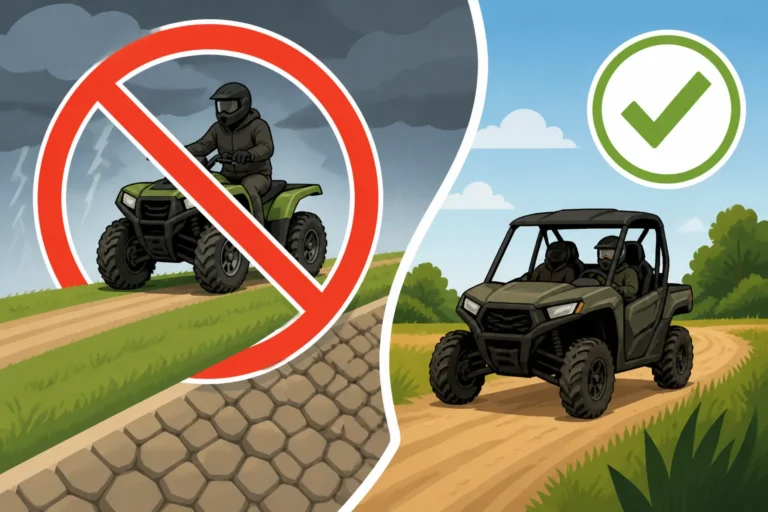
This is where the rubber meets the road, or more accurately, where your tires are not supposed to meet the road. Louisiana law is pretty clear that ATVs and UTVs are primarily for off-road use, and that means public roadways are generally off-limits. It's not just a suggestion; it's a statute designed to keep everyone safe, including you.
The Strict Letter of Louisiana Law
When it comes to ATVs, Louisiana Revised Statute 32:299 lays out the fundamental prohibition: "No all-terrain vehicle shall be operated on any public street or highway of this state." That's a pretty strong statement, and it forms the bedrock of why most road use is a no-go. The lawmakers recognize that these machines are built for rugged terrain, not for sharing lanes with cars and trucks at highway speeds. They lack many of the safety features, like crumple zones, advanced turn signals, or seatbelts that are standard in street-legal vehicles. Even if you're the most careful rider in the world, the inherent design differences make them a hazard in traditional traffic.
The spirit of this law is about preventing accidents. Imagine a small ATV trying to keep up with traffic on a busy two-lane highway, or the difficulty a driver in a pickup truck might have seeing a quad at dusk. The differences in speed, braking capability, and visibility create a dangerous situation for everyone involved. So, while it might feel like an inconvenience to take your machine on a trailer or find an alternative route, the law is there for a reason.
Understanding "Incidental" Crossings
Now, here's where things get a little nuanced, but only a little. The same statute, 32:299, does offer a very narrow exception for what it calls "incidental" crossings. This isn't a free pass to drive a block or two down a road; it's strictly for getting from one off-road area to another when a public road literally cuts through your path. Think of it as a momentary interruption, not an extension of your ride.
For a crossing to be considered "incidental," it generally has to meet several strict criteria. First and foremost, it must be the shortest and most direct route across the roadway. You can't make a turn and ride parallel to the road for any distance; it must be a perpendicular crossing. Secondly, you need to yield to all oncoming traffic, just as if you were pulling out from a private driveway. Your machine is not going to win a contest with a speeding car, so safety is paramount. Third, the purpose of the crossing must be to continue your off-road travel. You aren't crossing the road to go to the convenience store, you're crossing to reach another piece of land where off-road riding is permitted. Law enforcement often looks for intent and distance when evaluating these situations. For example, if you're crossing a gravel parish road that separates two tracts of timberland you own, that’s likely to be seen as incidental. If you cross that same road and then ride down the shoulder for half a mile to get to a friend’s house, that’s almost certainly not incidental, even if your friend's house is in a rural area. The key takeaway is: if you can avoid touching a public road, do it. If you absolutely can't, make the crossing as quick, direct, and safe as humanly possible.
Navigating the Farm Exemption for Crossings
Louisiana law provides a specific—and often misunderstood—exemption for ATVs and UTVs used in agricultural operations. This isn't a blanket permission slip to ride wherever you want if you own a few acres; it comes with its own set of very strict rules and limitations, especially when it comes to interacting with public roads.
Who Qualifies for the Farm Exemption?
To qualify for the farm exemption, your ATV or UTV must be used "exclusively for agricultural purposes" or "in conjunction with the commercial production of timber." This isn't just about occasionally pulling a small trailer on your property. It means the primary, ongoing use of the machine must be related to farming, ranching, or timber operations. The Louisiana Office of Motor Vehicles (OMV) typically requires an agricultural affidavit to confirm this use. This document, often signed before a notary, is your declaration that the machine serves a specific, farm-related function. It helps the state categorize your machine and understand its intended purpose.
For instance, if you're using your side-by-side to check fence lines, haul feed, spray pesticides, or transport tools across fields, it fits the definition. If you're riding it purely for recreation on your farm land, then it likely does not. This distinction is crucial because the exemption hinges entirely on the machine's function. The OMV is looking to differentiate between legitimate farm equipment and recreational vehicles simply stored on farm property. Farmers often have specific needs for transportation and utility that standard road vehicles can't fulfill, and this exemption acknowledges those practical realities. You can learn more about this by reading [Louisiana Agricultural Affidavits for an ATV].
The 5-Mile Radius and Shoulder Riding
Even if your machine is legitimately farm-exempt, the rules for public road interaction are still quite narrow. Louisiana statute 32:299 (and 32:299.3 for UTVs) permits these agricultural vehicles to operate on the "shoulder of a public road or highway." However, this isn't an unlimited privilege. The operation must be "for agricultural purposes," and it's restricted to a radius of "five miles from the point of origin of the farm or timber operation." So, if your farm is in rural Rapides Parish, you can't just drive your ATV across the entire parish on the shoulder, even if you're heading to another field.
The intention here is to allow farmers to move their equipment short distances between fields or properties that are part of the same operation, especially when those properties are separated by a public road. The emphasis is on shoulder riding, not riding in the travel lane. The shoulder offers a buffer from faster-moving traffic. It's imperative to understand that this 5-mile radius is measured from the primary farm location, and any use beyond that limit, even on the shoulder, would likely be considered a violation. Additionally, the phrase "shoulder of a public road or highway" means just that – the paved or unpaved area adjacent to the main travel lanes, specifically designed for stopped vehicles or drainage, not for regular travel. For more details, check out [The 5-Mile Farm Radius on a Shoulder].
Crossing Requirements for Farm Machines
When a farm-exempt ATV or UTV needs to cross a public road, the rules are essentially the same as for any "incidental" crossing, but with the added context of agricultural use. The crossing must still be direct, perpendicular, and the shortest possible distance. It's about traversing the road to get from one section of a farm to another, or from a farm to a related adjacent property. You should not use the shoulder to ride for any distance before making the crossing, unless that shoulder riding is itself within the 5-mile farm exemption radius and directly facilitates the crossing.
While not explicitly stated in the statutes for farm-exempt crossings, safety best practices would strongly suggest ensuring your machine is highly visible. This might include using aftermarket lighting, reflective tape, or even a brightly colored flag. Many farmers choose to upgrade their machines with accessories from brands like SuperATV, which offer robust lighting kits and mirrors that can significantly improve visibility when operating near or crossing public roads. Even though a farm machine has certain exemptions, a state trooper or local deputy will prioritize public safety, and a poorly visible machine making a crossing is a recipe for a citation, regardless of its farm status. Always stop, look both ways, and yield to all traffic before proceeding.
UTV-Specific Road Crossings and Designations
Unlike ATVs, UTVs (or side-by-sides, as they are often called) have a slightly different legal standing in Louisiana when it comes to public roads. While the general prohibition still applies, the state has provided a framework for some road use under specific conditions, primarily through local governmental discretion.
Louisiana's UTV Statute and Parish Ordinances
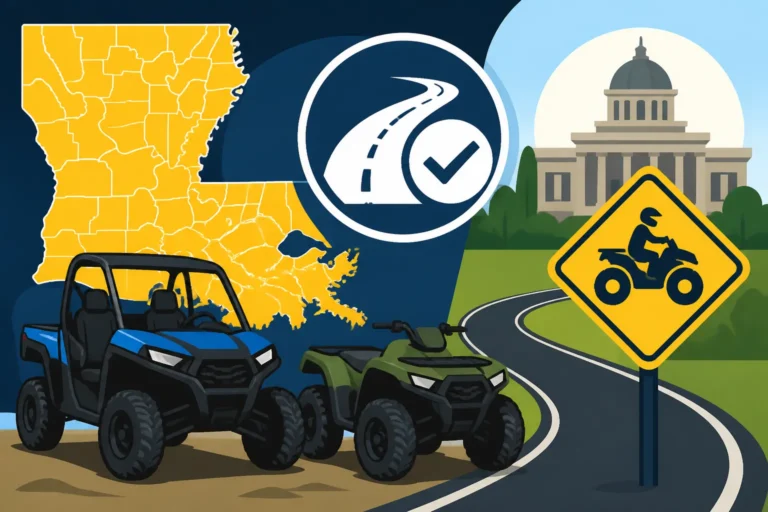
Louisiana Revised Statute 32:299.3 specifically addresses the operation of utility terrain vehicles (UTVs) on public roads. This statute, notably revised in 2022, creates a pathway for UTVs to be operated on public roads or streets, but only if a local governing authority – meaning a parish council or municipal government – designates those roads for UTV use. This is a critical distinction from ATVs: UTVs can gain limited street legality if the local government decides to allow it. This doesn't mean every UTV is suddenly street legal; it means you must check the local ordinances for the specific parish or municipality you intend to ride in.
The intent behind this statute is to allow local communities, particularly rural ones, to permit UTVs on their less-trafficked roads, recognizing their utility for everything from farm work to neighborhood transportation. However, it's not a free-for-all. The local designation process is specific and requires the parish or town to vote on an ordinance. Without such an ordinance, the UTV is still treated largely like an ATV when it comes to public road use, meaning it's generally prohibited except for incidental crossings or the farm exemption. You'll find more information on this in [Louisiana UTV Road Rules Under 32:299.3].
The Role of Designated Roads and Signage
If a parish or municipality decides to designate certain roads or streets for UTV use, they aren't just giving a verbal okay. The state law requires that these designated roads or streets be "identified by signs conspicuously posted on the road or street." This means you shouldn't have to guess whether a road is designated; there should be clear signage indicating UTV access. These signs are crucial for both riders and law enforcement, signaling where UTVs are permitted and where they are not.
Before you even think about riding your UTV on a public road, it is absolutely essential to investigate the local ordinances and look for these signs. Relying on hearsay or assumptions could lead to a costly ticket. Many parishes maintain online records of their ordinances, or you can contact the parish clerk's office directly. Even on designated roads, there are usually limitations, such as speed limits (often capped at 25 mph or 35 mph, depending on the local ordinance), daylight-only operation, and specific equipment requirements like mirrors, turn signals, and a horn. These requirements can often be met with aftermarket parts from companies like SuperATV, which specializes in UTV accessories designed to enhance safety and compliance. It’s also worth noting that some local ordinances may even require specific insurance coverages beyond what you might carry for off-road use. For specific details on signage requirements, refer to [Parishes Have to Post Signs on Designated Roads].
Age and Licensing Requirements for UTV Road Use
Even if a road is properly designated for UTV use by a local ordinance, not just anyone can jump behind the wheel. The Louisiana statute 32:299.3 also imposes specific requirements on the driver. For one, a person operating a UTV on a designated public road or street must be "at least twenty-one years of age." This is a higher age requirement than for driving a car in some instances and is a clear indicator that the state views UTV road operation as requiring a certain level of maturity and experience.
Furthermore, the driver must possess a valid "Class E driver's license." A Class E license is the standard driver's license that most people obtain for operating a passenger car or truck. This means that if you only have a learner's permit, or if your license is suspended, you cannot legally operate a UTV on a designated public road, even if you meet the age requirement. These provisions are in place to ensure that anyone operating a UTV on a public thoroughfare has demonstrated a basic level of driving competence and responsibility. It’s not enough to know how to drive a UTV; you must also be legally permitted to drive a standard vehicle. Familiarize yourself with [Louisiana Requires UTV Drivers to Be 21] and [Louisiana Requires a Class E License] to ensure compliance.
Practical Considerations and Safety for Crossings
Whether you're making an incidental ATV crossing or operating a UTV on a designated road, safety should always be your top priority. The inherent differences between off-road machines and street-legal vehicles mean you need to be extra cautious and proactive about your visibility and awareness.
Visibility and Equipment for Safe Crossings
When you're momentarily on a public road, even for a quick crossing, you become part of the traffic flow, and you need to be seen. Off-road machines aren't always designed with road visibility in mind. This means you should take extra steps to ensure other drivers can spot you, especially in low light or adverse weather. Essential equipment includes functioning headlights and taillights. If your UTV or ATV doesn't have bright enough lights, consider aftermarket upgrades. Reflective tape on the front, sides, and rear of your machine can make a huge difference, particularly at dawn, dusk, or on overcast days. A bright, whip flag attached to the rear of your machine can also help increase visibility, making your profile taller and more noticeable to drivers of larger vehicles.
For UTVs that might spend more time on designated roads, adding turn signals, a horn, and side mirrors becomes critically important for safe communication with other vehicles. These are often standard features on street-legal vehicles, but optional or non-existent on many off-road models. Investing in quality aftermarket accessories from reputable brands can help bridge this gap. For instance, SuperATV offers a wide range of UTV accessories, including full turn signal kits, rearview and side mirrors, and LED light bars that vastly improve visibility and driver communication, making your crossings safer and more compliant. Always ensure your lights are clean and in good working order before you head out, and if you're riding with a group, make sure everyone in your party is equally equipped for maximum safety.
Best Practices for an Incidental Crossing
Making an incidental crossing safely is more than just a quick dash across the asphalt. It requires a deliberate, methodical approach to minimize risk. First, always approach the road slowly and prepare to stop. Treat every public road intersection as you would a busy highway crossing, even if it looks deserted. Come to a complete stop at the edge of the pavement, well before the travel lane.
Next, look in both directions multiple times for oncoming traffic, including bicycles and pedestrians. Your off-road machine is quieter than a car, so don't rely solely on sound. Once you've confirmed a clear path, proceed directly across the road, making the crossing as perpendicular as possible. Do not ride down the road, even for a few feet, before turning to cross. The goal is to spend the absolute minimum amount of time in the travel lanes. Accelerate smoothly but not aggressively, and once you've crossed, immediately return to off-road terrain. If you're riding with a group, each rider should cross individually, ensuring the road is clear for themselves before proceeding. Never assume that because one rider made it across, the next one will automatically be safe.
What a Law Enforcement Officer Looks For
When a Louisiana State Trooper or a local sheriff's deputy spots an ATV or UTV on a public road, their first thought is usually safety and legality. They are trained to identify vehicles that are out of place or being operated unlawfully. They'll be looking for several key indicators. Is the machine actually farm-exempt, and does the operator have the necessary agricultural affidavit to prove it? Is the crossing truly incidental, or is the rider traveling for an extended distance on the road or shoulder? For UTVs, they'll check if the road is designated and if the driver meets the age and licensing requirements.
Beyond the specific rules, officers are also observing how the machine is being operated. Is the driver riding erratically? Are they speeding? Do they appear to be under the influence? Are they wearing a helmet if required for their age? They'll also check for any visible registration or decal that might be required. If you're pulled over, be polite, cooperative, and have any relevant paperwork ready, such as your ID, proof of ownership, and if applicable, your agricultural affidavit. Understanding [What a Louisiana State Trooper Can Ask to See] can help you be prepared. Remember, even if you believe you're within your rights, an officer has the authority to issue a citation if they perceive a violation or a safety hazard.
Penalties and Avoiding Common Mistakes
Ignorance of the law is never a valid defense, especially when it comes to operating ATVs and UTVs on public roads in Louisiana. Understanding the potential consequences and the common pitfalls can save you a lot of headache, and a lot of money.
Consequences of Illegal Road Crossings
Riding an ATV or UTV illegally on a public road in Louisiana can lead to significant penalties. The most immediate consequence is typically a citation, which comes with fines. These fines can vary depending on the parish and the specific nature of the violation, but they are rarely cheap. Beyond the initial fine, you could also face court costs, adding to the financial burden. For repeated offenses, or in cases where the operation is deemed particularly reckless or dangerous, there could be more severe repercussions, including the impoundment of your machine. Having your ATV or UTV impounded is not only costly in terms of towing and storage fees, but it also creates a major hassle, requiring time and effort to get your machine back.
Furthermore, if an accident occurs while you are operating your machine illegally on a public road, your insurance coverage may be voided, leaving you personally liable for damages and injuries. This could lead to massive financial ruin if someone is seriously hurt or property is extensively damaged. The legal framework is designed to discourage unauthorized road use, and the penalties reflect the seriousness of the state's intent to keep off-road machines off public roads. It's simply not worth the risk. For more on what a citation might cost, see [Louisiana Ticket Costs for Road Riding], and for details on impoundment, check out [Louisiana Impoundment for No Decal].
Common Misunderstandings About Road Use
There are several persistent myths and misunderstandings that riders often hold about ATV and UTV road use in Louisiana. One of the most common is believing that if a road is unpaved or lightly traveled, it's fair game. This is simply not true. Any road maintained by a parish or the state, regardless of its surface or traffic volume, is considered a "public road or highway" under the law. Another misconception is that possessing a Louisiana ORV decal makes your machine street legal. It absolutely does not. The decal is for off-road identification and contributes to trail maintenance funds, but it confers no right to operate on public roads. You can find more clarity on this in [Why an Off-Road Decal Is Not Street-Legal Registration].
Some riders mistakenly assume that as long as they stick to the shoulder, they're fine, even if they're not farm-exempt. Again, this is incorrect. The shoulder exemption is specifically tied to agricultural use and the 5-mile radius rule. For recreational riders, the shoulder is just as off-limits as the main travel lanes, except for the briefest, most direct incidental crossing. Finally, many riders assume that if they see others doing it, it must be legal. This is a dangerous assumption. Just because someone else is breaking the law without consequence doesn't make their actions legal or safe. Always verify the rules for yourself and your specific machine.
The Importance of Local Ordinance Checks
Given the nuanced nature of UTV road access and even some local variations in how ATVs might be regulated, checking local ordinances is paramount. While state law provides the overarching framework, parishes and municipalities in Louisiana have the authority to implement additional rules, especially regarding UTVs. A parish might designate certain roads for UTV use, while an adjacent parish might not. The requirements for signage, speed limits, and even the types of equipment required on designated roads can vary from one jurisdiction to another.
Before you ever operate your UTV on a public road, make it a habit to contact the local parish government or municipal clerk's office and specifically ask about UTV ordinances. Many parishes now have their codes of ordinances available online, which can be a valuable resource. Simply because a friend in one parish rides their UTV on certain roads doesn't mean you can do the same in your parish or a neighboring one. Failing to check these local rules could easily lead to an unexpected ticket or impoundment. For additional information on how to find these local rules, consult [Louisiana Parish Ordinance Lookups]. Taking the time to do your homework can save you a world of trouble and ensure you're riding legally and responsibly.
Louisiana ATV/UTV Road Crossing Rules Summary
To help clarify the differences and requirements, here's a quick overview of how ATVs and UTVs are typically handled when it comes to public road crossings in Louisiana.
| Feature | All-Terrain Vehicle (ATV) | Utility Terrain Vehicle (UTV) |
|---|---|---|
| General Road Use | Prohibited on public streets/highways. | Prohibited on public streets/highways unless designated by local ordinance. |
| Incidental Crossings | Allowed if direct, perpendicular, shortest route, yield to traffic, for off-road continuation. | Allowed if direct, perpendicular, shortest route, yield to traffic, for off-road continuation. |
| Farm Exemption | Allowed on shoulder for agricultural purposes within 5 miles of origin. Incidental crossings apply. | Allowed on shoulder for agricultural purposes within 5 miles of origin. Incidental crossings apply. |
| Designated Roads | Not applicable. ATVs cannot be made street-legal by local designation. | Permitted only if parish/municipality passes ordinance and posts signs. Specific conditions apply. |
| Driver Age for Road Use | Not applicable (generally not allowed on roads). | 21 years of age required for operation on designated public roads. |
| License for Road Use | Not applicable (generally not allowed on roads). | Valid Class E driver's license required for operation on designated public roads. |
| Required Equipment for Designated Roads | Not applicable. | May include headlights, taillights, turn signals, mirrors, horn (as per local ordinance). |
| Primary Regulatory Statute | RS 32:299 | RS 32:299.3 (specific to UTVs) |
Disclaimer
This article is for general informational purposes only and does not constitute professional advice. Laws, prices and regulations vary by location and change over time. Consult a qualified professional for guidance on your specific situation.