Louisiana Rules for Riding a Levee
There's a special kind of freedom that calls to us in Louisiana when we think about riding our ATVs and UTVs. The vast open spaces, the bayous, the woods, and yes, sometimes, those long, inviting levees. It's easy to look at those long, cleared paths and imagine cruising along, feeling the breeze. But here's the honest truth: riding a levee in Louisiana is almost universally prohibited, and this guide is here to help you understand why, what the consequences are, and where you can legally and safely enjoy your machine.
The Blunt Truth About Levee Riding in Louisiana
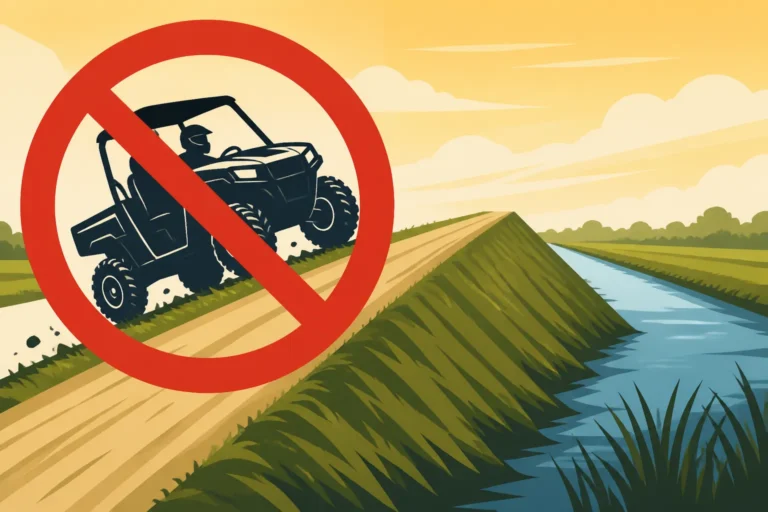
Let's get straight to it: those long, elevated paths that crisscross our state, protecting our homes and communities from rising waters, are generally off-limits for recreational ATV and UTV riding. It's a tough pill to swallow for many riders who see them as inviting open trails, but the reasons behind these prohibitions are absolutely critical.
Why Levees Are a No-Go for Recreational Riding
Our levees are more than just dirt mounds; they are vital pieces of infrastructure, painstakingly engineered and maintained to protect countless homes, farms, and businesses from flooding. When you ride on a levee, even if it feels harmless, you can cause damage. Ruts from tires can compromise the levee's integrity, leading to erosion or even structural weaknesses that might only become apparent during a major flood event. Imagine the catastrophic consequences if a levee failed because of cumulative damage from unauthorized recreational use. It's not just about the immediate impact; it's about the long-term stress and wear and tear that can build up.
Beyond the structural concerns, there are also practical issues. Levee districts and other managing authorities need clear, unimpeded access for inspections, maintenance, and emergency repairs. An ATV creating ruts, compacting soil in unintended ways, or simply being present can obstruct these vital activities. This is why the state is very clear: [Louisiana Levee Riding Is Prohibited]. It’s a blanket rule designed to protect everyone, not to spoil anyone’s fun. It's easy to get frustrated, seeing miles of open ground, but understanding their purpose helps frame why the rules are so strict.
Who Really Owns the Top of a Levee?
This is where it gets a little nuanced but ultimately still points to "no riding for fun." While a levee might run alongside private property, the levee itself, and often a substantial right-of-way on either side, is typically under the jurisdiction of a local levee district, a parish government, or even the state. These entities hold easements or outright ownership for flood control purposes. This means that even if you have permission to ride on the adjacent private land, that permission rarely extends to the levee itself.
The levee districts are governmental bodies tasked with maintaining these critical flood defenses, and their authority over the levees is paramount. They have specific rules and regulations governing access and use, and these rules are designed to ensure the levee's stability and functionality. Trying to determine ownership based on proximity to private land is a common misconception, but in almost all cases, the recreational rider does not have a right to be on the levee. The question of [Who Really Owns the Top of a Levee] is crucial because it clarifies why individual landowners often can't grant permission for levee riding.
Understanding Louisiana Levee District Permissions
So, if recreational riding is out, are there any circumstances under which a machine can be on a levee? Yes, but these are highly specific, rare, and almost always tied to official duties or special circumstances, not casual enjoyment.
The Official Process for Access
Gaining permission to operate an ATV or UTV on a levee is not a simple request for a fun ride. It's typically reserved for specific, authorized personnel performing duties directly related to levee maintenance, inspection, or emergency response. Think about the folks who monitor water levels during a flood threat, engineers assessing structural integrity, or crews making repairs. These are the individuals who might get official access, and even then, their activities are strictly controlled and often involve specific routes or designated times.
For the average recreational rider, this avenue is essentially closed. You cannot simply call up a levee district and ask for a permit to ride for the day or weekend. The process, if one exists for non-official use, would be incredibly stringent and likely involve a detailed justification, insurance, and a clear purpose that doesn't involve leisure. It's about protecting the infrastructure, not facilitating recreation. So, while [Getting Permission From a Levee District Board] is technically possible, it's not a path for recreational use.
Penalties for Levee Trespass
Ignoring the rules and riding on a levee can lead to some pretty significant headaches and financial burdens. Levee districts and local law enforcement take these violations very seriously because, as we discussed, the integrity of these structures is vital to public safety. You're not just breaking a minor rule; you're potentially jeopardizing flood control.
The consequences for levee trespass can include substantial fines, and your ATV or UTV could even be impounded. Imagine getting a ticket, having to pay a hefty fine, and then having to deal with impoundment fees to retrieve your machine – that can quickly turn a quick, forbidden ride into a very expensive regret. Law enforcement has the authority to issue citations, and the levee districts themselves may pursue legal action for damages if your riding is found to have compromised the levee. It's not worth the risk, especially when there are so many fantastic legal riding spots available. These [Louisiana Levee Trespass Penalties] are designed to deter unauthorized access and protect our communities.
Exceptions and Misconceptions
It's natural to wonder if there are any gray areas or if you're misunderstanding something. We all want to find a way to enjoy our machines, but when it comes to levees, the rules are pretty black and white.
Are There Any Situations Where It's Allowed?
Very, very limited exceptions might exist, but they are incredibly rare and specific, and they usually don't apply to recreational riding. For example, some agricultural operations might have specific, pre-approved access to cross or travel very short distances on certain levees to reach fields, but this is always under strict permit and is not for general travel or leisure. Emergency personnel responding to a crisis are another obvious exception. These are not "loopholes" for the general public, but rather essential access points for authorized work.
The misconception often arises when people see someone else on a levee – maybe a utility worker, a levee district employee, or even someone with special permission that isn't immediately obvious. It's easy to assume, "If they can do it, why can't I?" But without that official authorization, you're opening yourself up to legal trouble. It's critical not to assume that just because you see an ATV or UTV on a levee, it's legal for everyone. Many times, what you're seeing is an exception, not the rule.
Why the Rules Are So Strict
The strictness of levee riding rules boils down to a few core principles. First and foremost is flood control. Any activity that risks the structural integrity of a levee, no matter how small it seems, is a non-starter. Our state has seen too much devastation from flooding to take chances with these vital protections. Beyond that, there's the environmental impact. Uncontrolled riding can lead to erosion, damage delicate ecosystems, and disrupt local wildlife habitats that depend on these areas.
Safety is another huge factor. Levees can have steep slopes, unpredictable surfaces, and are not designed with recreational vehicle traffic in mind. There's also the issue of liability; if an unauthorized rider gets injured on a levee, who is responsible? Levee districts naturally want to avoid such situations. Moreover, allowing some recreational riding would create a "slippery slope" where it becomes incredibly difficult to enforce any limits, leading to widespread damage and safety hazards. Companies like SuperATV make incredible gear for off-road machines, from heavy-duty axles to aggressive tires, but these enhancements are for designated trails and responsible use, not for challenging critical infrastructure like levees. The rules are strict because the consequences of ignoring them can be catastrophic.
Where to Ride Legally in Louisiana
Instead of risking fines, impoundment, or worse, damaging critical infrastructure, let's talk about the incredible places you can ride legally and safely in Louisiana. Our state has a lot to offer the ATV and UTV enthusiast!
Exploring Designated Trails and Parks
Louisiana is home to a fantastic array of legal riding opportunities, from national forests to private mud parks, each offering a unique experience. If you're looking for natural beauty and miles of trails, places like the Kisatchie National Forest are a dream come true. You can find well-maintained trails like those in the Kisatchie Hills, which offer diverse terrain and stunning scenery. Always check the specific rules and permit requirements for these areas, as they can vary by season or section. You can learn more about these areas by looking into [Louisiana ATV Trails: Where to Ride] and [Kisatchie National Forest OHV Trails in Louisiana].
For those who love the mud and camaraderie of events, our state boasts incredible private parks. Places like [Muddy Bottoms ATV Park in Louisiana] offer thousands of acres specifically designed for off-road fun, complete with challenging mud holes, obstacle courses, and often amenities like camping and wash stations. These parks are purpose-built for ATVs and UTVs, providing a safe and legal environment where you can truly push your machine to its limits without fear of trespass or damage to critical infrastructure.
Respecting Private Property and Obtaining Permission
Another huge avenue for legal riding is private land – with the proper permission, of course! If you have friends or family with acreage, or if you're part of a hunting club that allows ATV/UTV use, this can open up vast opportunities. Always make sure you have explicit, written permission from the landowner. This protects both you and them and ensures you're not inadvertently trespassing. Many landowners are happy to allow responsible riders, but communication is key.
Riding in designated areas, whether public or private with permission, not only keeps you on the right side of the law but also provides a much better and safer experience. These areas are designed for off-road vehicles, often have emergency services readily available, and contribute to a vibrant and responsible riding community. You can focus on enjoying your machine, whether it's navigating challenging terrain with your SuperATV lift kit or cruising through scenic trails, rather than constantly worrying about getting caught or causing damage.
Here’s a quick comparison to help solidify the differences:
| Feature | Levee Riding (Unauthorized) | Designated ATV Trails/Parks (Legal) |
|---|---|---|
| Legality | Illegal / Highly Restricted (Trespass) | Fully Legal (with permits/fees) |
| Purpose | Flood Control & Maintenance | Recreational Riding, Mudding, Exploring |
| Access | Prohibited (except official duties) | Open to Public (often with fees/permits) |
| Risk to Rider | High (fines, impoundment, injury) | Managed (safety rules, emergency services) |
| Environmental | Damages critical infrastructure, erosion | Designed to minimize impact, managed |
| Experience | Stressful, constantly looking over shoulder | Relaxed, community-focused, purpose-built fun |
This article is for general informational purposes only and does not constitute professional advice. Laws, prices and regulations vary by location and change over time. Consult a qualified professional for guidance on your specific situation.