Louisiana Rules for Riding a Field Road
Navigating the myriad of rules and regulations for ATVs and UTVs in Louisiana can feel like trying to find your way through a cypress swamp after a heavy rain – confusing, mucky, and with hidden snags at every turn. Many folks just want to use their off-road machine to get from one part of their property to another, or perhaps access a hunting stand down a familiar dirt path, only to wonder if that seemingly innocuous "field road" is actually legal to traverse. This guide is here to untangle the complexities, offering clear, actionable advice on riding your ATV or UTV on Louisiana's field roads, helping you avoid accidental trespass or costly citations.
Understanding the Nature of "Field Roads" in Louisiana
Before you even think about putting your machine in gear, it’s absolutely crucial to understand what constitutes a "field road" from a legal standpoint in Louisiana. This isn't just about whether it's paved or unpaved; it's about ownership, purpose, and public access. The rules change dramatically depending on whether that dirt path is on private land, part of an agricultural operation, or, in very rare cases, a publicly designated access route. Misunderstanding this can lead to serious legal trouble, so let's break it down.
Private Agricultural Roads: The Heart of the Farm Exemption
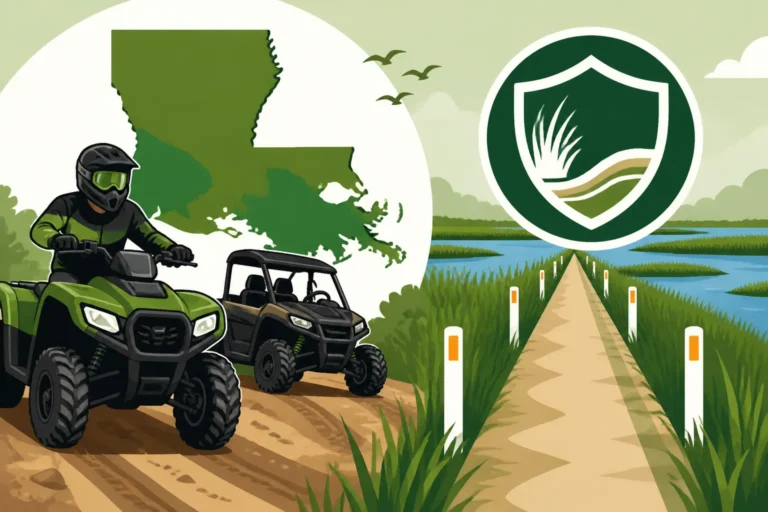
For many Louisiana residents, a "field road" immediately brings to mind the dirt paths winding through sugarcane, rice, or crawfish ponds. These are, almost without exception, located on private property and exist for the sole purpose of facilitating agricultural work. Whether it's moving equipment, checking on crops, or accessing irrigation pumps, these roads are integral to farm operations. The key takeaway here is private property. Your right to ride on these roads stems entirely from the property owner's permission. Without it, you are trespassing, plain and simple.
Even if you’re riding your own land, it’s important to understand the intent behind the agricultural exemption that Louisiana offers. While your machine might be used primarily for farm work, the exemption primarily applies to its use on public road shoulders within a limited radius, not necessarily to the internal roads of your farm itself. [Louisiana's Agricultural Registration Exemption] clarifies much of this. Think of these as private driveways for tractors and combines. They are not typically open to the general public, even if they look like an appealing shortcut.
Hunting Camp, Timber, and Lease Roads: Access by Permission
Beyond active farms, Louisiana is rich with hunting camps, vast timberlands, and properties leased for various recreational or commercial uses. The "field roads" you encounter here often serve a similar purpose to agricultural roads: providing access to specific areas of the property for hunting, logging, or other authorized activities. These roads might be well-maintained gravel paths, barely-there two-tracks through the woods, or simple dirt lanes leading to a camp.
Just like with private agricultural roads, the overarching rule is that these are private property. You absolutely must have explicit permission from the landowner or the entity that holds the lease (e.g., a hunting club, timber company) before riding on them. A locked gate on a timber road isn't just a suggestion; it's a legal barrier. Even if the gate is open, or if there's no visible gate at all, you are presumed to be trespassing without proper authorization. Many landowners now require written permission, not just a casual verbal okay. This is especially true if you are on a hunting lease; always review [What a Hunting Lease Says About Quad Use] to understand your rights and responsibilities.
Rare Public Access Paths and Easements
While most field roads are private, there are rare instances where a dirt path or "field road" might have some form of public access. This is usually due to a historical easement, a designated parish road that happens to be unpaved and looks like a field road, or specific agreements for public access. However, these are the exceptions, not the rule. If you encounter a road that looks like a field road but has public road signage or a clear designation, then the rules for [Louisiana Rules for Riding a Parish Road] would apply. Without such explicit signage or designation, always assume a field road is private, and seek permission. It’s far better to err on the side of caution than to find yourself explaining why you were on someone else's property to a local sheriff's deputy.
Louisiana's General Road Rules and Field Road Implications
Even when riding exclusively on private field roads, understanding Louisiana's broader ATV and UTV laws is essential. The line between private and public land can sometimes feel blurry, especially when you need to cross a public road to get to another section of your property or move between fields. These regulations impact everything from whether you need a decal to how you legally transport your machine.
The Agricultural Exemption and Its Limitations on Public Roads
Louisiana law does provide specific exemptions for ATVs and UTVs used for agricultural purposes, particularly regarding their operation on public road shoulders. The key here is the "farm exemption" which allows agricultural vehicles to operate on the shoulder of certain public roads within a [Louisiana's 5-Mile Farm Radius] of the owner's farm or land. This exemption is incredibly useful for farmers who need to move their equipment between fields separated by public roads.
However, it's vital to understand that this exemption is narrow. It generally applies only to the shoulder, not the travel lanes, and for farm-related activities. It does not grant general public road access, nor does it typically apply to riding on private field roads themselves. If your machine is used solely for farm tasks and stays within the bounds of private property, it may even fall under [Louisiana Farm-Only Machines Need No Decal]. But if it touches a public road shoulder, even briefly, the agricultural exemption comes into play. You need to be actively engaged in agricultural pursuits, and it's best to carry documentation, such as a [Louisiana Agricultural Affidavits for an ATV], proving the machine's primary use.
Crossing Public Roads: The "Incidental" Rule
It’s often unavoidable to cross a public road when moving from one field road to another, or from a private field road to a public shoulder under the farm exemption. Louisiana law does allow for incidental crossings of public roads by ATVs and UTVs. This means you can cross directly and safely from one side of a public road to the other, but you cannot travel down the public road itself, beyond the shoulder limitations of the agricultural exemption.
When making an incidental crossing, you must yield to all traffic, come to a complete stop, and proceed only when safe. Think of it like crossing a street on foot – you're a pedestrian, not another vehicle in the flow of traffic. These crossings should be quick, direct, and occur at a ninety-degree angle to the road if possible, minimizing your time in the roadway. This rule is particularly important for landowners whose property is bisected by a parish or state highway. For further guidance, look into [Louisiana Crossings of Public Roads].
Decals, Titles, and Registration for Field Machines
A common misconception is that if you only ride on private land or field roads, your ATV or UTV doesn't need to be titled or have a decal. This is often not the case. In Louisiana, most ATVs and UTVs require both a title and an ORV decal, regardless of where they are primarily ridden. The title establishes ownership, which is crucial for legal possession, buying, selling, and proving you own the machine if it's ever stolen. The decal, while often associated with public land use, is a state requirement for off-road vehicles.
Even if your machine never leaves your private property, you'll still need to go through the process of titling it through the OMV. For new machines, you’ll need the Manufacturer’s Statement of Origin (MSO). For used machines, an assigned title from the previous owner is necessary. While there are limited exceptions, such as [Louisiana Farm-Only Machines Need No Decal] for use in fields, the machine itself still requires a title. If you plan to haul your machine on a trailer down public roads to get to your private field roads, law enforcement may still request proof of ownership and a valid decal. It's much simpler to comply with [Louisiana ORV Decals and Titles Explained] from the start to avoid any headaches.
Practicalities and Precautions for Riding Louisiana Field Roads
Beyond the letter of the law, there are practical considerations and precautions every rider should take when navigating Louisiana's field roads. These aren't just about legality; they're about safety, property respect, and ensuring your machine is up to the task.
Securing and Respecting Permission: Your Golden Ticket
Let’s be blunt: if you are not riding on your own land, permission is paramount. This cannot be stressed enough. Never assume that an unposted or unfenced field road is fair game. In Louisiana, trespass laws are taken seriously. Whether it's verbal or, preferably, written, having clear permission from the landowner or leaseholder is your only legitimate right to be on that field road.
When seeking permission, be specific about where you plan to ride, what kind of machine you'll be on, and for what purpose. Landowners often have specific rules regarding times of day, certain sensitive areas (like planted fields), or even specific equipment. Always carry proof of your permission, especially if it's written. Respecting the property means staying on designated paths, closing gates, not disturbing crops or livestock, and leaving no trace behind. Ignoring these courtesies can lead to revoked access for everyone. [Getting Written Permission From a Louisiana Landowner] is more than just a formality; it's a testament to good stewardship.
Equipping Your Machine for the Terrain
Louisiana's field roads are diverse, from dry, dusty ruts in summer to mucky, standing water after a rain. Equipping your ATV or UTV appropriately isn't just about fun; it's about efficiency, safety, and preventing damage. For many agricultural roads, especially those that see heavy equipment traffic, deep ruts are common. Upgrading your machine’s ground clearance with a quality lift kit can make a huge difference. Companies like SuperATV offer a range of suspension components, from simple lift kits to full portals, which can help you clear obstacles that would otherwise leave you high-centered or dragging your undercarriage.
Furthermore, consider the tires. Deep mud in rice or crawfish fields demands aggressive treads. If you're hauling implements or supplies, your machine's suspension and hauling capacity need to be considered. Heavy-duty springs or even specialized cargo racks from manufacturers like SuperATV can ensure your machine can handle the workload without undue strain. Don't forget basic maintenance: frequently check tire pressure, ensure your brakes are in good working order, and keep your machine clean, especially if moving between different properties, to prevent the spread of invasive species.
Safety and Awareness on the Field Road
Riding on field roads often comes with a different set of hazards than recreational trails. You might encounter slow-moving farm equipment, logging trucks, livestock, or even irrigation ditches that are not immediately obvious. Always ride defensively, wear appropriate safety gear (helmet, eye protection, sturdy footwear), and be aware of your surroundings. Visibility can be an issue, especially around dense crops, tall timber, or blind turns. Consider adding extra lighting to your machine, particularly if you anticipate riding near dawn, dusk, or even after dark for farm tasks.
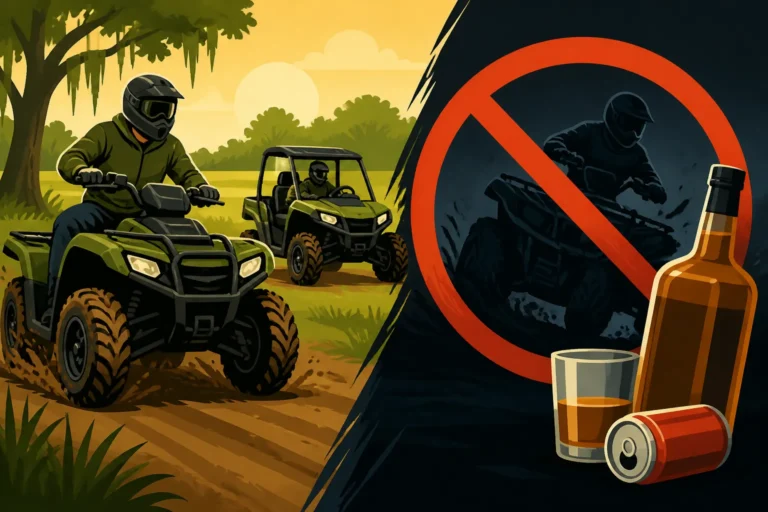
Furthermore, be mindful of environmental conditions. Louisiana heat and humidity can lead to heat exhaustion quickly, so stay hydrated. Snake season brings additional hazards, especially when accessing overgrown areas. Lastly, remember that while you might be on private land, you're not entirely exempt from all laws. [Louisiana DUI Law and Off-Road Machines] still applies, even if you’re only operating on a private field road. Operating any vehicle while impaired is a recipe for disaster, no matter the location.
Specific Field Road Scenarios in Louisiana
Louisiana's agricultural and rural landscape offers a variety of "field road" types, each with its own nuances and challenges. Understanding these specific contexts can further inform your riding practices.
Sugarcane and Rice Field Roads
Riding through sugarcane fields or along rice levees often means navigating soft, sometimes unstable, terrain. The levees between rice fields, while appearing solid, can be incredibly slick after rain or if saturated. Cane field roads are frequently used by heavy equipment like cane cutters and trucks, leaving deep ruts and compaction. The key here is adaptability and respect for the active agricultural environment.
- Sugarcane Roads: These roads are primarily for heavy farm machinery. They can be wide and flat or narrow with deep ruts. During harvest season, these roads are bustling with activity, and you must give way to all commercial and agricultural traffic. Dust can be a significant issue in dry periods, impacting visibility.
- Rice Levee Roads: These are often narrow, elevated paths designed to control water flow in rice paddies. Riding on them requires precision and caution, as slipping off can mean ending up in a water-filled field. They are not built for high speeds or aggressive maneuvers. [Louisiana Rules for Riding a Rice Levee] are specific because of the delicate nature of these structures.
Always be aware of the planting and harvesting cycles. Riding through a freshly planted field, even if you think you’re on a road, could damage crops. The same applies to active harvesting operations. Your presence could interfere with crucial work.
Timber and Logging Roads
Louisiana's piney woods are crisscrossed with timber roads, ranging from well-maintained gravel arteries to barely-used two-tracks. These roads are often part of private timber leases or owned by large forestry companies. While they can provide excellent access for hunting or recreation with permission, they are primarily functional roads for logging operations.
- Active Logging Areas: If you see signs of active logging – fresh tire tracks, cut trees, or machinery – avoid the area. Logging operations are incredibly dangerous, and your presence could put you or the workers at risk. [What a Locked Gate on a Timber Road Means] is a direct message: stay out.
- Road Conditions: Timber roads can be severely rutted by heavy logging trucks, especially after rain. They may also have sharp debris, like branches or even discarded metal from equipment. Be prepared for varying conditions, and consider heavy-duty tires from SuperATV designed for rugged terrain to minimize punctures.
Always remember that these roads are economic lifelines for the timber industry. Your recreational use is secondary to their commercial function.
Hunting Camp Roads
Hunting camps, whether private family camps or those belonging to larger clubs, often have their own network of internal roads. These "camp roads" are typically unpaved, winding paths designed to access various hunting stands, feeders, or remote parts of the property. They can be rough, overgrown, and minimally maintained.
- Shared Use: If you're part of a hunting club, be aware that these roads are shared. Other members will be using them for similar purposes, and you might encounter other ATVs, UTVs, or even trucks. Communicate your plans if possible, especially during peak hunting seasons.
- Environmental Impact: Camp roads can be particularly susceptible to erosion and mud. Stick to existing paths to prevent creating new, damaging ruts. If you're moving between different areas, be mindful of any changes in terrain. [Louisiana Rules for Riding a Camp Road] often boil down to respecting the shared environment and rules set by the camp or club.
Regardless of the type of field road, a consistent theme emerges: permission, respect for the land, and preparation. These elements are your best defense against both legal complications and unfortunate incidents while enjoying the unique riding opportunities that Louisiana's rural landscape offers.
| Type of Field Road | Typical Ownership | Public Access? | Key Rule for Riders | Common Hazards |
|---|---|---|---|---|
| Private Agricultural | Private Farm | No | Strict landowner permission required | Heavy farm equipment, deep ruts, irrigation ditches, soft ground |
| Hunting Camp/Lease | Private/Leased | No | Explicit permission from landowner/leaseholder | Logging trucks (if timber also present), hidden stumps, overgrown paths, shared use with hunters |
| Timber Roads | Private Timber Co. | No | Explicit permission from timber company | Active logging, heavy machinery, sharp debris, deep ruts, erosion |
| Public Easement/Parish | Public (rare) | Yes | Follow general [Louisiana Rules for Riding a Parish Road] | Standard road hazards, traffic, dust/mud |
Disclaimer
This article is for general informational purposes only and does not constitute professional advice. Laws, prices and regulations vary by location and change over time. Consult a qualified professional for guidance on your specific situation.