The Sprinkler Park Kids Use Between Rides
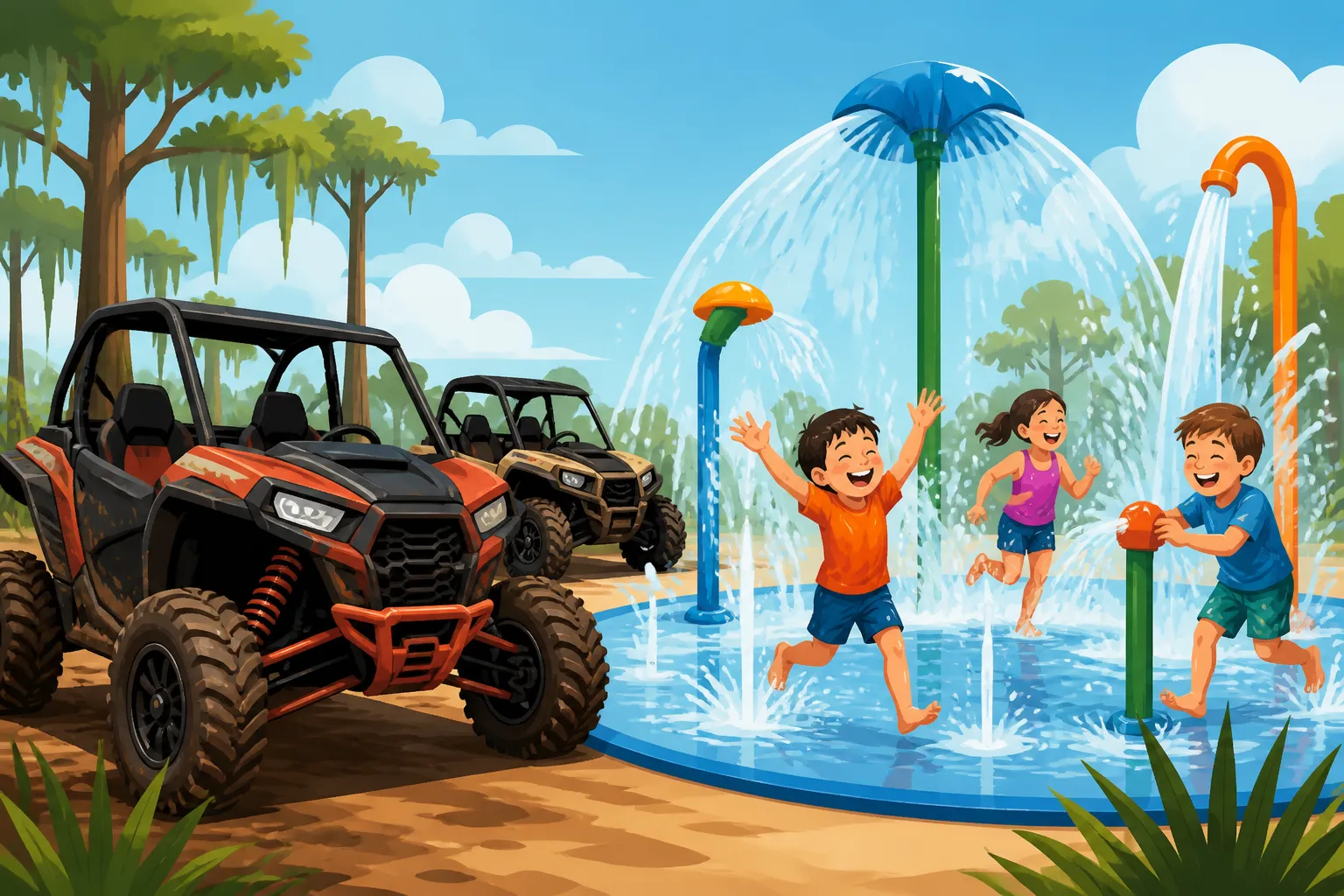
A riding weekend is harder when children run out of things to do, especially while adults are cleaning machines, taking a break, or waiting for the next ride. The sprinkler park at Muddy Bottoms can give kids a welcome change of pace between rides. Here’s how to plan around it, keep the day comfortable, and avoid treating an amenity as a substitute for supervision.
How to Fit the Sprinkler Park Into a Riding Day
Treat it as a planned break, not an all-day childcare option
A sprinkler park can be a fun way for kids to cool off between rides, but it works best as one part of a family day rather than the entire plan. Children may want to use it after a dusty ride, while adults take a breather or handle basic machine checks. A little coordination helps everyone enjoy the stop instead of having one person juggle wet kids, gear, and vehicles at once.
Before heading out, decide who will supervise the children and where the group will meet afterward. For example, one adult might stay with the kids while another checks the machine or gathers towels and dry clothes. Agree on a simple meeting point that children can recognize, and remind them not to wander back toward parked machines or riding areas on their own.
The sprinkler park is an amenity, not a reason to assume children will be watched by staff. Keep a responsible adult close enough to see and hear them, and follow any posted age, supervision, or use rules. If the area is busy, set expectations before kids start playing: stay within the designated area, take turns, and come back when called.
Check the event details before you count on it
A family can plan a whole afternoon around a water break and still be caught off guard if an amenity is closed, unavailable, or operating differently during a particular visit. Muddy Bottoms is associated with event weekends, so check the park’s event information and any instructions provided for the date you plan to attend. The Muddy Bottoms’ Event Calendar in Louisiana can help you start planning around the right weekend.
Confirm what the event information says about the sprinkler park, access, and any relevant rules. If details aren’t clear, contact the park before loading the trailer. That small check can save a frustrating conversation at the gate, especially when kids are already expecting a water-play break.
It is also worth checking the broader amenity information, not just the event listing. The Muddy Bottoms’ Bathhouse, Pro Shop and Amenities page is a useful place to look for practical details about facilities. Don’t assume the sprinkler area has changing rooms, lockers, towels, shade, or other conveniences unless the park confirms them. Pack for the simple version: bring what your family needs to dry off and get comfortable again.
Build a rhythm that works for kids and riders
Children often do better when the day has a predictable rhythm. Instead of promising, “We’ll go to the sprinkler park whenever,” try setting a rough sequence: ride, drink water, check the machines, take a water-play break, then get dry and eat. You don’t need a strict timetable, but a clear plan helps kids understand that the sprinkler park is one stop within a full day.
Be flexible if a child is tired, overheated, or simply done riding. A short break may be more useful than pushing through to the next activity. On the other hand, if the sprinkler area is crowded or your group needs to move machines, tell children what is happening and when you expect to return. Clear expectations tend to reduce the familiar “just five more minutes” negotiation.
If you are travelling with several families, agree on supervision before you arrive. “The adults are all here” is not the same as knowing who is watching which child. A quick handoff—“I’m taking the kids to the water area; you’re checking the trailer”—keeps responsibilities clear.
What to Pack for a Sprinkler Park Break
Bring dry clothes and a way to keep wet items separate
Wet clothes can make the rest of a hot, dusty day uncomfortable, particularly if children have to sit in a vehicle or change back into riding gear. Pack a complete change of clothes for each child, including underwear and socks, and keep those items in a bag that stays dry. A separate bag for wet swimwear or towels makes cleanup easier when it is time to head home.
Towels are an obvious item, but a small family can go through them quickly if children take more than one turn. If you are packing for several kids, label towels or choose distinct colors so they are easy to tell apart. A plastic bag or washable wet bag is handy for damp items; keep it away from clean clothes, food, and any paperwork you need later.
Footwear matters, too. Pack shoes or sandals appropriate for the designated water-play area, and bring dry footwear for walking around the event grounds afterward. Don’t assume children can safely move between play areas and riding spaces in bare feet. Follow posted rules and use the footwear the park requires.
Plan for heat, hydration, and sun exposure
Water play can feel refreshing, but it does not replace regular drinking water or shade breaks. Children may be so focused on playing that they forget to drink, especially after riding in warm weather. Offer water before and after the sprinkler break, and encourage small, regular drinks throughout the day. Hydration at a Mud Event is a helpful companion when you’re planning for a long day outdoors.
Pack sun protection even if the play area seems likely to get kids wet. Reapply sunscreen as directed on the product label, and look for opportunities to rest in shade. A water break can cool kids down temporarily, but it is not a substitute for recognizing signs of heat illness. If a child seems unusually weak, dizzy, confused, nauseated, or unwell, stop the activity and seek appropriate help rather than encouraging them to keep playing.
For a broader warm-weather checklist, see Packing for Humid Heat. Think beyond the children, too: adults handling machines, riding, or supervising can also get overheated. Plan breaks for the whole group, and avoid letting a fun activity distract you from how everyone is feeling.
Keep riding equipment away from wet play items
Wet towels and muddy riding equipment don’t mix well in a crowded vehicle or trailer. Store children’s dry clothes and personal items separately from helmets, gloves, muddy boots, and anything that may be damp or dirty. If you can, keep a small bag of clean essentials easy to reach so you aren’t unloading the trailer to find a dry shirt.
Before children return to riding, make sure they are dry and comfortable in the clothing and protective equipment appropriate for the next activity. A wet swimsuit under riding clothes can become irritating, and damp hands can make gloves uncomfortable. Don’t let the excitement of getting back out on the trails rush a helmet or gear check.
A simple packing table can help prevent the mid-day scramble:
| Item | Why it helps | Packing tip |
|---|---|---|
| Towel for each child | Makes it easier to dry off without sharing | Label towels or choose different colors |
| Complete dry outfit | Keeps children comfortable after water play | Store it in a sealed dry bag |
| Separate wet-item bag | Keeps damp clothes away from clean gear | Use a washable or waterproof bag |
| Drinking water | Supports regular hydration during the day | Keep it accessible to adults and children |
| Sun protection | Helps manage exposure during outdoor breaks | Reapply according to the product directions |
| Dry footwear | Makes it easier to move around after playing | Keep it separate from muddy riding boots |
Safety and Supervision Between Rides
Set clear boundaries before children start playing
Before kids enter the sprinkler area, point out where they can play and where they must not go. Event grounds can include parked machines, trailers, vehicle traffic, and active riding areas. Children should understand that the play area is not a shortcut between campsites or a place to approach moving vehicles.
Use a simple rule they can repeat: stay in the designated area and ask an adult before leaving it. If a child is old enough to be given a meeting point, make sure they know exactly where it is and which adult is responsible for them. For younger children, keep them within close supervision instead of relying on a location rule alone.
If the area is crowded, choose a visible place for your family’s belongings and take turns supervising. Don’t assume that a nearby adult is watching your child just because they are also with a group. A clear handoff between adults is especially useful when one person needs to visit the bathhouse, check a machine, or take another child back to the campsite.
Make the transition back to riding deliberate
The move from water play to riding deserves a small reset. Dry off, change out of wet clothing as needed, drink water, and check that children have the right protective gear before heading back. Make sure they know whether they are riding, riding as a passenger where permitted, or staying with an adult. The answer should be clear before anyone approaches a machine.
Adults should also take a moment to look over the area and their equipment. After a break, it is easy to leave a helmet behind, misplace a key, or forget where a child’s gloves were put. A quick check of people, gear, and the planned route is much easier than discovering something is missing once the group is ready to move.
If your family is exploring trails or riding areas beyond the event grounds, plan navigation separately from the sprinkler-park visit. A tool such as onX Offroad may help with route planning and orientation, but it should not replace park directions, posted signs, or permission requirements. Use the park’s own information to understand where riding is allowed, and don’t assume an app shows every event-specific boundary.
Keep the activity comfortable for different ages
A water-play break may be a highlight for younger children, while older kids may prefer to rest, eat, or help with simple tasks. Let children have some choice, but keep the boundaries firm: supervision, designated areas, and riding rules still apply. If one child wants to play and another wants a quieter break, an adult may need to split the group or help them choose a shared plan.
For families staying overnight, think about how the break fits with the rest of the weekend. The Muddy Bottoms’ Cabins in Louisiana and Muddy Bottoms’ RV Sites in Louisiana can help you consider accommodation options, but confirm availability and rules directly for your event. Having a place to return to can make it easier to dry clothes, rest, and reset between activities.
Before leaving home, consider mapping the drive and any planned stops. onX Offroad can be part of your broader navigation preparation, especially when you are coordinating a trip with multiple vehicles. Keep the park’s event details and directions handy as well; don’t rely on a third-party map as the final authority for access, closures, or where to unload.
Planning a Smoother Family Visit to Muddy Bottoms
Confirm the practical details as a group
A short planning conversation can prevent a lot of friction on arrival. Decide who is bringing towels and dry clothes, who will supervise the children during water play, and where the family will regroup. If you are riding with another household, confirm whether everyone understands the same plan. Don’t leave key responsibilities to guesswork once the kids are eager to jump in.
Check the event information for the date you’re attending, then review any posted park rules when you arrive. Ask staff if you have a question about the sprinkler park, access, supervision, or the route between activities. Conditions and event arrangements can vary, so the safest approach is to confirm rather than assume.
Also plan for the parts of the day that aren’t riding or playing: meals, bathroom breaks, changing, charging phones, and keeping belongings together. The Muddy Bottoms’ 5,000 Acres in Louisiana can give context for the park setting, while Riding Etiquette at a Mud Event can help your group think through considerate behavior around other visitors. onX Offroad may help with your drive planning, but use official park information for event-specific instructions.
Keep expectations realistic
The sprinkler park can be a welcome family amenity, but it won’t solve every challenge of taking children to a riding event. Kids may get tired, the area may be busy, or the timing may not suit your group. It helps to have a backup plan such as a meal break, a quiet rest, or time at your campsite rather than promising that water play will be available whenever a child asks.
Be especially mindful of the transition from excitement to fatigue. A child who has been riding, playing in water, and spending hours outdoors may need food and rest more than another activity. Watch for changes in mood and energy, and be willing to adjust the day. A shorter ride or an early return to camp can be a better memory than pushing everyone past their limits.
Finally, make the break enjoyable without losing sight of why your family came. The best days usually leave room for both riding and downtime. If the kids get to play, the adults get a chance to reset, and everyone returns to the next activity safely and comfortably, the sprinkler park has done its job.
Disclaimer
This article is for general informational purposes only and does not constitute professional advice. Laws, prices and regulations vary by location and change over time. Consult a qualified professional for guidance on your specific situation.