Muddy Bottoms’ 5,000 Acres in Louisiana
Muddy Bottoms is often described as a 5,000-acre Louisiana mud park, but a large acreage figure does not tell you exactly where you can ride, what is open during your visit, or what kind of terrain to expect. This guide explains how to think about the park’s scale, plan around event access and conditions, and arrive prepared without assuming every acre is a trail.
What 5,000 Acres Means for a Riding Day
Park acreage is not the same as open riding area
A figure of 5,000 acres gives you a sense of scale: Muddy Bottoms is a large private riding destination, not a small loop where you can see the whole property from the entrance. But total property size and the amount of terrain available to riders at a particular moment are different things. Some areas may be set aside for parking, camping, event activity, facilities, or other uses. Trails and riding zones may also be opened, closed, or managed differently depending on the event and conditions.
That distinction matters when you are planning a visit. A rider might hear “5,000 acres” and picture a full weekend of unrestricted wandering. In practice, the experience depends on the park’s rules and what is open when you arrive. Treat the acreage as a sign of the park’s overall scale—not a promise that every acre is rideable, connected by trails, or available during every visit.
If you are comparing destinations, look beyond the acreage headline. Check what kind of machines are allowed, whether the park is operating on your planned dates, and what the event or entry information says about riding access. For a broader look at how private parks differ, see [Louisiana Private Mud Parks Compared].
Expect a big property to have different kinds of terrain
A large riding property may include a mix of conditions rather than one uniform landscape. A route might take you from firmer ground to wet, rutted sections, wooded areas, open spaces, or deeper mud. Even if you have ridden in Louisiana before, the feel of a private park can change from one section to another—and from one weekend to the next.
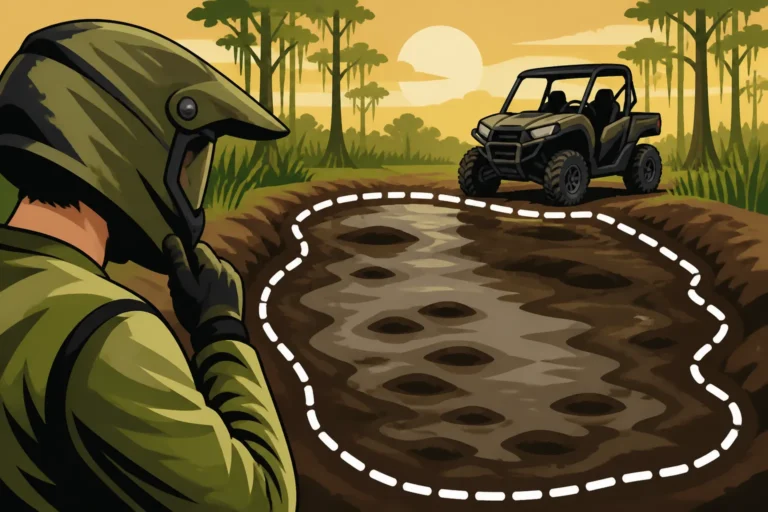
That variety is part of the appeal for many riders, but it also makes conservative decisions important. A deep-looking hole may hide a sharp change in depth, a soft edge, or a rut that pulls a machine sideways. A trail that looks manageable from the entrance may be a poor choice for a smaller machine, a new rider, or a group without recovery gear. Ride within your experience, keep a safe distance from the machine ahead, and avoid entering terrain you cannot assess.
Think of the property as a place to choose your ride thoughtfully, not as a challenge to cover as much ground as possible. If you are riding with a mixed group, agree ahead of time on how the group will handle difficult sections. A confident rider on a well-equipped machine may be comfortable taking a line that is not suitable for a novice or a youth rider. Staying together and turning around are both sensible options.
Planning Around Access and Events
Confirm the operating date before you tow
A large private park is not necessarily open for casual riding every day. Muddy Bottoms is associated with event-based access, so the first planning task is confirming that the park is open on the date you want to visit and understanding what access is included for that event. A road trip to the entrance is a frustrating way to discover that your chosen weekend does not match the park’s schedule.
Check the park’s own information before loading up. Confirm the event dates, arrival instructions, current rules, and whether your plans require advance arrangements. Details can differ between events, so do not assume that information from a previous visit applies to the next one. For help thinking through the schedule, see [Muddy Bottoms' Event Calendar in Louisiana] and [Why Muddy Bottoms Opens Only on Event Weekends].
It is also worth checking whether your group’s goals fit the event. Some people want a long day of riding; others are planning a weekend with camping, friends, or activities away from the trails. If you are bringing children, a large group, or a first-time rider, make sure the event setup and facilities suit the people coming—not just the machines.
Build flexibility into your itinerary
When a destination has scheduled events, your plan needs a little more flexibility than a simple “show up and ride” day. Decide what you will do if the terrain is wetter than expected, a particular area is closed, or your group needs to take a break. A backup plan might be a shorter ride, time at camp, or a return to the park another day rather than pushing into conditions that do not feel safe.
The schedule can affect practical details too. If your group is towing several machines, coordinate arrival and unloading before you leave home. Make sure everyone knows where to meet if you get separated, and keep the park’s instructions handy. For groups coming from different parts of Louisiana, agree on a meeting point before the drive so that one late vehicle does not leave the rest of the group guessing.
If you are considering an overnight visit, check the current event information for lodging and camping options instead of relying on assumptions. Availability and rules may vary by event. The same goes for amenities: confirm what is open, what you need to bring, and whether any part of your plans requires a reservation. [Louisiana Riding Near Sarepta] can also help put the destination in context when you are organizing a trip around the area.
Match Your Machine and Riding Group to the Terrain
Choose a route that fits the least experienced rider
A big property can tempt riders to split up and explore, but it is easier to manage a group when everyone has a realistic idea of what they are comfortable riding. Before heading out, talk through machine size, experience, and any limits within the group. A rider who is new to mud should not feel pressured to follow a more experienced friend into a section they would rather avoid.
For families, set a simple turnaround rule: if a rider is uncomfortable, the group turns back or finds another route. This removes the pressure to “keep up” and makes it easier for children and newer riders to speak up. Keep youth riders within the supervision and equipment expectations that apply to the park and their machines. A large park is no substitute for close supervision.
If your group does separate, agree on a meeting place and a check-in plan first. Do not rely only on phone service in wooded or remote areas. A familiar landmark, a written park map if available, or clear directions from staff can help everyone regroup. A mapping app such as onX Offroad may be useful for general trip planning, but do not treat a third-party map as proof that a route is open or authorized within a private park. Follow Muddy Bottoms’ current directions and on-site rules.
Prepare for mud before you reach it
Mud riding can put extra strain on a machine. Water and muck can reach places that stay clean during ordinary riding, and repeated hard use can make recovery difficult if a machine gets stuck. Before the trip, check your machine’s condition, including tires, brakes, lights, cooling system, and any recovery equipment you rely on. If you are not sure how your machine handles deep mud, start with easier terrain and build up gradually.
Carry gear that suits your machine and your group. Depending on the conditions and park rules, that may include a winch or other recovery equipment, tow strap, basic tools, drinking water, and a way to communicate with the rest of the group. Do not assume a machine nearby can safely pull yours out; recovery needs to be planned with care, especially when machines are close together or the ground is unstable.
A little restraint can prevent an expensive day. Avoid charging into a hole because someone else made it through. The other rider may have a different setup, more experience, or a better view of the exit. If you cannot judge the depth or the route out, wait, walk the area if it is safe to do so, or choose another line. For more trip-prep detail, see [Trailering to a Mud Park] and [Louisiana Trail Conditions After Rain].
Choose a Visit That Matches the Conditions
Rain can change the experience quickly
Louisiana weather can shift the character of a riding area. A route that was firm earlier may become slick or deeply rutted after rain; a low spot that looked manageable can hold water longer than expected. Park conditions can also vary across the property, so a rainy forecast does not necessarily describe every section equally.
Before leaving, check for park updates and pay attention to any event-specific notices. When you arrive, ask staff what conditions are like and whether any sections are closed or discouraged. This is more useful than relying on a post from an earlier weekend or a map that does not show current trail conditions. If you use onX Offroad or another navigation tool to plan your route to the area, keep it in its proper role: it can support general navigation, but park staff and posted instructions determine where riding is permitted.
Use the conditions to make a real decision about your group. If heavy rain has made the terrain too demanding for your machine or the least experienced rider, adjust your plan. Choose a milder section, shorten the ride, or sit out the most difficult areas. It is better to come home wishing you had ridden longer than to spend the afternoon dealing with a stuck machine, a damaged component, or an avoidable injury.
Read the surface, not just the sign at the entrance
Even on the same visit, ground conditions can vary from one part of a property to another. A well-used line may have deep ruts while an adjacent section is firmer. Water can hide holes or make an edge look more stable than it is. Watch the riders ahead, but remember that their machines and choices may not be a reliable guide for yours.
Leave room between machines, especially when visibility is limited or the route narrows. If the rider in front stops, you want enough space to stop without sliding into them. When a section looks uncertain, pause before entering and decide as a group whether it is appropriate. Do not let event excitement or a line of waiting riders rush you into a choice you would not make on a quieter day.
Conditions also affect how you care for the machine afterward. Mud packed around moving parts or left to dry can make cleaning and inspection more difficult. Plan time to wash the machine after riding, and check it once it is clean enough to see what needs attention. For more on what to expect after a wet outing, see [Washing a Machine After a Mud Weekend].
Make the Visit Easier From the Driveway to the Trail
Prepare the trailer and arrival plan
A smooth park visit starts before you reach the gate. Check your trailer’s tires, lights, tie-downs, and hitch connection, then load machines so they are secure and easy to unload. Bring any paperwork or confirmation needed for your plans, and make sure everyone knows the address and arrival instructions. If your group is traveling in several vehicles, share the plan in advance rather than trying to coordinate it through spotty service on the road.
Think through where your tow vehicle and trailer will go once you arrive. A busy event weekend can mean more traffic and more activity around staging areas. Follow staff directions, keep access lanes clear, and do not unload in a spot that blocks other visitors. If someone in your group is new to towing or unloading, give them time and space rather than rushing because other vehicles are waiting.
A physical map or written directions can be a useful backup even if you use a phone. onX Offroad can help with trip planning and general navigation, but do not assume it contains the park’s current internal riding routes. Save the event details before traveling, and use signage and staff guidance once you are on site.
Know the rules before the wheels turn
Private park rules are part of the riding plan, not fine print to skim after unloading. Review expectations for machine types, passengers, helmets, age limits, alcohol, pets, camping, and any restricted areas that apply to your visit. Requirements may differ from public-land rules and from the laws that apply on public roads. A machine that is appropriate for private riding does not automatically become legal for road use outside the property.
Make sure every rider understands the basic boundaries: where riding is allowed, where speed should be reduced, how to behave around pedestrians and campsites, and what to do if there is an incident. Be considerate around other visitors. A large property still has shared spaces, and riders who drive aggressively through crowded areas can create risk for people who are walking, unloading, or relaxing at camp.
For park-specific expectations, read [Louisiana Private Park Waivers and Rules]. If you are unsure about a rule, ask before riding rather than trying to interpret it once you are already in a restricted area. A few minutes spent confirming expectations can prevent a disagreement, a disrupted visit, or a ride that ends earlier than planned.
A Practical Planning Checklist
Use this table as a starting point for organizing a trip. Confirm event-specific details directly with the park, since access, rules, and conditions can change.
| Planning question | What to check | Why it matters |
|---|---|---|
| Is the park open on your dates? | Event schedule and current park updates | Access may be tied to scheduled events |
| What areas can you ride? | On-site directions, posted notices, and staff guidance | Total acreage does not mean every acre is open |
| Is the terrain suitable for your group? | Recent conditions and rider experience | Wet or rutted ground can challenge some machines and riders |
| What should you bring? | Park rules, recovery gear, water, tools, and protective equipment | Good preparation reduces avoidable problems |
| Where will you stay or stage? | Current event details and any reservation requirements | Options and availability can vary |
| How will the group stay together? | Meeting point, check-in plan, and backup directions | Phone service may not be reliable everywhere |
| What rules apply? | Waivers, age and passenger rules, and restricted areas | Private park rules are not the same as public-road rules |
Plan for the trip you actually want
It is easy to focus on the ride and forget the rest of the day. If you want a relaxed outing, build in breaks and do not make the most difficult terrain the only reason for going. If you are planning a group weekend, discuss expectations in advance: some riders may want to explore, while others may prefer easier routes and more time off the machine.
Keep your schedule realistic. Loading, unloading, check-in, changing conditions, and regrouping all take time. A plan that assumes every minute will be spent riding can leave everyone tired and frustrated. Give yourself room to adjust without feeling that the day has failed if you ride less than expected.
For trip planning, tools such as onX Offroad may help you orient yourself on the way to the region or organize a broader route. Use a reliable, current source for the park’s operating information and internal riding instructions. A digital map is helpful, but it does not replace permission, posted directions, or a conversation with park staff.
Leave room for a safe finish
The end of the ride deserves as much attention as the start. Stop before fatigue makes decisions sloppy, keep track of everyone in the group, and check machines before loading. Look for visible damage, loose straps, or problems that could make the drive home unsafe. If a rider is overheated, shaken, or exhausted, take a break rather than treating the last miles as something to push through.
After the visit, clean and inspect the machine when practical. Mud can conceal damage, and a quick look after washing may reveal a loose part, a damaged tire, or a problem that needs attention before the next outing. Make a note of what worked and what you would bring next time—especially if this was your first visit to a large Louisiana mud park.
The main advantage of a property described as 5,000 acres is the sense of scale and variety it can offer. Getting the most from that space means confirming access, following current park directions, choosing terrain that fits your group, and staying flexible when conditions change. That approach makes the trip more enjoyable whether you ride for a few hours or plan a full event weekend.
Disclaimer
This article is for general informational purposes only and does not constitute professional advice. Laws, prices and regulations vary by location and change over time. Consult a qualified professional for guidance on your specific situation.