Louisiana Riding in Fall
Fall can be one of the most comfortable seasons for riding in Louisiana, but cooler air does not guarantee open trails or dry ground. Hunting activity, recent rain, changing daylight, and site-specific rules can all affect a ride. This guide explains how to choose an area, check access, prepare your machine, and plan a safer autumn day on the trail.
Why fall riding in Louisiana takes a little planning
Cooler weather helps, but conditions still change
After a long Louisiana summer, fall can make a day outdoors feel much more manageable. You may be less exposed to intense heat than during midsummer, especially on shaded forest roads. Still, temperatures can swing, and humidity, sun exposure, and exertion remain part of the day. Pack water and clothing you can adjust rather than assuming the season alone will keep you comfortable.
Rain can complicate plans even when the forecast looks pleasant. A trail may be firm at the parking area but soft or rutted farther in, and low spots can hold water after a storm. In the piney woods, leaves and pine needles can make roots and uneven ground harder to spot. Check the forecast for the riding area itself, not only the town where you are staying, and be ready to change your route if conditions are poor.
Before heading out, review Louisiana ATV Trails: Where to Ride for a starting point, then confirm that your specific destination allows the machine you plan to bring. A place that permits one kind of off-road vehicle may have restrictions on another, and trail availability can change with weather, maintenance, hunting activity, or management decisions.
Daylight gets shorter, so give your ride a firm endpoint
A route that feels easy to finish in summer can become a poor choice when daylight fades earlier. Build your plan around the time you need to return to the trailer, not the time you hope to be done riding. If you are meeting friends, agree in advance on a turnaround time so the group does not keep adding “one more loop” late in the afternoon.
Take a working flashlight or headlamp even if you expect to be back well before dusk. A delayed group, a minor repair, or a wrong turn can eat up time quickly. Check your machine’s lights before leaving home, too. A phone flashlight is not a reliable substitute if you need both hands free or the battery is running low.
A paper map is useful backup in areas where cell service is weak. A mapping app such as onX Offroad can help you review routes and keep track of your position, but treat any digital map as a planning aid rather than permission to ride. Confirm access rules with the trail manager, posted signs, and current site information before unloading.
Choosing a fall riding area
Match the destination to your machine and your group
Louisiana offers different kinds of riding experiences, from managed off-road areas to forest trails and private parks. The right choice depends on your machine, experience, group size, and preferred terrain. A beginner who wants a relaxed ride may be happier on an established route than in deep mud or on a narrow, technical trail. A side-by-side group should confirm width, vehicle-type, and route restrictions before making the drive.
The Kisatchie National Forest area is one place riders may investigate, but do not assume every road or trail is open to motorized riding. Forest access rules can vary by route and season. Review Louisiana Forest Trail Status Pages and local notices before setting out, and stay on routes specifically open to your vehicle. A road that appears on a general map is not automatically an authorized OHV route.
Private parks can be a practical option when you want a defined riding area and posted facility rules. Their schedules, admission policies, camping arrangements, and machine requirements are set by each operator. Check the park’s own calendar and rules before towing; some places operate around specific events rather than regular daily access. For a wider comparison of options, see Louisiana Private Mud Parks Compared.
Use maps to plan, then verify the rules on the ground
Before the ride, identify your trailhead, parking or staging area, fuel stop, and a reasonable route back. Save or download the information you need while you have service. onX Offroad can be handy for reviewing mapped routes and keeping a location reference, especially when a group is spread out. It should not replace posted signs or official land-manager guidance.
At the trailhead, read the signs before unloading. Note any route colors, machine limits, closure notices, permit instructions, and instructions about parking or unloading. If the sign conflicts with an old map or a saved route, follow the current posted direction and ask the site manager when possible. Do not ride around a gate, barrier, or closure marker simply because a track appears on your device.
| Planning question | What to check before leaving |
|---|---|
| Is the area open? | Current trail or park status, closure notices, and operating schedule |
| Is my machine allowed? | Vehicle type, size or weight limits, and any trail-specific restrictions |
| Is a permit needed? | Site-specific passes, permits, or check-in steps |
| What are conditions like? | Recent rain, flooding, maintenance updates, and surface conditions |
| How long should we ride? | Route length, group experience, daylight, and time needed to return |
| Is there backup access? | Alternate route or destination if the first choice is closed |
For a broader look at seasonal access, read Louisiana Trail Closures and Seasons and [Checking a Trail Status Page First]. These checks are particularly useful in fall, when a trail can be affected by both weather and seasonal land use.
Prepare for weather, mud, and hunting activity
Check recent rain and adjust your route
A fall ride can be dry and comfortable one weekend, then muddy and difficult the next. Look for recent rainfall and area-specific condition updates before towing. If you cannot find reliable information, call the park or land manager rather than assuming the trail is passable. A heavy machine can damage soft ground, and a seemingly shallow puddle can conceal ruts, roots, or a sudden drop.
Use a conservative approach when you encounter standing water. If you cannot judge its depth or see the ground beneath it, do not charge in to find out. Walk the edge only where it is safe and permitted, or choose another route. Avoid creating new paths around muddy sections: that can widen damage, disturb vegetation, and take you into an area that is not open to riding.
After a wet ride, clean the machine and check places where mud and water collect. Pay attention to the radiator area, air intake, brakes, bearings, and electrical connections, following the owner’s manual for maintenance. The related guide Louisiana Trail Conditions After Rain can help you think through whether a wet-weather outing is sensible.
Treat hunting season as a separate access and safety issue
Fall overlaps with hunting activity in many parts of Louisiana. That does not mean every trail is closed, but it does mean riders should verify access and be especially visible. Public lands, wildlife management areas, private hunting leases, and forest roads may each have different rules. Never assume a route is open just because you rode it earlier in the year.
Check the specific land manager’s notices and any posted signs, and avoid riding beyond marked routes. If an area is open to both riders and hunters, keep noise and speed under control near camps or access points, and give other land users plenty of room. Wear high-visibility clothing where appropriate, and do not ride through an active hunting setup or cross private property without permission.
Rules for wildlife management areas can be different from rules for a private park or national forest. Before riding public land, review [Louisiana WMA Riding Rules for Quads] and the relevant permit requirements. If access is unclear, choose a destination with straightforward, confirmed riding permission rather than trying to interpret an uncertain boundary from a phone map.
Make the day safer and more enjoyable
Set group expectations before anyone starts the engine
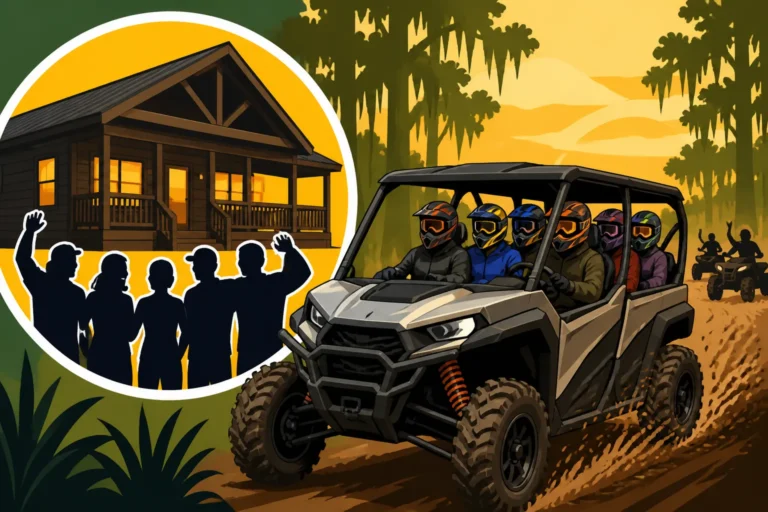
A group ride goes more smoothly when everyone knows the plan. Share the destination, route difficulty, turnaround time, and meeting point before leaving the staging area. Agree on a regrouping procedure at trail junctions. If one rider stops, the person behind should stop too, so a small delay does not turn into a search for someone who kept going.
Keep the pace appropriate for the least experienced rider. Give extra space in dusty or muddy conditions, and slow down where visibility is limited. On narrow routes, avoid sudden stops around blind turns. Let faster riders pass only where it is safe and allowed. A little patience prevents the familiar fall-ride problem of one person pushing ahead while another is still managing a difficult section.
For a group that includes new riders, children, or passengers, check both the destination’s rules and the machine’s capacity. Do not assume that a passenger is allowed simply because a machine has an extra seat. Review [Louisiana Trail Etiquette Locals Expect] and any park-specific passenger or age requirements before the trip.
Pack for a longer day than you expect
Even a short outing can stretch when a group gets delayed, a machine needs attention, or a trail is harder than expected. Bring water, basic first-aid supplies, a charged phone, a battery bank, and tools suitable for your machine. Pack snacks and a light layer for cooler hours. If you ride in a remote area, make sure someone who is not on the ride knows where you are going and when you expect to return.
Before departing, walk around the machine and check tires, brakes, controls, lights, fuel, and any accessories you plan to use. Secure loose cargo so it cannot shift on rough ground. Carry registration or other documents if the destination requires them, and keep permits or passes accessible for inspection. Leave enough time to load, fuel, and reach the trailhead without rushing.
You can use onX Offroad to help organize a route and share a location reference with your group, but save important details before entering an area with limited service. Pair the app with a backup plan: a paper map, an agreed meeting point, and a clear way to turn around. For more seasonal planning ideas, see [Louisiana Riding Season Month by Month].
A little preparation makes fall riding more relaxed: confirm access, check the weather and trail status, plan around daylight, and choose a route that suits everyone in the group. When conditions or rules are uncertain, changing destinations is better than risking a closed trail, damaged machine, or a long walk back to the trailer.
Disclaimer
This article is for general informational purposes only and does not constitute professional advice. Laws, prices and regulations vary by location and change over time. Consult a qualified professional for guidance on your specific situation.