The Statute Allows the Shoulder and Nothing More
It’s a common scenario across Louisiana: you just bought a new ATV or UTV, or maybe you’re a seasoned rider, and you’re wondering if you can legally drive your machine down the road to a friend’s house, to the corner store, or even just to connect two trails. The confusion is real, and the laws aren't always crystal clear, leading many to risk hefty fines or worse. This guide is here to untangle the complexities of Louisiana’s statutes regarding off-road vehicle (ORV) use on public roads, helping you understand exactly what’s allowed and, more importantly, what’s not.
What Louisiana Law Says About Off-Road Vehicles on Public Roads
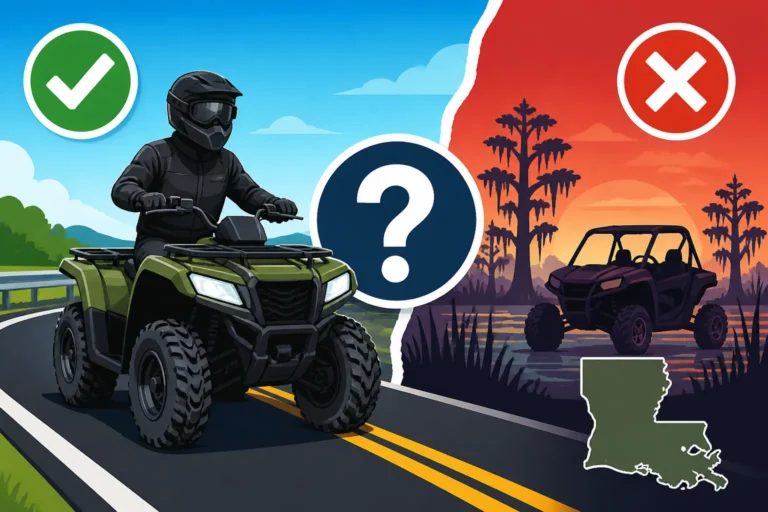
Let's get straight to it: Louisiana law is pretty restrictive when it comes to riding ATVs and UTVs on public roads. The general rule is simple: you can't. But, as with most laws, there are specific, limited exceptions that create a lot of misunderstanding. Many riders hear "exceptions" and mistakenly believe they have broad permission, but that's rarely the case. It’s crucial to understand the letter of the law to avoid unfortunate encounters with law enforcement.
The core intent of the legislation is to keep these machines, designed for off-road use, off the regular flow of traffic for safety reasons. Their different handling characteristics, lack of traditional safety features like crumple zones, and lower visibility make them ill-suited for roads shared with cars and trucks. So, while you might see a neighbor riding one down the street, it doesn't mean it's legal or safe to do so.
The Shoulder-Only Rule
One of the most significant and often misunderstood provisions in Louisiana law relates to riding on the shoulder. For many ATVs, the law does allow for use on the shoulder of certain public roads, but it comes with very strict caveats. This isn't a blanket permission to cruise down any shoulder you please. The statute, specifically [Louisiana ATV Road Rules Under 32:299], outlines a narrow path for this activity. It's often tied to agricultural purposes, which we'll dive into next.
Think of the shoulder rule as a lifeline, not a highway. It's meant to facilitate specific, limited movements, not to replace a truck and trailer for transport. The distinction is critical: riding on the shoulder is not the same as riding on the road. Vehicles are expected to stay as far to the right as practicable, minimizing interference with vehicular traffic. This means if you're out there, you need to be constantly aware of your surroundings, ready to yield, and prepared for the quick decisions that traffic requires.
The Farm Exemption
This is where much of the confusion stems, and it’s a provision that riders often try to stretch beyond its true intent. Louisiana law provides an exemption for ATVs and UTVs when they are being used for agricultural purposes. This farm exemption allows machines to be operated on the shoulder of a public road, or to cross a public road, only if that use is directly related to a farming operation. This is outlined further in sections like [Louisiana Farm Affidavits for Road Use]. The statute is designed to allow farmers to move between fields or access parts of their farm that are divided by a public road, not to run errands.
What constitutes "agricultural purposes"? It's generally defined as activities related to the production of crops, livestock, or forestry. This doesn't mean driving your quad to pick up feed from the co-op in town, unless that feed is for your farm animals and you are literally moving from one part of your farm to another that happens to be bisected by a road. Many riders think owning a few chickens or a garden qualifies them for this exemption, but the law intends for genuine, commercial-level farming operations. You often need to carry an affidavit, sworn before a notary, attesting to the farm-only use, and that exemption comes with a specific range, often a [Louisiana's 5-Mile Farm Radius].
Understanding Incidental Crossings
Beyond shoulder use for farm purposes, there's also the concept of "incidental crossings." This is another very limited exception. An incidental crossing means you can cross a public road, usually at a 90-degree angle, to get from one section of private property to another, or from a trail system on one side to a trail system on the other. This isn't about riding along the road for any distance; it's about a quick, direct movement across it. This might be relevant if your hunting lease is bisected by a small parish road, and you need to move your machine from one side to the other.
These crossings must be made safely, yielding to all oncoming traffic, and with appropriate visibility. They are typically expected to be at designated crossing points or at the safest available location. It's not an invitation to treat every road as a quick shortcut. Law enforcement will often scrutinize these crossings, especially if they appear to be part of a longer journey on public roads. The intent is crucial: are you genuinely crossing, or are you trying to circumvent the general ban on road use?
Specific Rules and Limitations for Road Use
Even when one of the narrow exceptions applies, like the agricultural exemption or an incidental crossing, there are still very specific rules and requirements you must follow. It’s not just about where you can ride, but how and what your machine needs to have, and even who can operate it. Overlooking these details can quickly turn a legal exception into an illegal activity.
These rules are in place for everyone's safety, including yours. ATVs and UTVs simply aren't designed with the same safety features as street-legal vehicles. They lack turn signals, specific lighting, horn requirements, and often mirrors that are standard on cars and trucks. This is why even when on a shoulder or making a crossing, the utmost caution and adherence to these additional rules are absolutely essential.
Parish and Municipal Ordinances
While state law sets the baseline, individual parishes and municipalities in Louisiana have the authority to designate specific roads or streets for UTV use. This is a critical distinction: these local ordinances often apply specifically to UTVs, not ATVs, and they must be designated by the local governing body. You cannot assume a road is open just because others are riding on it. [Louisiana Parish Ordinance Lookups] and [Louisiana Municipal Ordinance Lookups] are your friends here. If a parish council votes to designate a road, they typically have to post signs indicating that the road is open to UTVs.
Without such a designation and clear signage, riding your UTV on a parish or municipal road is generally illegal, even if you are only moving a short distance. This is why you might see UTVs legally operating in one rural town but not in another just a few miles away. Always check the local laws for your specific riding area. What's legal in Shreveport might not be legal in a smaller, neighboring parish.
Age and Licensing Requirements
Louisiana has specific age and licensing requirements for operating off-road vehicles on public roads, even under the limited exceptions. For UTVs, the law states that operators must be at least 21 years old to drive on designated public roads. This is a strict rule that many riders, especially younger adults, often overlook, leading to citations. [Louisiana's 21 Age Minimum for UTV Drivers] is not just a suggestion; it's law.
For ATVs, while the age requirement for operating on a public road shoulder under the farm exemption isn't explicitly 21, general rules for ATV operation and safety suggest that younger riders should not be on public roads. Furthermore, anyone operating an ATV or UTV on a public road, even if legally allowed under an exemption, must possess a valid driver's license, typically a [Louisiana Requires a Class E License]. This means no temporary permits or learner's permits will suffice. You need a full, unrestricted license.
Equipment and Insurance
If you are operating an ATV or UTV on a public road under one of the narrow exceptions, you must also ensure your machine is appropriately equipped and that you have proof of insurance. While Louisiana doesn't typically require insurance for off-road use on private land, it's a different story when you touch public asphalt. [Louisiana Insurance Proof on Demand] means you need to be ready to show proof to law enforcement. This usually means carrying at least liability insurance at the state minimums.
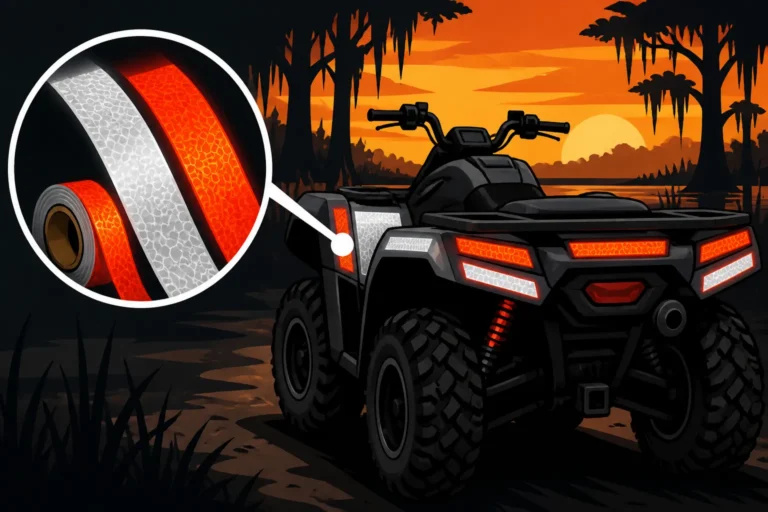
In terms of equipment, while the law doesn't turn your ORV into a street-legal vehicle, it often implies certain safety measures. Proper working headlights and taillights are non-negotiable, especially during low light conditions or if you're crossing a road at dusk or dawn. Some designated UTV roads might require additional equipment like mirrors, turn signals, or a horn, as specified by the local ordinance. Many riders look to aftermarket parts from companies like SuperATV to ensure their machines are equipped with durable and reliable lighting or other accessories that might be needed for such limited road use or to enhance safety in general.
Distinctions Between ATVs and UTVs for Road Use
It's absolutely essential to understand that Louisiana law often treats ATVs (All-Terrain Vehicles) differently from UTVs (Utility Terrain Vehicles) when it comes to road use. While both are off-road machines, their design differences — ATVs typically single-rider or with a passenger straddling, UTVs typically side-by-side with steering wheel and bucket seats — lead to separate legal provisions. This distinction is often a source of confusion, with riders mistakenly applying UTV rules to ATVs or vice-versa.
The legislative intent behind these separate rules recognizes the inherent differences in how these machines are operated and their relative visibility and stability on paved surfaces. UTVs, with their automotive-style controls and often wider stance, are sometimes deemed slightly more adaptable for limited road use than ATVs, leading to the possibility of parish-designated roads. This is why it's critical to know which type of machine you are riding when interpreting the law.
ATV Road Rules
For ATVs, the rules are primarily focused on the farm exemption and incidental crossings. [Louisiana ATV Road Rules Under 32:299] explicitly states that ATVs are generally prohibited from operating on public highways, roads, or streets. The key exceptions, as discussed, are agricultural operations on the shoulder or crossing for bona fide farm purposes. There is no provision for parishes or municipalities to designate roads for ATV use. If you’re riding an ATV, you pretty much need to assume it's not allowed on any public road unless you are actively engaged in a permitted farm activity on the shoulder.
This means that if you're not farming, your ATV should remain off public asphalt. [Louisiana Bans ATVs From Travel Lanes] and [Louisiana Bans ATVs From Interstates] are clear cut. Even riding for a short distance to access a trail or a friend’s property is typically illegal unless it falls under that very specific farm exemption. This is why most ATV enthusiasts will trailer their machines to riding areas rather than attempting to ride them on public roads, even rural ones. It's the safest and most legal approach.
UTV Road Rules
UTVs, or side-by-sides, have a slightly different set of rules, though still heavily restricted. While they are also generally prohibited from public roads, the critical difference is the provision for local designation. [Louisiana UTV Road Rules Under 32:299.3] allows parishes and municipalities to pass ordinances designating specific public roads for UTV operation. This is a game-changer for many UTV owners, but it comes with strict conditions.
Even on a designated UTV road, there are usually specific hours of operation (often daylight hours, such as [Thirty Minutes After Sunrise] to [Thirty Minutes Before Sunset]), speed limits, and equipment requirements that go beyond what a UTV typically comes with from the factory. For instance, some parishes might require additional lighting, mirrors, or even specific safety flags. The operator still needs to be 21 years old and possess a valid driver's license. For those looking to equip their UTVs for these limited road uses, companies like SuperATV offer a range of accessories from mirrors to turn signal kits that can help meet local requirements. Always check the specific ordinance of the parish or municipality you intend to ride in, as they can vary greatly.
The Orleans Parish Exception
It’s worth noting that Louisiana’s statewide ATV and UTV statutes specifically exempt Orleans Parish. This means that [Orleans Parish Is Exempt From Louisiana's ATV Statute] and [Orleans Parish Is Written Out of the Statute]. This exception is due to the unique urban nature of New Orleans and its distinct local governance. For residents and visitors in Orleans Parish, state law regarding ATVs and UTVs on public roads simply does not apply.
However, this doesn't mean it's a free-for-all. Instead, it means that Orleans Parish has the full authority to set its own local ordinances regarding the use of these machines. If you’re in New Orleans and planning to ride an ATV or UTV, you absolutely must research the specific local laws and ordinances that apply within the city and parish limits. What's legal in the rural parts of Louisiana might be strictly prohibited in a densely populated urban area like New Orleans, and vice-versa. Always assume restriction unless you have clear, written evidence of permission.
Penalties for Non-Compliance
Ignoring Louisiana's ATV and UTV road rules isn't just a minor oversight; it can lead to serious legal and financial consequences. Law enforcement takes these violations seriously because of the inherent safety risks involved when off-road machines are mixed with regular vehicle traffic. Don't let the allure of a quick shortcut or a perceived "unlikely to get caught" attitude cloud your judgment. The penalties can be substantial and can put a real damper on your riding experience and your wallet.
These penalties are designed to deter illegal road use and ensure public safety. A moment of convenience is simply not worth the potential headaches and expenses that can come from a citation, a fine, or even having your beloved machine impounded. It’s always better to err on the side of caution and adhere strictly to the law.
Fines and Citations
The most common consequence for illegally riding an ATV or UTV on a public road in Louisiana is a traffic citation, much like a ticket you’d get for speeding or running a stop sign. The fines can vary, but they are generally significant. You could be looking at several hundred dollars for a single offense, and that's often just the base fine. There are usually additional court costs, administrative fees, and other surcharges that quickly add up, turning a simple ticket into a major financial burden. [Louisiana Ticket Costs for Road Riding] can certainly impact your budget.
Beyond the monetary cost, a citation can also mean points on your driving record, which might affect your vehicle insurance rates. It’s a traffic violation, and it’s treated seriously. Officers also have the discretion to issue multiple citations if they observe several infractions, such as riding without the proper license, without insurance, or not adhering to designated road rules. What might seem like a simple joyride can quickly become a very expensive mistake.
Impoundment and Other Consequences
Perhaps even more disheartening than a hefty fine is the possibility of your ATV or UTV being impounded. If law enforcement determines that your machine is being operated illegally on a public road, they have the authority to seize it. This means your quad or side-by-side will be towed away and stored at an impound lot, often at your expense. Getting an impounded machine released can be a logistical nightmare, involving proof of ownership, payment of all outstanding fines, and often daily storage fees that quickly accumulate. [Louisiana Impoundment for No Decal] (which applies to off-road use, but the principle of impoundment is similar for road violations) can be a real pain.
In some cases, repeated offenses or particularly egregious violations could lead to even more severe consequences, though this is rare for first-time offenders. The goal of the law is to encourage compliance, not to take away your machine permanently, but the costs associated with recovery can feel pretty close to losing it. Always ask [Questions Worth Asking an OMV Office] if you have doubts about specific local regulations before you ride on or near any public road.
Disclaimer
This article is for general informational purposes only and does not constitute professional advice. Laws, prices and regulations vary by location and change over time. Consult a qualified professional for guidance on your specific situation.