Louisiana Ticket Costs for Road Riding
Ah, the open road beckons, doesn't it? Especially when you're perched on your favorite ATV or UTV, feeling the breeze and imagining a shortcut to the next hunting camp or even just a quick trip to the corner store. But for many riders in Louisiana, that quick spin on a public road ends not with a cold drink, but with a costly ticket from a state trooper or parish deputy. This guide is here to walk you through the various financial and personal repercussions of getting caught riding your off-road machine where it doesn't belong, helping you understand not just the fines, but all the hidden costs that can add up faster than you think.
The Core Problem: Why Road Riding Leads to Tickets in Louisiana
It’s a tale as old as time in Louisiana: someone buys an ATV or UTV, thinking it’s just another vehicle, and then they wonder why they can’t run it down the road for a mile or two. The truth is, while these machines are incredibly versatile and fun, they are purpose-built for off-road use, and that distinction is a big one in the eyes of Louisiana law enforcement. It's not about being a spoilsport; it's about safety, public roads infrastructure, and the specific statutes designed for these machines.
Understanding Louisiana's Off-Road Vehicle Statutes
Louisiana has specific laws governing ATVs (All-Terrain Vehicles) and UTVs (Utility Terrain Vehicles), primarily found in Louisiana Revised Statutes Title 32:299 and 32:299.3, respectively. These statutes clearly define where these machines can and cannot be operated. Generally, ATVs are expressly prohibited from highways and public roads. There are very limited exceptions, such as for agricultural purposes within a certain radius, but these are often misunderstood and misapplied by riders. For UTVs, the rules are slightly different, allowing parishes or municipalities to designate certain roads for UTV use, but this requires specific signage and often entails strict equipment requirements and age restrictions for drivers. [Louisiana ATV Road Rules Under 32:299] and [Louisiana UTV Road Rules Under 32:299.3] lay out these distinctions in detail. Without these specific designations and proper compliance, you're pretty much always on the wrong side of the law on a public road.
Many riders mistakenly believe that because they have an [Louisiana ORV Decals and Titles Explained] or even a title for their machine, it somehow grants them permission to ride on public roads. This is a common and costly misconception. An off-road decal is specifically for off-road areas, like state forest trails or private parks, and the title simply proves ownership. Neither of these makes your machine street-legal. [Why an Off-Road Decal Is Not Street-Legal Registration] and [Why a Title Still Keeps You Off the Road] are crucial reads for anyone who holds this belief.
The Slippery Slope of "Just This Once"
We've all been there. "It's just a quick hop to the neighbor's house," or "The gas station is only a quarter-mile down this parish road." It's these seemingly innocuous, short trips that often lead to a flashing blue light in the rearview mirror. You might think you're safe because the road is quiet, rural, or unpaved, but a Louisiana State Trooper or local sheriff's deputy doesn't care if it's I-10 or a dusty gravel lane. If it's a public road, and your ATV or UTV isn't legally allowed there, you're fair game for a citation. These "just this once" moments accumulate, increasing your odds of an encounter with law enforcement. It often feels like a gamble you win most of the time, until you don't, and then you're left dealing with the aftermath of a ticket.
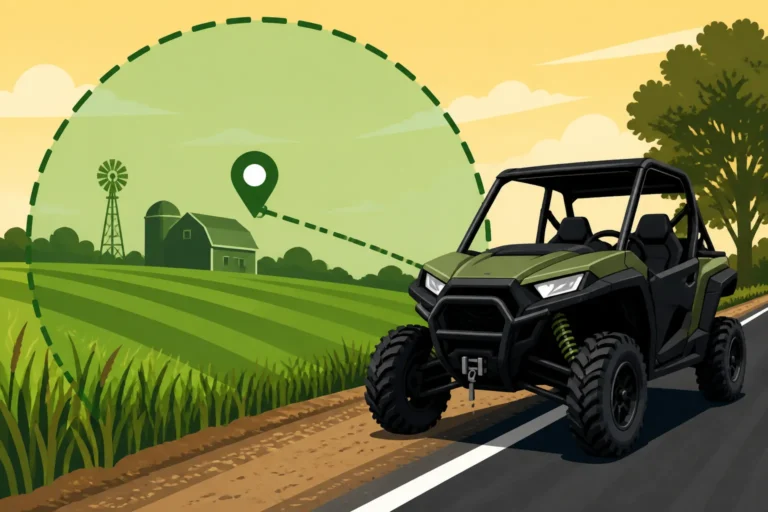
Even if you live on a farm and genuinely use your machine for agricultural purposes, there are still strict limitations. The "farm exemption" typically allows for riding on the shoulder of a public road within a limited radius from the farm, and even then, your machine must be equipped with proper lighting and you usually need to carry specific documentation like a [Louisiana Agricultural Affidavits for an ATV]. Stepping beyond those narrow boundaries, like crossing a state highway without incident or venturing beyond the specified mileage, can immediately nullify that exemption and land you in hot water.
What Law Enforcement Is Looking For
It's not usually a targeted hunt for ATVs, but rather a combination of visibility and common sense enforcement. Law enforcement officers are trained to spot vehicles that don't fit the typical road-going profile. The sound of an unmuffled exhaust, the lack of proper turn signals or brake lights, or simply the sight of a machine clearly designed for dirt trails on an asphalt road can immediately draw attention. [What a Louisiana State Trooper Can Ask to See] includes documentation and proof of compliance.
Deputies patrol parish roads regularly, and if your ATV or UTV is being operated in a manner that seems out of place or unsafe – perhaps speeding, not yielding, or just generally making a nuisance – you're inviting scrutiny. And remember, [Louisiana Traffic Law Still Applies] even if you are on a designated UTV road. This means things like DUIs, reckless operation, or even minor traffic infractions can still get you pulled over, compounding your problems if you're already illegally on the road. The best advice is to assume that if you're on a public road, you will be seen and potentially stopped.
Deconstructing the Costs: Fines, Fees, and Beyond
So, you've been pulled over, and a citation is being written. What's next? The initial shock of the fine is often just the tip of the iceberg. There are multiple layers of financial burden that come with a road riding ticket in Louisiana, from direct monetary penalties to escalating insurance premiums.
Initial Fines for Specific Violations
The exact dollar amount of a fine for illegally riding an ATV or UTV on a public road can vary quite a bit depending on the specific statute violated, the parish where you received the ticket, and the discretion of the issuing officer or court. However, you can expect fines to be substantial enough to be a deterrent. A first offense might carry a fine that feels like a slap on the wrist to some, but it quickly adds up. For example, a general violation of the ATV road riding statute could start in the low hundreds of dollars. If you're also cited for other issues, like no helmet (if applicable to your age or machine type), improper lighting, or reckless operation, each of those can be a separate line item on your ticket, each with its own fine.
Imagine this scenario: you're riding your ATV on a quiet parish road, and a deputy pulls you over. You might get a ticket for illegal operation on a public road (a base fine). Then, if your machine lacks a visible ORV decal, that's another fine. If it's after dark and you don't have proper headlights or taillights, that's another. If you're under the influence, well, that's a whole different, much more severe category of penalties. Each individual violation stacks up, turning a single incident into a multi-hundred-dollar headache, if not more. For a comprehensive overview of potential monetary penalties, check out [Louisiana Penalties for Illegal Road Riding].
The Hidden Burden of Court Costs and Administrative Fees
Beyond the fine itself, you'll almost certainly incur additional costs. When you pay a traffic ticket, you're not just paying the fine; you're also paying court costs, administrative fees, and sometimes even fees related to funding specific local programs. These can often add another $50 to $150 (or even more) on top of your base fine, depending on the parish and court system. These aren't usually negotiable and are simply part of the package when you receive a citation that goes through the justice system.
If you decide to contest the ticket, you'll have to factor in your time off work to appear in court, potential legal fees if you hire an attorney, and still, ultimately, the court costs if you're found guilty. Even if you're found innocent, the time and effort invested are a significant cost. For more on what to expect when a ticket goes to court, refer to [Louisiana Court Costs for a Citation]. Many people don't realize that simply appearing in court, even if it's just to plead guilty and pay, comes with these added fees.
Insurance Premium Hikes and Coverage Impacts
This is one of the most overlooked, yet potentially most expensive, consequences of a road riding ticket. While Louisiana doesn't generally require insurance for off-road machines used exclusively off public roads, if you get a ticket for illegal road riding, it could be treated like a moving violation on your driving record. This can absolutely impact your automobile insurance rates. Insurance companies look at your driving history to assess risk. A moving violation, even on an ATV or UTV, signals a higher risk, potentially leading to increased premiums for your car, truck, and any other vehicle you insure.
Imagine your auto insurance premium jumping $50 a month for the next three years. That’s an extra $1,800 out of your pocket, all because of one "quick trip" on a quad. Even if you have a separate policy for your off-road machine (which is a smart idea, especially for theft or damage), a history of illegal road use might make future coverage harder to get or more expensive. It's a long-term financial hit that can far outweigh the initial fine and court costs. For details on related insurance topics, consider [Louisiana Insurance Proof on Demand] and what it means for your policy.
Beyond the Wallet: Indirect Consequences of a Road Riding Ticket
The financial hit is bad enough, but a ticket for illegal road riding can have other, less obvious consequences that can impact your machine, your future, and your standing in the community. These are the ripples that spread long after the initial splash of the citation.
Potential Impoundment and Recovery Headaches
In some cases, especially for repeat offenders or particularly egregious violations (like riding while intoxicated or with a severely unsafe machine), law enforcement may choose to impound your ATV or UTV. This isn't just an inconvenience; it's another significant financial drain. You'll be responsible for towing fees to the impound lot, storage fees for every day your machine sits there, and potentially administrative release fees. These can add up very quickly, often costing hundreds of dollars, sometimes even more than the original fine.
Think about it: Your machine is impounded in a parish far from your home. You'll need to arrange for a trailer to pick it up once released, potentially taking another day off work, and paying for fuel and the trailer rental. It’s not a simple matter of walking down to the lot and driving it home. This isn't just about the money; it's the sheer hassle and stress of getting your machine back, all because you took a chance on a public road.
The Long-Term Impact on Your Driving Record
As mentioned with insurance, a ticket for illegal road riding can show up on your official driving record maintained by the Louisiana OMV. While an ATV isn't a "motor vehicle" in the same way a car is, some violations can still be recorded. Accumulating points on your license, even if it's from an off-road machine incident, can lead to higher insurance rates, and in severe cases, even suspension of your driver's license. If you're a commercial driver, this could put your livelihood at risk.
Even if a specific incident doesn't directly add points, the record of the violation exists. This can come back to haunt you during background checks, job applications for positions requiring a clean driving record, or even when trying to get a loan or lease for a vehicle. It's a stain that can linger for years, impacting aspects of your life you might not initially connect to a "simple" ATV ticket.
Community Relations and Future Access
While less tangible than fines or impoundment, damaging community relations can have long-lasting effects. When ATVs and UTVs are seen illegally tearing down public roads, it creates a negative perception among residents, local law enforcement, and landowners. This perception can lead to stricter local ordinances, increased patrols, and a general backlash against off-road riders. [Louisiana Parish Ordinance Lookups] and [Louisiana Municipal Ordinance Lookups] are important resources for staying informed.
If you frequent a particular area, or if you're hoping to gain access to private land for riding, a reputation as someone who disregards the law can close doors. Landowners, weary of trespassers or those who abuse access privileges, may become even more reluctant to grant permission for riding on their property. This ultimately hurts all riders by limiting legal riding opportunities and creating a hostile environment for a sport that many enjoy responsibly.
Staying on the Right Side of the Law: Avoiding Costly Mistakes
The best way to avoid the financial and personal headaches of a road riding ticket is, quite simply, to avoid riding illegally on public roads in the first place. It might sound obvious, but understanding and adhering to the rules is your first and most important line of defense.
Knowing Where You Can Legally Ride
Before you ever load your machine onto a trailer or even pull out of your driveway, know exactly where you are permitted to ride. For most ATVs, this means sticking to private land with permission, designated off-road parks, or approved trails within places like the Kisatchie National Forest. If you're riding a UTV, check with the specific parish or municipality you plan to operate in. Some parishes have designated roads where UTVs are allowed, but these are often limited in scope and require specific machine modifications and permits.
Don't rely on hearsay or what a buddy told you. Take the time to look up the ordinances for your area. The Louisiana Department of Wildlife and Fisheries (LDWF) and the OMV websites are great starting points. Remember that the rules can change, so it's worth a periodic check. For example, [Louisiana's 2022 UTV Amendment] made significant changes to how UTVs can be used. Being informed is your best protection.
Here's a quick comparison of typical road status for ATVs vs. UTVs:
| Feature/Status | ATV (All-Terrain Vehicle) | UTV (Utility Terrain Vehicle) |
|---|---|---|
| General Public Road Use | Prohibited (with very limited agricultural exceptions) | Prohibited, unless specifically designated by parish/municipality |
| Agricultural Exception | Shoulder use within 5-mile radius from farm, specific equipment, affidavit required | Similar agricultural exceptions, also with strict limits |
| Designated Roads | No provisions for ATV designated roads | May be allowed on specifically designated and signed roads/streets |
| Equipment for Road Use | Not applicable for legal road use | Required: Headlights, taillights, brake lights, turn signals, mirrors, horn, seatbelts, windshield, often a slow-moving vehicle sign |
| Driver Age Requirement | Varies off-road; not applicable for legal road use | Often 21+ for designated road use, Class E license required |
| Licensing/Registration | ORV Decal and Title for off-road use; not for road use | Title, ORV Decal, and potential specific UTV road registration/permit |
Ensuring Your Machine Is Properly Equipped for Designated Areas
If you are fortunate enough to live in a parish or municipality that does designate roads for UTV use, there will almost certainly be a long list of required equipment your UTV must have to be legal on those roads. This isn't just a suggestion; it's a requirement that can lead to a ticket if ignored. We're talking about working headlights, taillights, brake lights, turn signals, a horn, a rearview mirror, and often a windshield and seatbelts. Many riders choose quality aftermarket parts from reputable brands like SuperATV to ensure their machines meet these requirements and stand up to the rigors of off-road environments when they're not on designated roads. While SuperATV parts are primarily designed for enhancing off-road performance and utility, if you're outfitting a UTV for legal designated road use, ensuring all your safety components like lights and mirrors are robust and reliable is paramount. They help you stay compliant and visible, whether on a trail or a designated path.
For ATVs, since legal road use is so limited, these specific equipment requirements for road travel are largely moot. However, ensuring your ATV has proper lighting for night riding off-road or for visibility during agricultural shoulder use is still crucial for safety and avoiding tickets specific to those situations. Again, investing in quality parts, like those offered by SuperATV, for their intended off-road or limited utility use can enhance safety and functionality.
When in Doubt, Transport It
This is the golden rule: If you're unsure whether a stretch of road is legal for your machine, don't ride it. Load your ATV or UTV onto a trailer and transport it to your designated riding area. Yes, it takes more time and effort, and you have to have a truck and trailer, but it's a minor inconvenience compared to the cost and stress of a ticket, impoundment, or an accident.
Many riders, myself included, have learned this lesson the hard way. It’s a frustrating feeling to have your fun cut short because you gambled on a public road. Think of your truck and trailer as part of your riding gear. They are essential tools for safely and legally getting your machine to where it belongs. Planning your route and knowing your legal riding spots beforehand can save you a world of trouble. By making the effort to transport your machine, you're not only protecting your wallet and your driving record but also contributing to a more positive public image for the entire off-road riding community.
Disclaimer
This article is for general informational purposes only and does not constitute professional advice. Laws, prices and regulations vary by location and change over time. Consult a qualified professional for guidance on your specific situation.