The 5-Mile Farm Radius on a Shoulder
It's incredibly frustrating when you just need to get your ATV or UTV from one field to another, or down a short stretch of road to access the back forty, and you're constantly worried about whether you're breaking the law. Louisiana's rules around off-road vehicle use on public roads can feel like a tangled mess of "ifs," "ands," and "buts," especially when it comes to the famous "5-mile farm radius." This guide will cut through the confusion, meticulously detailing what this specific exemption means for Louisiana riders, its strict limitations, and how to stay on the right side of the law without pulling your hair out.
Understanding Louisiana's ATV/UTV Road Use Landscape
For many, the appeal of an ATV or UTV is its off-road capability – navigating trails, pastures, and rugged terrain where traditional vehicles can't go. But sometimes, these machines need to touch public pavement, and that's where the waters get murky in Louisiana. The state's laws are designed to keep these powerful off-road machines primarily off public roads, but they do make allowances for specific, practical needs.
The General Prohibition on Public Roads
Let's start with the baseline: generally speaking, ATVs and UTVs are not street legal in Louisiana. This is the fundamental rule that every owner needs to understand. Public roads, whether paved highways or gravel parish roads, are typically off-limits for these machines. The law is quite clear that operating an ATV or UTV in the travel lanes or on certain public rights-of-way can lead to significant penalties. It's a common misconception that simply having a title or a yearly decal means your machine is good to go on the street, but that's just not the case. [Why an Off-Road Decal Is Not Street-Legal Registration] and [Why a Title Still Keeps You Off the Road] delve deeper into this common misunderstanding. The legislative framework, such as [Louisiana ATV Road Rules Under 32:299] and [Louisiana UTV Road Rules Under 32:299.3], lays out these general prohibitions with very few exceptions.
Picture this: you've just bought a shiny new side-by-side, eager to use it for both work and play. You assume that since it's a vehicle, and you paid sales tax and got a title, it's just like a car, right? Wrong. The moment you pull out of your driveway onto a state highway, even just for a hundred yards, you're likely in violation unless you meet very specific criteria. This blanket prohibition is designed for public safety, recognizing that ATVs and UTVs lack many of the safety features, like crumple zones or airbags, that cars have.
Why Exceptions Exist: The Farm Use Reality
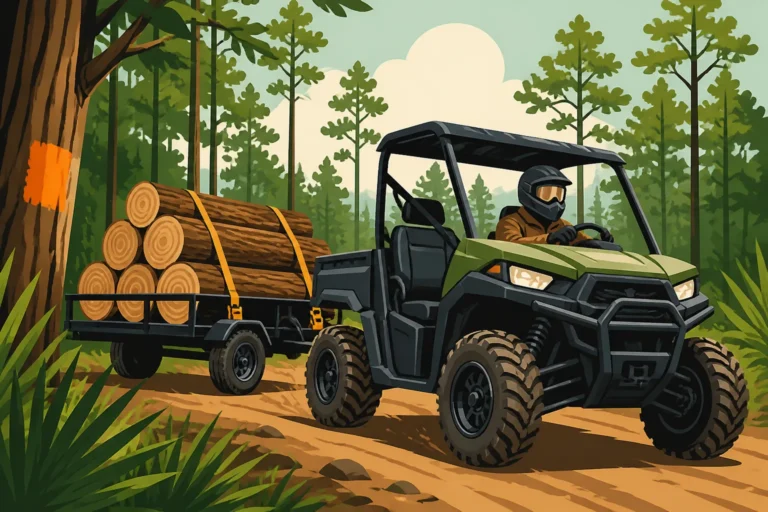
While the general rule is "no public roads," Louisiana's lawmakers recognized the vital role ATVs and UTVs play in the agricultural sector. Farmers, ranchers, and those involved in timber or aquaculture often rely on these machines to perform daily tasks across their properties. Their land might be bisected by a public road, or they might need to move equipment a short distance to access a different field or repair shop. Without some form of legal allowance, these essential operations would become incredibly inefficient, if not impossible.
So, the law carves out specific, narrow exceptions to accommodate these agricultural needs. These aren't loopholes for recreational riders; they are carefully crafted provisions designed to support Louisiana's farming communities. It's important to view these as exceptions to the general rule, not as a blanket permit for all off-road vehicle use on public thoroughfares. Understanding the spirit of the law – which is to facilitate genuine farm work – helps to interpret the strict wording of the statutes. This is why you'll often hear about "farm exemptions" and the conditions that must be met to qualify for them.
Decoding the 5-Mile Farm Radius Rule
The 5-mile farm radius is perhaps one of the most talked-about, yet frequently misunderstood, aspects of Louisiana's ATV and UTV laws. It's a critical provision for many rural residents, but its precise application is often misconstrued. Let's break down exactly what this rule entails and where its boundaries lie.
What "5-Mile Farm Radius" Actually Means
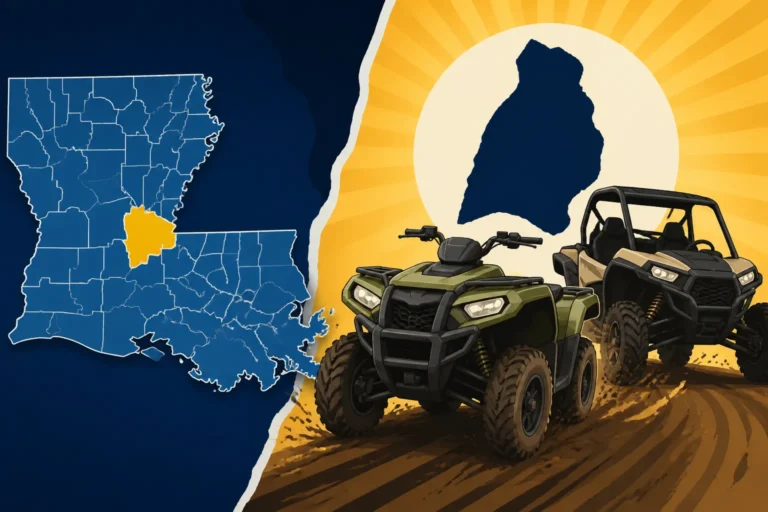
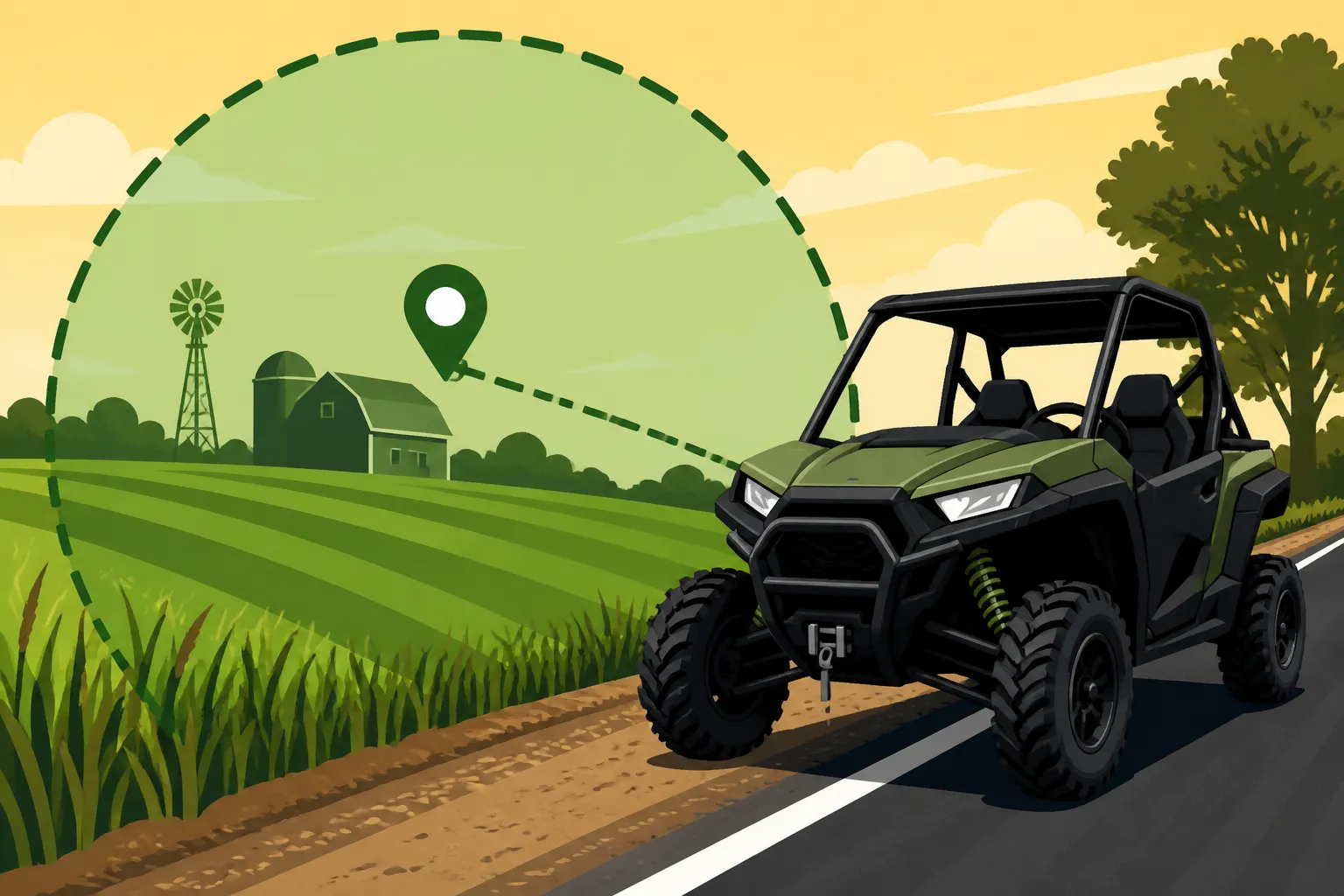
At its core, the "5-mile farm radius" is a specific distance limitation placed on the operation of ATVs and UTVs on public road shoulders for agricultural purposes. It means that if your machine is primarily used for farming, you may operate it on the shoulder of a public road, but only within a five-mile radius of your farm, timber land, or aquaculture operation. This isn't a free pass to ride up and down the road for five miles in any direction; it's about the purpose and proximity to the agricultural activity. [Where the 5-Mile Radius Is Measured From] clarifies how this measurement typically originates from the central point of your farming operation.
Consider a farmer in rural Acadiana who owns fields on both sides of a state highway, and also has a small repair shop five miles down the road where he keeps his implements. This rule allows him to use his ATV or UTV to move between his fields or transport a piece of equipment to the shop, as long as he stays within that crucial five-mile window and adheres to all other conditions. The radius is intended to allow for necessary, short-distance travel for agricultural operations, recognizing the practical logistics of managing farmland that may not be contiguous. It's not about how far you can go, but how far you need to go for a legitimate farming purpose.
The Shoulder-Only Restriction
This is a non-negotiable aspect of the 5-mile farm radius rule: the exemption only applies to riding on the shoulder of the road. Let me emphasize that: shoulder only. A road shoulder is the unpaved or unimproved strip of land immediately adjacent to the main travel lane. It's typically gravel, dirt, or sometimes a narrow paved strip, separate from the primary flow of vehicular traffic. This distinction is absolutely critical. [The Statute Allows the Shoulder and Nothing More] is unequivocal on this point.
You cannot, under any circumstances permitted by this specific rule, operate your ATV or UTV in the main travel lanes of the road. This means no riding on the asphalt or concrete where cars and trucks drive, no using turning lanes, and no making U-turns in the middle of the road. Even if you're within your five-mile radius and performing a farm-related task, veering into the primary traffic lanes is a direct violation. The only exception for entering the main road would be for a direct, perpendicular crossing to access property on the other side, which must be done safely and yielding to all vehicular traffic. Imagine trying to drive your tractor down the middle of a busy highway; the intent of the law is to keep ATVs and UTVs out of such situations by confining them to the shoulder.
Purpose-Driven Use: "Every Legal Road Trip Has to Be Farm Related"
Perhaps the most fundamental aspect of the 5-mile farm radius exemption is that the use must be farm-related. This isn't a gray area; it's a black-and-white rule. [Every Legal Road Trip Has To Be Farm Related] is not just a catchy phrase; it's the absolute truth of this statute. You cannot use this exemption to run to the corner store for a soda, pick up groceries, visit a friend, or take a scenic drive, even if you remain within five miles of your farm and stick to the shoulder.
The operation of your ATV or UTV on a public shoulder, under this exemption, must be directly connected to the planting, cultivation, harvesting, timber operations, aquaculture, or other legitimate agricultural activities. For example, moving your machine from one pasture to another, transporting tools to a distant field, checking on livestock that have strayed near the road, or taking a broken part to a mechanic for repair (if the mechanic is within the radius and the trip is necessary for the farm machine) are all examples of permissible use. Conversely, taking your side-by-side to a local festival, riding it to a fishing spot not on your property, or just going for a recreational spin, are explicitly not covered. [The Exemption That Only Covers Farm Use] really underscores the specificity here. This strict interpretation means that law enforcement can and will question the purpose of your travel if you're seen on a public shoulder, and if it's not genuinely farm-related, you could face penalties.
Essential Conditions and Paperwork for Farm Use
Understanding the "what" and "where" of the 5-mile farm radius is only half the battle. To legally utilize this exemption, you also need to fulfill several crucial "how" requirements, particularly concerning documentation and driver qualifications. Missing these steps can render your legitimate farm use illegal, leading to unnecessary headaches and fines.
The Agricultural Affidavit Requirement
This is a step that many riders unfortunately overlook, often leading to trouble. The privilege of using the 5-mile farm radius is not automatic; it comes with a mandatory documentation requirement. You must carry a signed and notarized affidavit stating that your ATV or UTV is primarily used for bona fide agricultural, timber, or aquaculture purposes. This isn't a form you fill out on the spot; it needs to be properly executed before a notary public. [Carrying an Affidavit Sworn Before a Notary] is paramount here.
This affidavit serves as your official declaration to the state that your machine qualifies for the exemption. Without it, even if your machine is genuinely used for farming, you lack the immediate proof required by law enforcement. Think of it as your "permission slip" to use the shoulder within the prescribed limits. Law enforcement officers are trained to ask for this documentation if they stop an ATV or UTV on a public shoulder. If you can't produce it, or if it's not correctly notarized, you're essentially riding without the necessary authorization. This requirement ensures that only those with legitimate agricultural operations benefit from the exemption, preventing recreational riders from abusing the farm-use clause. For more details on what needs to be included, check out [Louisiana Farm Affidavits for Road Use].
Driver Licensing and Age Requirements
While the machine might be farm equipment, the person operating it on a public shoulder still needs to be a qualified driver. For ATVs, the driver generally needs to possess a valid Class E driver's license, which is the standard Louisiana operator's license for passenger vehicles. For UTVs, the rules are even stricter: the driver must be at least 21 years of age and possess a valid Class E driver's license. [What a Class E License Lets You Do] outlines the general scope of this license.
This age requirement for UTVs specifically can catch many riders off guard, especially younger farmhands or family members who might regularly operate the UTV on private land. While they might be perfectly capable and experienced drivers on the farm, the moment they hit the public shoulder, even under the farm exemption, they become subject to these age restrictions. [Louisiana Requires UTV Drivers to Be 21] is a critical point that cannot be overlooked. A 16-year-old with a valid driver's license might be able to drive a car, but they cannot legally operate a UTV on a public shoulder, even for farm work. This is another area where enforcement is strict, as it ties directly to public safety and driver responsibility on public thoroughfares.
Machine Equipment and Safety Considerations
While the law doesn't typically mandate extensive modifications to an ATV or UTV specifically for the 5-mile farm radius use, common sense and safety dictate certain considerations. When you're sharing a right-of-way, even the shoulder, with cars and trucks, visibility is paramount. Ensuring your machine has working headlights and taillights is a basic requirement for any vehicle. However, going beyond the bare minimum can significantly enhance your safety.
Consider adding reflective tape to the front, rear, and sides of your machine, especially if you might be operating near dawn or dusk. Products from companies like SuperATV offer excellent auxiliary lighting kits, turn signals, and robust side mirrors that can dramatically improve your visibility to other motorists and your ability to see approaching traffic. While these might not be legally required for farm-use shoulder riding, they are highly recommended safety upgrades. [Staying Visible on a Parish Road After Dark] and [Reflective Tape Worth Adding to Your Quad] provide valuable insights into making your presence known. The objective is to minimize the risk of accidents, and clear visibility is a major factor in achieving that. Even on a quiet rural road, unexpected traffic can appear, and being seen can be the difference between a safe passage and a dangerous encounter.
Practical Scenarios and Potential Pitfalls
Navigating the 5-mile farm radius successfully isn't just about knowing the rules; it's about understanding how they apply in real-world situations and being aware of the common missteps that can lead to trouble. The nuances of crossings, the vigilance of law enforcement, and the distinction between different road use laws are all critical for compliance.
Navigating Crossings and Intersections
While the "shoulder-only" rule is strict, the law does make practical allowances for crossing public roads. If your farm or agricultural operation requires you to access land on the opposite side of a public road, the statute generally permits you to make a direct, perpendicular crossing. This isn't an invitation to drive down the road to the next intersection and turn; it means crossing directly from one shoulder to the other, or from a private drive across the road to a field. [Louisiana Crossings of Public Roads] details these incidental crossings.
When executing such a crossing, extreme caution is necessary. You must come to a complete stop, look in both directions, and yield to all oncoming traffic. The crossing should be made as quickly and directly as possible, minimizing your time in the travel lanes. This is one of those moments where an enhanced field of vision, perhaps aided by aftermarket mirrors from a brand like SuperATV, can be incredibly beneficial. The key here is "incidental" – the crossing must be a necessary part of your farm operation, not a detour or a shortcut. Attempting to ride for a significant distance in the travel lanes before making a turn or crossing will almost certainly be considered a violation.
Enforcement and Penalties
Make no mistake: Louisiana law enforcement officers are aware of the rules governing ATVs and UTVs on public roads, and they do enforce them. State troopers, parish deputies, and even municipal police in some areas are authorized to stop and cite riders who are operating these machines illegally. [What a Louisiana State Trooper Can Ask to See] includes your driver's license, the agricultural affidavit, and proof of ownership.
If you are found to be operating an ATV or UTV on a public road or shoulder outside the legal parameters – perhaps you're beyond the 5-mile radius, not on the shoulder, or without the required affidavit – you could face a range of penalties. These can include significant fines, court costs, and potentially even the impoundment of your machine. [Louisiana Penalties for Illegal Road Riding] lays out the potential consequences. Ignorance of the law is never a valid defense. An officer isn't going to let you off with a warning because you "didn't know" about the affidavit or the 5-mile limit. It's the owner's and operator's responsibility to understand and comply with every aspect of the law.
Here's a quick summary of the key differences between the farm-use shoulder exemption and general road use (when designated by a parish):
| Condition/Requirement | ATV/UTV Farm Use (5-Mile Radius) | General Road Use (Designated Roads) |
|---|---|---|
| Location | Shoulder only | Designated roads or shoulders |
| Distance Limit | 5 miles from farm operation | No specific distance limit |
| Purpose | Agricultural related (strict) | General transportation (if designated) |
| Required Docs | Notarized Farm Affidavit, Valid Driver's License | Valid Driver's License, Vehicle Title/Registration, (possibly proof of insurance, etc.) |
| Age Requirement | ATV: Class E license; UTV: 21+ and Class E license | ATV: depends on specific parish/municipal rules; UTV: 21+ is standard for state-designated roads |
| Permitted Machines | ATVs, UTVs | ATVs, UTVs (depending on specific local ordinance) |
The Difference Between Farm Use and Designated Roads
It's absolutely vital to understand that the 5-mile farm radius rule is distinct from the provisions allowing UTVs (and sometimes ATVs, depending on local ordinance) on parish-designated roads. These are two separate legal pathways for off-road machines to be on public ways, and they come with entirely different sets of requirements and limitations.
The 5-mile farm radius is an exception for agricultural purposes on the shoulder of any public road (state, parish, or municipal) that runs through or adjacent to farm property. This exemption is not dependent on a parish council voting to designate specific roads. In contrast, [Louisiana UTV Street Legal Rules by Parish] and [Parishes Have to Post Signs on Designated Roads] refer to a separate statute that allows individual parishes or municipalities to designate specific public roads or streets for UTV (and sometimes ATV) use. When a road is designated, it's typically for general transportation, not just farm use, and it usually requires the UTV to meet certain equipment standards (like turn signals, horn, mirrors, etc.) and the operator to be 21 or older.
Many riders mistakenly believe that if they are within 5 miles of their farm, they can ride their machine anywhere, or that the farm exemption means their machine is "street legal" in the same way a designated road makes a UTV "street legal." This is a significant pitfall. The farm exemption is narrow and specific to agricultural work on the shoulder. Designated roads, while offering more freedom, require local designation and usually stricter equipment. Conflating these two can easily lead to a citation. Always check [Louisiana Parish Ordinance Lookups] for specific local rules if you plan to use a designated road.
Maximizing Safety and Compliance
Operating an ATV or UTV on public shoulders, even under a legitimate farm exemption, inherently carries more risk than riding on private land. You're sharing space with faster, heavier vehicles. Therefore, it's not enough to simply meet the legal minimums; proactive steps to enhance safety and ensure compliance are crucial for protecting yourself, your machine, and others.
Equipping Your Machine for Shoulder Riding
While the agricultural exemption primarily focuses on the purpose and location of your ride, common sense dictates that your machine should be as visible and manageable as possible when operating near traffic. Beyond the basic functioning headlights and taillights, consider additional safety equipment:
- Mirrors: Investing in robust, wide-view side mirrors is invaluable for seeing approaching traffic on the road you're paralleling or when preparing for an incidental crossing. Many aftermarket brands, including SuperATV, offer durable mirror kits designed specifically for ATVs and UTVs that provide far better visibility than stock setups.
- Turn Signals & Horn: While not strictly mandated for the shoulder-only farm use, adding a turn signal kit and a horn can significantly improve your ability to communicate your intentions to other drivers, especially when making a legal crossing or pulling over. These are standard features on street-legal vehicles for a reason.
- Reflective Markings: Generously apply reflective tape to the front, rear, and sides of your machine. Bright, contrasting colors are best. This is particularly important if there's any chance you'll be on the shoulder during low-light conditions, like early morning or late evening when farmers often work.
- Flag/Whip: A brightly colored flag on a tall whip antenna can increase your visibility, especially in areas with tall crops or uneven terrain that might obscure your machine from approaching motorists.
Remember, these are enhancements to your safety, not necessarily items that make your machine "street legal" under different statutes. Their purpose is to make you as conspicuous as possible to prevent accidents.
Best Practices for Farm Operators
Beyond the equipment, responsible operating practices are paramount when using the 5-mile farm radius.
- Double-Check Local Ordinances: While state law dictates the farm exemption, some parishes or municipalities might have supplementary rules or recommendations regarding agricultural vehicle movement. It's always wise to check [Louisiana Parish Ordinance Lookups] or contact your local sheriff's office for any specific nuances in your area.
- Carry All Documentation: Always have your valid Class E driver's license (and ensure you meet the 21+ age for UTVs), the notarized agricultural affidavit, and proof of ownership readily available. Keep these documents in a waterproof bag on your machine.
- High-Visibility Clothing: Wear bright, reflective clothing, especially a safety vest, when operating on shoulders. This is a simple yet highly effective way to increase your personal visibility to other drivers.
- Defensive Driving: Assume that other drivers might not see you. Maintain a safe distance from the travel lanes, be aware of road conditions on the shoulder, and anticipate movements of other vehicles.
- Maintain Your Machine: Ensure brakes, steering, and tires are in excellent working order. A breakdown on a public shoulder can be dangerous.
By adhering to these best practices, you not only increase your safety but also demonstrate responsible operation, which can be helpful if you ever have an interaction with law enforcement.
What if Your Farm Machine Isn't Always Farm-Only?
This is a critical point that can lead to significant problems. The agricultural affidavit declares that your machine is primarily used for bona fide agricultural purposes. If your ATV or UTV serves a dual role – say, it's used for farm work during the week but also taken to a mud park or hunting camp on weekends – you must be extremely careful. [When a Quad Is Only Part-Time Farm Equipment] highlights this very scenario.
The 5-mile farm radius exemption is specifically tied to the agricultural purpose. If you're using the machine recreationally, even on the shoulder and within five miles of your farm, you are likely outside the bounds of this specific exemption. Law enforcement isn't going to distinguish between "work use" and "play use" if you're violating the general prohibition against ATVs/UTVs on public roads without proper authorization. The affidavit is a sworn statement, and misrepresenting the primary use of your machine could have legal repercussions beyond a simple traffic ticket. If your machine isn't exclusively or primarily for farm use, you should be extremely cautious about using any public road, even the shoulder, under this exemption. It's often safer to transport such machines on a trailer for recreational purposes, completely avoiding public road use with the machine itself.
Disclaimer
This article is for general informational purposes only and does not constitute professional advice. Laws, prices and regulations vary by location and change over time. Consult a qualified professional for guidance on your specific situation.