Louisiana Rules for Carrying a Rifle
It's incredibly common for folks in Louisiana to use their ATVs and UTVs for a whole lot more than just tearing up mud. Whether you're heading out for deer season, checking a trapline, or simply moving gear around your property, chances are a rifle or shotgun might be part of your cargo. But let's be real, the rules around carrying firearms on your off-road machine can feel like a tangled mess of state law, wildlife regulations, and good old common sense. This guide will help you understand the nuances of carrying a rifle on your ATV or UTV in Louisiana, ensuring you stay legal, safe, and stress-free on your next outing.
General Legality of Carrying Firearms on ATVs and UTVs
First things first, let's talk about the overarching legal framework. Louisiana generally upholds the right to bear arms, and carrying a firearm in a vehicle (which an ATV or UTV can often be considered, especially for transport purposes) is usually permissible. However, "permissible" doesn't always mean "without caveats," especially when you introduce the unique aspects of off-road machines and the various types of land you might traverse.
On private land where you have permission to be, the rules are typically more relaxed. You can generally carry a rifle openly or cased, as long as you're not violating any specific landowner rules. The real complexities arise when you venture onto public lands, state roads, or wildlife management areas. It's not just about the gun; it's about where you are, when you are there, and how that firearm is secured. Many riders assume that because they're hunting, they can just throw a rifle onto the seat and go, but that's a quick way to find yourself in a sticky situation with a game warden or state trooper.
Open Carry vs. Cased Carry Considerations
When it comes to transporting a rifle, Louisiana law often distinguishes between open carry and cased carry, especially in certain contexts. On your own private land, you might feel perfectly comfortable with your rifle sitting openly in a SuperATV gun rack, ready for action. However, this casual approach needs to be re-evaluated for public access.
Many public areas, especially Wildlife Management Areas (WMAs) and during specific seasons, will mandate that firearms be unloaded and cased. A "cased" firearm means it's fully enclosed in a container, whether that's a soft gun sock, a hard plastic case, or a specialized scabbard designed for ATVs and UTVs. The key is that the firearm should not be readily accessible or visible as an uncased, loaded weapon. Even if you're on a public road where you might technically be able to open carry, having a long gun openly displayed on an ATV or UTV can draw unwanted attention from law enforcement, who might stop you to verify your intent and compliance with other regulations. It's often safer and less prone to misinterpretation to keep your rifle cased when transporting it anywhere beyond your immediate private property, especially if you're crossing public ground to get to another private tract.
Roadway Restrictions and Incidental Crossings
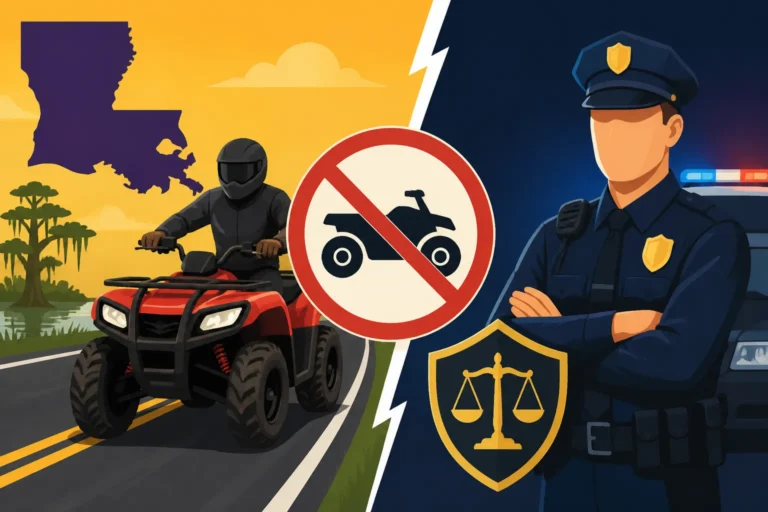
This is where many riders get confused. Your ATV or UTV, even with a rifle strapped to it, is generally not street legal for general road use in Louisiana. While there are some exceptions for agricultural purposes, designated parish roads, or specific UTV statutes, these are very specific and limited. Even when an ATV or UTV is allowed on a shoulder for farm use within a 5-mile radius, the rules for firearms might be different than if you were in a truck.
If you must cross a public road, it should be done as incidentally as possible – directly across, not down the road. During such a crossing, any firearm on your machine should absolutely be unloaded and cased. The same goes if you're operating under an agricultural exemption. While you might be able to ride the shoulder for farm purposes, carrying a loaded, uncased rifle during that transit could be seen as a violation, depending on specific parish ordinances or game laws at that time. Remember, the rules for your ATV are often distinct from those for a full-sized vehicle. Always refer to [Louisiana ATV Road Rules Under 32:299] and remember that these rules are primarily for moving the machine, not necessarily for active hunting or carrying a ready firearm on public thoroughfares.
Specific Rules for WMAs and Public Lands
Venturing onto Louisiana's Wildlife Management Areas (WMAs), national forests like Kisatchie, or other public hunting grounds introduces a much stricter set of rules for carrying firearms on your ATV or UTV. These areas are managed for conservation and public access, and that means regulations are in place to ensure safety, prevent poaching, and manage wildlife resources effectively. Ignorance of these rules is rarely an excuse, and game wardens are well-versed in enforcing them.
One of the biggest frustrations for riders is how these rules can change based on the specific WMA, the time of year, and even the type of hunting season. What's allowed for squirrel season might be entirely different during deer season, and a general access trail could have different requirements than a designated hunting area.
WMA Firearm and ATV/UTV Regulations
Most Louisiana WMAs have very clear guidelines regarding firearms and their transport on ATVs and UTVs. A common rule is that during closed seasons or when transiting through a WMA, all firearms must be unloaded and encased. This isn't just a suggestion; it's a mandatory safety and compliance measure. An uncased firearm, even if unloaded, can be interpreted as intent to hunt outside of legal seasons or areas, leading to citations.
Furthermore, WMAs often have strict rules about where ATVs and UTVs can even be operated. Many only allow machines on designated trails, and going off-trail could result in fines. Make sure your machine meets any specific [Louisiana WMA Machine Size Limits] and that you're aware of [Louisiana WMA Seasonal Riding Ban] that might impact when you can even access certain areas with a machine, let alone with a firearm. Before heading out, always check the specific WMA's regulations, which are usually available on the Louisiana Department of Wildlife and Fisheries (LDWF) website. Print them out and keep them with you – it’s better to have too much information than not enough when a game warden asks.
| Area Type | Firearm Status (General) | ATV/UTV Use (General) | Notes |
|---|---|---|---|
| Private Land (w/ Perm) | Loaded, uncased often permissible | Unrestricted by state, landowner rules apply | Landowner permission is paramount. Carry based on comfort and landowner's wishes. |
| Public Roads (Crossing) | Unloaded, cased, and inaccessible | Direct crossing, incidental use only | Avoid general road use. Check local ordinances for any UTV exceptions. |
| WMAs (Hunting Season) | Varies by WMA/season, often loaded when hunting. Cased during transport. | Designated trails only, specific size/weight limits | Check specific WMA regulations for loaded status. Game retrieval rules may allow limited off-trail. |
| WMAs (Non-Hunting Season) | Unloaded and cased, inaccessible | Designated trails only, often restricted access | Avoid any appearance of hunting. Check for [Louisiana WMA Seasonal Riding Ban]. |
| National Forests | Unloaded and cased when transporting | Designated trails only, specific permits required | Federal regulations may apply in addition to state. Check US Forest Service rules. |
Game Retrieval and Exceptions
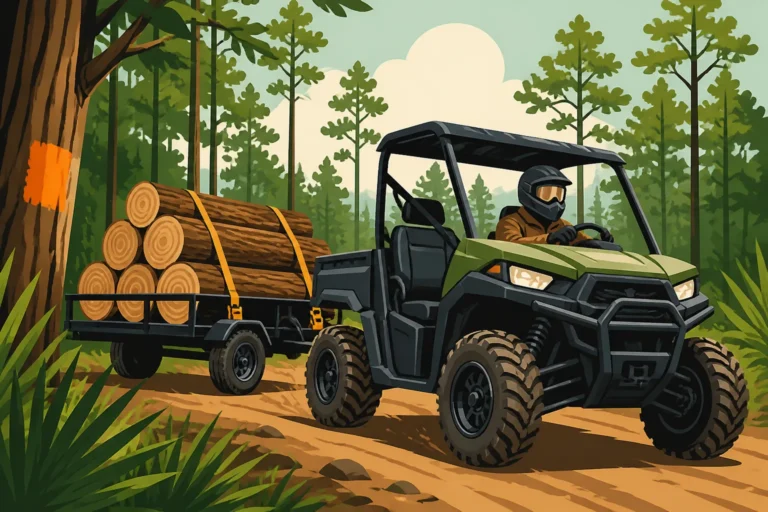
There's often a bit of flexibility for game retrieval. If you've legally harvested an animal, some WMAs or private lands may permit you to use your ATV or UTV to retrieve the game, and in some cases, a firearm might be present. However, this is usually strictly for retrieval and not for active hunting while driving the machine. The firearm should still be unloaded and secured in a way that demonstrates it's not being used to pursue game from the vehicle.
It's critical to understand that this "retrieval exception" is usually very specific and does not give you carte blanche to ride anywhere off-trail with a loaded gun. Often, it means you can take [One Machine in a Retrieval Party] and you might be limited to a specific path to and from the animal. Always confirm the specific rules for the area you are hunting in before you make any assumptions. Misinterpreting these rules could lead to penalties, even if your intentions were good.
Safe Transport and Storage Practices
Regardless of the legalities, practicing safe transport and storage of your rifle on an ATV or UTV is paramount. An accident with a firearm can be catastrophic, and the rough, unpredictable terrain that off-road machines traverse only heightens the risk. Safety should always be your top priority, even above convenience.
Many of us have seen riders with rifles just tossed onto the front rack, perhaps loosely strapped, or even worse, propped up against a seat. This is an invitation for disaster. A sudden bump, a sharp turn, or even a branch could dislodge the firearm, potentially damaging it, or worse, causing an accidental discharge.
Securing Your Firearm
Properly securing your rifle is non-negotiable. Invest in a quality gun rack or scabbard designed specifically for ATVs or UTVs. There are many excellent options out there, including those from brands like SuperATV, that are built to withstand the rigors of off-road riding. These systems typically mount securely to your machine's racks or roll cage and often feature padded interiors or sturdy straps to hold the rifle firmly in place.
When securing, always ensure:
- Unloaded: The magazine is removed (if applicable) and the chamber is empty. This is the golden rule, especially when moving the machine.
- Muzzle Direction: The muzzle is pointed in a safe direction, typically upwards or forwards, away from the operator, passengers, and vulnerable parts of the machine.
- Trigger Guard: The trigger area is protected from accidental bumps or snags.
- Tight Fit: The firearm is snugly held, preventing movement and rattling. You don't want it bouncing around and potentially rubbing against other gear, or worse, falling off.
- Accessibility: While secure, ensure it's still reasonably accessible if you need it for a lawful purpose, but not so accessible that it could be easily grabbed or misused.
Many riders opt for a fully enclosed, hard-sided case that attaches to the machine. These offer superior protection from bumps, dust, and moisture, and add an extra layer of safety by fully encasing the firearm.
Protecting Your Firearm from the Elements
Louisiana weather can be brutal – sudden downpours, thick mud, and relentless humidity are common. Your rifle is an investment, and protecting it from these elements is crucial for its longevity and reliable function. A cased firearm offers far more protection than one exposed to the open air.
Consider waterproof or water-resistant cases or scabbards. Even if your gun rack is open, you can often use a heavy-duty gun sock or cover to provide some protection against dust, rain, and mud splatter. After any ride in wet or muddy conditions, it's essential to remove your firearm, clean it, and ensure it's thoroughly dried to prevent rust and corrosion. Don't just wipe it down and put it away; often, moisture can seep into hidden crevices. A little preventative maintenance goes a long way in ensuring your rifle is ready when you need it.
Avoiding Common Mistakes and Misunderstandings
The rules surrounding ATVs, UTVs, and firearms in Louisiana are complex and often misunderstood. Many riders, with good intentions, still fall afoul of regulations simply because they didn't know or misinterpreted a rule. The goal is to avoid costly fines, potential confiscation, and most importantly, dangerous situations.
One of the biggest pitfalls is assuming that rules for private land translate directly to public land, or that what's allowed in a truck is also allowed on a quad. These assumptions can be costly.
Never Hunt from Your Machine
This is a fundamental rule in almost all jurisdictions, and Louisiana is no exception. It is generally illegal to hunt, shoot, or attempt to take game from a moving or stationary ATV or UTV. Your machine is a means of transport to and from your hunting spot, not a mobile hunting blind or shooting platform.
There are very limited exceptions, such as for individuals with specific physical disabilities who obtain special permits. For the vast majority of riders, this rule is absolute. Even if you're just sitting on your quad, if your rifle is loaded and uncased, and you're in an area where hunting is permitted, a game warden could interpret that as hunting from the machine. Always dismount, move away from your machine, and secure it before you begin to hunt. This rule is in place for safety and fair chase principles. Remember that [Louisiana Trespass Law for Riders] also applies, and even if you’re dismounted, ensure you are on land where you have permission to hunt.
Understanding DUI Laws and Off-Road Machines
It's a common misconception that DUI laws only apply to cars on paved roads. This is absolutely false. In Louisiana, you can be charged with Driving Under the Influence (DUI) while operating an ATV or UTV, even on private land, if that land is accessible to the public or if you're on a public trail or road. The same legal limits and penalties that apply to cars can apply to your off-road machine.
If you're carrying a firearm while operating your ATV or UTV under the influence, the legal consequences can become far more severe. This combination can lead to additional charges related to reckless endangerment or improper handling of a firearm, in addition to the DUI. Alcohol and firearms simply do not mix, and adding an off-road vehicle into the equation compounds the danger. Always ensure the driver is sober, and if you're going to consume alcohol, do so responsibly and away from operating any machinery or handling firearms. [Louisiana DUI Law and Off-Road Machines] is a serious matter and can have life-altering consequences.
The Importance of a Hunting License and WMA Permit
If you're carrying a rifle on your ATV or UTV with the intent to hunt, you absolutely must have a valid [Louisiana Hunting License and Land Access] license appropriate for the game you're pursuing. Additionally, if you're on a WMA, you'll need the appropriate WMA access permit, and often, you'll need to fill out a self-clearing permit upon entry.
Failing to have these documents is a guaranteed way to get a citation, even if your firearm and ATV are otherwise compliant. These permits and licenses fund wildlife management and conservation efforts, and they are foundational to legal hunting. Always double-check that your licenses and permits are current and in your possession before heading out. It's a small administrative step that prevents a large headache.
Remember, the goal is always to enjoy Louisiana's incredible outdoors responsibly and safely. Understanding these rules helps ensure that your experience is a positive one for everyone involved.
Disclaimer
This article is for general informational purposes only and does not constitute professional advice. Laws, prices and regulations vary by location and change over time. Consult a qualified professional for guidance on your specific situation.