Louisiana Decals After a Private Sale
Buying an off-road machine from a private seller here in Louisiana can feel like navigating a swamp blindfolded, especially when it comes to getting all your ducks in a row for proper registration. Many folks assume that once you have the title in hand, you're good to go, but there's a crucial piece of the puzzle often overlooked: the Off-Road Vehicle (ORV) decal. This guide is going to walk you through everything you need to know about securing your Louisiana ORV decal after a private sale, making sure you don't hit any unexpected snags or penalties down the road.
Understanding the Louisiana Off-Road Decal
It's easy to get confused when you're dealing with official paperwork for your ATV or UTV in Louisiana. You've got titles, sales tax, and then there's this decal. What exactly is it for, and why is it so important, especially after you've just bought a machine from a private individual? Let's clear the mud on this.
The Purpose of the Decal: Beyond Just a Sticker
Think of the ORV decal not just as a sticker, but as your machine's visible proof of registration for off-road use within Louisiana. This little three-dollar gem, renewed every year, signifies that your ATV or UTV is accounted for in the state's system. It's how law enforcement can quickly tell if a machine is legally allowed to be on designated trails, certain public lands, or even crossing parish roads under specific circumstances. Without it, even if you own the machine free and clear, you could face questions and potential penalties. It's a quick visual check that helps keep everyone honest and ensures machines are properly documented. It's easy to overlook, especially if you're excited about a new-to-you quad, but it's a non-negotiable part of being a responsible off-road enthusiast here. [Louisiana's Yearly Off-Road Decal] outlines more about this critical sticker.
Decals vs. Titles: Two Separate Requirements
This is where a lot of riders trip up. In Louisiana, your ATV or UTV needs both a title and an ORV decal. The title proves ownership – it’s like the deed to your house, showing who legally holds the property. The decal, on the other hand, is the permit to operate that machine on regulated off-road areas. You can hold a title without having an active decal, and vice-versa, though neither scenario is ideal or fully compliant. The title process usually involves the Louisiana Office of Motor Vehicles (OMV) ensuring the machine is properly transferred from one owner to the next and that all sales taxes are paid. Only after you’ve secured the title and settled your sales tax can you even apply for the decal. It’s a two-step process, and understanding that distinction is key to avoiding frustration and multiple trips to the OMV. [Why an ATV Needs Both a Title and a Decal] offers a deeper dive into this important distinction.
What Happens Without a Decal: The Risks
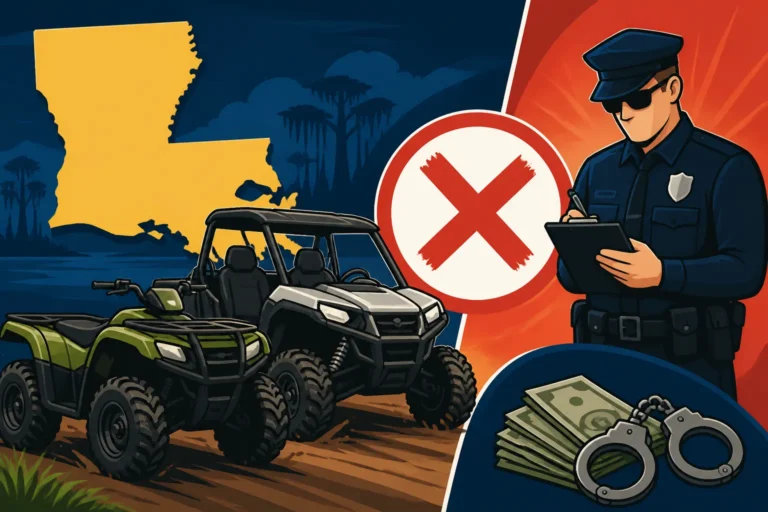
Riding without a current ORV decal in Louisiana is like playing Russian roulette with your wallet and your machine. If you're pulled over or encountered by a state trooper or parish deputy while riding on an area that requires a decal, the consequences can range from a significant fine to your machine being impounded. These penalties aren't just a slap on the wrist; they can be costly and a huge hassle to resolve. Imagine having your fun cut short, your machine loaded onto a tow truck, and then having to pay impound fees on top of the citation. It's a scenario no rider wants to face, and all of it is easily avoidable by simply having that little decal displayed correctly. The OMV and law enforcement take this seriously because it’s a matter of tracking machines and ensuring compliance with state regulations. [Louisiana Penalties for No Decal] explains these consequences in more detail.
Navigating a Private ATV/UTV Sale in Louisiana
Buying an ATV or UTV from a private individual can often save you money compared to a dealership, but it also places a greater responsibility on your shoulders to ensure all the paperwork is in order. Unlike a dealer who handles most of the legwork, a private sale means you’re the one responsible for getting the machine legally transferred and ready for the trails. This can feel daunting, but with the right information, you can protect your investment and streamline the decal process.
Essential Documents from the Seller: What to Demand
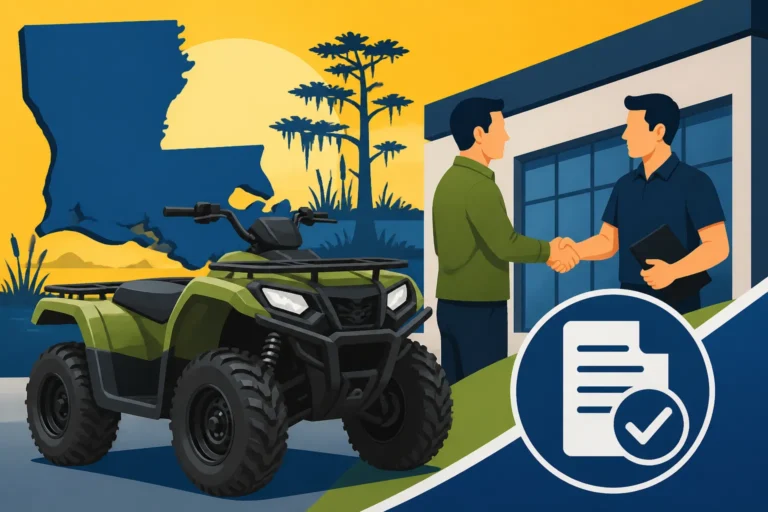
When you’re shaking hands on a private sale, the most critical document you need from the seller is the signed-over original title. Without a properly assigned title, you simply cannot get a new title in your name, and without a title, you definitely can't get a decal. Look for the "Assignment of Title" section on the back of the Louisiana title certificate. It must be filled out completely, with the seller's signature, your name as the buyer, the sales price, and the date of sale. Seriously, check every blank. A missing signature or an incorrect date can cause huge headaches at the OMV. You'll also want a clear, legible odometer reading if applicable, though for most ATVs and UTVs, hours are more relevant than miles. Make sure the VIN on the title matches the VIN on the machine perfectly. [Louisiana Requires an Assigned Title for a Used One] underscores the importance of this step.
The Importance of a Bill of Sale: Protecting Your Purchase
Beyond the title, a comprehensive bill of sale is your best friend in a private transaction. While not always strictly required by the OMV for titling and decals if you have a perfectly assigned title, a bill of sale provides an invaluable record of the transaction. It should include the full names and addresses of both buyer and seller, the date of sale, the purchase price, the year, make, model, and VIN of the ATV or UTV. Having a detailed bill of sale can prevent disputes later, especially if there are any questions about the sale price (which impacts sales tax) or the condition of the machine. I always recommend using a standardized form, perhaps one you can find online from a reputable source like LawDepot, to ensure all necessary information is captured. Even better, get it notarized – this adds a layer of official verification to the agreement and can smooth things over if any questions arise with the OMV. [Why Your Bill of Sale Needs a Notary] goes into why this small step can be a big help.
Proof of Sales Tax First: A Critical Step Before the Decal
This is often the biggest surprise for private buyers: you must pay the sales tax on your purchase before the OMV will issue you a title or a decal. You can’t just show up with your signed title and expect to walk out with a decal. Louisiana requires proof that the state and parish sales taxes have been collected on the purchase price. If you buy from a dealer, they handle this for you. But in a private sale, you are responsible for paying this directly to the OMV. They will calculate the sales tax based on the purchase price listed on your title or bill of sale, and you'll need to pay it on the spot. Make sure you've budgeted for this expense, as it can be a significant amount depending on the purchase price and your combined state and local sales tax rates. Without that sales tax receipt, the entire process grinds to a halt. [Louisiana Requires Proof of Sales Tax First] explains this fundamental requirement.
The Decal Application Process After Purchase
Alright, you've successfully navigated the private sale, secured your title, and paid your sales tax. Now it's time for the final piece: getting that shiny new ORV decal. This process is generally straightforward, but knowing what to expect and having all your materials ready will make your visit to the OMV much smoother. Nobody enjoys standing in line only to realize they forgot a crucial document!
Gathering Your Paperwork: What to Bring to the OMV
When you head to your local OMV office, preparation is key. You'll need to bring a few essential items to ensure you can apply for your decal without a hitch. First and foremost, bring your newly issued Louisiana title for the ATV or UTV. This proves legal ownership in your name. Secondly, you'll need the receipt proving you've paid the applicable state and parish sales tax on the purchase. This is often an integral part of the titling process, so you might have just received it. Thirdly, bring your valid Louisiana driver's license or state-issued ID. They'll need to verify your identity. While not always strictly required for the decal itself if the title is already in your name, it's wise to have a copy of the bill of sale (especially if notarized, perhaps one you created through LawDepot) just in case there are any questions about the purchase price or details. Finally, be prepared to fill out the necessary application form, often the Vehicle Application form (DPSMV 1799).
Paying the Decal Fee: Understanding the Cost
Once your paperwork is reviewed and approved, you’ll be asked to pay the decal fee. The good news is that the Louisiana ORV decal is quite affordable. It's a nominal fee that helps fund the program. This fee is separate from the title fee and any sales tax you paid. Always check the current rates on the OMV website or call ahead to your local office to confirm, as fees can sometimes change. You'll generally pay at the counter, and most OMV locations accept various forms of payment, including cash, checks, and debit/credit cards. Once the payment is processed, they'll issue you the decal on the spot, along with a registration card to keep with your machine or in your records. [Louisiana Charges $3 a Year for a Decal] provides specific details on this minimal cost.
Affixing Your New Decal: Placement Rules
Getting the decal is one thing, but knowing where to put it is another. The Louisiana OMV has specific guidelines for decal placement to ensure it's easily visible for enforcement purposes. Typically, the decal must be prominently displayed on the left side of the machine. For ATVs, this usually means on the left front fender or cowling. For UTVs, it might be on the left side of the roll bar or an easily visible part of the left bodywork. The key is visibility; it shouldn't be hidden by accessories, mud, or obscured in any way. Make sure the surface is clean and dry before applying the decal to ensure good adhesion. Taking the time to place it correctly will save you potential hassle later on. After all, the whole point is for it to be seen!
Common Hurdles and How to Overcome Them
Even with the best intentions, the process of getting a decal after a private sale isn't always perfectly smooth. Sometimes, you encounter unexpected problems that can delay or complicate things. It's frustrating when you're ready to hit the trails, but these issues are usually solvable with a little patience and persistence.
Missing Paperwork from the Seller: What to Do
One of the most common headaches is discovering that the seller didn't provide all the necessary paperwork, or that a signature is missing from the title. If you realize the title is improperly assigned before you've registered it, your best bet is to contact the seller immediately and ask them to complete or correct the missing information. If they're uncooperative or unreachable, things get tougher. You might need to pursue a court order to establish ownership or potentially apply for a bonded title, which is a much more involved and costly process. This is precisely why a detailed, notarized bill of sale is so important; it can often bridge gaps or provide additional proof of transaction details if the title itself has minor flaws. Always try to get everything squared away at the time of sale, ideally even meeting the seller at an OMV office to complete the transfer. [Louisiana Title Without a Bill of Sale] can offer some guidance if you find yourself in this tricky spot.
Dealing with Unpaid Sales Tax: Resolving the Issue
If you bought the machine from a private seller and, for some reason, didn't pay the sales tax at the time of titling, you'll eventually need to settle up. The OMV will not issue a decal (or even a title) until that sales tax liability is resolved. They have mechanisms to assess use tax on machines brought into the state or for which tax was not properly collected. If you acquired the machine through a gift or inheritance, there might be specific exemptions or procedures, but generally, sales tax is expected on any purchase. If you're coming from out-of-state with a machine, you'll pay Louisiana use tax if you haven't already paid sales tax in another state at an equivalent or higher rate. The OMV is surprisingly diligent about this, so it's always better to address it proactively. Don't try to dodge it; it will eventually catch up to you. [Getting a Use Tax Bill at the OMV Counter] explains how this tax is handled.
When the VIN is Missing or Unreadable: Special Procedures
The Vehicle Identification Number (VIN) is your machine's unique fingerprint, and it’s absolutely essential for titling and decal purposes. If the VIN plate is missing, has been tampered with, or is simply unreadable due to rust or damage, you’ve got a significant problem. The OMV cannot process a title or issue a decal without a verifiable VIN. In such cases, you might be required to undergo a VIN verification inspection by law enforcement. They will check for any alternative identification numbers and verify the machine isn't stolen. If no VIN can be recovered, the OMV might require you to obtain a new assigned VIN, which involves another layer of inspection and paperwork. This is a rare but challenging hurdle, so always inspect the VIN carefully before purchasing a used machine from a private seller. [Serial Numbers the OMV Will Accept on a Title] discusses the OMV's requirements for identification.
Maintaining Compliance and Avoiding Penalties
Getting your decal is a great first step, but responsible ownership means staying compliant long-term. Decals aren't a one-and-done deal; they need to be renewed, and sometimes they get lost or damaged. Understanding these ongoing responsibilities will ensure you can enjoy your machine without unnecessary worry or legal trouble.
Decal Renewal Cycles: Staying Current
Unlike vehicle license plates, which often renew on an annual basis tied to your birth month, Louisiana ORV decals operate on a specific cycle. The state sets these cycles, and typically, decals are issued for a specific period, often four years, with a small annual fee. This means you don't necessarily get a new sticker every single year, but you do pay a renewal fee to keep it active. It's crucial to know when your decal is due for renewal. The OMV usually sends out reminders, but it’s ultimately your responsibility to track the expiration date. Letting it lapse can put you in the same position as riding without one – facing fines and potential impoundment. Always make sure your information with the OMV is current so you receive these important notices. [When a Louisiana ORV Decal Comes Up for Renewal] clarifies the timing.
The Consequences of No Decal: Fines and Impoundment
We've touched on this before, but it bears repeating: riding without a valid ORV decal in Louisiana is a gamble you don't want to take. The penalties are real and can be severe. A state trooper or parish deputy patrolling public lands, designated trails, or even parish roads where ATVs are conditionally allowed, can and will issue citations for non-compliance. These tickets carry fines that can quickly add up, and in some cases, especially for repeat offenses or if other violations are present, your machine could be impounded. Getting an impounded machine back involves not only paying the fines but also towing and storage fees, which can quickly exceed the cost of the decal itself many times over. Save yourself the headache and expense by always ensuring your decal is current and properly displayed. [Louisiana Penalties for Riding Without a Decal] details the financial and logistical costs.
When Your Decal is Lost or Damaged: Getting a Replacement
Life happens, and sometimes decals get lost, stolen, or damaged beyond recognition – perhaps during a particularly enthusiastic mud ride or if your machine is involved in a minor mishap. If your ORV decal is no longer visible or usable, you absolutely need to get a replacement before riding again. You can obtain a replacement decal through the OMV. You’ll typically need to fill out a form, provide your identification, and possibly pay a small replacement fee. It's a much quicker and simpler process than starting from scratch, but it's important to do it promptly. Don't risk riding around with a damaged or missing decal, thinking it's "close enough." Law enforcement will view it the same as having no decal at all. Being proactive about replacements keeps you legal and worry-free on the trails. [Louisiana Decal Replacement If Lost] explains the steps to get back on track.
| Common Decal Application Mistakes | Description | How to Avoid / Resolve |
|---|---|---|
| Missing Signed Title | Seller fails to sign the "Assignment of Title" section, or crucial information (like sales price or date) is left blank. | Always inspect the title thoroughly at the point of sale. If possible, meet the seller at the OMV to complete the transfer. Get a detailed bill of sale (e.g., from LawDepot) as backup. |
| Unpaid Sales Tax | Buyer assumes sales tax is included in purchase price or isn't aware they need to pay it directly to the OMV on a private sale. | Budget for sales tax on top of the purchase price. Be prepared to pay it at the OMV when you title the machine. Ask for a clear tax receipt. |
| Incorrect VIN on Title | The VIN on the provided title does not exactly match the VIN stamped on the machine itself. | Physically verify the VIN on the title against the machine's VIN before finalizing the purchase. Take a photo of the VIN on the machine. |
| Delayed Application | Waiting too long after purchase to title and get the decal, leading to potential issues with lost paperwork or legal deadlines. | Louisiana has deadlines for titling. Complete the titling and decal application as soon as possible after purchase, ideally within 30 days. [Louisiana's 30-Day Decal Deadline] applies. |
| Improper Decal Placement | New decal is affixed in an obscured location, is peeling, or is not on the required side of the machine. | Clean and dry the surface. Place the decal prominently on the left side of the machine as per OMV guidelines. Ensure it's fully visible and not damaged. |
| Lapsed Decal Renewal | Forgetting to renew the annual decal fee, leading to an expired decal. | Keep track of your decal's expiration date. Respond to OMV renewal notices. Set a personal reminder to renew annually. |
Ultimately, getting your Louisiana ORV decal after a private sale doesn't have to be a bewildering experience. By understanding the distinct roles of the title and decal, demanding the right paperwork from the seller, preparing for your OMV visit, and staying vigilant about renewals, you can ensure your off-road adventures are always on the right side of the law. A little planning goes a long way in keeping you on the trails and out of trouble!
Disclaimer
This article is for general informational purposes only and does not constitute professional advice. Laws, prices and regulations vary by location and change over time. Consult a qualified professional for guidance on your specific situation.