Louisiana Title Compared to Mississippi
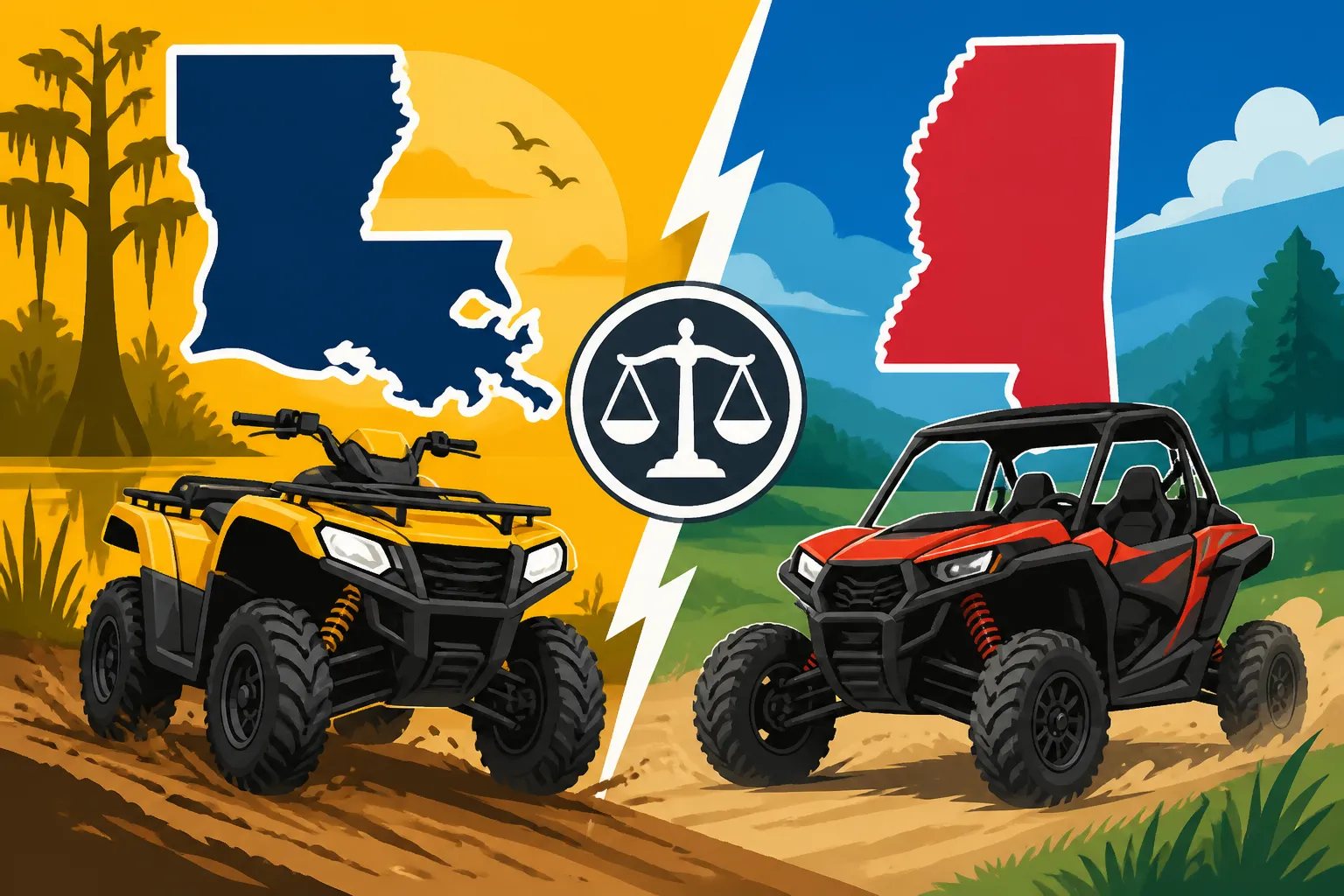
Many of us living on the border of Louisiana and Mississippi find ourselves scratching our heads when it comes to off-road vehicle titles. Whether you're eyeing a killer deal across the Sabine River or you're moving your whole life, including your beloved quad, from one state to the other, the differences in titling can feel like navigating a swamp in the dark. This guide is here to untangle the nuances between Louisiana and Mississippi's ATV and UTV titling processes, helping you avoid headaches, fines, and wasted trips to the OMV.
Fundamental Differences in Titling Philosophy
Louisiana and Mississippi approach the concept of off-road vehicle (ORV) titling from quite different perspectives, and understanding this core difference is key to avoiding confusion. It's not just about different forms; it's about what each state believes an ATV or UTV is in the eyes of the law. This can be a huge point of frustration for riders who expect a uniform process, especially if they've bought machines in other states before and encountered yet another set of rules.
Is Titling Even Mandatory in Mississippi?
One of the biggest eye-openers for Louisiana riders looking into Mississippi, or vice-versa, is that Mississippi’s approach to ATV and UTV titling is, for many years, quite different from Louisiana's. In Mississippi, titling for off-road vehicles like ATVs and UTVs often isn't mandatory unless you specifically request it or if the vehicle is being financed through a lender that requires a title for collateral. This means a private sale in Mississippi might involve little more than a bill of sale, which can be unsettling if you're used to Louisiana's more stringent requirements. Imagine finding a great deal on a used quad in Hattiesburg, only to realize the seller has never bothered with a title because their state didn't demand it. This difference can lead to a lot of confusion, especially if you're accustomed to the mandatory system we have right here in Louisiana.
When a Mississippi resident purchases an ATV or UTV, they might simply receive a Manufacturer's Statement of Origin (MSO) for a new machine or a bill of sale for a used one. They can choose to apply for a title through the Mississippi Department of Revenue, but it's not universally required for ownership. This optional nature means you might encounter machines for sale in Mississippi that have never been titled, which can be a red flag if you’re planning to bring it back across the state line to Louisiana. It's a fundamental difference that really shapes how transactions happen and what paperwork you can expect to receive.
Louisiana's Mandatory Title and Decal System
Contrast that with Louisiana, where ATV and UTV titling is a firm requirement through the Office of Motor Vehicles (OMV). There's no "optional" about it here; if you own an off-road machine in Louisiana, it needs a title. This title acts as the official record of ownership, just like it would for a car or truck, and it's absolutely crucial for proving you’re the rightful owner, especially when it comes to selling it later or dealing with any legal issues. This system is designed to provide clear ownership trails and help prevent theft, and it’s something every Louisiana rider learns quickly. [Louisiana ORV Decals and Titles Explained] provides a good overview of this process and how deeply it's woven into our state's off-road culture.
Beyond the title, Louisiana also mandates an annual ORV decal. This isn't a license plate, but a sticker that proves you've paid the minimal yearly fee and helps fund our state's off-road programs. You literally can't ride legally on designated trails or even some private lands without this decal properly affixed. For those coming from Mississippi, this is another layer of bureaucracy that might seem unfamiliar. So, for your machine to be fully legal in Louisiana, you're looking at both a title and a decal. It’s a two-pronged approach that Mississippi generally doesn't share, and it means more paperwork to keep track of. The OMV is the agency responsible for this, as detailed in [Louisiana Titles ATVs Through the OMV]. Don't forget, [Louisiana's Yearly Off-Road Decal] is a small fee, but a mighty requirement.
Sales Tax and Associated Fees: A Tale of Two Budgets
Beyond the titling philosophy, the financial side of acquiring an ATV or UTV in either state presents its own set of distinctions, primarily in how sales tax is assessed and the various fees you’ll encounter. Nobody wants to get to the OMV counter only to be hit with an unexpected bill, and these differences can definitely throw off your budget if you're not prepared.
Louisiana's Sales Tax and Specific Fees
In Louisiana, when you purchase an ATV or UTV, whether new or used, you're going to pay sales tax. This isn't just a state sales tax; it's a combination of state and local parish sales taxes, which can vary significantly depending on where you live or where you make your purchase. It can sometimes feel like you’re doing math gymnastics just to figure out the final price! The good news is that if you trade in an old machine, the sales tax is typically calculated on the price after the trade-in credit, which can save you a bit of money. [Louisiana's 5 Percent State Sales Tax] gives you the state-level details, but remember those parish add-ons can make the total rate quite high.
When it comes to fees, Louisiana has a few standard ones. You'll pay a title fee, which is a flat rate, regardless of the machine's value. There's also an OMV handling fee for processing your paperwork, and if you're financing your machine, you'll likely incur a mortgage recordation fee to record the lien on the title. It's vital to have proof of sales tax payment before the OMV will even issue your title, so don't skip that step! [Louisiana Requires Proof of Sales Tax First] explains why this is non-negotiable. [Louisiana Title Fees for an ATV] breaks down the main costs. All these fees add up, and it's essential to factor them into your overall budget, especially if you're bringing a machine into Louisiana from out-of-state. The OMV is pretty firm on these requirements, and without proper proof, you'll be sent home empty-handed.
Mississippi's Sales Tax and Simpler Fee Structure
Mississippi also assesses sales tax on ATV and UTV purchases, but the rate and structure can differ from Louisiana’s combined state and local rates. For many years, Mississippi has had a single state sales tax rate that applies across the board, making it a bit more straightforward to calculate than Louisiana's sometimes dizzying array of combined rates. Just like in Louisiana, if you trade in a machine, the sales tax will typically be on the net purchase price. This can make comparing "out-the-door" prices between dealers in both states a bit tricky, so always ask for a full breakdown.
As for fees, because titling isn't always mandatory in Mississippi, the associated fees can be simpler or even non-existent if you opt not to title your machine. If you do choose to title your ATV or UTV in Mississippi, you'll pay a titling fee to the Department of Revenue, but you won't generally encounter the separate "ORV decal" fee that Louisiana mandates. The lien recording process is also different, usually handled directly by the Department of Revenue if a title is issued. This contrast in fees can make Mississippi initially appear cheaper, but remember that Louisiana’s mandatory titling and decal system comes with the benefits of official state registration and easier proof of ownership, which can save headaches in the long run.
Navigating a Cross-Border Purchase or Move
This is where the rubber truly meets the road for many of us. It’s one thing to understand the rules in theory, but quite another to apply them when you’re buying a quad from a seller across the state line, or when life takes you from one state to the other. Mistakes here can cost you time, money, and a lot of frustration, turning an exciting new purchase into a bureaucratic nightmare.
Buying an ATV or UTV from Mississippi to Louisiana
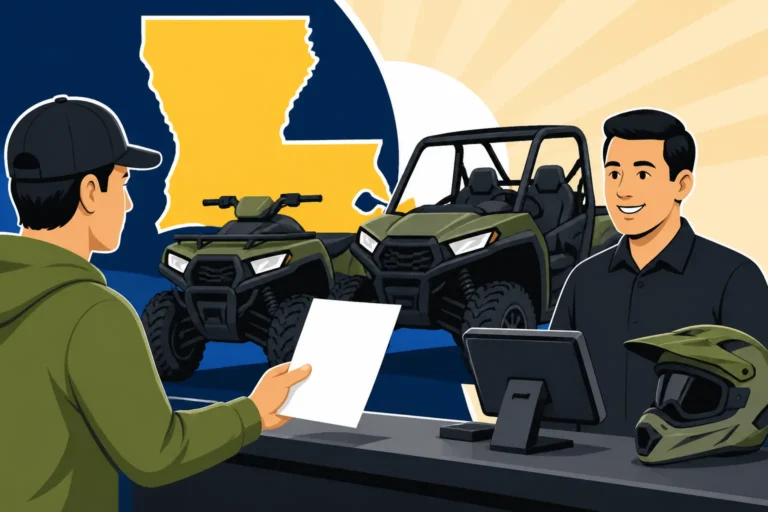
Let’s say you’ve found a fantastic deal on a used side-by-side just over the Mississippi border. You’ve negotiated a great price, but now you need to bring it home to Louisiana and make it legal. The absolute first thing you need from the seller is proof of ownership. If the machine was never titled in Mississippi, you'll need the original Manufacturer's Statement of Origin (MSO) for a new machine, or a robust, detailed bill of sale for a used one. And by robust, I mean make sure it has all the details: buyer and seller names, addresses, VIN, purchase price, date, and signatures. Even better if you can get it notarized – while not always strictly required for an MSO, a notarized bill of sale can head off a lot of questions at the OMV, especially for a used machine. [Louisiana Notarized Bills of Sale] explains why this matters so much.
When you bring this machine to the Louisiana OMV, you’ll be treated as if you’re purchasing an out-of-state vehicle. This means you’ll pay Louisiana sales tax (state and local combined) on the purchase price. Even if the machine was titled in Mississippi, you’ll still need to provide proof of sales tax paid. If you didn’t pay sales tax in Mississippi, or if the rate was lower, you'll be on the hook for the difference here. The OMV will then issue you a Louisiana title and you’ll apply for your annual ORV decal. Prepare for a bit of a paperwork marathon, but being organized with your MSO or a detailed, notarized bill of sale from the seller will make a world of difference. For specific guidance on this, check out [Louisiana Titles for an Out-of-State Purchase]. LawDepot can be a really helpful resource for generating a professional, legally sound bill of sale if the seller doesn't have one ready.
Moving to Louisiana with an Already-Owned Machine
What if you're not buying, but moving your whole life, including your beloved off-road fleet, from Mississippi to Louisiana? Welcome to the Bayou State! While you won't pay sales tax again if you've already paid it in Mississippi when you originally bought the machine and can prove it, you will need to get a Louisiana title for each of your ATVs and UTVs. Remember, Louisiana makes titling mandatory. You might even pay a use tax if you can’t prove you paid sales tax at the original purchase, so dig out those old receipts!
To do this, you'll need your Mississippi title (if you had one), or your MSO and proof of ownership from when you first acquired the machine, along with proof of sales tax payment from Mississippi. The Louisiana OMV will require proof of your new Louisiana residency, your photo ID, and the usual application forms. They’ll then process your application, issue a new Louisiana title in your name, and you'll purchase your [Louisiana's Yearly Off-Road Decal]. It’s generally a smoother process than buying from out-of-state, as you already hold the proper ownership documentation, but it’s still essential to gather all your paperwork before heading to the OMV. For new residents, the process is detailed further in [Louisiana Title for a New Resident].
Selling a Louisiana Machine to a Mississippi Buyer
If you’re on the other side of the transaction and selling your Louisiana-titled ATV or UTV to a Mississippi resident, your primary responsibility is to properly assign your Louisiana title to the buyer. This involves signing over the physical title document, making sure the mileage (if applicable) and sale price are correctly filled out, and dating it. A bill of sale is also highly recommended, even if Mississippi’s titling is optional for the buyer, as it protects both parties by documenting the transaction. Again, a notarized bill of sale, perhaps drafted using a service like LawDepot, can provide an extra layer of legal security. The buyer will then take these documents back to Mississippi to decide whether they want to title the machine there or simply rely on the bill of sale. For tips on how to prepare for this, read [Selling to a Buyer Across the Sabine].
It’s a good idea to remind the buyer that while Mississippi might not require a title, having one can be beneficial for proving ownership, especially if they ever plan to sell it to someone in a state with mandatory titling, like Louisiana. For you, the seller, ensure you keep a copy of the assigned title and the bill of sale for your records. This protects you in case of any future disputes or if the machine is later involved in an incident. [Buying From a Seller Across the Sabine] also has relevant insights from the buyer's perspective.
Avoiding Common Pitfalls and Ensuring a Smooth Process
Navigating two different state systems can feel like a bureaucratic maze, and it’s easy to stumble into common traps that lead to delays or extra costs. A little proactive planning and attention to detail can save you a lot of grief, turning potential headaches into smooth transactions.
The Importance of Comprehensive Paperwork
Regardless of whether you’re coming from Mississippi or going there, the golden rule is always about paperwork. Louisiana is incredibly strict about documentation. If you’re bringing a machine into Louisiana, the OMV absolutely requires a clear chain of ownership. This means:
- For new machines: The Manufacturer's Statement of Origin (MSO) is paramount. Make sure it's the original and that it's properly assigned to you by the dealer. [Louisiana Requires an MSO for a New Machine]
- For used machines: An assigned title from the previous owner (if titled in Mississippi) or a detailed, notarized bill of sale is critical. Make sure all fields are filled out completely, and the VIN matches perfectly. You can often find reliable templates for bills of sale through services like LawDepot, which can help ensure you don't miss any vital information. [Louisiana Requires an Assigned Title for a Used One]
- Proof of Sales Tax: This cannot be stressed enough. The Louisiana OMV will not issue a title without proof that sales tax has been paid on the purchase price. If you paid tax in Mississippi, bring that receipt. If you didn't, or if the rate was lower, be prepared to pay the Louisiana use tax at the OMV counter. [Louisiana Sales Tax Proof at the Counter]
Missing or incomplete documents are the number one reason people get turned away from the OMV. Always call ahead or check the OMV website for the latest requirements before you make the trip, especially if you’re dealing with an out-of-state purchase.
Verifying Ownership and Machine Details
Before you hand over any money, especially in a private sale across state lines, always take steps to verify the machine's legitimacy. If you’re buying from a Mississippi seller, ask if they have a title, even if it’s optional in their state. If they do, compare the VIN on the title to the physical VIN on the machine. If they only have a bill of sale, scrutinize it for completeness and consider running the VIN through a national database to check for theft. This due diligence can save you from inadvertently purchasing a stolen machine, which would lead to nothing but trouble trying to get a Louisiana title.
Also, be sure to document the condition of the machine and any agreements with the seller. A thorough bill of sale generated from a template, perhaps from LawDepot, can be immensely helpful here, providing sections for disclosures about the machine's condition or any known issues. This level of detail helps protect you, the buyer, and ensures a transparent transaction.
Understanding the Long-Term Implications
The choice to title a machine in Mississippi (or the requirement to do so in Louisiana) has long-term implications. A title provides indisputable proof of ownership, which is invaluable for resale, insurance claims, or recovering a stolen machine. While Mississippi’s optional titling might seem simpler initially, it can complicate matters down the road if you sell to someone in a state like Louisiana, where a title is a must-have.
Think about resale value: a machine with a clear, clean title in hand will almost always command a better price and attract more serious buyers than one with only a bill of sale, especially if those buyers are from states like Louisiana. It reduces risk for the buyer and makes the transaction smoother. So, even if you could skate by without a title in Mississippi, considering the future can lead you to make the choice for a clear, official paper trail, much like Louisiana demands from the start.
Table: Louisiana vs. Mississippi ATV/UTV Titling Overview
Here’s a quick glance at some of the key differences you might encounter:
| Feature | Louisiana (OMV) | Mississippi (Dept. of Revenue) |
|---|---|---|
| Titling Status | Mandatory for all ATVs/UTVs | Optional for most ATVs/UTVs |
| Required Documents | MSO/Assigned Title, Bill of Sale, Sales Tax Proof, Photo ID, Application | MSO/Assigned Title, Bill of Sale (optional title app) |
| Sales Tax | State + Parish Combined (on net price) | State Only (on net price) |
| Annual Decal/Plate | Mandatory ORV Decal required | No annual ORV decal/plate required |
| Lien Recording | Mortgage Recordation Fee at OMV | Handled by Dept. of Revenue if titled |
| Private Sale | Notarized Bill of Sale strongly recommended | Bill of Sale sufficient (title if available) |
| New Machine Proof | Manufacturer's Statement of Origin (MSO) | Manufacturer's Statement of Origin (MSO) |
Disclaimer
This article is for general informational purposes only and does not constitute professional advice. Laws, prices and regulations vary by location and change over time. Consult a qualified professional for guidance on your specific situation.