Louisiana Charges $3 a Year for a Decal
It can be incredibly confusing trying to navigate the rules for owning and operating an off-road vehicle here in Louisiana, especially when it comes to understanding what fees are truly necessary. Many riders are surprised, and sometimes even frustrated, by the seemingly small annual decal fee, wondering if it's just another hurdle or if it genuinely serves a purpose. This guide will demystify the Louisiana off-road decal, explaining its minimal cost, what it achieves, and why it's a crucial part of responsible riding in our beautiful state.
Understanding the Louisiana Off-Road Decal
When you’re gearing up for a weekend ride, whether it’s through the piney woods or a local mud park, the last thing you want is a surprise from law enforcement because you missed a small, but vital, piece of paperwork. That little sticker on your ATV or UTV, the one that only costs a few dollars a year, carries a lot more weight than its price tag suggests. It's not just a revenue grab; it's a fundamental part of keeping our trails open and our riders safe.
What Exactly Is This $3 Decal For?
At first glance, a $3 annual decal might seem like a token fee, almost too small to matter, but it's far from insignificant. This minimal charge, as highlighted in Louisiana Charges $3 a Year for a Decal, is a requirement for most off-road vehicles operated in Louisiana, whether on designated trails, private lands (if leaving your own property), or even crossing parish roads where permitted. It acts as proof that your machine is recognized by the state for off-road use, helping to fund vital programs and infrastructure that benefit all riders. Think of it as your yearly membership card to the Louisiana off-road community.
It’s easy to dismiss such a small fee, but its purpose is actually quite broad. The funds collected from these decals contribute directly to state programs focused on ATV and UTV safety, education initiatives, and even enforcement to ensure everyone is riding responsibly. This collective contribution helps maintain a safer riding environment for everyone. It also helps the state gather data on the number of off-road machines in operation, which can be crucial for planning future trail development and resource allocation.
The Four-Year Cycle and What It Means for You
Unlike some annual registrations that might follow a calendar year, Louisiana’s off-road decal operates on a four-year cycle. This can sometimes catch riders off guard if they're not used to it. Your decal will have an expiration year printed on it, and it will be valid for four years from the date of issue or renewal, regardless of the calendar year it was purchased. For example, if you buy your decal in April of 2023, it might expire in April of 2027. This cycle is designed to simplify renewals and reduce the administrative burden on both riders and the OMV. [Louisiana Decal Cycles and Their Length] provides more detail on this system.
Understanding this four-year cycle is key to avoiding penalties. While the cost is just $3 per year, you'll actually pay for all four years upfront when you first obtain or renew your decal, meaning an initial payment of $12. This consolidates the process and ensures continuous coverage. It also means you need to mark your calendar for that four-year renewal date, as you won't get an annual reminder for a decal that's good for multiple years. It's a system designed for convenience, but it requires riders to be a little proactive in remembering their renewal dates.
Dispelling Myths About the Decal's Purpose
There are often misconceptions circulating among riders about what the off-road decal actually grants you. Some might mistakenly believe that possessing a decal automatically makes their ATV or UTV street legal, or that it’s simply a "tax" with no real benefit. Let's be absolutely clear: [Why an Off-Road Decal Is Not Street-Legal Registration]. The decal is specifically for off-road use and does not permit you to ride your machine on public roads, highways, or interstates, except under very specific, limited circumstances like crossing a road or for legitimate agricultural purposes.
The primary purpose of the decal, as also detailed in [What the $3 Yearly Off-Road Decal Buys], is to help fund the administration of off-road vehicle laws, promote rider safety through educational programs, and support enforcement efforts. It’s part of a larger framework designed to manage and regulate off-road recreation responsibly. It also helps the state track the number of active off-road vehicles, which can be used to advocate for more riding opportunities or dedicated off-road funding. It's not about making your machine street legal, but about ensuring its legal off-road operation and contributing to the community of riders.
The Process of Obtaining Your Decal
Getting your off-road decal in Louisiana isn't a complex process, but it does require attention to detail and the right documentation. The good news is that the Louisiana Office of Motor Vehicles (OMV) is the agency responsible for handling these decals, making it a familiar process for anyone who has ever titled a vehicle. Knowing what to bring and what to expect can save you a lot of time and frustration at the counter.
Necessary Paperwork for a New Decal
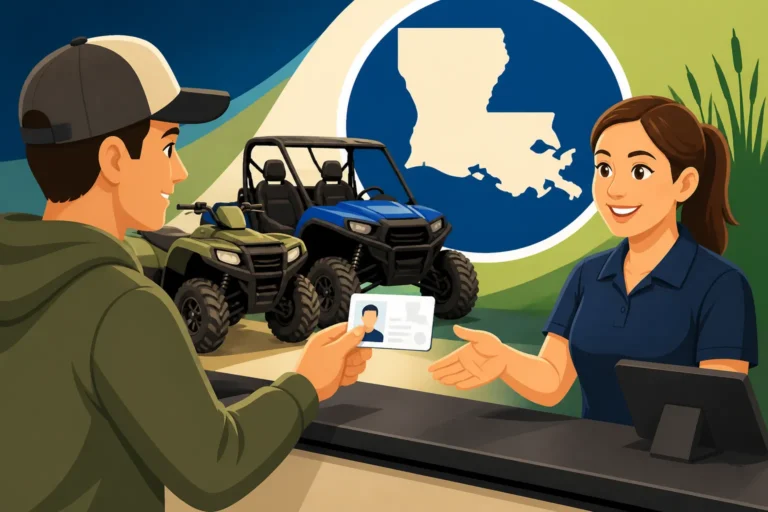
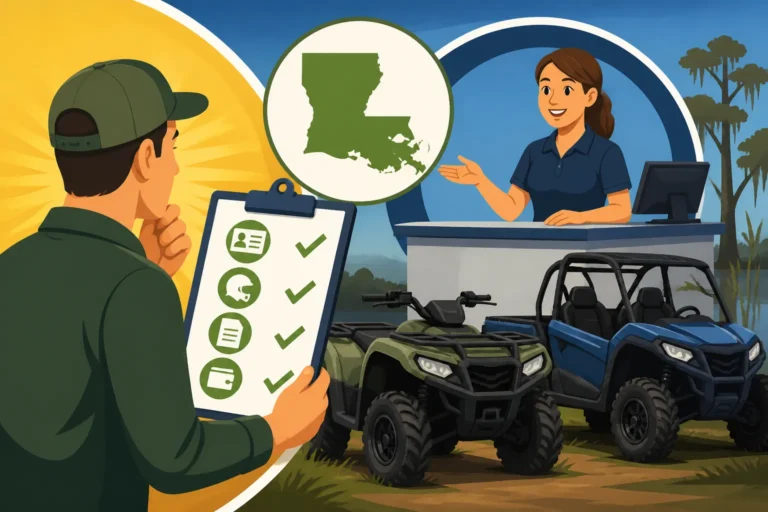
When you're ready to get your first off-road decal, you'll need a few key documents. The most important piece of paper is proof of ownership for your ATV or UTV. For a brand-new machine, this typically means a Manufacturer's Statement of Origin (MSO). If you bought a used machine, you'll need the properly assigned title from the previous owner. Along with proof of ownership, you'll also need proof that you've paid Louisiana sales tax on the purchase, or if it was an out-of-state purchase, be prepared to pay the use tax at the OMV. [How to Get a Louisiana ORV Decal] covers these steps in detail.
You'll also need a valid form of identification and proof of residency. Remember, the OMV needs to verify who you are and where you live to properly issue the decal and title. If you're unsure about specific forms or need to create a legal document like a bill of sale for a private transaction, resources like LawDepot can provide helpful templates to ensure all necessary information is captured accurately. Having all your paperwork organized and complete before you head to the OMV counter will make the process smooth and quick, allowing you to get your decal affixed and hit the trails sooner.
Renewing an Existing Off-Road Decal
Renewing your off-road decal is generally simpler than obtaining a new one, especially since it operates on that four-year cycle. When your decal is nearing its expiration, you'll need to submit a renewal application, which can often be done through the OMV's website or by visiting a local OMV office. You'll need your vehicle's identification number (VIN) and current decal information to complete the renewal. The $12 fee for the next four-year cycle will be due at this time.
It's a good practice to keep a copy of your current title and previous decal receipts, just in case there are any discrepancies during the renewal process. While the OMV's system usually keeps track of your information, having your own records provides an extra layer of security. If you're unsure about the exact timing or process, checking the OMV's official website or calling their customer service line a few months before your decal expires is always a smart move to avoid any last-minute rush or lapse in coverage.
Replacing a Lost or Damaged Decal
Accidents happen, and sometimes that little decal can get ripped, scraped, or even completely fall off. When this occurs, it's important to replace it promptly to avoid any issues if you're stopped by authorities. Thankfully, replacing a lost or damaged decal is a straightforward process, though it does incur a small replacement fee. You'll typically need to visit your local OMV office, provide proof of ownership (your title), and explain the situation. [Louisiana Decal Replacement If Lost] offers specific guidance on this.
You'll complete a replacement application and pay a nominal fee for the new decal. It’s not the full $12 again, but a smaller administrative charge to cover the cost of issuing a new sticker. Just like with original decals, make sure to have your photo ID and current proof of address handy. Getting a replacement ensures you remain compliant with state regulations, and it's always better to be safe than sorry when it comes to having proper documentation on your off-road machine.
Where the Decal Money Goes and What It Supports
It’s natural to wonder where your hard-earned money goes, even if it’s just a small amount like $3 a year. The Louisiana off-road decal fee isn't just tossed into a general fund; it's specifically earmarked to support the off-road vehicle community and ensure safer, more enjoyable riding experiences across the state. Understanding these benefits can help riders appreciate the value of that small sticker.
Funding Off-Road Safety and Education Initiatives
One of the primary beneficiaries of the decal fees is off-road safety and education. These funds help finance programs aimed at teaching new riders, especially youth, about safe operating practices, environmental responsibility, and the specific laws governing ATVs and UTVs in Louisiana. This could include things like printed safety guides, public service announcements, or even funding for safety courses. For instance, the OMV might partner with organizations to offer hands-on training that covers everything from proper helmet use to navigating challenging terrain.
These initiatives are critical because they foster a culture of safety among riders, which in turn reduces accidents and injuries. A safer riding community is a more sustainable community. The decal fee ensures there’s a consistent, dedicated source of funding for these educational efforts, reaching a broad audience of riders across the state. By contributing that small fee, you're directly investing in the well-being of fellow riders and the future of the sport.
Supporting Trail Systems and Conservation Efforts
While the decal primarily focuses on safety and education, a portion of the funds can also indirectly support the upkeep and development of off-road riding areas. Well-maintained trails are essential for a positive riding experience, and these often require resources for signage, minor repairs, and general cleanup. While specific trail fees might exist for certain parks or WMA's, the overall state management benefits from the decal program.
Furthermore, these funds can indirectly aid in conservation efforts, ensuring that off-road activities are conducted in an environmentally responsible manner. This might involve supporting programs that teach riders about minimizing their impact on sensitive ecosystems or funding efforts to prevent erosion on popular trails. It's about balancing the thrill of riding with the responsibility of preserving Louisiana's natural beauty for future generations.
Why the Fee is Minimal Compared to the Benefit
The $3 annual fee, or $12 for the four-year cycle, is remarkably low when you consider the comprehensive benefits it supports. Compared to the costs associated with maintaining public lands, enforcing safety regulations, and educating a growing population of riders, this fee is truly a bargain. It’s designed to be accessible to all riders, ensuring that the cost itself isn't a barrier to compliance.
Consider the potential costs of accidents or environmental damage if there were no regulations or educational programs in place. The decal fee is a proactive measure that helps mitigate these risks, ultimately saving everyone money and grief in the long run. It demonstrates that a small, collective contribution can have a significant and positive impact on the entire off-road community, proving that sometimes, great value comes in small packages.
Common Decal Mistakes and How to Avoid Them
Even with all the information available, it’s easy to make small mistakes that can lead to big headaches when it comes to off-road decals. From where you put the sticker on your machine to misunderstanding the penalties for non-compliance, these errors can turn a fun day of riding into an inconvenient one. Let's look at some common pitfalls and how you can steer clear of them.
Improper Decal Placement and What to Do
One of the most frequent issues the OMV sees is improper decal placement. The decal isn't just a sticker; it needs to be affixed in a visible, specific location on your ATV or UTV so that law enforcement can easily verify its validity. Typically, this means on the front fender or another prominent, non-removable part of the machine. [Louisiana Decal Placement on a Machine] outlines the exact requirements. Placing it on a helmet, a cooler, or a removable part that could fall off or be swapped is a recipe for trouble, as it won't be considered properly displayed.
If you’ve accidentally placed your decal incorrectly, or if it’s peeling off and becoming illegible, it’s best to address it immediately. You might need to get a replacement decal from the OMV, as trying to re-stick a damaged decal often won't hold up, and an illegible decal is as good as no decal at all in the eyes of the law. Before you affix it, take a moment to read the instructions or check the OMV guidelines to ensure it’s in the right spot, saving you from a potential conversation with a state trooper later on.
Penalties for Riding Without a Valid Decal
Ignoring the decal requirement might seem like a small thing, but the state of Louisiana takes it seriously. Riding your ATV or UTV without a valid, properly displayed off-road decal can lead to citations and penalties. [Louisiana Penalties for No Decal] details the fines and potential consequences, which can quickly outweigh the minimal cost of the decal itself. You could face a monetary fine, and in some cases, authorities might even impound your machine until the issue is resolved.
Imagine being pulled over while enjoying a ride, only to have your machine impounded and facing a fine, all for a $12 sticker. It’s a frustrating situation that’s entirely avoidable. These penalties aren't meant to be punitive but to encourage compliance and support the system that benefits all riders. Always make sure your decal is current and properly displayed before you head out, and avoid the hassle and expense of an unnecessary ticket or impoundment.
The Difference Between a Decal and a Title
This is a point of confusion for many riders: the distinction between an off-road decal and an ATV/UTV title. They are not interchangeable, and your machine needs both to be fully compliant in Louisiana. A title is proof of ownership, just like the title for your car or truck. It legally establishes you as the owner of the vehicle and is essential for buying, selling, or financing your machine. You can learn more about this in [Louisiana ATV Title Cost] and [Louisiana Title Fee of $68.50].
| Feature | Louisiana Off-Road Decal | Louisiana ATV/UTV Title |
|---|---|---|
| Purpose | Permits off-road use; funds safety/education | Proof of ownership; legal record of vehicle |
| Cost | $3/year (paid as $12 for 4 years) | $68.50 (one-time fee, plus handling, etc.) |
| Duration | 4-year cycle | Permanent (until vehicle is sold/transferred) |
| Issuer | Louisiana OMV | Louisiana OMV |
| Display | Must be affixed to machine | Kept with owner (physical document) |
| Function | Allows legal off-road operation | Establishes legal ownership |
| Required For | Nearly all off-road riding in LA | Buying, selling, financing, registering |
The decal, on the other hand, is proof that your machine is registered for use in the state for off-road purposes and that you've contributed to the programs mentioned earlier. You can't get a decal without first having a title, as the title proves you own the machine eligible for the decal. Think of the title as proving you own it, and the decal as proving you can use it on designated grounds. Understanding [Why an ATV Needs Both a Title and a Decal] is fundamental to being a responsible Louisiana off-road enthusiast.
Disclaimer
This article is for general informational purposes only and does not constitute professional advice. Laws, prices and regulations vary by location and change over time. Consult a qualified professional for guidance on your specific situation.