The Voluntary Safety Course Run Through Extension Offices
A voluntary ATV safety course can help Louisiana riders build better habits before they head to a trail, hunting property, or mud park. The practical question is what an Extension-based course covers, how to find out whether one is available nearby, and what completion does—and does not—allow you to do.
What the Extension-based safety course is for
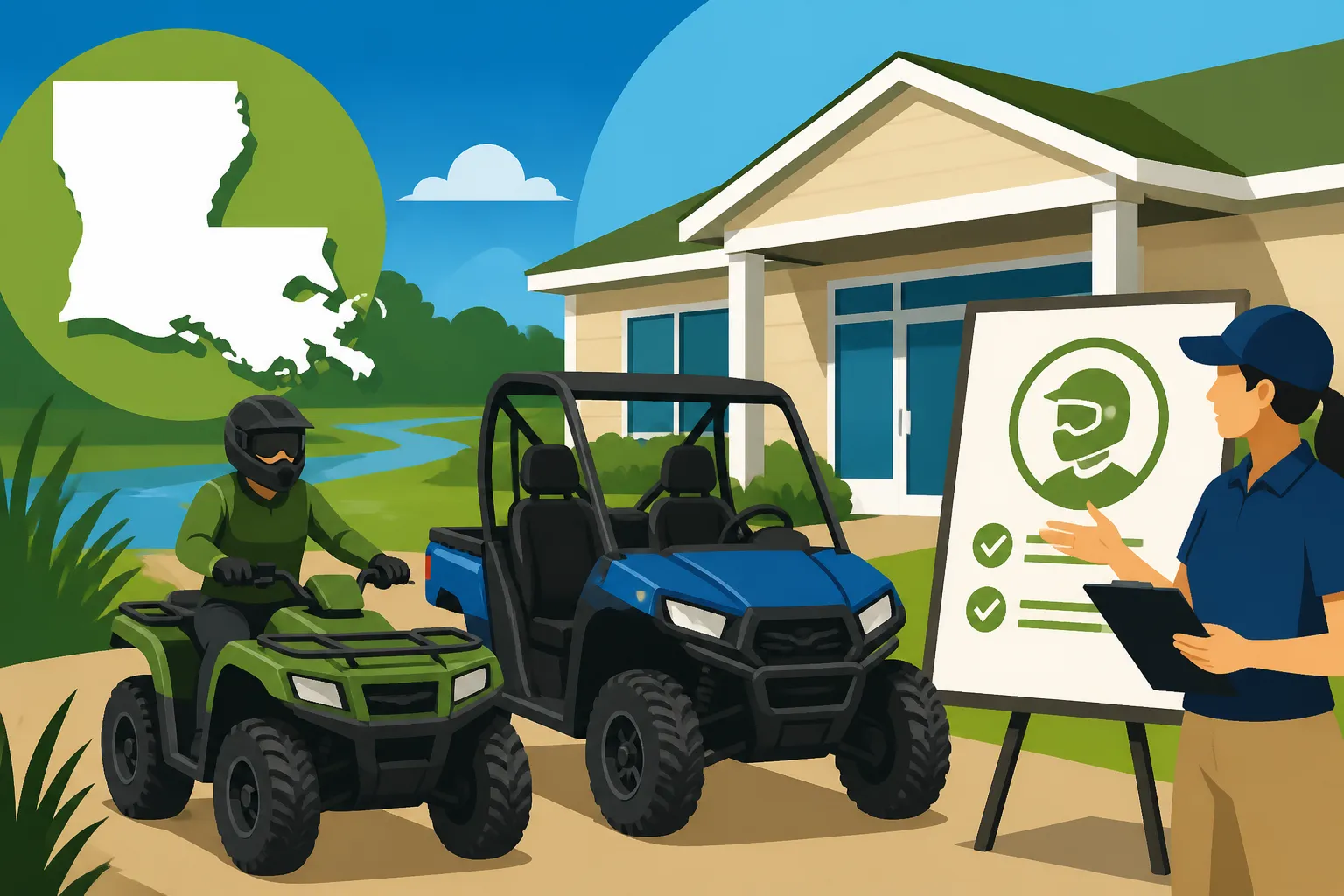
Louisiana’s voluntary ATV safety instruction is intended to help riders understand safe operation before they ride on their own. Extension offices can connect families with safety education, including youth-focused programs. The course is training, not a state permit or a substitute for checking the rules where you plan to ride.
A safety course is useful even when nobody requires one. An ATV can behave differently on gravel, mud, grass, or a slope, and a rider’s choices affect passengers and other people nearby. Instruction can give a new rider a more structured way to learn than simply following someone who has been riding for years.
For parents, training also provides a chance to discuss limits before a child is handed the keys. A rider may be able to explain a safety rule after class but still need an adult to enforce it in the moment. Children should ride a machine suited to their size and ability, with close supervision and appropriate protective equipment. For age-related considerations, see Louisiana Rules for a Ten-Year-Old Rider and Louisiana Parent Riding With a Child.
Louisiana does not make a general ATV safety course mandatory for every rider. That does not mean training is pointless or that every riding location has identical entry rules. A private park, event organizer, landowner, or public-land manager may set its own conditions. Check those requirements separately, especially if a child will ride. Louisiana Has No Mandatory Safety Course explains the difference between voluntary instruction and a legal requirement.
An Extension office is a helpful starting point because local availability can change. A course may not be offered in every parish, and dates, age groups, registration steps, and delivery formats can vary. Rather than assuming a program is running, contact the LSU AgCenter Extension office serving your parish and ask what ATV safety instruction is currently available. If the office does not have a session scheduled, it may be able to point you toward a youth program or another local resource.
What riders may learn and what to ask before enrolling
The exact curriculum depends on the course and instructor, so ask for the current outline rather than relying on another rider’s description of a past class. Safety instruction commonly focuses on decisions riders make before and during a trip: choosing an appropriate machine, using protective gear, inspecting the ATV, controlling speed, understanding terrain, and avoiding situations a rider cannot safely manage.
A course may also address how to respond when conditions change. Louisiana riding can involve wet ground, standing water, ruts, low visibility, heat, and changing trail surfaces. A machine that feels manageable on a flat, open area may be harder to control on a slope or in a tight turn. Knowing when to slow down, turn back, or get off the machine is part of safe riding, not a sign of poor ability.
Use the questions below when you contact an office or program coordinator:
| Ask about | Why it matters |
|---|---|
| Who can enroll | Courses may be designed for particular ages or rider groups. |
| Whether a parent or guardian must attend | Youth programs may have consent or supervision requirements. |
| What the course covers | The outline helps you judge whether it fits a beginner, a returning rider, or a family. |
| Whether instruction includes hands-on practice | Classroom discussion and supervised riding practice are different parts of training. |
| What equipment participants must bring | Ask about helmets, eye protection, clothing, footwear, and whether machines are supplied. |
| How completion is documented | A completion record may be useful, but it is not automatically a legal permit. |
| Whether there is a fee or registration deadline | Confirm current details directly with the provider. |
If the course includes riding practice, ask what kind of machine participants use and whether a rider may bring their own. A youth rider should not be placed on an adult-size machine simply because that is what is available. If instruction is classroom-only, ask whether the instructor can recommend a safe way to arrange supervised practice afterward.
The LSU AgCenter’s local Extension office is the most sensible place to begin asking about a program connected to Extension. You can also ask whether the office works with 4-H or another youth education program. The Louisiana 4-H ATV Safety Program is a useful related topic for families looking specifically for youth instruction. Confirm eligibility and current scheduling with the program rather than assuming every parish offers the same class.
What course completion does not authorize
A course completion record should be treated as evidence of instruction, not as blanket permission to ride. It does not make an ATV street-legal, register a machine, grant access to private land, or override a park’s age and equipment rules. It also does not replace a permit or pass required for a particular public riding area.
For Louisiana road use, a safety course does not change the laws governing where and how an ATV or UTV may operate. Rules can differ by machine type and location, and road access is not the same as trail access. Read Can You Ride an ATV on the Road in Louisiana? before planning to use public roads, and check the separate rules for a UTV if that is what you ride. A class may improve judgment, but it cannot make an otherwise prohibited route legal.
The same distinction matters when riding on public land. A course does not substitute for land-access requirements, trail restrictions, or equipment limits. Before heading to a wildlife management area, for example, check the location’s rules and permit steps in Louisiana WMA Permit Requirements and Louisiana WMA Riding Rules for Quads. Conditions can be different on private property, public trails, and at commercial parks.
A course also may not satisfy a requirement imposed by a park or event. Private riding areas can set their own age minimums, helmet rules, passenger limits, and other conditions. Contact the venue directly before traveling, particularly when a child is riding or when the machine will carry a passenger. [Louisiana Private Park Age Minimums] covers why a state-level rule and a private venue’s admission policy are not necessarily the same thing.
How to make the training useful on your next ride
Before enrolling, think about what you want the rider to be able to do afterward. A first-time rider may need basic instruction on controls and stopping. A parent may want help setting clear riding rules for a child. Someone who has ridden for years may benefit from revisiting passenger safety, terrain decisions, or the risks of fatigue and poor visibility.
After the course, turn the main lessons into a short routine rather than relying on memory. Before each ride, check the machine, confirm everyone has suitable gear, review the route and the group’s limits, and agree on how riders will communicate. Keep the plan appropriate to the least experienced person in the group.
A practical checklist can include:
- Confirm that the machine is suitable for the rider and intended use.
- Inspect tires, brakes, controls, lights, and visible components before leaving.
- Wear a properly fitted helmet and protective clothing suited to the conditions.
- Set clear rules for speed, spacing, stopping, and riding within sight of the group.
- Check the trail or property rules, including age, passenger, and access restrictions.
- Plan for heat, water, changing weather, and a way to contact help.
- Stop when the route, machine, or rider’s condition becomes unsafe.
For families, agree on rules before arriving at the riding area. Decide which routes are off-limits, when the child must stop, who rides nearby, and whether passengers are allowed. A course can start that conversation, but adults still need to supervise and make decisions based on the child’s ability and the conditions that day.
If you are traveling out of state, check the destination’s rules and ask whether it recognizes the course record for any specific purpose. Do not assume that a Louisiana class fulfills another state’s age, training, registration, or land-access requirements. Similarly, a visiting rider should confirm what Louisiana requires for the machine and riding location. Training can travel with the rider as useful knowledge; permissions and legal requirements may not.
The best next step is simple: call the Extension office for your parish, ask whether ATV safety instruction is currently available, and confirm the audience, format, equipment, and completion documentation. If no local session is offered, ask whether staff can direct you to a suitable youth or community program. Then check the rules for the exact place where you intend to ride. That combination—training plus location-specific preparation—is more useful than treating a course certificate as permission to ride anywhere.
Disclaimer
This article is for general informational purposes only and does not constitute professional advice. Laws, prices and regulations vary by location and change over time. Consult a qualified professional for guidance on your specific situation.