Why Tires Over 26 by 12 Are Turned Away
Oversized tires can make an ATV more capable in mud, but they can also keep it off a Louisiana Wildlife Management Area trail. The 26-by-12 limit is easy to misread if you confuse tire height, width and rim diameter. Here’s how to check what your machine is running, understand where the restriction applies and avoid a wasted trip to the trailhead.
What the 26-by-12 limit means
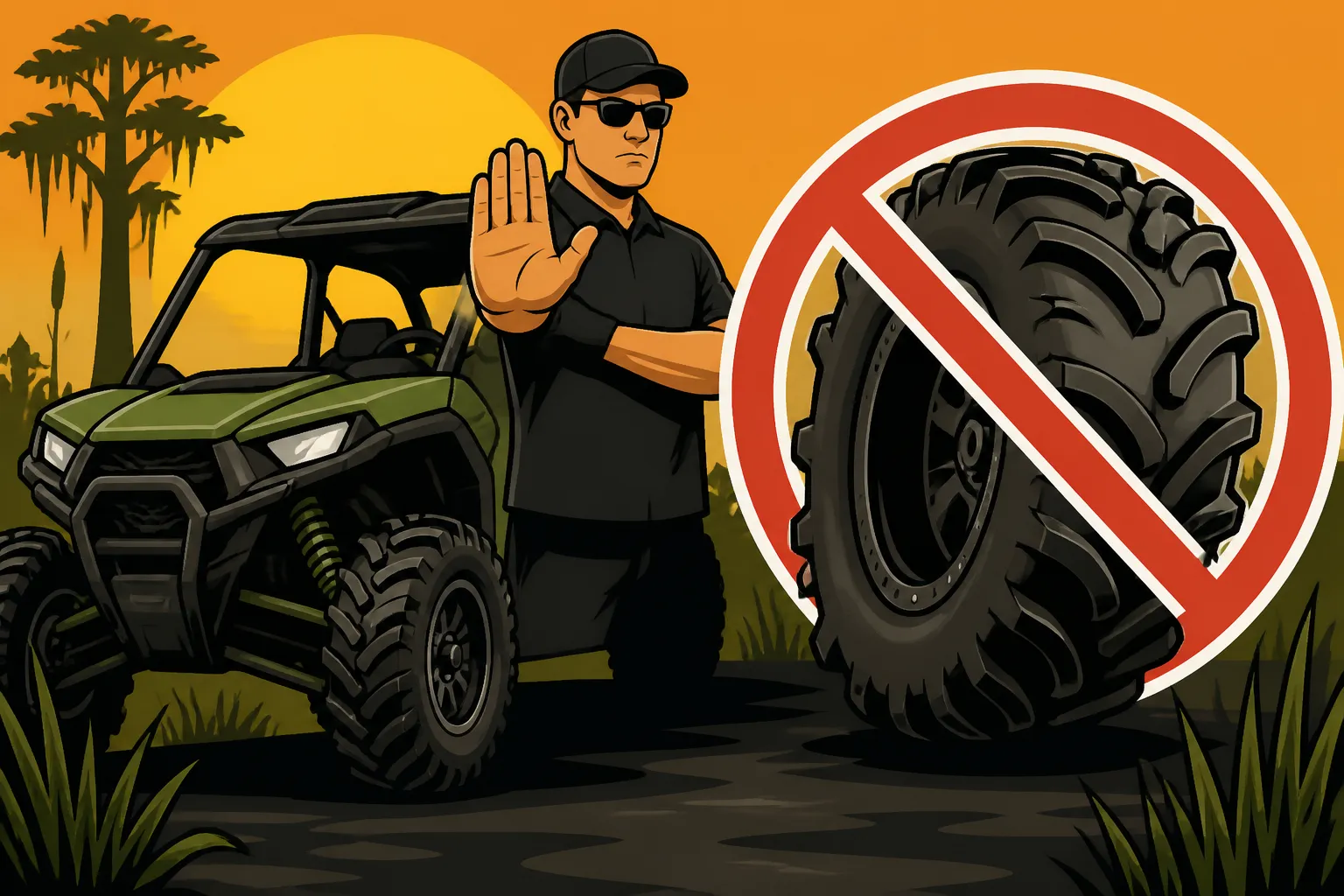
On Louisiana Wildlife Management Areas, ATV tire rules can limit tires to a maximum size of 26 inches tall by 12 inches wide. A machine with tires larger than that may be turned away from designated WMA trails. The restriction is about access to those public-land riding areas; it is not a blanket rule that makes an oversized tire illegal everywhere in Louisiana.
The size usually appears as a series of numbers on the tire sidewall. For example, a marking such as 26×12-12 generally describes a tire about 26 inches tall and 12 inches wide, mounted on a 12-inch rim. The final number is the wheel rim diameter, not another measure of the tire’s overall height or width.
| What you see | What it generally refers to | How it relates to the limit |
|---|---|---|
| First number, such as 26 | Nominal tire height in inches | Compare it with the 26-inch maximum |
| Second number, such as 12 | Nominal tire width in inches | Compare it with the 12-inch maximum |
| Number after the dash, such as 12 | Rim diameter in inches | It is not the tire-height limit |
A tire marked 27×10-12, for example, exceeds the height limit even though its listed width is below 12 inches. A 26×13-12 tire stays within the listed height but exceeds the width limit. For the WMA rule, both dimensions matter.
This restriction is one part of a wider set of requirements for machines on WMAs. Depending on the area and the type of vehicle, riders may also need to follow weight, tread, pressure, trail designation, permit and seasonal-access rules. See Louisiana WMA Tire Rules Explained for the broader tire requirements, and Louisiana WMA Machine Size Limits for other machine restrictions that can affect access.
The practical point is simple: a tire that fits your riding style may not qualify for a public WMA trail. Before towing to a trailhead, check the markings on all four tires and review the current rules for the specific WMA and trail you plan to use. Trail access rules can be more restrictive than what is allowed on private property or at a private riding park.
How to check your tire size
Start with the tire itself, not the ATV’s brochure or the seller’s description. Find the size molded into the sidewall of each tire. Mud tires, replacement tires and tires mounted on modified machines may not match the machine’s original equipment, and a model name alone does not confirm the dimensions.
Read the sidewall carefully
Look for a size in a format similar to 26×12-12 or 27×10-12. The first two measurements are the important ones for the 26-by-12 rule: height, then width. The last number indicates the rim size.
Some tire markings use a different format, such as a metric designation. If the sidewall does not clearly show height and width in inches, don’t guess from the digits. Check the manufacturer’s specifications for that exact tire model or ask a tire shop to identify the listed dimensions. When shopping online, including on Amazon, check the full manufacturer specification rather than relying on a shortened listing title or a customer photo.
The listed size is nominal. Actual dimensions can vary with the tire model, rim width, inflation pressure and how the measurement is taken. That can make a borderline tire worth checking before you travel. Don’t assume that a tire marked 26 inches will necessarily be treated as acceptable if its actual dimensions or the WMA’s inspection method put it over the limit. If the result is unclear, ask the relevant land manager before unloading.
Check every tire and any changes
Inspect all tires, not just the front pair. A previous owner may have installed a mismatched set, or a machine may have different tire sizes front and rear. Check the sidewall on each tire and compare the size markings.
Also consider the machine’s history. Larger tires may have been installed to improve ground clearance or flotation. A lift kit does not change the size printed on the tire, but it can make an oversized tire easier to overlook when you are checking only the ATV’s overall stance. Replacing one tire with a different size can create a mismatch even if the others meet the limit.
If the sidewall is worn, covered in mud or difficult to read, clean it before making a decision. Photograph the markings so you can refer to them when checking the manufacturer’s specifications or asking the WMA office a question. A photo is helpful for preparation, but it does not replace an official determination if the dimensions are ambiguous.
Where the restriction applies and what happens if tires are too large
The 26-by-12 limit is associated with motorized access on Louisiana WMAs, not every place where an ATV can be ridden. Private land, a commercial park, a forest trail and a WMA can each have different rules. A machine that is accepted at a private park is not automatically eligible for a WMA trail.
WMA access can also depend on the particular property, trail designation, season and vehicle type. Before setting out, check the current WMA rules and map rather than relying on a general statement about Louisiana trails. Reading a WMA Map Before You Unload can help you confirm that the trail you have in mind is open to your machine, while Louisiana WMA Season Closures covers another reason a familiar route may not be available.
If an ATV has tires over the stated size limit, staff may refuse access to the designated trail. That can mean unloading only to learn that the machine cannot be used on the trail, then having to load it again or change plans. It is better to check before leaving home than to treat the trailhead as a place to test the rule.
Oversized tires are not the only reason a machine might be turned away. Other limits can apply to vehicle weight, tire tread and pressure, and the kind of machine allowed on a trail. A side-by-side, for example, may be subject to requirements that are distinct from the ATV rules. Do not assume the tire maximum is the only specification that matters; review Louisiana WMA Weight Limits Explained and Louisiana WMA Riding Rules for Quads as part of the same pre-ride check.
Nor should you assume that meeting the tire limit grants access by itself. Some WMA trails are restricted to marked routes, and permits or other access conditions may apply. An out-of-state machine may need to meet the same on-site equipment rules even if its owner has documentation or a decal from another state. Check the relevant WMA’s current instructions and any applicable requirements for visiting riders.
A practical check before you tow
Use this short process before planning a WMA ride:
- Identify the riding area. Confirm that it is a WMA and find the specific trail or unit you plan to visit.
- Check the current rules. Look for the area’s access information, trail designations, operating dates, permits and vehicle restrictions.
- Read every tire sidewall. Record the height and width markings on all tires; don’t confuse the rim diameter with tire height.
- Resolve unclear markings. Use the manufacturer’s specification for the exact model or ask a tire professional to interpret the size.
- Check the rest of the machine requirements. Review applicable weight, tread and tire-pressure rules, plus any restrictions for the vehicle type.
- Ask before traveling if the measurement is borderline. Contact the appropriate WMA office or land manager and describe the tire markings and machine.
Keep in mind that choosing smaller tires to meet a public-land limit can involve trade-offs. A tire change may affect ground clearance, handling, gearing or the machine’s performance in mud. Confirm fitment and compatibility with the ATV manufacturer or a qualified mechanic before changing tires. A tire that meets a WMA size rule still needs to be suitable for the machine and used at appropriate pressure.
If your tires exceed the limit, you may have other riding options, but verify their rules separately. A private property owner or park can set its own requirements, and permission to ride there does not transfer to a WMA. Likewise, a machine that is suitable for private land does not become eligible for a public trail just because it has the right permits or ownership paperwork.
For a WMA trip, treat the tire limit as one check in a larger access checklist. Confirm the location, current trail status and equipment rules before loading up. That small step can save a long tow and keep your ride within the rules of the place you’re visiting.
Disclaimer
This article is for general informational purposes only and does not constitute professional advice. Laws, prices and regulations vary by location and change over time. Consult a qualified professional for guidance on your specific situation.