Why the Off-Road Decal Runs on a Four-Year Cycle
It can be downright confusing trying to keep track of all the rules and regulations that come with owning an off-road vehicle here in Louisiana. One of the questions that pops up frequently, and causes a fair bit of head-scratching, is why our state's off-road vehicle (ORV) decal operates on a unique four-year cycle instead of the typical annual renewal we see for so many other vehicle registrations. This guide will dive deep into the reasoning behind this system, breaking down its benefits for both the Louisiana OMV and you, the rider, and offering tips to keep you compliant and out on the trails without a hitch.
Understanding Louisiana's Off-Road Decal System
Before we get into the "why" of the four-year cycle, it's crucial to understand what this decal even is and why Louisiana requires it. Many folks mistakenly think it's just a simple sticker, but it’s much more integral to legal off-road vehicle ownership and use in our state. It's essentially your machine's registration for off-road purposes, indicating that you've fulfilled certain legal requirements.
More Than Just a Sticker: The Decal's Purpose
Think of the ORV decal as your off-road machine's official stamp of approval from the state. It's proof that your ATV, UTV, or dirt bike has been properly registered with the Louisiana Office of Motor Vehicles (OMV), and that all necessary sales taxes have been accounted for. This isn't just bureaucratic red tape; it serves several important functions for both the state and the riding community. For instance, it allows law enforcement to easily identify registered vehicles, which can be crucial in cases of theft or accidents.
Beyond simple identification, the decal also plays a role in funding. The small fee associated with the decal helps support the administration of the ORV program and, indirectly, can contribute to resources for managing trails and enforcing safety. It’s a collective effort, ensuring that our riding areas are maintained and that everyone is operating within legal parameters. You might find it helpful to review [Louisiana ORV Decals and Titles Explained] for a broader context of the decal's place in the overall system.
The Cost and Initial Application
The actual cost of the Louisiana off-road decal is remarkably low, which often surprises new owners. While the nominal fee might seem small, the state still requires you to go through the proper channels to obtain it. This includes presenting specific documentation to the OMV, which usually means providing proof of ownership and, critically, demonstrating that you’ve paid all applicable sales taxes on the machine.
The process of getting your initial decal often goes hand-in-hand with getting your machine titled. In fact, the OMV won't even issue you a title without proof that sales tax has been paid first, which is why [Louisiana Requires Proof of Sales Tax First]. You can learn more about the step-by-step process in [How to Get a Louisiana ORV Decal], but generally, you'll need your manufacturer’s statement of origin (MSO) for new machines or an assigned title for used ones, along with your sales tax receipt. It might seem like a lot of hoops to jump through for something so inexpensive, but it’s all about maintaining a clear chain of ownership and ensuring fair revenue collection for the state.
The Rationale Behind the Four-Year Cycle
So, why did Louisiana decide on a four-year cycle for its off-road decals? It's not a random number. This particular duration was chosen with specific goals in mind, aiming to strike a balance between administrative efficiency for the OMV and convenience for the state's many off-road enthusiasts. It’s a system designed to simplify things in the long run, even if it feels a little different from what you might be used to with other vehicle registrations.
Streamlining Administration for the OMV
Imagine if every single off-road vehicle in Louisiana—and there are tens of thousands of them—had to be renewed annually. The sheer volume of paperwork, data entry, and counter visits would overwhelm the OMV's resources. By adopting a four-year cycle, the OMV significantly reduces the administrative burden. Instead of processing renewals for every ORV every year, they can spread that workload out over a longer period, making their operations much more efficient.
This streamlined approach means fewer transactions at the counter, fewer calls to their help lines, and generally a smoother operation for the state agency. While many states operate on annual or biennial cycles for other vehicle types, the decision for ORVs specifically considers the unique nature of these machines and their usage patterns. This longer cycle helps the OMV better manage its resources and focus on other critical services for the public.
Convenience and Cost Savings for Riders
From your perspective as a rider, the four-year cycle offers a noticeable perk: convenience. Instead of having to remember an annual renewal date and make that yearly trip to the OMV (or log in online), you only need to think about your decal once every four years. This significantly cuts down on the mental overhead and the time commitment involved in staying compliant.
While the fee for the decal is nominal—currently, [Louisiana Charges $3 a Year for a Decal], meaning a four-year decal costs a total of $12—the real saving isn't just in the dollars, but in the time and hassle. You're not just paying a small sum; you're buying four years of peace of mind. It also helps spread out that small expense, making it feel less like a recurring bill and more like a one-time investment for a significant period. This extended validity allows you to focus more on riding and less on bureaucratic deadlines.
Linking to Titling and Enforcement
The four-year decal cycle is also intentionally aligned with the broader titling and enforcement framework in Louisiana. When you first get your off-road machine, the titling and decaling processes are often handled concurrently. This ensures that from day one, your machine has both its official proof of ownership (the title) and its proof of registration for off-road use (the decal). It's a comprehensive approach to getting your machine legally set up. This synergy is why [Louisiana Decal and Title Together] is often emphasized.
For law enforcement, a decal with a clear expiration year provides an immediate visual cue about a machine's compliance. While they can run the VIN for more detailed information, the presence of a current decal indicates that the owner has met the basic registration requirements. Riding without a current decal can lead to fines and other complications, so understanding [Louisiana Penalties for No Decal] is important. The longer cycle means fewer opportunities for honest mistakes where riders simply forget to renew.
Navigating the Four-Year Decal Renewal
The four-year cycle, while convenient, does require a slightly different approach to remembering your renewal dates. Since it’s not an annual event, it can sometimes slip your mind. However, with a little proactive planning, navigating the renewal process for your Louisiana ORV decal is quite straightforward, ensuring you remain compliant and ready to hit the trails whenever you wish.
When and How to Renew
Louisiana's off-road decals generally expire in specific months, often tied to when the original title was issued. The OMV uses a staggered system, which means not every decal expires in the same month of the same year. This further helps distribute the administrative workload. While the OMV might send out renewal notices, relying solely on them can be risky. It's a good idea to mark your calendar or set a digital reminder for when [When a Louisiana ORV Decal Comes Up for Renewal].
When it’s time to renew, you typically have a few options. You can renew online through the OMV website, mail in your renewal, or visit a local OMV office in person. Regardless of the method, you'll need to provide your vehicle information and pay the applicable fee. Don’t wait until the last minute! If your decal expires, you typically have a [Louisiana's 30-Day Decal Deadline] to affix the new decal without immediate penalty, but riding with an expired decal before then is still non-compliant.
Common Pitfalls and Tips for Riders
The biggest pitfall with a four-year cycle is simply forgetting the expiration date. Unlike car registrations that come around every year, it’s easy for a four-year interval to pass by without a thought. Many riders assume they’ll receive a reminder, but sometimes those get lost in the mail or filtered into spam folders if you've opted for email notifications. This is why personal reminders are invaluable.
A good tip is to immediately write down the expiration month and year on your personal calendar or add it to a digital reminder system as soon as you get a new decal. You could even use a general document management service like LawDepot if you're keeping all your vehicle's paperwork (title, bill of sale, maintenance records) organized digitally; having a digital file for your ORV might prompt you to also include its decal expiration date for easy reference. Keeping a copy of your current decal receipt with your machine’s other essential documents is also a smart move, so you always have the exact expiration clearly visible. If you’re ever questioned, having your paperwork in order makes any interaction smoother.
Decal Placement and Transferability
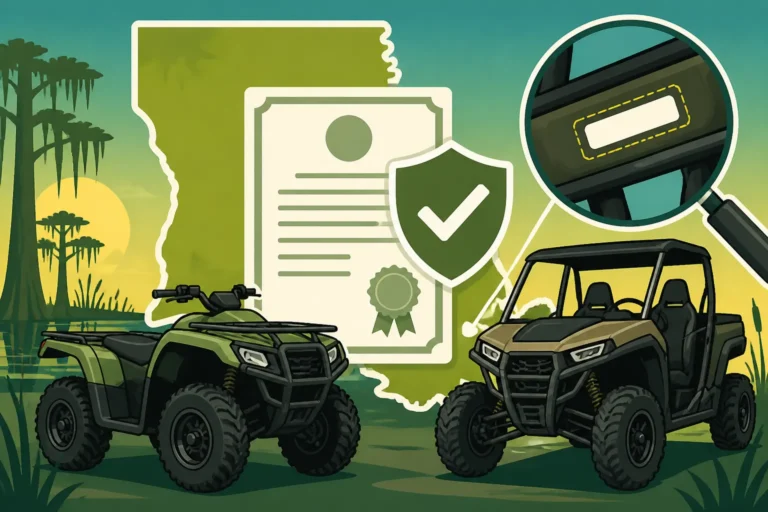
Once you receive your new decal, proper placement is essential. The OMV has specific guidelines for where the decal should be affixed on your off-road machine to ensure it’s clearly visible to law enforcement. Generally, it needs to be in a prominent location, often on the left-rear fender or another easily viewable part of the machine. Make sure to consult [Louisiana Decal Placement on a Machine] to ensure you're compliant, as incorrect placement could lead to issues during a compliance check.
When it comes to selling your off-road machine, the decal typically stays with the vehicle. Unlike license plates that transfer with the owner, the ORV decal is assigned to the machine itself. This means that if you sell your ATV or UTV, the new owner benefits from the remaining period of your decal's validity. However, the new owner will still need to handle the title transfer and ensure all other paperwork is in order. It's a good practice to ensure the decal is current before selling, as this makes the machine more appealing and simplifies the transfer process for the buyer. For buyers and sellers, understanding [Louisiana Decals After a Private Sale] is crucial for a smooth transaction.
| Aspect | Four-Year Decal Cycle (Louisiana ORV) | Annual Decal/Plate Cycle (Typical) |
|---|---|---|
| Renewal Frequency | Every four years | Every year |
| Administrative Load | Lower for OMV | Higher for DMV/OMV |
| Rider Convenience | Higher (less frequent renewals) | Lower (more frequent renewals) |
| Cost to Rider | ~$12 total (one payment for 4 years) | Varies annually (paid yearly) |
| Risk of Forgetting | Higher (due to infrequency) | Lower (more consistent reminder) |
| Notification Type | OMV may send reminders, but not guaranteed | Often consistent reminders |
Disclaimer
This article is for general informational purposes only and does not constitute professional advice. Laws, prices and regulations vary by location and change over time. Consult a qualified professional for guidance on your specific situation.