Hauling a Machine to a Mud Park
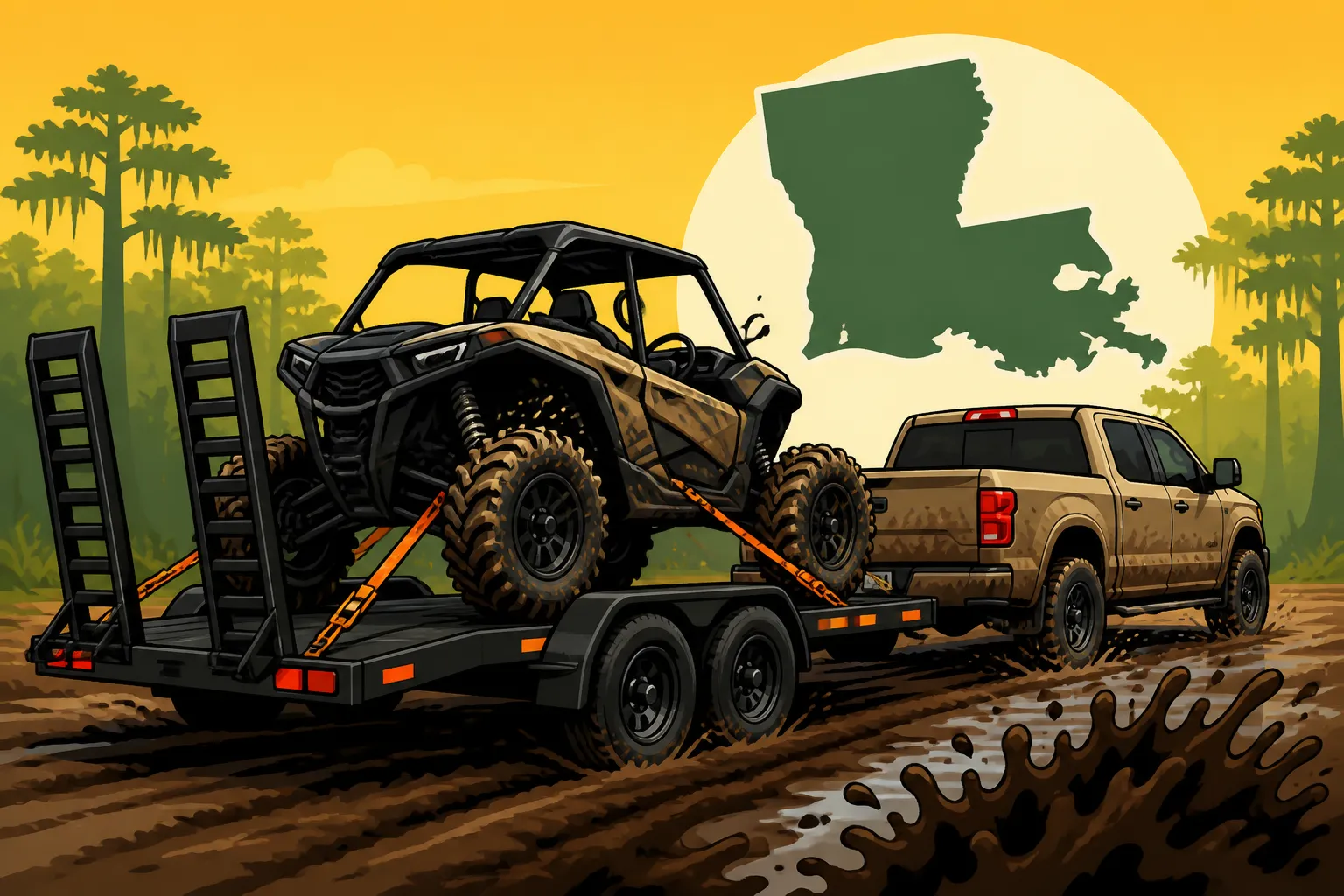
Getting your ATV or UTV from your home or camp to the thrilling mud parks and trails of Louisiana can be a bit more complicated than just throwing it in the truck bed. Many riders face the challenge of understanding the legalities, safety precautions, and practical considerations involved in hauling their pride and joy down the highway. This guide will walk you through everything you need to know to safely and legally transport your machine, ensuring your adventure starts long before you hit the first mud hole.
What You Need to Know Before You Hit the Road
Before you even think about backing your trailer up to your machine, there are several crucial details you need to iron out. Hauling isn't just about strapping your quad down; it's about making sure your entire setup—from the truck to the trailer to the ATV itself—is compliant with Louisiana laws and road-ready. Ignoring these steps can lead to frustrating delays, fines, or even dangerous situations on the road.
Understanding Trailer Requirements in Louisiana
First things first: does your utility trailer even need its own plate and registration? In Louisiana, if your trailer weighs over 3,000 pounds when loaded, or if it's over 8 feet wide, it generally needs to be titled and registered with the Office of Motor Vehicles (OMV). Even smaller trailers that don't technically need a title still require a license plate. You'll need to make sure the plate is current, clearly visible, and properly illuminated, especially if you're traveling after dark. Nothing ruins the anticipation of a mud run faster than getting pulled over by a state trooper for an expired tag. Beyond the plate, consider the condition of your trailer's tires, lights, and brakes. A blown tire on the highway, especially with a heavy load, is not just an inconvenience—it's a serious safety hazard for you and other drivers. Always check your tire pressure before heading out, including the spare!
Essential Paperwork for Your Machine and Trailer
When you’re hauling an ATV or UTV, you should always have proof of ownership readily available for your machine. This means your official title or, if you've recently purchased it, a [Louisiana Notarized Bills of Sale] or the manufacturer's statement of origin (MSO) for a brand new machine. Even if you're just driving down the road to a local park, a Louisiana State Trooper can ask to see this documentation. If you've just bought a used machine, ensure the title has been properly [Louisiana Requires an Assigned Title for a Used One] and you have proof of the sales tax paid. For private sales, having a clear, concise bill of sale is critical, and many riders opt to use templates from services like LawDepot to ensure all the necessary details are included and legally sound. This also ties into proving [Louisiana Sales Tax Proof at the Counter] for titling purposes.
Vehicle and Trailer Weight Limits
Louisiana has specific rules about how much weight you can legally tow. This isn't just about your truck's capacity, but also the Gross Vehicle Weight Rating (GVWR) of your trailer and the Gross Combined Weight Rating (GCWR) of your truck and trailer together. Overloading your trailer or your tow vehicle is incredibly dangerous. It can lead to diminished braking performance, instability, excessive wear on your vehicle's components, and potentially severe fines. Always know the weight of your ATV or UTV and your trailer, and confirm that your tow vehicle can handle the load safely. If you're hauling a larger side-by-side or multiple ATVs, a heavier-duty truck and a tandem-axle trailer might be essential. Remember, every piece of equipment—from your cooler to your spare fuel—adds to that total weight.
Securing Your Machine for the Journey
Once you’ve got your paperwork in order and understand the weight limits, the next critical step is properly securing your ATV or UTV onto your trailer. This is where many riders get complacent, but an unsecured machine is a massive liability. Imagine your quad shifting or, worse, coming loose during an emergency stop or a sharp turn on a busy highway. It’s a terrifying thought, and completely preventable with the right techniques and equipment.
Choosing the Right Tie-Downs
Not all straps are created equal. For ATVs and UTVs, you want heavy-duty ratchet straps with a high working load limit (WLL). Avoid cheap, flimsy bungee cords or thin rope. These might hold a tarp, but they won't secure a thousand-pound machine. Look for straps with a WLL of at least 1,000 to 1,500 pounds per strap, and plan to use at least four – one for each corner. More is often better, especially for heavier UTVs. Ensure the hooks are robust and designed to clip securely onto your trailer's anchor points without bending or slipping. Inspect your straps regularly for fraying, cuts, or worn ratchets. Just like your tires, worn-out straps are a recipe for disaster.
Proper Placement and Tension
Where you attach your tie-downs makes a huge difference. For ATVs, secure straps to the frame, A-arms, or sturdy bumper points. Avoid using plastic body panels or handlebars, which can bend, break, or simply aren't strong enough to withstand the forces of travel. For UTVs, the frame is always the best bet. You want to create an "X" pattern with your straps, pulling both forward and backward from each side. This crisscross method helps prevent the machine from shifting side-to-side, forward, or backward. Tighten the straps until there’s no slack and the suspension of your machine is slightly compressed. However, don't over-tighten to the point of damaging your machine's suspension or frame. Give the machine a good shake after tightening to ensure it’s truly snug. Check the tension again after driving a few miles, as things can settle.
Ramp Safety and Loading/Unloading Best Practices
Loading and unloading can be one of the riskiest parts of the whole process. Always use proper loading ramps designed for the weight of your machine. Make sure the ramps are securely attached to the trailer and the ground, preventing them from slipping. A common mistake is to use ramps that are too steep; ideally, you want a gradual incline. If possible, load on a level surface. Drive slowly and deliberately up the ramps, keeping your weight centered. Have a spotter if you’re unsure, especially with a wider UTV. When unloading, the same rules apply: slow, controlled descent. Never jump off a ramp or try to unload too quickly. After securing your machine, make sure to safely store your ramps. Some trailers have built-in ramp storage, while others require them to be strapped down themselves.
Here's a quick checklist for your hauling preparation:
| Item | Pre-Trip Check | Why It Matters |
|---|---|---|
| Trailer Lights | Test brake lights, turn signals, running lights. | Legal requirement; essential for safety and visibility, especially at night. |
| Trailer Tires | Check pressure, tread depth, and for any cracks/bulges. | Prevents blowouts, ensures stable towing, and handles weight safely. |
| Trailer Brakes | (If equipped) Test their function. | Critical for stopping power, especially with heavy loads. |
| Coupler & Hitch Ball | Ensure secure connection, proper ball size, and pin. | Prevents trailer detachment, a major safety hazard. |
| Safety Chains | Cross them under the coupler; ensure they're secure. | Backup in case of coupler failure; prevents trailer from separating from vehicle. |
| Machine Tie-Downs | Use 4+ heavy-duty ratchet straps; check for fraying. | Prevents machine shifting or falling off, protecting your investment and others. |
| Machine Papers | Title, bill of sale, or MSO; insurance proof. | Proof of ownership required by law; helps with [Louisiana Equipment Checks by Troopers]. |
| Tow Vehicle | Check oil, coolant, tire pressure, and fuel. | Ensures your primary vehicle can handle the strain of towing. |
Trailers: Types and Considerations for Mud Parks
The type of trailer you use can significantly impact your hauling experience and how well your machine holds up to the journey. Choosing the right one depends on factors like the size of your machine(s), your budget, and how frequently you'll be hitting the trails.
Open vs. Enclosed Trailers
This is often the first big decision. Open trailers, like utility trailers or flatbeds, are generally more affordable, lighter, and easier to maneuver. They offer excellent visibility for loading and unloading and are ideal if you only have one or two ATVs. However, your machine is exposed to the elements—rain, road grime, rocks, and anything else the highway throws at it. This means your quad will likely need a good wash before you even get to the park, and vital components are unprotected.
Enclosed trailers, while more expensive and heavier, offer superior protection. Your machine stays clean, dry, and secure from theft or damage during transit. They also provide space for gear, tools, and extra fuel, all kept out of sight and out of the elements. For multiple machines or expensive custom builds, an enclosed trailer is often worth the investment. The downside is they are harder to pull, require more storage space, and can be more challenging to back up. Consider how often you travel and how much you value protection when making this choice.
Single Axle vs. Tandem Axle
The number of axles your trailer has is a crucial safety and capacity consideration. Single-axle trailers are lighter, more maneuverable, and less expensive. They're suitable for hauling a single ATV or a smaller UTV. The main drawback is that if you have a tire blowout, you lose all stability on that side. Also, they generally have lower weight capacities.
Tandem-axle trailers, with two axles, offer significantly more stability and a higher weight capacity. If you have a tire issue, you still have other tires on that side to maintain control. This makes them much safer for hauling heavier UTVs, multiple machines, or traveling longer distances. The downside, as mentioned, is increased weight, cost, and slightly more difficulty in maneuvering tight spots. For many Louisiana mud park enthusiasts who haul larger, heavier machines or multiple quads, a tandem-axle trailer is the preferred and safer choice.
Trailer Maintenance and Upgrades
Just like your ATV, your trailer needs regular maintenance. This includes checking tire pressure before every trip (including the spare!), inspecting wheel bearings (and repacking them if necessary), ensuring all lights work, and checking the structural integrity of the frame and deck. Rust is a constant battle in Louisiana's humid climate, so address any signs of corrosion promptly.
Consider upgrades that enhance safety and convenience. A spare tire is non-negotiable. LED lights are brighter and more durable than traditional incandescent bulbs. A good jack and lug wrench specifically for your trailer's lug nuts are essential. Some riders add toolboxes or fuel can holders directly to the trailer for easy access. If you frequently load heavy UTVs, a winch mounted to the trailer can be a lifesaver for getting a machine on or off, especially if it breaks down at the park. Remember, keeping your trailer in top shape is just as important as maintaining your off-road machine itself.
Arriving and Unloading at the Mud Park
You've made it! The drive was smooth, your machine is secure, and the promise of mud-slinging adventure is just moments away. But don't let your excitement override safety and common sense. The arrival and setup at a mud park also require attention to detail, especially since these environments can be busy, chaotic, and sometimes have unique rules.
Navigating the Mud Park Rules and Regulations
Every mud park has its own set of rules, and these often extend to how you can park and unload your machine. Some parks have designated unloading areas, while others allow you to unload directly at your camp or RV site. Always check the park’s website or ask at the gate about their specific policies for [Louisiana Private Park Waivers and Rules], camping, and parking trailers. Some parks, especially on busy event weekends, might have limited space for large trucks and trailers, so arriving early can be a huge advantage. They may also have rules about generator use, quiet hours, or even how you can wash your machine post-ride. Respecting these rules not only keeps you in good standing but also contributes to a safer and more enjoyable experience for everyone.
Safe Unloading and Setup Procedures
Just as loading required care, unloading demands your full attention. Find a flat, stable surface for unloading, well away from main traffic areas if possible. Ensure your tow vehicle's parking brake is engaged, and consider chocking the trailer wheels for extra security, especially if you're on a slight incline. Carefully unstrap your machine, always double-checking that all straps are removed before attempting to move it. Use your ramps safely, just as you did when loading. Once your machine is off the trailer, move your truck and trailer to its designated parking spot or campsite. Set up your camp with safety in mind: keep fuel cans away from heat sources, properly secure any pop-up canopies against wind, and ensure any temporary lighting doesn't create tripping hazards.
Post-Ride Washing and Re-Securing for the Trip Home
After a day (or weekend) of slinging mud, your machine will be absolutely covered. Many mud parks have wash stations, which are a huge convenience. While it’s tempting to just spray off the worst of the mud, a thorough cleaning before re-loading for the trip home is always a good idea. Caked-on mud adds significant weight, can be abrasive to paint and components during transport, and will inevitably end up all over your trailer and tow vehicle.
Once your machine is reasonably clean, re-load it using the same careful, safe procedures you did when you arrived. This isn't the time to rush because you're tired. Double-check all your tie-downs, ensuring they are just as tight and secure as they were for the journey to the park. Make sure all your gear is stowed away and secured. The ride home, especially if you're tired, is when accidents can happen, so take no shortcuts. A little extra time spent securing everything will ensure a safe and uneventful journey back, leaving you with nothing but great memories of your Louisiana mud park adventure.
Disclaimer
This article is for general informational purposes only and does not constitute professional advice. Laws, prices and regulations vary by location and change over time. Consult a qualified professional for guidance on your specific situation.