Louisiana Snake Season on the Trail
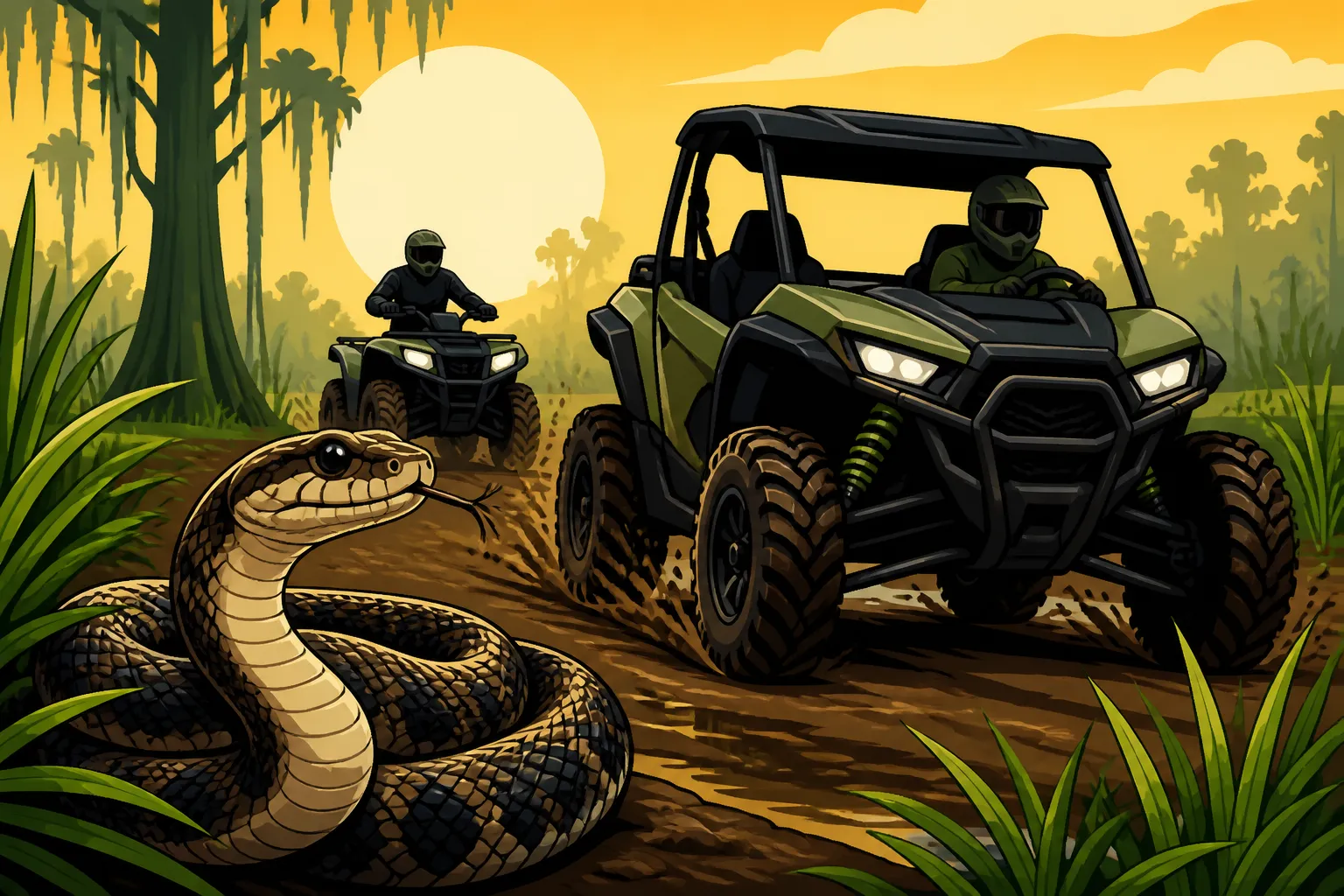
A warm afternoon on a Louisiana trail can turn stressful when a snake appears beside the track—or across it—just as you approach. Snake activity rises with warmer weather, but there is no single date when every trail becomes risky. This guide explains when and where to stay alert, how to ride without startling wildlife, and what to do if someone is bitten.
When Snake Season Is on Louisiana Trails
Warm weather brings more chances for an encounter
Snakes are most noticeable when temperatures warm up, often from spring through fall. They may be basking, moving between shelter and feeding areas, or resting in places that also make sense for a trail ride. Activity depends on temperature, rain, time of day, and the particular habitat—not just the month on the calendar. A warm spell can bring a snake out even when the season feels like it should be quiet.
That does not mean trails are unsafe throughout the warm months, or that a snake is waiting around every bend. Most encounters happen because a rider and snake happen to use the same space. A snake may be lying across a sunny trail, tucked beside a log, or hidden in vegetation at the edge of a path. Staying alert is more useful than avoiding all summer riding.
Louisiana’s mix of pine woods, wetlands, fields, and waterways means conditions differ from one riding area to another. The Kisatchie National Forest’s wooded terrain, for example, is not the same as a low, wet trail after heavy rain. Before heading out, check the area’s access and conditions. [Kisatchie National Forest OHV Trails in Louisiana] and [Louisiana Trail Conditions After Rain] can help you think through the riding environment as well as the route.
Expect snakes where cover, warmth, and water meet
A snake may use the same natural features riders encounter on a trail: brush piles, fallen branches, tall grass, leaf litter, rocks, and the margins of ponds or ditches. On a warm day, a sunlit stretch of ground can attract wildlife. After rain, water may collect in low spots, and vegetation along the edges can make it harder to see what is on the ground.
Venomous snakes live in Louisiana, including copperheads, cottonmouths, rattlesnakes, and coral snakes. Many are difficult to identify quickly, especially in poor light or when viewed from a moving machine. Treat an unidentified snake as something to give space rather than something to inspect. Don’t rely on a color pattern, head shape, or folk rule to decide whether it is harmless.
The same caution applies at camp and trailheads. Check where you place your hands and feet, avoid stepping over a log without seeing the ground on the other side, and don’t reach blindly into brush or equipment storage. These simple habits are practical whether you are riding near a wetland or setting up for a weekend in the woods.
How to Ride More Safely Around Snakes
Slow down where visibility is limited
You cannot avoid every encounter, but a controlled pace gives you more time to notice something on the trail and respond calmly. Ease off the throttle around blind curves, tall grass, shaded sections, narrow crossings, and places where brush crowds the track. Keep your eyes moving between the path ahead and its edges, rather than focusing only on the center of the trail.
If you see a snake, avoid swerving. A sudden turn can put your ATV or UTV into a ditch, tree, or another rider’s path. Slow down in a controlled way, stop at a safe distance, and give the snake a clear route away from people and machines. Do not try to nudge it with a tire, kick it, or drive over it. Once it has moved off, continue only when you can see the trail clearly.
Good group habits matter, too. Leave room between machines so the rider in front can slow or stop without causing a pileup. Let the group know if you spot wildlife, and don’t crowd the area for a closer look. For broader trail conduct, review [Louisiana Trail Etiquette Locals Expect] and [Louisiana Group Ride Planning].
Keep hands and feet out of hidden spaces
A rider can be focused on the track and still be caught off guard while getting off the machine. Before stepping down, look at the ground around the footrests and check for brush, debris, or an animal nearby. Keep your feet on the machine’s footrests while moving, and don’t let them drag near tall grass or the trail edge.
Be deliberate when moving logs, reaching beneath a machine, or checking a tire in thick vegetation. Use a tool rather than a bare hand when practical, and look before placing hands near a log, rock, or pile of leaves. Gloves can protect against scrapes, but they are not protection from a snakebite. The safest plan is to avoid putting a hand where you cannot see.
Navigation and communication are part of preparation. Before riding, identify your trailhead, route, and a way to get help if the group has to stop. A mapping tool such as onX Offroad can be useful for reviewing a route before leaving; save the route information you need in advance rather than assuming you’ll have a strong signal in a remote area. You can also share your planned route and expected return time with someone who is staying behind.
| Trail situation | What makes it harder to spot a snake | Safer response |
|---|---|---|
| Blind bend or shaded trail | Limited view of the ground ahead | Reduce speed and avoid sudden steering |
| Tall grass along the track | Vegetation can hide an animal at the edge | Stay on the visible trail and keep feet on footrests |
| Log or brush pile | A snake may be concealed on either side | Look before stepping over or reaching near it |
| Pond, ditch, or wet low spot | Cover and damp ground can restrict visibility | Give the area room and avoid walking through unseen vegetation |
| Stop at a trailhead or campsite | Gear and ground cover can hide wildlife | Check the spot before setting down equipment or stepping off |
Preparing for a Louisiana Ride During Snake Season
Make a simple plan before unloading
Start by confirming that the riding area is open and that your intended route is permitted. Trail access, closures, and seasonal restrictions can change, so don’t assume a route you used before is available today. [Louisiana Trail Closures and Seasons] and [Louisiana ATV Trails: Where to Ride] are useful starting points when planning where to ride.
Pack a charged phone, water, a basic first-aid kit, and any communication equipment appropriate for the area. Keep your phone accessible without leaving it loose where it can fall or get soaked. If your route includes stretches with limited service, tell someone where you’re going and when you expect to return. With onX Offroad or another mapping option, review the route before you set out and make sure the group knows the planned turnaround point.
Wear sturdy footwear and clothing that suit the trail conditions. Long pants and boots can reduce scrapes from brush and debris, but they do not make it safe to approach a snake. Choose gear that lets you move comfortably and keep your feet protected when you stop. In hot, humid weather, balance coverage with heat safety: take breaks, drink water, and avoid turning a clothing choice into a reason to overheat.
Choose breaks and campsites thoughtfully
When you stop, choose a visible, open spot rather than stepping into a patch of tall grass or brush. Look around before sitting down, placing a bag, or opening a storage compartment that has been sitting outside. Keep food and gear organized so you are not reaching blindly into a cluttered pile. At camp, use a light to check the ground after dark, even if you are familiar with the area.
If heavy rain has changed the trail, take extra care around washouts, puddles, and newly fallen branches. Don’t walk through vegetation to inspect a route unless you can see where you are placing your feet. A route that looks passable from the machine may have hidden hazards at its edges. Check [Louisiana Trail Riding After Heavy Rain] when rain is part of the day’s plan, and follow posted directions at the trailhead.
When using onX Offroad to plan a ride, use it as one part of your preparation rather than a substitute for posted signs or local rules. Confirm that the route is open, tell your group where you intend to go, and keep an offline or otherwise accessible route reference if service may be unreliable. The goal is not to eliminate every risk; it is to avoid getting disoriented or separated when a small wildlife encounter interrupts the ride.
What to Do if Someone Is Bitten
Get help and keep the person as calm and still as possible
A suspected venomous snakebite needs prompt emergency medical care. Call 911, or have someone in the group call while another person stays with the injured rider. Give the dispatcher your location as clearly as possible, including the trailhead, route name, nearby landmarks, and any map coordinates you can access. If you used onX Offroad to plan the route, the location information you reviewed beforehand may help you explain where the group is.
Have the person sit or lie down and remain as still and calm as possible while help is arranged. Remove rings, watches, or tight items near the affected area if they can be taken off easily before swelling develops. Keep the bitten limb comfortably still, and follow instructions from emergency dispatchers. Do not delay calling for help to take photographs, search for the snake, or drive around trying to identify it.
Do not cut the bite, attempt to suck out venom, apply ice, or use a tourniquet. Do not try to catch or kill the snake. A photo is not worth another bite, and medical treatment should not depend on identifying the animal. If someone else saw it from a safe distance, they can describe its appearance to medical professionals, but getting help takes priority.
Make it easier for responders to reach you
If the group is in a remote area, send one capable person toward a known access point only if doing so does not leave the injured rider without help or create another hazard. Keep the rest of the group together and make the meeting point clear to dispatch. Avoid moving the injured person farther than necessary unless the location itself is immediately dangerous.
After the emergency is underway, note when the bite happened and any symptoms the person develops, then share that information with responders. Don’t offer food, drink, or medication unless emergency personnel advise it. If the rider is alone with the injured person, prioritize contacting emergency services and following their directions rather than attempting improvised treatment.
A prepared group is less likely to lose precious time figuring out where it is or who should make the call. Before the ride, agree on a simple plan: who carries the first-aid kit, who can contact emergency services, and how the group will describe its location. Keep route details accessible, and don’t let the urgency of a situation push anyone into driving recklessly.
Disclaimer
This article is for general informational purposes only and does not constitute professional advice. Laws, prices and regulations vary by location and change over time. Consult a qualified professional for guidance on your specific situation.