Louisiana Rules for Riding in New Orleans
Dreaming of cruising down Bourbon Street or navigating the historic French Quarter on your ATV or UTV? Many riders move to Louisiana or visit our vibrant state with visions of taking their off-road machines into urban centers, picturing a unique way to see the sights. However, the legal landscape for ATVs and UTVs in New Orleans (which falls entirely within Orleans Parish) is far more restrictive than most realize, often leading to confusion and frustration. This guide is here to clear up that confusion, explaining why New Orleans is a very special, and often challenging, case for off-road vehicle enthusiasts.
The Unique Exemption for Orleans Parish
It’s easy to assume that state laws regarding off-road vehicles apply uniformly across Louisiana, but when it comes to New Orleans, that assumption can get you into a lot of trouble. Orleans Parish operates under a distinct set of rules, creating a major legal hurdle for anyone hoping to ride their ATV or UTV on public roads within the city. This exemption is crucial to understand before you even think about unloading your machine.
What Louisiana's ATV Statute Says About New Orleans
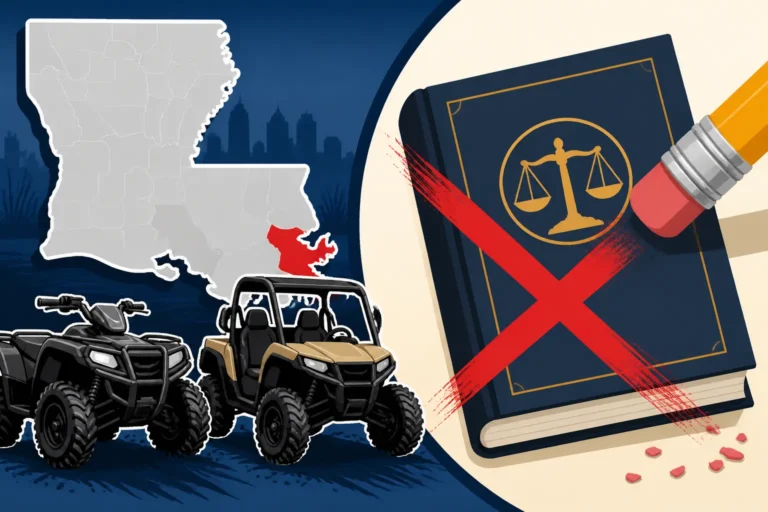
Louisiana’s statewide statutes governing the use of ATVs and UTVs on public roads, specifically Louisiana Revised Statute 32:299 for ATVs and 32:299.3 for UTVs, lay out very specific conditions. These laws detail where and how off-road machines can be legally operated on public roadways, often limited to shoulders, for agricultural purposes, or under specific conditions in designated areas. However, these statutes contain a critical clause: they explicitly state that they do not apply to Orleans Parish.
This means that any allowances, exceptions, or specific rules that might permit limited road use in other parishes – such as riding on the shoulder of a parish road for agricultural purposes, or crossing a highway where it's incidental to off-road travel – simply vanish within the boundaries of New Orleans. If you’re a farmer from a rural parish near Monroe or Lafayette, you might be accustomed to certain exemptions that allow you to operate your ATV on the shoulder to get from one field to another. However, bringing that same expectation to New Orleans will lead to immediate issues. For a deeper dive into these general rules, check out [Louisiana ATV Road Rules Under 32:299].
The implication is profound for riders. When the state statute explicitly removes a parish from its jurisdiction concerning ATVs and UTVs on public roads, it effectively means that the city or parish itself gets to set its own rules entirely. This isn't just a minor technicality; it’s the foundational reason why New Orleans is so different from, say, rural Avoyelles Parish when it comes to off-road machine use. The state essentially says, "Orleans, you handle this your way," and New Orleans has indeed taken a very specific approach.
Why Local Ordinances Rule the Roost
Because the state statutes defer to Orleans Parish, the rules for ATVs and UTVs on public ways are determined by local city ordinances and parish regulations. And in a densely populated, historic urban center like New Orleans, those local rules are almost universally restrictive. The city government prioritizes public safety, traffic flow, noise control, and preserving the unique character of its streets, which simply aren't designed for off-road vehicles.
It can feel like a bureaucratic headache, especially when you're used to the more relaxed regulations found in other parts of Louisiana. But understanding this local control is absolutely key. Trying to argue that your machine is titled or has a decal, or that you're only riding on the shoulder, won't hold up in New Orleans if a local ordinance prohibits it outright. Police enforcement in New Orleans is typically very strict regarding vehicles that don't conform to standard street-legal requirements, and ATVs and UTVs fall squarely into that category for public road use.
These local ordinances often prohibit the operation of off-road vehicles on any public street, sidewalk, or right-of-way unless specifically authorized for official use (like by law enforcement or sanitation departments) or for very special, permitted events. This means that unlike some other parishes where you might find [Louisiana UTV Street Legal Rules by Parish] allowing specific use, New Orleans maintains a blanket prohibition for general recreational riding on its public infrastructure.
The Realities of Riding an ATV or UTV in New Orleans
Now that we've established the legal framework, let's talk about what this actually means for you and your machine if you find yourself in the Crescent City. The short answer is: don't plan on riding it on any public thoroughfare.
Public Roads and City Streets Are Off-Limits
To be blunt, ATVs and UTVs are generally prohibited from operating on public streets, sidewalks, and most public rights-of-way within New Orleans. This includes iconic streets like Canal Street, historic avenues in the Garden District, and even residential side streets. The city's dense traffic, narrow streets, and pedestrian-heavy areas make it an unsuitable and unsafe environment for these types of machines. [Louisiana Bans ATVs From Travel Lanes], and this ban is strictly enforced in New Orleans, with no exceptions for shoulders or other limited uses.
Unlike rural areas where limited shoulder riding might be permitted for specific purposes, or where a farmer might have an [Louisiana Agricultural Affidavits for an ATV] exemption, New Orleans offers no such reprieve. The reasons for this strict stance are manifold: safety concerns for both riders and the general public, the potential for traffic congestion, excessive noise in residential and tourist areas, and the risk of damage to delicate historic infrastructure. Trying to navigate congested city streets on a vehicle designed for off-road terrain is inherently dangerous and disruptive, which is why the city maintains its prohibition.
Furthermore, forget about even considering major arteries like I-10; these are absolutely off-limits for any ATV or UTV, regardless of where you are in Louisiana. For details on that, you can reference [Louisiana Bans ATVs From Interstates]. In New Orleans, this prohibition extends to virtually all public paved and unpaved roads and pathways, making any recreational use of your machine on these surfaces illegal.
Limited Exceptions and Private Property
Are there any exceptions? Extremely few, and they generally don't apply to recreational riders. Law enforcement, emergency services (like paramedics responding to an accident), and city sanitation departments might use ATVs or UTVs for official duties, but this is under specific operational guidelines and departmental authority, not general public access. Similarly, a contractor working on a construction site on private land might use a UTV, but that's confined to the private property with the owner's permission, and still subject to noise ordinances.
When it comes to private property, the rules are slightly different. If you own a large, privately fenced lot within New Orleans, or have explicit permission from a private landowner, you could theoretically operate your ATV or UTV there. However, this is far from the typical New Orleans experience. Most residential properties have very small yards, making riding impractical and dangerous. Even on private land, you would still be subject to local noise ordinances and nuisance laws. A homeowner with a large private parcel might enjoy some freedom, but for the average New Orleans resident or visitor, truly private riding space is scarce to non-existent.
It's also important to consider the context. Even if you're riding on private property, if that property is easily visible or audible from public areas, you might still attract attention from law enforcement if your activities are deemed a public nuisance. The general rule of thumb: assume you cannot ride your ATV or UTV anywhere in New Orleans unless you have explicit, written, and highly specific permission for a very limited, controlled scenario on private land, far from public view and earshot.
Consequences of Illegal Riding
The potential consequences of operating an ATV or UTV illegally on New Orleans streets are significant and can quickly become very costly. Law enforcement in the city is generally well-versed in these prohibitions and does not hesitate to enforce them. You could face immediate citations, hefty fines, and, most critically, the impoundment of your vehicle.
Imagine receiving a citation for illegal operation, which can carry a substantial fine that quickly adds up with court costs. Beyond that, the inconvenience and expense of having your machine towed and impounded are considerable. Getting an impounded vehicle released often involves paying towing fees, storage fees (which accrue daily), and any associated fines. This process can be time-consuming and frustrating, especially if you're an out-of-state visitor. For a general understanding of penalties, you can read [Louisiana Penalties for Illegal Road Riding]. While the specific impoundment reasons might differ from [Louisiana Impoundment for No Decal], the result—your machine being taken away—is the same.
Furthermore, any incident, accident, or damage caused while illegally operating your ATV or UTV could lead to civil liabilities, increased insurance premiums (if you even have coverage for illegal road use, which is unlikely), and potentially more severe charges depending on the circumstances. It's simply not worth the risk. The city’s priority is public order and safety, and they will act swiftly to remove machines that are deemed a hazard or a nuisance on public roads.
What to Do If You're Visiting New Orleans with Your Machine
If you're planning a trip to Louisiana and New Orleans is on your itinerary, but you also want to bring your ATV or UTV, you need to adjust your expectations and plan carefully. The key is to separate your New Orleans visit from your off-road riding activities.
Plan for Storage, Not Riding
If you're bringing your ATV or UTV to Louisiana with the intention of riding elsewhere in the state, and your route or stay includes New Orleans, your primary plan for the machine within the city limits should be secure storage. This means keeping it trailered or parked safely where it won't be operated. Many hotels in New Orleans, especially in the central districts, have limited parking, and even less for vehicles with trailers. You'll need to research secure parking options well in advance, possibly outside the immediate downtown area, or ensure your accommodation has adequate and safe space for your setup.
Think of your ATV or UTV as cargo, not transportation, while you're in New Orleans. You might be just passing through on your way to a legal riding area, such as a state park or a private mud park. In such cases, your machine should remain on its trailer, secured, and should only be operated once you've reached an approved destination far outside the city. For tips on transporting your machine, refer to [Hauling a Machine to a Mud Park]. The last thing you want is to have your vacation ruined by a citation or impoundment before you even hit the trails.
Finding Legal Riding Spots Outside the City
Louisiana boasts numerous fantastic places to ride ATVs and UTVs, but they are definitively not within New Orleans. If you want to experience the thrill of off-road riding, you'll need to plan a separate trip to one of the designated trails, parks, or private lands in other parishes. For instance, you could head north to [Kisatchie National Forest OHV Trails in Louisiana], which offers miles of scenic trails, or immerse yourself in the mudding culture at places like [Muddy Bottoms ATV Park in Louisiana]. These locations are designed for off-road recreation and have specific rules for safe and legal riding.
When you're preparing for those legal rides, remember that the right setup makes all the difference. Many riders equip their machines with aftermarket parts for enhanced performance and safety. Companies like SuperATV offer a wide range of accessories, from lift kits and heavy-duty axles for tackling deep mud to lighting upgrades and winches for trail adventures. While these modifications from SuperATV won't make your machine street-legal in New Orleans, they are invaluable for optimizing your quad or side-by-side for the challenging terrain you'll encounter at a legitimate riding park or trail. Planning your ride outside New Orleans allows you to fully enjoy your machine in its intended environment.
It’s crucial to understand that even when you go to these other riding areas, you still need to follow their specific rules and acquire any necessary permits or passes. The freedom to ride is a privilege, and responsible riding in designated areas is key to ensuring these spots remain open for everyone. Always check the current status and regulations of any park or trail before you load up and head out.
Considering Local Transportation Alternatives
Once you're in New Orleans, it's best to embrace the city's unique transportation options. Walking is often the best way to explore the historic districts, allowing you to fully soak in the atmosphere. The city also offers streetcars, buses, taxis, and ride-sharing services that are perfectly suited for navigating the urban landscape. These methods are not only legal but often more efficient and enjoyable for getting around, especially given New Orleans' often congested streets and limited parking.
Trying to maneuver a large ATV or UTV through crowded areas, search for non-existent parking, or risk a run-in with law enforcement simply detracts from the experience. Leave your off-road machine securely stored and rely on the local transit infrastructure to get you where you need to go. This approach allows you to focus on enjoying the city's incredible food, music, history, and culture without the constant worry of legal repercussions.
By planning ahead for storage and utilizing local transportation, you can have a fantastic New Orleans experience without ever having to worry about the legality of your ATV or UTV on city streets. It’s about respecting the local laws and making smart choices for your visit.
Common Questions and Misconceptions
Despite the clear legal exemptions, many riders still hold onto misconceptions about operating ATVs and UTVs in New Orleans. Let's address some of these common questions head-on.
Is a Decal or Title Enough?
Absolutely not. A common misunderstanding is that if your ATV or UTV is properly titled and has the required [Louisiana ORV Decals and Titles Explained] for off-road use in other parts of the state, then it should be acceptable in New Orleans. While Louisiana law does require both a title (proof of ownership) and an off-road decal (for public land use in non-exempt parishes), these documents do not grant street legality in New Orleans.
Think of it this way: your driver's license allows you to drive a car on any public road, but it doesn't give you permission to drive a forklift on the highway. Each type of vehicle has its own set of rules and requirements for specific environments. Your ATV's title and decal confirm it's a legitimate off-road vehicle for designated areas, but they do not magically transform it into a street-legal vehicle for Orleans Parish roads. The primary reason an ATV needs [Why an ATV Needs Both a Title and a Decal] is for identification and to fund trail maintenance, not to grant general road access in an urban setting.
Even if you meticulously follow all titling and decal procedures, it won't override New Orleans' local ordinances. The exemption in the state statute means that for urban street use, your off-road machine is simply not recognized as a legal mode of transportation on public roads in the city, regardless of its registration status for off-road trails elsewhere.
Modified Machines and "Street Legal" Kits
Many UTV owners invest heavily in modifying their machines to meet street-legal requirements in other states or even in certain designated parishes within Louisiana. These modifications often include adding turn signals, brake lights, mirrors, horns, windshields, and DOT-approved tires. While these "street-legal" kits (which you might find from companies like SuperATV) are excellent for making a UTV compliant where allowed, they generally do not hold sway in New Orleans.
The fundamental issue remains the Orleans Parish exemption in the state statute. Even if your UTV is decked out with every conceivable street-legal accessory, the local ordinances in New Orleans are likely to prohibit its general operation on public roads. The city isn't typically evaluating individual machines for compliance with a list of features; it's operating under a blanket prohibition based on the vehicle type. It's a tough pill to swallow when you've invested significant time and money in making your machine compliant elsewhere, only to find it's still barred in New Orleans.
Therefore, while a UTV equipped with a high-quality lift kit and advanced lighting from SuperATV might be perfect for tackling the trails at Catahoula Recreation Area or for limited farm use in a rural parish, it simply doesn't change its status on the streets of New Orleans. The city's regulations are often more about what the vehicle fundamentally is (an off-road vehicle) rather than how it's been accessorized.
What About Special Events or Parades?
New Orleans is famous for its parades and special events, and you might see ATVs or UTVs being used during Mardi Gras or other festivals. This can lead to the misconception that these machines are allowed on city streets during such times. However, this is a very specific exception and not a general rule.
Machines used in parades, festivals, or other special events operate under highly specific permits issued for that particular event. These permits are typically granted to organizations or krewes, not individual recreational riders. They come with strict conditions regarding routes, times, safety precautions, and designated operators. They are absolutely not transferable for general recreational use outside of the permitted event.
In essence, seeing an ATV or UTV in a New Orleans parade is like seeing a construction crane on a city street – it's there for a specific, permitted purpose under controlled conditions, not because it's considered street-legal for everyday driving. Trying to join in on the fun outside of these highly regulated events would quickly lead to legal trouble.
Here's a quick look at the contrasting rules:
| Feature | New Orleans (Orleans Parish) | Other Louisiana Parishes (General Rule) |
|---|---|---|
| State Statute Applicability | Explicitly Exempted | Applies (e.g., RS 32:299, 32:299.3) |
| Public Road Use (Recreational) | Generally Prohibited on all public roads | Limited (shoulders, farm use, crossings) |
| Agricultural Exemptions | No, state exemptions do not apply | Yes, under specific conditions (e.g., farm roads) |
| Local Ordinance Control | Full Authority, typically restrictive | State law applies, local ordinances supplement |
| Typical Enforcement | Strict enforcement likely | Varies by parish, often less strict in rural areas |
| Common Penalties (Illegal Use) | Fines, vehicle impoundment, citations | Fines, vehicle impoundment, citations |
| Street Legal Kits | Does not grant street legality | May grant street legality if all state/local requirements met |
Disclaimer
This article is for general informational purposes only and does not constitute professional advice. Laws, prices and regulations vary by location and change over time. Consult a qualified professional for guidance on your specific situation.