Disputing a Citation Written on a Parish Road
It’s a frustrating scenario many of us have faced in the bayou state: you’re out for a ride on your ATV or UTV, perhaps heading to a hunting camp, a fishing spot, or just enjoying some country air on what you thought was a perfectly permissible parish road, only to be stopped and handed a citation. The rules for off-road machines on public roads in Louisiana can feel like a tangled web of statutes, exceptions, and local ordinances, leaving many riders confused and unjustly ticketed. This guide is here to untangle that web, helping you understand your rights and offering a clear path to disputing a citation written on a Louisiana parish road.
Understanding Louisiana's ATV/UTV Road Rules and Your Citation
Before you can effectively dispute a citation, you need to understand the legal landscape in Louisiana and precisely why you might have been stopped in the first place. The laws aren't always intuitive, and they certainly don't get much airtime outside of our riding circles, so it's easy to get caught unaware.
Why You Might Have Received a Citation
Louisiana has specific, often strict, laws regarding the operation of ATVs and UTVs on public roads. While it might feel like you're just on a quiet, gravel parish road, the law generally sees it differently than riding on private land or a designated trail.
One of the most common reasons for a citation is simply being in the wrong place on the road. [Louisiana Bans ATVs From Travel Lanes] means that, by default, your machine shouldn't be in the part of the road where cars drive. If you were spotted in the main travel lane, that’s usually an open-and-shut case for a trooper. The law mandates that if you're on a public road, you must stay on the extreme right side of the road, preferably the shoulder, if one exists and is passable. Another common issue arises with the "farm use" exception. While many rural riders rely on this, it's not a blanket pass. The statute details specific conditions, including a [The 5-Mile Farm Radius on a Shoulder] from the farm property. If you were outside this radius, or not engaged in genuine farm work, that exemption might not apply, leading to a ticket.
For UTVs, there are even more layers. [Louisiana Requires UTV Drivers to Be 21] and [Louisiana Requires a Class E License] are two big ones. If the driver of a UTV doesn't meet these criteria, a citation is almost guaranteed, regardless of where they were on the road. Age restrictions on ATVs also exist, typically prohibiting riders under 10 from operating on public land, and requiring supervision for younger riders on private land. Then there's the issue of time of day: [Louisiana Daylight Riding Window] rules generally prohibit riding after dark, or more specifically, 30 minutes after sunset and 30 minutes before sunrise, unless you're engaged in specific agricultural activities. Many riders also forget about local designations. While state law has general prohibitions, parishes and municipalities can designate certain roads as open to UTVs under [Louisiana UTV Road Rules Under 32:299.3]. However, [Parishes Have to Post Signs on Designated Roads] for this to be valid. If you were on a road not explicitly signed, even if it feels like a common riding area, you could still be ticketed.
The bottom line is, confusion is absolutely rampant because the rules are fragmented and not always well-communicated. This guide aims to clear up some of that confusion.
Decoding Your Citation: What to Look For
Receiving that slip of paper can be jarring, but don't just shove it in the glove box. The first, and most critical, step in disputing your citation is to understand exactly what it says. Take a deep breath and read every single line.
Look for key information:
- Officer's Name and Badge Number: This identifies the issuing officer.
- Issuing Agency: Was it a State Trooper, Parish Sheriff, or local police?
- Date and Time of Violation: Crucial for establishing timelines for your defense.
- Location of Violation: Be as specific as possible. Was it on Highway 123, Parish Road 456, or within city limits? This affects which laws apply.
- Statute/Ordinance Cited: This is the most important piece of information. It will be a numerical code, like "LRS 32:299" for ATVs or "LRS 32:299.3" for UTVs, or perhaps a local ordinance number. This tells you the specific law the officer believes you violated.
- Alleged Violation Description: A brief explanation of what you were doing wrong.
- Court Date and Location: This is where you'll need to appear if you decide to dispute the ticket.
- Fine Amount: This can vary significantly. You'll also want to be aware of [Louisiana Ticket Costs for Road Riding] and potential [Louisiana Court Costs for a Citation] if you lose.
Many citations are filled out by hand, and sometimes, mistakes happen. A misspelled name, an incorrect vehicle description, or even an incorrect statute cited can sometimes be grounds for dismissal. While you should never rely solely on a clerical error, it’s worth noting anything that seems off. The clearer you are on what the state is accusing you of, the better you can prepare your defense.
Gathering Your Evidence for a Strong Defense
Once you understand the specifics of your citation, the next step is to build your case. This isn't about blaming anyone; it's about presenting a factual, well-supported argument that demonstrates you either weren't violating the law or there were mitigating circumstances.
Documenting the Scene and Your Machine
This is where the details matter. If you’re still at the scene, or can return to it soon after the citation, document everything you can. Your memory will fade, but photos and videos won't.
- The Road Itself: Take pictures of the road where you were stopped. Was there a clear, passable shoulder? Was it wide enough for a machine? Capture the width, material (gravel, dirt, paved), and any obstructions. If the citation claims you were in the main travel lane, but the shoulder was impassable or nonexistent, that’s key.
- Signage (or Lack Thereof): Were there any signs indicating the road was designated for UTV use? If not, take photos of the absence of such signs, as [Parishes Have to Post Signs on Designated Roads] for a UTV to legally operate on them. Conversely, if there were "No ATV/UTV" signs and you missed them, that's important to know for your defense strategy.
- Visibility: If the citation was for riding after dark without proper lights, document the lighting conditions. Were there streetlights? Was it truly "dark" or just dusk/dawn? Your machine's lighting, including aftermarket LED light bars or auxiliary lights from a company like SuperATV, could be relevant here. Showing you had ample lighting even if it was dim outside can strengthen your position against a "no lights" claim, for example.
- Your ATV/UTV: Take detailed photos of your machine. Show its ORV decal clearly affixed. [Louisiana Decal Placement on a Machine] is on the front fork or visible area. Document any safety equipment like mirrors, turn signals (if applicable for UTVs), or reflective tape. This helps demonstrate your commitment to safe and compliant operation. Also, note any modifications. Sometimes, accessories, especially those designed for increased visibility or safety, can implicitly support your argument that you were operating responsibly.
- Your Position: Try to recreate or photograph exactly where your machine was situated on the road relative to the travel lane and shoulder when you were stopped.
This documentation is your visual evidence, telling the story of the scene from your perspective.
Reviewing Relevant Laws and Ordinances
This is the research phase. The statute number on your citation is your starting point. Look it up. Louisiana Revised Statutes (LRS) are publicly available online. Read the exact wording of the law the officer cited. Pay close attention to definitions, exceptions, and conditions.
For example, if you were cited under [Louisiana ATV Road Rules Under 32:299], understand what that statute permits and prohibits. If you were on a parish road with a UTV, you’ll want to review [Louisiana UTV Road Rules Under 32:299.3]. Understanding the letter of the law can reveal loopholes or misinterpretations that could help your case.
Don't stop at state law. Also, research [Louisiana Parish Ordinance Lookups] and [Louisiana Municipal Ordinance Lookups]. It's entirely possible that a local ordinance could either exempt you or, conversely, have stricter rules than state law. A local ordinance might designate a particular road for UTV use, or allow specific exceptions not covered by state statute. If your defense involves the [Louisiana Farm Affidavits for Road Use], make sure you understand the precise requirements for that affidavit and that you had one properly completed and notarized. [Why Your Bill of Sale Needs a Notary] also applies to certain documents for titling, and similar notarization requirements ensure legal validity for many affidavits.
Witnesses and Other Supporting Documentation
Beyond the scene and the law, personal testimony and official paperwork can bolster your defense.
- Witnesses: Did anyone else see you riding? Or, more importantly, did anyone witness the stop itself? If so, get their contact information. A credible witness who can corroborate your account, or attest to the road conditions or the presence (or absence) of signage, can be incredibly persuasive in court.
- Proof of Ownership and Registration: Always carry your official proof of ownership, such as your title, and proof of your current ORV decal. You can refer to [Louisiana Title and Decal Together] for a reminder of why both are essential. Even if you're not legally required to carry them on your person, having them available shows you’re a responsible owner. The officer may have asked to see your [Louisiana Photo ID at the Counter] when you registered, and bringing your ID to court is essential.
- Insurance: While [Does Louisiana Require Insurance on an Off-Road Machine?] typically says no for private land use, if you were riding on a designated public road (especially with a UTV), insurance might be required. If so, have proof of that coverage.
- Farm Exemption Documentation: If your defense hinges on the farm exemption, have your [Louisiana Agricultural Affidavits for an ATV] (or UTV) readily available. This affidavit is a sworn statement, often before a notary, confirming the machine's primary use for agricultural purposes within the specified radius. You should be familiar with [Swearing an Affidavit That a Quad Is Farm-Only].
- Mailing Records/Communications: If you were trying to register your machine, or had a specific question for the OMV or local authorities, and have emails or letters, bring those. It can demonstrate due diligence.
The more comprehensive your evidence, the more seriously the court will take your dispute.
Navigating the Legal Process: Options for Disputing
Once you've gathered all your information and weighed your options, you'll need to decide how to proceed. It's not always an easy choice, but understanding the paths available can help you make the best decision.
Deciding to Pay or Fight
This is often the hardest part. On one hand, paying the fine is usually the quickest way to put the incident behind you. On the other hand, it means admitting guilt and potentially facing other consequences.
Pros of Paying the Fine:
- Convenience: No court appearance, no lost work days.
- Predictable Cost: You know exactly what you're paying.
- Avoids Legal Fees: If you were to hire an attorney, this saves money.
Cons of Paying the Fine:
- Admission of Guilt: You're saying you broke the law.
- Potential Record: Depending on the violation, it could go on your driving record (especially for UTV violations requiring a Class E license), potentially affecting future insurance rates or even your ability to hold certain licenses. [Louisiana Penalties for Illegal Road Riding] can sometimes involve points or other lasting marks.
- Precedent: If you genuinely believe you were in the right, paying sets a precedent for future interactions and doesn't resolve the underlying confusion or perceived injustice.
Pros of Disputing the Citation:
- Opportunity for Dismissal: If you have a strong case, the citation could be dismissed, saving you the fine and avoiding any record.
- Education: It's an opportunity to educate the court (and potentially, through the court, law enforcement) on the nuances of ATV/UTV laws in Louisiana.
- Justice: If you truly feel you were in the right, fighting it can provide a sense of justice.
Cons of Disputing the Citation:
- Time Commitment: Court appearances, gathering evidence, potentially multiple dates.
- Uncertainty: There's no guarantee you'll win, even with a strong case.
- Increased Costs: If you lose, you'll still pay the fine, plus potential court costs. If you hire an attorney, those fees add up.
Consider the severity of the alleged violation, the strength of your evidence, and the potential long-term consequences of an admission of guilt.
Preparing for Your Court Appearance
If you decide to fight the citation, preparation is key. This isn't just about showing up; it's about presenting yourself and your case effectively.
- Dress Professionally: This may seem minor, but it matters. Show respect for the court and the judge. Business casual attire is usually appropriate.
- Organize Your Evidence: Don't just show up with a stack of papers. Use a folder or binder, clearly labeled sections for photos, statutes, affidavits, and any other documents. This makes it easy for you to reference and for the judge to follow along. Print multiple copies of key documents – one for you, one for the judge, one for the prosecutor (if present).
- Practice Your Explanation: Mentally (or even verbally) walk through what happened, clearly and concisely. Stick to the facts. Avoid emotional language or getting sidetracked. Be ready to explain your understanding of the law and why your actions complied with it, or why the citation was in error.
- Be Respectful: Even if you feel frustrated, maintain a respectful demeanor towards the judge, the officer, and any court staff. Arguing or being confrontational will only hurt your case.
- Consider Legal Counsel: For some, especially if the penalties are significant or the legal issues are complex, hiring an attorney specializing in traffic or municipal law can be incredibly beneficial. An attorney understands legal procedures, can cross-examine the officer, and can present legal arguments more effectively.
Remember, the goal is to convince the judge that either the citation was issued in error, or that there were valid reasons for your actions that the officer may not have fully understood.
Potential Defenses and Arguments
When you stand before the judge, what arguments can you make? Your defense will, of course, depend on the specifics of your citation, but here are some common approaches:
- No Designated Road Signage (for UTVs): If you were on a parish road that was not clearly marked as designated for UTV use, you can argue that you couldn't reasonably know it was illegal if the parish hadn't fulfilled its obligation under [Parishes Have to Post Signs on Designated Roads]. This is a strong defense if no signs were present.
- Farm Use Exemption: If you were within the [The 5-Mile Farm Radius on a Shoulder] and engaged in legitimate agricultural work, present your [Louisiana Farm Affidavits for Road Use]. Emphasize that your machine was being used as legitimate farm equipment, not for recreational joyriding. Be prepared to explain your route and purpose. Remember, [Carrying an Affidavit Sworn Before a Notary] is crucial for its validity.
- Lack of a Passable Shoulder: If the citation claimed you were in the main travel lane but there was no safe or passable shoulder available, you can argue that you had no other option to maintain safe operation. Photos of the road's edge can be critical here.
- Mistaken Identity/Clerical Error: If the citation contains significant factual errors (wrong machine description, incorrect date/time, wrong name), point these out to the judge. While minor errors might be overlooked, major discrepancies could lead to a dismissal.
- Officer Observation Error: Respectfully challenge the officer's account if it differs from yours, especially regarding distance, speed, or your position on the road. Your photos and witness testimony become vital here.
- Orleans Parish Exemption: If by some slim chance you were cited in Orleans Parish for an ATV or UTV road violation, you can argue that [Orleans Parish Is Exempt From Louisiana's ATV Statute], meaning the state law generally does not apply there. However, local ordinances in Orleans might still apply.
- Possession of Required Licenses/Permits: If you were cited for not having a Class E license for a UTV, and you actually do, present it. [What a Class E License Lets You Do] is clear about the permissions. Same for any decals, titles, or other required paperwork.
Present your arguments clearly and calmly, referencing your evidence as you speak.
After the Hearing: What Comes Next
The court hearing is a significant step, but your journey isn't necessarily over once the judge makes a ruling. There are always follow-up actions, whether you win or lose.
If You Win Your Case
Congratulations! A dismissal is a huge relief. However, there are still a few things to consider:
- Confirm Dismissal: Make sure the dismissal is formally recorded. Ask the clerk for a copy of the court order or a confirmation that the case has been closed and the citation dismissed.
- Refunds: If you paid any court costs or fines upfront, inquire about how to receive a refund. [Can the OMV Refund a Louisiana Title Fee?] primarily refers to title fees, but similar processes may apply for court-related payments.
- Record Clean-Up: If the citation was initially entered on your driving record, confirm that it has been removed. This might require a follow-up with the OMV or relevant state agency.
- Learn and Share: Even in victory, reflect on what happened. Was the law truly unclear, or did you learn something new? Share your experience with other riders so they can avoid similar situations. This is how our riding community helps each other navigate the complex legal terrain of Louisiana.
If the Citation Stands
It’s disheartening to lose, but it's not the end of the world. Take a deep breath and accept the outcome.
- Pay the Fine and Costs: Promptly pay any fines and court costs as ordered by the judge. Failing to do so can lead to even more severe penalties, including license suspension or additional fees.
- Understand Penalties: Beyond the monetary fine, understand if there are any other penalties, such as points on your driving record, mandatory safety courses, or community service. Make sure you comply with all aspects of the judgment.
- Appeal Options: In some cases, you might have the option to appeal the judge's decision to a higher court. This is a more complex and expensive legal process, usually requiring an attorney, and should only be considered if you believe there was a significant legal error in the initial ruling. It's not simply a chance to re-argue your case.
- Learn from the Experience: This is perhaps the most crucial step. Use the experience to clarify what you did wrong (or what the court believed you did wrong) and how to avoid future citations. [Louisiana Rules Riders Get Wrong] often center around these nuanced road rules.
Proactive Steps to Avoid Future Citations
The best way to deal with a citation is to avoid getting one in the first place. Knowing the rules and being prepared can save you a lot of headache, time, and money.
- Know Your Local Rules Inside and Out: Don't just rely on general knowledge. Research the specific laws for the parishes and municipalities where you ride. What's legal in one rural parish might not be in another. Check the state statutes regularly for amendments (like [Louisiana's 2022 UTV Amendment] to the 2015 UTV statute).
- Always Carry Documentation: Keep your title, current ORV decal, proof of insurance (if required), and any applicable farm affidavits with you when you ride. A secure, waterproof pouch for paperwork is a great investment. Make sure your decal adheres to [Louisiana Decal Placement on a Machine].
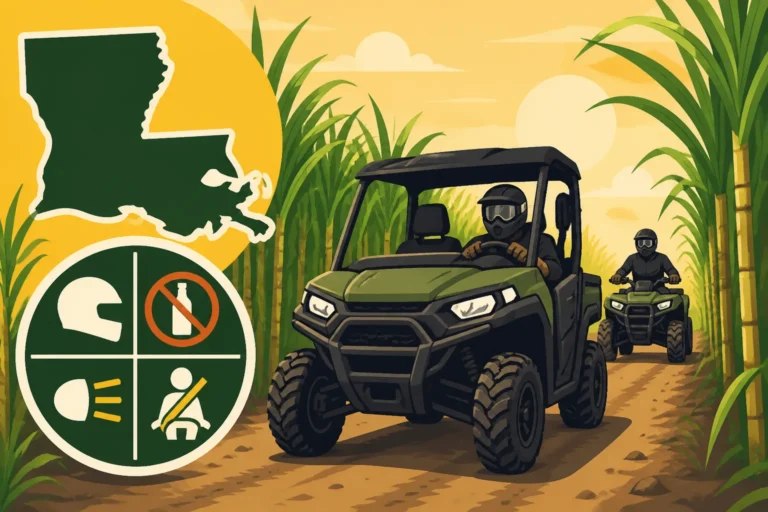
- Enhance Visibility and Safety: Even if not strictly required, consider adding aftermarket lighting, mirrors, and reflective tape to your machine. Products from brands like SuperATV can significantly improve your visibility to other vehicles on public roads, especially if you're riding near dawn or dusk (even within the legal daylight window). Better visibility can go a long way in preventing an incident and an interaction with law enforcement.
- Ride in Designated Areas: Whenever possible, stick to private land, designated trails, or private parks like [Muddy Bottoms ATV Park in Louisiana] or [Louisiana Mudfest and Event Weekends]. These areas are set up for recreational riding and generally don't carry the same legal complexities as public roads. For public land, research [Louisiana WMA Trail Riding] or [Kisatchie National Forest OHV Trails in Louisiana] and ensure you have any required passes or permits, like [Louisiana Forest Trail Use Passes].
- Educate Other Riders: Share your knowledge and experiences with your riding buddies. The more informed our community is, the safer and more enjoyable our time on the trails and roads will be.
By taking these proactive steps, you can significantly reduce your chances of another run-in with the law on a Louisiana parish road. Stay safe out there, and happy riding!
Disclaimer
This article is for general informational purposes only and does not constitute professional advice. Laws, prices and regulations vary by location and change over time. Consult a qualified professional for guidance on your specific situation.