Louisiana Rules for Riding a Crawfish Pond Road
Riding your ATV or UTV across the vast, flat expanse of a Louisiana crawfish farm might sound like a dream, but navigating those private pond roads comes with a maze of rules and potential pitfalls many riders don't anticipate. It's not like cruising down a public parish road; these are working farms, and understanding who owns the land, what laws apply, and how to stay safe is absolutely critical to avoid legal trouble, angry landowners, and costly repairs. This guide will walk you through the realities of riding on crawfish pond roads, making sure you're fully prepared before you ever consider turning a wheel.
Understanding What Crawfish Pond Roads Really Are
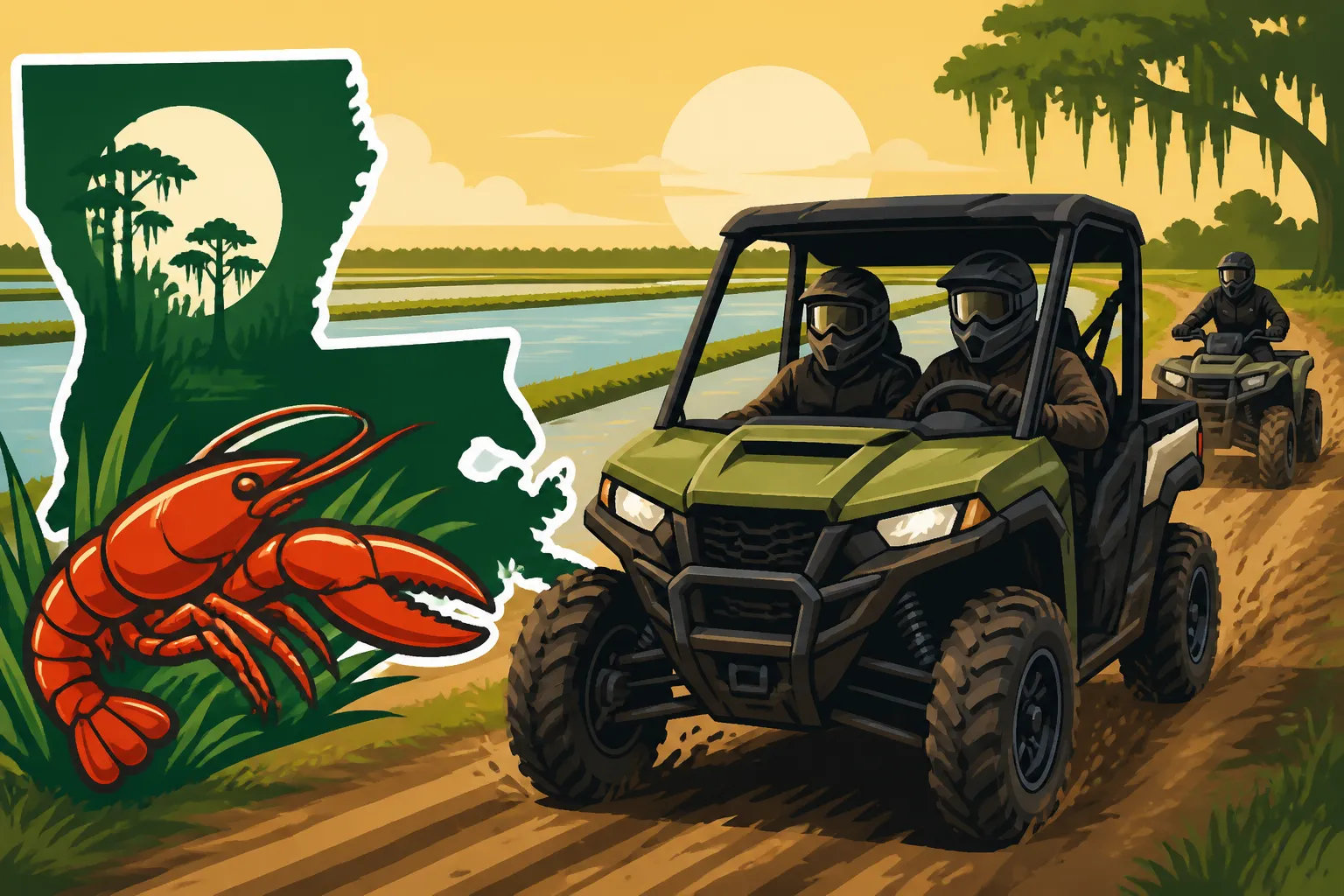
When you picture a crawfish pond, you're likely thinking of vast, shallow bodies of water surrounded by raised earthen levees. These levees aren't just barriers for the water; they often double as the "roads" that farmers use to access their ponds, check traps, and maintain their operations. These aren't public rights-of-way, and they're rarely, if ever, designated for recreational off-road vehicle use. Thinking of them as anything other than private farm infrastructure can lead to some serious misunderstandings.
Who Owns These Roads?
This is the absolute first, and most important, distinction to make: crawfish pond roads are overwhelmingly private property. They belong to the landowner, the farmer, or the agricultural operation that manages the ponds. They are not like forest trails in Kisatchie National Forest, where you might pay a [Louisiana Forest Pass Cost] and ride on designated public lands. There's no public access implied just because they look like a path or a road. Imagine someone driving across your private driveway without asking; it's the same principle, just on a much larger scale. This private ownership means that the default assumption should always be that you do not have permission to ride there unless explicitly granted.
The Purpose of Crawfish Pond Roads
These "roads" are built and maintained for one primary purpose: to facilitate crawfish farming. This includes everything from planting rice in the off-season, filling and draining ponds, checking traps daily during the season, moving equipment, and harvesting the catch. They are integral to a farmer's livelihood. When you're riding on them, you're not just on a trail; you're on someone's workplace. This context is vital because it explains why unauthorized riding can be such a disruptive and costly problem for farmers. Damage to these levees, even seemingly minor ruts from tires, can compromise a pond's integrity, affect water levels, and hinder farm machinery, leading to significant financial losses for the operation.
Navigating the Legal Landscape of Private Farm Roads
The biggest legal hurdle you'll face when considering riding on crawfish pond roads is the issue of trespass. Unlike designated [Louisiana WMA Designated Trails Only] where specific rules are posted, private farm roads fall under general property law. There's no special carve-out for recreational vehicles on these specific types of private agricultural infrastructure.
Are They Public Roads? Absolutely Not.
Let's be unequivocally clear: crawfish pond roads are not public roads. They are not parish roads, state highways, or even the shoulder of a public road where [Louisiana Rules for Riding a Shoulder] might apply under very specific agricultural exemptions. Because they are private, the rules that govern ATV and UTV use on public thoroughfares, like [Louisiana UTV Road Rules Under 32:299.3] or [Louisiana ATV Road Rules Under 32:299], simply do not apply in the same way. The question isn't whether your machine is street legal; the question is whether you have permission to be on that private property at all. Trying to argue that a crawfish pond levee is somehow a "public right-of-way" will not hold up in court, and it will certainly not endear you to the property owner.
The Strict Enforcement of Trespassing Laws
In Louisiana, riding on private land without permission is trespassing, plain and simple. Farmers take trespass very seriously, especially on active agricultural land, where it can lead to crop damage, equipment interference, and even liability issues if someone gets hurt on their property. Law enforcement, including parish sheriffs and state troopers, are well aware of these issues and will enforce [Louisiana Trespass Law for Riders] if called by a landowner.
The consequences can range from being asked to leave, to receiving a citation, to having your machine impounded. If you're caught, you could face fines, court costs, and potentially even civil action from the landowner for any damages caused. It's not a slap on the wrist; it's a serious offense that can be easily avoided by simply asking for permission. Don't be fooled by the lack of "No Trespassing" signs; the absence of a sign doesn't grant implied permission. Many farmers rely on the common understanding that private land is, well, private.
Public Road Affidavits vs. Private Land Access
It's easy to confuse the rules, especially with discussions around [Louisiana Agricultural Affidavits for an ATV]. These affidavits, which allow for limited road use for agricultural purposes within a certain radius, apply only to public roads for specific farm tasks. They do not grant you permission to ride on private farm roads or levees. A farmer might use one to move their quad from one field to another across a public road, but that has nothing to do with whether you, as a recreational rider, can use their private crawfish pond roads. This distinction is vital for understanding what paperwork does and doesn't do for you as a rider. The [Louisiana Farm Affidavits for Road Use] are for very specific, narrow circumstances on public property.
The Non-Negotiable Step: Getting Permission
Because crawfish pond roads are private property, securing explicit permission from the landowner or farm manager is the only legal and respectful way to ride there. There are no shortcuts, no implied consents, and no loopholes. Without a clear "yes," the answer is always "no."
Why Permission is Non-Negotiable
Beyond the legal ramifications of trespassing, there are practical reasons why permission is so crucial. Firstly, it respects the farmer's property and livelihood. Second, it allows you to understand any specific rules or hazards they might have for their land. Are there certain times when they're actively working and riders would interfere? Are there particular areas that are off-limits due to fragile levees or hidden irrigation equipment? Third, it helps protect you. If you're on their land with permission, you might be covered under their liability, or at least you've avoided the legal trouble of trespassing should an accident occur.
Ignoring this step is not only illegal but also creates a bad reputation for all ATV and UTV riders, potentially leading more landowners to strictly forbid any off-road vehicle access, even to those who genuinely seek permission. It is critical to [Getting Written Permission From a Louisiana Landowner] to protect yourself and the landowner.
How to Identify the Landowner
This can sometimes be the trickiest part. Crawfish farms can be large, owned by individuals, families, or corporations, and finding the right contact isn't always obvious.
- Local Knowledge: The best first step is often asking around locally. Neighbors, feed stores, co-ops, or local parish extension offices might know who owns the land or how to reach them.
- Parish Assessor's Office: Property ownership records are public information. You can often look up parcel maps and ownership details at your parish's tax assessor's office. This might give you a name and a mailing address, though sometimes the mailing address isn't local.
- Visible Signage: Some farms might have signs with contact information, especially if they sell directly to the public or have specific operating hours.
- Respectful Inquiry: If you see someone working on the farm, approach them respectfully. Explain your interest in riding and ask who you should speak to about getting permission. Be prepared for a "no," and accept it graciously. Remember, they don't owe you access to their private property.
What to Discuss When Asking for Permission
When you do get in touch with the landowner, be prepared to have an open and honest conversation.
- Be Specific: Don't just ask, "Can I ride my quad out there?" Ask if you can ride on specific crawfish pond roads, during specific times, and with a certain number of riders.
- Explain Your Intent: Are you just looking for a casual ride, or do you have a specific purpose?
- Acknowledge Risks: Show that you understand the terrain can be challenging and that you'll ride responsibly. You might mention that your machine is equipped for varied terrain, perhaps with quality aftermarket parts from a brand like SuperATV that improve stability or traction, demonstrating your commitment to safe riding.
- Offer to Help: Sometimes, offering to help with a small task or contribute to levee maintenance can sweeten the deal, though don't expect it to be a prerequisite for permission.
- Discuss Liability: Ask about their concerns regarding liability. Some landowners may require you to sign a waiver. Being upfront about this shows you're serious and responsible.
- Ask About Rules: Always inquire about specific rules: speed limits, areas that are off-limits, whether passengers are allowed, and if you need to carry [Louisiana Insurance Proof on Demand] even on private land, for any unforeseen circumstances.
- Get it in Writing: If permission is granted, and especially if it's for regular access, try to get it in writing. Even a simple email or text can serve as documentation. This protects both you and the landowner. This is similar to why [Louisiana Landowner Permission Forms] are so useful in other contexts.
Practical Riding Considerations on Crawfish Pond Roads
Once you've secured permission, your responsibilities don't end there. Riding on active farmland, particularly crawfish ponds, requires a different mindset than hitting a recreational trail. It's about safety, respect for the land, and minimizing your impact.
Respecting the Farm Operation
This cannot be stressed enough: the farm is a business, and your recreational activity should never interfere with it.
- Timing is Everything: Ask the farmer when the best times to ride are. Avoid peak harvest times, planting seasons, or when heavy machinery is operating. Early mornings or late afternoons might be better than midday when work is in full swing.
- Stick to Designated Paths: Only ride on the specific pond roads or levees you've been given permission for. Do not venture into fields, through crops, or onto other areas of the farm.
- Watch for Equipment: Farm equipment can be huge, slow, and hard to stop. Always assume farm vehicles have the right-of-way and keep a safe distance. Be aware of irrigation pipes, pumps, and other infrastructure that might be hidden or easily damaged.
- Minimize Disturbance: Keep noise levels down, especially if there are residences nearby. Avoid kicking up excessive dust or mud that could impact water quality or air. Be mindful of livestock if they are present on other parts of the property. For some, [Louisiana Noise Complaints About Quads] are a real concern.
Safety on Uneven Terrain
Crawfish pond roads, while seemingly flat, can be deceptive. They are often narrow, uneven, and can change rapidly with weather conditions.
- Mud and Water: This is Louisiana, and mud and water are par for the course. After a rain, these levees can become extremely slick, deep with mud, or even partially submerged. Assess conditions carefully. Even if your machine is equipped with heavy-duty mud tires or a lift kit from SuperATV, remember you're on a working farm, not just a mud park.
- Narrow Paths: Many levees are just wide enough for farm vehicles. Be extra cautious about edges, which can be soft or crumble, especially if they are saturated with water. A rollover into a pond is not a fun experience.
- Hidden Obstacles: Irrigation inlets, drains, furrows, and even animal burrows can be hidden by grass or water. Ride slowly and be vigilant, especially in unfamiliar areas.
- Varying Surfaces: You might encounter gravel, packed dirt, soft soil, or even areas covered in grass. Each surface presents different traction challenges.
- Riding with Others: If riding in a group, maintain safe distances. Dust and mud thrown up by the lead rider can obscure visibility for those behind. Communicate clearly and frequently. Remember, the [Louisiana DUI Law and Off-Road Machines] still applies, even on private land.
Maintaining Your Machine After a Farm Ride
Riding on crawfish pond roads, with their unique blend of mud, water, and often agricultural chemicals, can be tough on your ATV or UTV. Proper maintenance afterward is crucial to prolonging your machine's life.
- Thorough Cleaning: Immediately after riding, give your machine a thorough wash. Mud, especially acidic pond mud, can corrode components if left to dry. Pay extra attention to the undercarriage, suspension, and engine bay.
- Check for Debris: Inspect your radiator, air filter, and all moving parts for mud, grass, or other debris that could clog them or cause wear.
- Lubrication: Re-lubricate all grease points, especially after water crossings or deep mud.
- Fluid Checks: Check all fluid levels (oil, coolant, brake fluid) and inspect for any leaks that might have occurred from impacts or stress.
- Tire Inspection: Look for any punctures or damage to your tires and ensure proper inflation. Aggressive mud tires, like those often found on machines using SuperATV components, are great for traction but can still be vulnerable to sharp debris.
- General Wear: Pay attention to brakes, belts, and bearings. Excessive mud and water can accelerate wear on these components, leading to higher [Louisiana Maintenance Costs Per Year] if neglected.
By understanding the private nature of crawfish pond roads, seeking explicit permission, and riding with utmost respect and caution, you can enjoy these unique Louisiana landscapes without creating problems for yourself or the hardworking farmers who maintain them.
| Aspect | Riding on Public Roads (with permits) | Riding on Private Crawfish Pond Roads (with permission) |
|---|---|---|
| Ownership | State, Parish, Federal Government | Private Individual, Family, or Corporation |
| Primary Purpose | Public Transit, Recreation (designated areas) | Agricultural Operations, Farm Access, Levee Maintenance |
| Default Access | Generally open (with rules/permits) | Restricted (permission required) |
| Legal Basis | Public statutes (e.g., ORV laws) | Trespass laws, private property rights |
| Permit/Affidavit | May require public land pass or farm affidavit for specific public road use | Requires direct landowner permission (ideally written) |
| Enforcement | State Police, Parish Sheriff, Forest Rangers | Parish Sheriff, Landowner, Private Security |
| Safety Focus | Traffic laws, trail etiquette, environmental | Farm operations, specific hazards, landowner rules |
| Impact to Owner | Minimal (if rules followed) | High (potential for crop/levee damage, disruption) |
Disclaimer
This article is for general informational purposes only and does not constitute professional advice. Laws, prices and regulations vary by location and change over time. Consult a qualified professional for guidance on your specific situation.