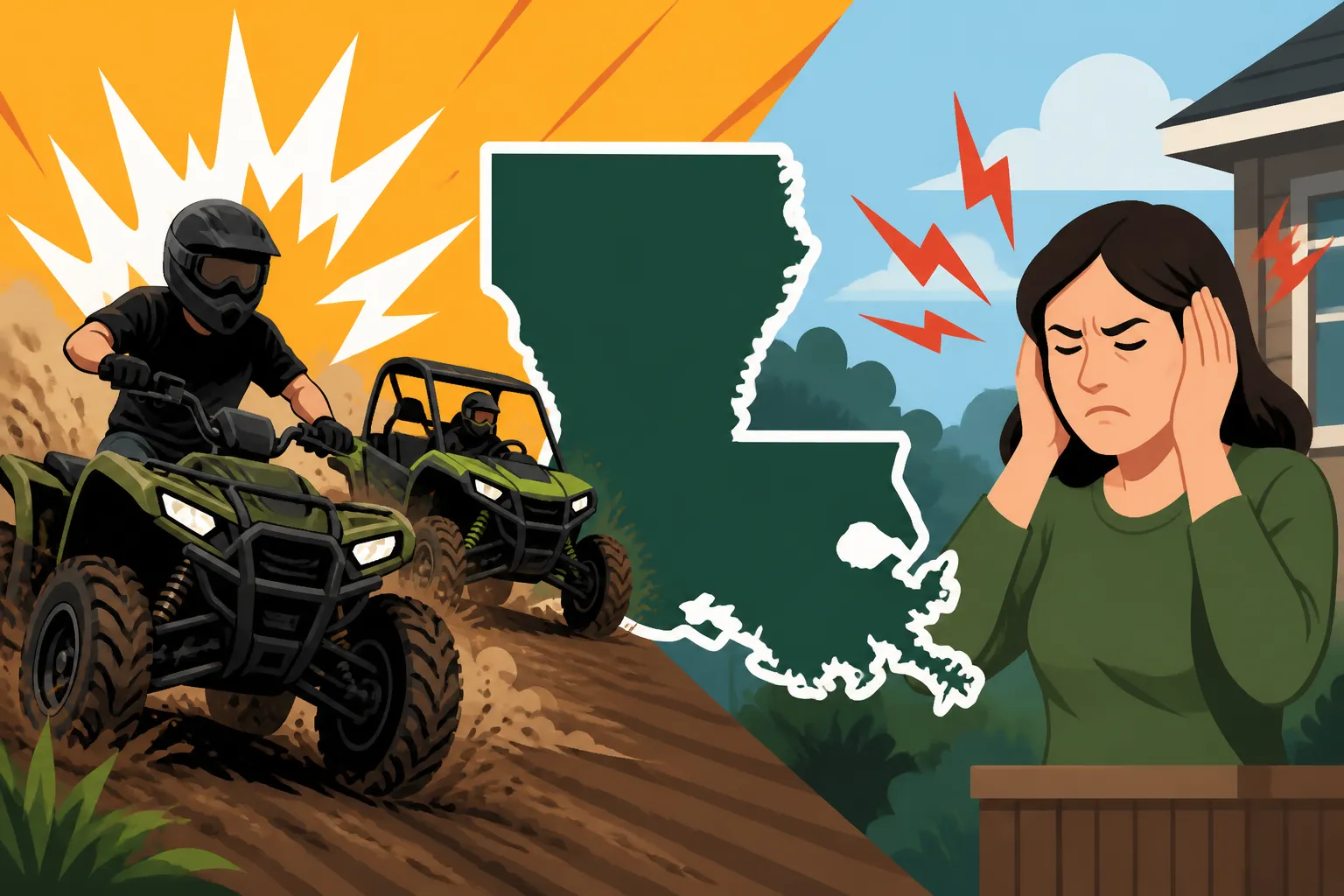
Louisiana Noise Complaints About Quads
There's nothing quite like hitting the trails or rolling through a sprawling camp on your ATV or UTV, the roar of the engine a symphony to your ears. But for many folks in Louisiana, that "symphony" can quickly turn into a headache for neighbors, leading to friction and, sometimes, official complaints. This guide is here to help you navigate the tricky waters of ATV and UTV noise, understand what might lead to a complaint, and give you actionable steps to keep the peace while still enjoying your machine.
The Rumble Next Door: Why ATV/UTV Noise Is a Community Concern in Louisiana
Living in Louisiana often means a blend of wide-open spaces and tight-knit communities, sometimes right next door to each other. You might have a sprawling property where your side-by-side feels right at home, but a few hundred yards away, your neighbor's backyard might be their sanctuary. The sound from an off-road machine, especially one with an aftermarket exhaust, carries further than many riders realize. This isn't just about a moment of annoyance; consistent or excessive noise can genuinely impact someone's quality of life, their ability to enjoy their own property, or even disrupt sleep, especially for families with young children.
Consider the diverse landscapes we have here – from the deep woods of Kisatchie National Forest to the sprawling cane fields, to the residential areas bordering recreational land, or even the camps along our bayous. What might be perfectly acceptable on a vast hunting lease out in the sticks becomes a major problem when you're riding too close to a quiet neighborhood or retirement community. It's a delicate balance, and unfortunately, the perception of loud ATVs and UTVs can sometimes paint all riders with a broad, negative brush.
The Sound of Freedom vs. The Sound of Disturbance
For many of us, the rumble of an ATV or UTV engine symbolizes freedom, adventure, and the joy of the outdoors. It's the sound of tearing through mud, climbing a tricky hill, or simply cruising through the scenic Louisiana countryside. We invest in our machines, we customize them, and sometimes that customization includes upgrading the exhaust for better performance or just for that aggressive sound. There’s a thrill in that raw power.
However, what's exhilarating for the rider can be incredibly disruptive for someone not involved in the activity. Imagine trying to enjoy a quiet evening on your porch with family, or trying to hear the game on TV, only to be constantly interrupted by the loud drone or intermittent revving of a machine from nearby. This isn't about telling anyone they can't enjoy their hobby; it's about recognizing that our enjoyment can inadvertently intrude on someone else's peace. The conflict arises when the "sound of freedom" becomes a "sound of disturbance" that makes neighbors feel like their privacy and tranquility are being invaded.
How Noise Can Escalate into Bigger Problems
Ignoring noise concerns, or not realizing you're causing them, can lead to much larger issues than just a few dirty looks. Initially, a bothered neighbor might just stew in silence, perhaps making passive-aggressive comments. But if the noise continues unchecked, that frustration can boil over into direct confrontations, which are rarely pleasant for anyone involved. Beyond personal disputes, the situation can quickly become official.
A neighbor can file a formal complaint with their parish sheriff's office, local police department, or even directly with the parish council. These complaints put law enforcement in a difficult position, as they have to respond to citizen concerns. Persistent complaints can lead to increased patrols in your area, closer scrutiny of your riding habits, and potentially new restrictions or enforcement actions that weren't there before. In some unfortunate cases, a pattern of unresolved noise complaints could even contribute to a push for more stringent local ordinances or even lead to community-wide bans on off-road vehicle use in certain areas. It's truly in every rider's best interest to be proactive and address noise issues before they reach this point.
Understanding Louisiana's Approach to Noise Regulations
When it comes to ATV and UTV noise, Louisiana doesn't have a specific statewide "loud exhaust law" like you might find for street vehicles in some other states. This can be a bit confusing for riders, as it often means noise is handled under broader nuisance laws or, more commonly, through local parish and municipal ordinances. This patchwork of rules means what's acceptable in one rural parish might be an issue in another, or completely out of line within city limits. It’s crucial not to assume that just because there isn't a state-level ATV noise statute, you're free to make as much noise as you want.
Generally, law enforcement and local authorities will fall back on "disturbing the peace" statutes or general nuisance ordinances if they receive complaints about excessive ATV or UTV noise. These laws are often subjective, allowing officers to determine what constitutes a disturbance based on the circumstances, time of day, and impact on others. This subjectivity is why communication and courtesy with your neighbors are so important, as it helps prevent situations from reaching the point where an officer has to make that judgment call.
Parish and Municipal Ordinance Lookups
Because there isn't a one-size-fits-all state law for off-road vehicle noise, understanding the specific rules in your area is paramount. Many parishes and municipalities across Louisiana have their own noise ordinances, which can vary wildly. Some might have specific decibel limits for certain times of day, while others might simply refer to "unreasonable" or "excessive" noise that disturbs the peace.
Your first step should always be to check the local ordinances for the parish and any specific municipality you're riding in. You can often find these by visiting your parish's official website, or the website of the town or city. Look for sections on "noise," "disturbing the peace," or even "motor vehicles." If you're having trouble locating them online, a call to your local parish courthouse or police department (non-emergency line, of course!) can often point you in the right direction. Knowing these rules beforehand can save you a lot of grief and help you be a more responsible rider. For specific information, you might look into [Louisiana Parish Ordinance Lookups] or [Louisiana Municipal Ordinance Lookups].
Decibel Limits and Enforcement Realities
While some municipal ordinances might specify decibel limits, it's rare to find such specific measurements applied directly to off-road vehicles in a casual enforcement scenario. For instance, a city might have a rule that residential noise shouldn't exceed 60 decibels during the day and 50 at night, measured at the property line. However, deputies aren't typically driving around with sound meters to test every ATV they hear. Instead, enforcement often comes down to subjective judgment based on complaints.
When an officer responds to a noise complaint, they're assessing whether the sound from your machine constitutes a "disturbance of the peace" from the perspective of a reasonable person. This means factors like the time of day, the duration of the noise, the proximity to residences, and the overall volume and character of the sound (e.g., constant droning vs. occasional revving) all come into play. A short burst of noise far from homes might be overlooked, but continuous loud operation near houses, especially late at night, is almost guaranteed to draw attention. The key takeaway here is that even without a hard decibel number to chase, common sense and consideration are your best defense.
Quieter Hours and Curfews
One of the most common aspects of local noise ordinances, especially in residential or mixed-use areas, involves designated "quiet hours" or curfews. These rules are designed to protect residents during times when they expect peace and quiet, typically late evening, overnight, and early morning. Many parishes or towns might designate quiet hours from, say, 10 PM to 7 AM, during which "excessive" noise is strictly prohibited.
For ATV and UTV riders, this means exercising extreme caution, or preferably, completely avoiding riding during these times in areas where sound might carry to homes. Even if your machine isn't exceptionally loud during the day, that same level of noise can be profoundly disturbing when everything else is quiet. Imagine a family trying to put their kids to sleep, or someone working an early shift trying to get some rest – the sound of an off-road engine at 11 PM will be much more noticeable and irritating than at 2 PM. Knowing your local quiet hours is essential for being a good neighbor and avoiding unwanted attention. It’s also important to consider [Louisiana Rules for Riding After Dark] when planning your excursions.
Practical Steps to Be a Better Neighbor (and Rider) When It Comes to Noise
Nobody wants to be that neighbor, the one everyone whispers about because their off-road machine sounds like a jet engine taking off every Sunday morning. Being a responsible ATV/UTV owner in Louisiana means thinking beyond just your enjoyment and considering the impact your machine has on those around you. Luckily, there are many practical steps you can take to significantly reduce the noise your machine makes and improve your standing in the community.
These aren't just about avoiding complaints; many of these tips also lead to a smoother, more enjoyable ride for you and your passengers. A well-maintained, quieter machine often performs better and is less stressful to operate over long periods. It's about finding that sweet spot where you can still have your fun without making an enemy of everyone within earshot.
Exhaust Systems and Mufflers
The exhaust system is often the biggest culprit when it comes to excessive ATV and UTV noise. Many riders, especially those looking for a performance boost or a more aggressive sound, install aftermarket exhaust systems that are significantly louder than the stock components. While a "loud pipe" might be appealing to some, it’s a direct highway to noise complaints in residential or sensitive areas.
If you've got an aftermarket exhaust, consider whether the trade-off of extra noise is really worth the potential friction with neighbors. Often, even a performance exhaust can be fitted with a spark arrestor and a quiet insert, which can significantly reduce decibel levels without completely choking the engine. Brands like SuperATV offer a range of aftermarket accessories, including exhaust systems and components designed to meet various sound requirements or dampen noise. Sometimes, simply replacing a damaged or rusted-out stock muffler can make a huge difference. A well-sealed, intact exhaust system is quieter by design. Regularly check your exhaust for leaks, loose baffles, or holes, as these can drastically increase noise levels and signal neglect.
Ride Smart, Ride Quiet
Beyond your machine's setup, your riding style plays a massive role in how much noise you generate. Think about it: a machine can be relatively quiet at idle or low RPMs, but constantly revving the engine, accelerating hard, or tearing around at high speeds will amplify the noise dramatically. This is particularly true in areas where sound might echo, like wooded valleys or near buildings.
Practicing smooth throttle control is perhaps the easiest and most effective way to reduce noise. Avoid unnecessary revving or "blasting" through areas where people might be present. When you're near homes, camps, or public spaces, slow down, maintain a steady, lower RPM, and be mindful of your acceleration. Consider the time of day – early mornings and late evenings are when sounds travel furthest and are most likely to disturb. Riding during the middle of the day, when ambient noise levels are higher, can help your machine blend in more. When riding near residential areas or designated campgrounds, remember the importance of [Louisiana Rules for Riding Quietly Past Camps].
Maintenance and Tire Choices
It’s not always just the engine or exhaust making noise; a poorly maintained machine can be a symphony of rattles, squeaks, and groans that contribute to the overall sound signature. Loose body panels, worn suspension components, failing wheel bearings, or even an improperly mounted cargo rack can add to the cacophony. Regular maintenance is key not only for safety and longevity but also for keeping your machine quieter. Tighten bolts, replace worn bushings, and lubricate moving parts to eliminate those extraneous noises.
Your tires can also contribute significantly to noise, especially when riding on hard-packed surfaces, gravel, or paved roads (where allowed). Aggressive mud tires with deep, widely spaced lugs tend to be much louder than all-terrain or utility tires, creating a distinct drone or hum at speed. If a significant portion of your riding takes place on non-muddy trails or property near homes, consider a tire choice that balances traction with a quieter ride. Some brands, including those found through a quick search for SuperATV, offer a variety of tire patterns suitable for different terrains, allowing you to choose options that might reduce road noise.
Building Bridges with Your Neighbors
Ultimately, preventing noise complaints often comes down to good old-fashioned neighborly communication. Many problems can be resolved with a simple conversation before they escalate. If you ride frequently, especially near property lines, consider having a friendly chat with your neighbors. Let them know you enjoy riding your ATV or UTV and that you're mindful of the noise.
You might offer to adjust your riding times, particularly during quiet hours, or suggest routes that take you further from their property. Giving them a heads-up if you're planning a group ride or an extended session can also go a long way. This proactive approach shows respect and a willingness to compromise. Most people are reasonable, and if they feel heard and respected, they'll be far less likely to jump to formal complaints. Sometimes, a simple acknowledgement of their peace and quiet means more than any legal statute.
Navigating an Official Noise Complaint
Despite your best efforts to be a considerate rider, sometimes a noise complaint can still happen. Perhaps a new neighbor moved in, or circumstances changed, or maybe someone just had a bad day. Receiving an official complaint can be stressful, but knowing how to react and what to expect can help you navigate the situation calmly and effectively. Panicking or becoming defensive rarely solves anything; a measured and respectful approach is always best.
Remember, the goal is to resolve the issue, not to escalate it further. While you have the right to enjoy your property and your machine, others also have the right to peace and quiet in their own homes. Finding that common ground is essential, and how you respond to an initial complaint can set the tone for all future interactions.
From Friendly Chat to Formal Complaint
Noise issues often follow a progression. Ideally, if your ATV or UTV is bothering someone, they'll approach you directly for a friendly chat. This is your prime opportunity to listen, empathize, and make adjustments. Perhaps they work nights and your morning rides are disturbing their sleep, or maybe your evening rides are interfering with dinner on the patio. Taking their concerns seriously and making a visible effort to mitigate the noise can resolve the issue right then and there.
However, if direct communication doesn't happen, or if previous conversations didn't lead to a resolution, the next step is often a formal complaint. This usually involves contacting local law enforcement – the sheriff's office in unincorporated areas or the municipal police department within city limits. A formal complaint means a record is created, and law enforcement will be obligated to investigate. This is a more serious situation because it involves a third party with authority, and it elevates the issue beyond a neighborly disagreement. It's often at this stage that riders realize the full gravity of noise concerns within their community.
What to Expect from Law Enforcement
When law enforcement responds to a noise complaint about your ATV or UTV, their approach can vary depending on the officer, the specifics of the complaint, and local ordinances. Typically, an officer will arrive at your location, explain that a complaint has been made, and ask to speak with you about it. They might observe your riding, listen to your machine, and try to ascertain if the noise constitutes a "disturbing the peace" violation or falls under a specific local noise ordinance.
The officer will likely explain the nature of the complaint – for example, noise during quiet hours, excessive revving, or general disruption. They might offer a warning, suggesting ways you can reduce noise or adjust your riding habits. They could also inform you of specific local ordinances that apply. In some cases, if the noise is deemed truly excessive or if it's a repeat offense, they might issue a citation or a fine. It's important to be polite, cooperative, and respectful during this interaction. Arguing or being confrontational will only make the situation worse. Remember, officers are there to respond to citizen concerns. For a general idea of what officers might look for, you could review [Louisiana Equipment Checks by Troopers].
Here’s a quick overview of potential scenarios:
| Action from Law Enforcement | Typical Scenario | Rider's Best Response |
|---|---|---|
| Friendly Warning/Visit | First complaint, minor disturbance, no specific ordinance violation, officer is advising. | Listen, apologize, explain efforts, promise to adjust, thank them for understanding. |
| Formal Verbal Warning | Repeat complaint, more significant disturbance, but still no immediate citation. | Acknowledge seriousness, ask for specific guidance, confirm understanding of expectations. |
| Written Citation/Fine | Clear violation of a specific noise ordinance, persistent issue, egregious noise, or repeat offense. | Remain calm, accept citation, ask for court information if applicable, do not argue. |
| Order to Cease Riding | Extreme disturbance, dangerous riding, or immediate threat to public peace. | Comply immediately, seek clarification if needed, prepare to address the underlying issue. |
Possible Outcomes and Penalties
The consequences of a noise complaint can range from a simple warning to significant legal penalties. For a first offense where the disturbance is minor, you might just get a verbal warning and a request to reduce the noise. However, repeated complaints or more severe violations of local ordinances can lead to written citations and fines. The cost of these fines can vary widely depending on the parish and the specific ordinance violated, and they can add up if you're cited multiple times. It’s not uncommon for [Louisiana Ticket Costs for Road Riding] to include additional court costs beyond the base fine.
Beyond monetary penalties, persistent noise issues could potentially lead to more severe actions, though these are less common for simple noise alone. For example, if your machine is deemed a continuous public nuisance, authorities could potentially seek an injunction preventing you from operating it in certain areas or during certain times. In extreme cases, and often coupled with other violations like illegal road riding or reckless operation, a machine could even be impounded. The overall goal is to avoid any of these escalating scenarios by being proactive, respectful, and willing to make adjustments to your riding habits and machine setup. Thinking about [Louisiana Community Complaints That Reach a Parish Council] shows how a local government can get involved.
Disclaimer
This article is for general informational purposes only and does not constitute professional advice. Laws, prices and regulations vary by location and change over time. Consult a qualified professional for guidance on your specific situation.