Carrying Papers on a Parish Road
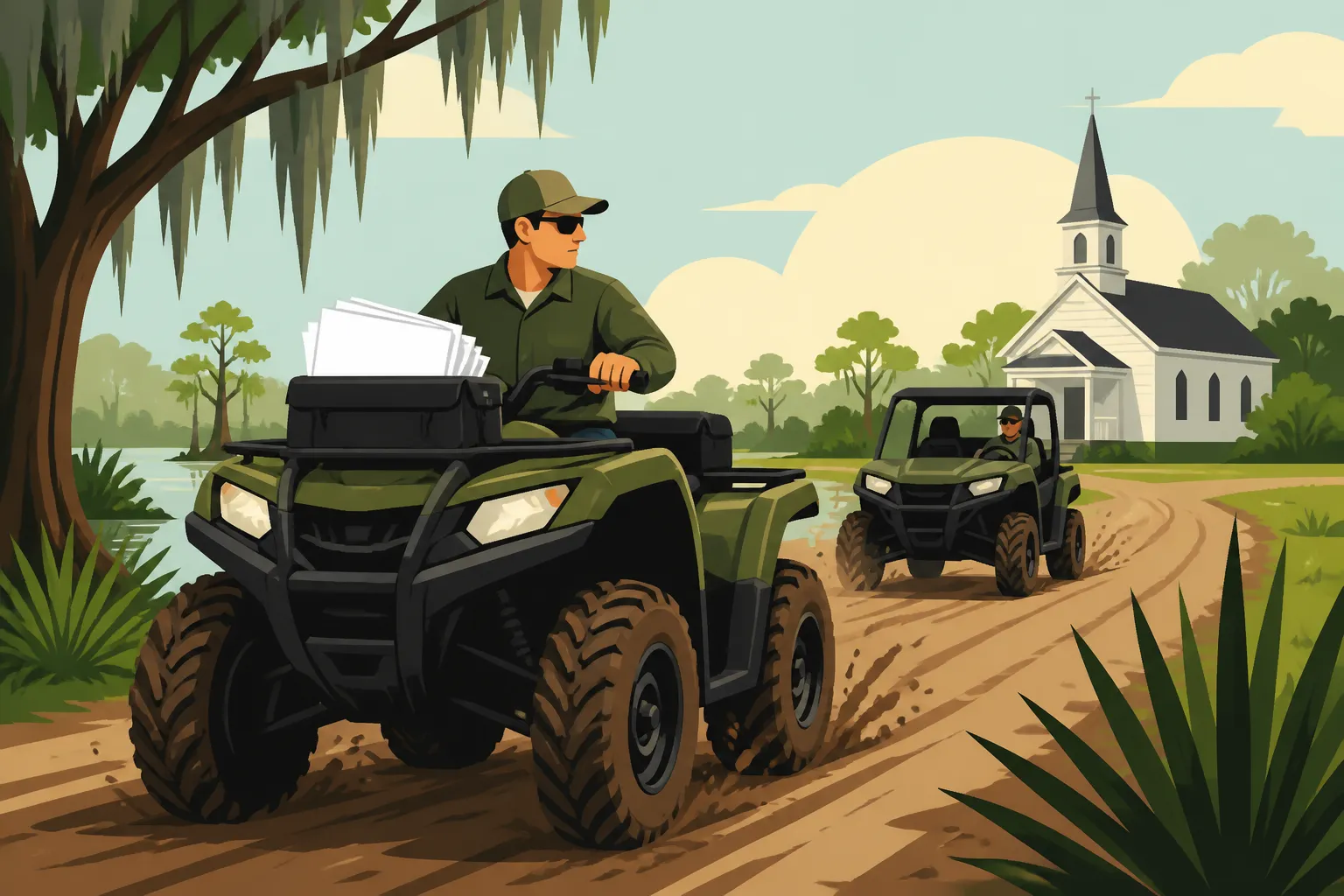
It's a common scenario: you’re just trying to get your ATV or UTV from point A to point B, maybe a quick hop down a parish road to a different field, or to a friend's camp just around the bend. But then you see those flashing lights, or a local deputy waves you down, and your heart sinks a little. The immediate question that pops into your head is, "What paperwork do I need to have on me right now?" It’s a valid worry, because not having the right documents can turn a simple stop into a major headache, or even lead to fines or impoundment. This guide is here to walk you through exactly what papers you should be carrying when you ride your off-road machine on a Louisiana parish road, helping you stay compliant and avoid unnecessary trouble.
Essential Documents for Parish Road Riding in Louisiana
Navigating Louisiana's rules for ATVs and UTVs on parish roads can feel like trying to find your way through a cypress swamp in the dark—confusing and full of potential pitfalls. The truth is, while off-road vehicles are generally meant for private land or designated trails, Louisiana law does make some very specific, limited exceptions for their use on public roads, particularly parish roads. When you take advantage of these exceptions, you’re also signing up for the responsibility of proving your right to be there. And that means having the correct documents ready to present.
Proof of Ownership and Registration
First and foremost, you need to be able to prove that the machine you're riding actually belongs to you. This might seem obvious, but if a law enforcement officer stops you, they’re going to want to verify that you’re not riding a stolen machine.
- Your Title (or a Copy): In Louisiana, all ATVs and UTVs are required to be titled through the OMV. This title serves as the official record of ownership. While you shouldn't carry the original title on your person while riding (you don't want to lose this crucial document in a mishap!), having a clear, legible photocopy of your machine's Louisiana title is an absolute must. Make sure the photocopy includes your name as the registered owner and the vehicle identification number (VIN). This is often the first thing a trooper or deputy will ask to see, as it quickly establishes legal ownership. If you just bought a used machine, ensure that the title has been properly assigned to you. [Louisiana Requires an Assigned Title for a Used One]
- Bill of Sale (Especially for New Purchases or Recent Transfers): If you've just bought your machine, especially through a private sale, you might not have the new title back from the OMV yet. In this interim period, a well-documented bill of sale is your best friend. This document, ideally notarized, proves that ownership was legitimately transferred to you. It should include the date of sale, the purchase price, the VIN of the machine, and the names and signatures of both the buyer and seller. For new machines, an itemized dealer invoice showing your purchase is equally important until your title arrives. If you need a robust, legally sound bill of sale, especially for a private transaction, resources like LawDepot can help you generate one that covers all the necessary bases. This helps ensure there are no ambiguities about who owns the machine.
- Proof of Sales Tax Payment: Believe it or not, this is critical. Louisiana law requires proof that sales tax has been paid on the purchase of the machine before a title can be issued. If you're riding with a new bill of sale and no title yet, the officer might want to confirm that this step has been initiated. Always keep your sales tax receipt or a copy of it with your other documents. [Louisiana Requires Proof of Sales Tax First]
Valid Decal and Driver's License
Beyond ownership, you need to prove your machine is authorized for limited road use and that you, as the operator, are legally allowed to drive.
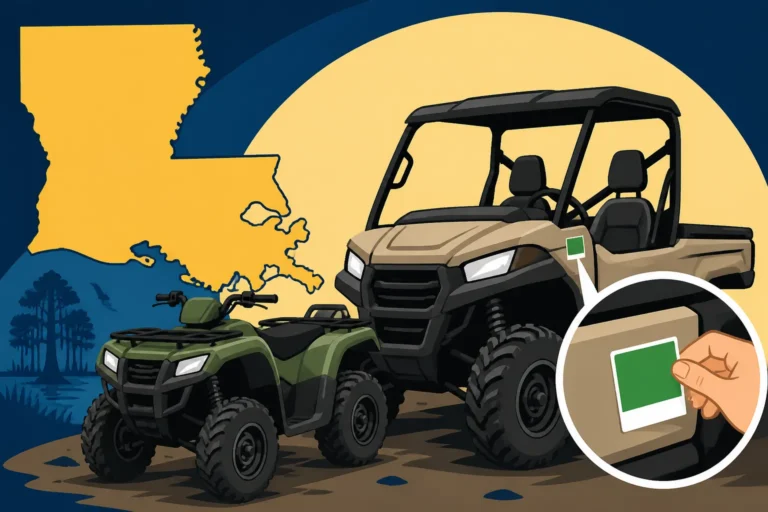
- Louisiana ORV Decal: This is perhaps the most visible sign of compliance. Every ATV or UTV that is operated on designated public lands or, in certain specific circumstances, parish roads, must display a current Louisiana Off-Road Vehicle (ORV) decal. This isn’t a sticker you can just forget about; it needs to be clearly affixed to your machine. Not having one, or having an expired one, is an easy way to get a ticket. The decal signals that your machine has met the basic state requirements for off-road use, including environmental standards. [Louisiana's Yearly Off-Road Decal] The good news is, the cost for this vital decal is quite low, making it an easy thing to budget for. [Louisiana Charges $3 a Year for a Decal]
- Driver’s License: Even though you’re on an off-road machine, if you’re operating it on a public road—even a parish road shoulder—you generally need a valid driver's license. For most adults, a standard Class E driver's license is sufficient. This isn’t just about proving you can legally drive a car; it's about proving you have demonstrated competence and are authorized to operate a motor vehicle on public thoroughfares. Don't assume that just because it's an ATV, the rules are different for your license. Always have your current driver's license on your person. [Louisiana Requires a Class E License]
- Proof of Insurance (if required): While Louisiana doesn’t always require insurance for off-road machines used exclusively on private land, if you’re riding on public roads, even parish roads, insurance requirements can kick in. [Louisiana Insurance Proof on Demand] Specifically, if your UTV is registered for road use under Louisiana's updated statutes (32:299.3), you must carry proof of minimum liability insurance. Even for ATVs, which have more limited road access, having some form of liability insurance is a smart move for your own protection and can sometimes be requested, especially in an accident scenario. Check your policy to ensure it covers limited road use.
Special Exemptions and Affidavits
Louisiana has some specific carve-outs for agricultural use that can allow ATVs and UTVs on parish roads under strict conditions. If you're operating under one of these exemptions, you need the paperwork to back it up.
- Agricultural Affidavit: This is a crucial document for farmers. Louisiana allows ATVs and UTVs to operate on the shoulder of public roads within a five-mile radius of a farm, but only for agricultural purposes. To take advantage of this, you often need a sworn agricultural affidavit. This document attests that your machine is primarily used for agricultural purposes and that your road use falls within the legal parameters. This is not a casual agreement; it’s a formal statement. [Louisiana Farm Affidavits for Road Use] If you're involved in farming and plan to use parish roads for agricultural tasks, make sure you have this affidavit readily available. You can find templates for such affidavits, or guidance on drafting them, through legal document services like LawDepot.
- Permission Letters (if applicable): While not legally mandated in all cases, if you’re crossing private property to get to a parish road, or if you’re using a section of a parish road that borders private land with specific restrictions, a letter of permission from the landowner can save you a lot of grief. This is less about complying with state statute and more about avoiding trespass complaints, which can quickly escalate.
Here's a quick reference table for the documents you should consider carrying:
| Document Type | Purpose | Where to Get It | Carry Original? |
|---|---|---|---|
| Title (Copy) | Proof of legal ownership; contains VIN and owner info. | Louisiana OMV (original at home for safety) | No (copy only) |
| Bill of Sale/Invoice | Proof of recent purchase/ownership transfer, especially if title is pending. | Dealer (invoice) / Seller & Buyer (bill of sale); consider templates from LawDepot | Yes |
| Sales Tax Receipt | Proof tax was paid, prerequisite for title issuance. | Dealer or OMV | Yes |
| ORV Decal | Authorization for off-road use, including limited parish road access. | Affixed to machine (purchased from OMV) | Yes (affixed) |
| Driver's License | Proof of legal driving privilege on public roads. | Issued by state DMV/OMV | Yes |
| Proof of Insurance | Required for UTVs registered for road use; smart for all machines. | Your insurance provider (policy card, digital copy) | Yes |
| Agricultural Affidavit | Required for farm-related road use exemptions. | Notary Public after drafting; templates available from LawDepot | Yes |
What a Louisiana State Trooper Can Ask to See
When a law enforcement officer, whether it’s a Louisiana State Trooper or a local sheriff’s deputy, pulls you over on a parish road while you’re operating an ATV or UTV, they have a legitimate reason to do so. These machines aren't generally street-legal, and their presence on public roads is highly restricted. Their primary goal is to ensure public safety and confirm that you are operating within the narrow bounds of the law. Knowing what they are authorized to ask for can help you remain calm and provide the necessary information efficiently.
Verification of Identity and Legal Status
The initial interaction will almost always start with confirming your identity and your legal standing to operate a vehicle.
- Identification: The first thing any officer will ask for is your driver's license. This establishes who you are and verifies that you have the legal privilege to operate a motor vehicle on a public roadway. If you're riding on a parish road under one of the specific exceptions, a valid Class E license is typically a must. For UTVs, [Louisiana Requires UTV Drivers to Be 21] in many road-use scenarios, adding another layer of ID verification for age.
- Ownership and Registration: Next, they will want to verify that the machine you are on is legally yours, or that you have permission to operate it. This is where your copied title or current bill of sale comes into play. They’re looking for the VIN to match the document to the machine and to confirm your name as the owner or authorized operator. If you’ve just made a purchase, the officer might want to review your bill of sale to ensure the transfer was legitimate and sales tax was addressed. [What a Louisiana State Trooper Can Ask to See] is quite broad when it comes to vehicle documentation, especially for non-standard vehicles like ATVs and UTVs on public ways.
- ORV Decal Check: Officers are trained to look for the current ORV decal. If it's missing, expired, or improperly displayed, it’s an immediate red flag. They might check the date on the decal against their records to ensure it's still valid. The absence of this decal, especially if you're attempting to use a parish road for agricultural purposes, will likely negate any claim to exemption.
Proving Compliance with Specific Road Use Statutes
Beyond basic identity and ownership, the officer needs to confirm you're adhering to the very specific laws that permit limited ATV/UTV road use.
- Agricultural Exemption Verification: If you state you are on the parish road for agricultural purposes, the officer will likely inquire further. They may ask about the nature of your farm work, the distance you are traveling, and where your farm is located relative to your current position. This is precisely why having that [Louisiana Agricultural Affidavits for an ATV] on hand is so important. It supports your claim and shows you understand the conditions of the exemption, such as the [Louisiana's 5-Mile Farm Radius]. Without this affidavit, your claim of agricultural use is much harder to substantiate, potentially leading to a citation.
- Compliance with Road Rules: They’ll also be observing your driving behavior. Are you riding on the shoulder? Are you maintaining a safe speed? Are you equipped with necessary lighting if it’s near dawn or dusk? [Louisiana ATV Road Rules Under 32:299] and [Louisiana UTV Road Rules Under 32:299.3] lay out these restrictions clearly. Any deviation from these rules, even if you have all your papers, can result in a separate violation. For instance, riding in the travel lane instead of the shoulder will certainly draw attention.
- Insurance Proof for UTVs: If you’re operating a UTV registered for road use, be prepared to show proof of insurance. This is a non-negotiable requirement for street-legal UTVs, and an officer will absolutely ask for it.
The Consequences of Not Having Your Papers Handy
It's tempting to think, "Oh, I'm just going a short distance," and leave your documents at home. But that short distance can quickly become a costly lesson if you encounter law enforcement. The consequences of not having your required papers when riding an ATV or UTV on a Louisiana parish road can range from a minor inconvenience to significant financial penalties and even the loss of your machine.
Fines and Citations
The most common immediate consequence is a traffic citation, which comes with a fine. These aren't usually cheap, and they can add up quickly.
- Missing Decal Penalties: If you're caught riding on a parish road without a current [Louisiana's Yearly Off-Road Decal], you'll almost certainly receive a citation. This isn't just a slap on the wrist; it's a formal recognition that your machine isn't authorized for even limited public road use. The state views this seriously because the decal fee helps fund programs related to off-road riding. [Louisiana Penalties for Riding Without a Decal] can be steep, often exceeding the cost of the decal itself many times over.
- No Proof of Ownership/Registration: Failing to provide a title copy, bill of sale, or dealer invoice can lead to questions about the machine's legitimacy. While it might not always result in a direct "no papers" ticket, it can cause significant delays and suspicion. The officer might detain you while they run the VIN to check for theft reports. This extended stop is inconvenient, embarrassing, and can make you feel like a criminal, even if you’re perfectly innocent.
- Lack of Driver's License or Insurance: Operating any motor vehicle on a public road without a valid driver's license or, if required, proof of insurance, is a serious offense. These are general traffic laws that apply to all vehicles, including ATVs and UTVs, when on public ways. The penalties can be significant, potentially involving points on your driving record, higher insurance premiums, and even suspension of your driving privileges.
Impoundment and Legal Troubles
In more severe cases, or if you're unable to definitively prove ownership or eligibility for road use, your machine could be impounded.
- Machine Impoundment: If you cannot produce valid proof of ownership, or if the officer suspects the machine is stolen, or if you are operating it in a manner far outside the legal parameters (e.g., riding recklessly in a travel lane without any farm exemption), the machine may be impounded. This means your ATV or UTV is seized and taken to an impound lot. Getting it back involves proving ownership, paying storage fees, impound fees, and any outstanding fines. The cost of retrieving an impounded machine can easily run into hundreds or even thousands of dollars. [Louisiana Impoundment for No Decal] can happen if the basic authorization is missing.
- Court Appearances: A citation isn't always just a fine you pay online. Depending on the severity of the offense or if there are multiple violations, you might be required to appear in court. This means taking time off work, possibly hiring a lawyer, and dealing with the stress of the legal system. It's a far cry from a quick trip down a rural road.
- Delays and Frustration: Even if you avoid a major fine or impoundment, simply not having your papers can turn a five-minute stop into a much longer, frustrating ordeal. Officers have to err on the side of caution. They'll need to make extra calls, run more checks, and verify information, all while you wait, usually by the side of the road. This wastes your time and the officer's time, and it's entirely avoidable by being prepared.
By understanding these potential repercussions, it becomes clear that taking a few moments to gather and carry the right documents isn't just a suggestion—it's a critical part of responsible and legal ATV/UTV operation on Louisiana's parish roads.
Disclaimer
This article is for general informational purposes only and does not constitute professional advice. Laws, prices and regulations vary by location and change over time. Consult a qualified professional for guidance on your specific situation.