Strapping Down a Cooler for a Mud Weekend
A cooler that slides across a trailer bed or tips inside a side-by-side can turn a fun Louisiana mud weekend into a mess of spilled drinks, damaged gear, and distracted driving. The fix is not simply pulling a strap as tight as possible: it is choosing a stable location, using sound tie-down points, and securing the load for the bumps and jolts along the way.
Choose a stable place for the cooler
Match the cooler to the vehicle
Start by deciding where the cooler will ride before you load it. In a truck or trailer, place it low and close to the front of the cargo area, without blocking lights, the license plate, a driver’s view, or access to other equipment. A heavy cooler is easier to control when it is not perched high or balanced on top of loose camping supplies.
In a UTV, use a designated cargo area or another location the manufacturer allows for carrying gear. Avoid setting a cooler on a seat, where it can become a hazard for a passenger or driver. On an ATV, be especially cautious: cargo racks are not all designed for the same load, and a bulky cooler can affect balance, handling, and visibility. Check your owner’s manual for rack limits and approved cargo locations before loading up.
Think about the route, too. A cooler that feels stable in a driveway may shift when a trailer hits a pothole, crosses a rough entrance, or travels a rutted track near a riding area. If you are Trailering to a Mud Park, load and secure the cooler before you set off, then check it again after the first short stretch of driving.
Keep the weight low and balanced
A full cooler can be surprisingly heavy, particularly when it holds ice, drinks, and food for a group. Put it on a flat surface and keep it low. If you are carrying other equipment, spread the weight across the vehicle or trailer rather than crowding everything onto one side. Uneven cargo can make a trailer feel less steady and can make unloading more awkward.
On a trailer, position the cooler so it cannot roll into a tire, ramp, fuel container, or other equipment. Leave room to open the cooler without having to remove every strap or shift the machine. If your load includes a fuel can, keep it separate from food and drink, and follow the fuel container’s storage instructions.
A quick practical test is to push the empty cooler gently in several directions before loading it. If it rocks, slides, or sits on an uneven surface, fix the placement first. Straps should hold a stable cooler in place, not compensate for a poorly balanced load.
Separate the cooler from muddy equipment
Mud weekends tend to involve wet boots, muddy helmets, recovery gear, and clothes that are no longer clean enough to share a space with food. Keep the cooler away from dirty equipment when possible. A clean cargo mat, washable liner, or sturdy plastic tub can help keep mud and meltwater from spreading around the truck or trailer.
This separation also makes camp setup easier. You can unload food and drinks without digging past muddy gear, and you are less likely to bring trail grime into the cooler when you open it. If you are packing for an overnight stay, Packing for a Night of Dry Camping at Mudfest can help you think through which supplies should be easy to reach and which can stay packed away.
Pick straps and tie-down points that hold
Use secure attachment points
Use sturdy, purpose-made tie-down points designed for cargo. In a truck or trailer, inspect the anchors before loading. They should be firmly attached and free of obvious damage, sharp edges, and excessive rust. In a UTV, use only cargo tie-down locations approved by the manufacturer. A grab bar, plastic body panel, seat frame, or improvised hook may look convenient but may not be built to hold a loaded cooler through repeated jolts.
Cam-buckle straps are often easier to adjust for a cooler because they tighten by hand and are less likely to overtighten or crush the lid. Ratchet straps can work when used carefully, but the extra force can deform a cooler or damage its lid. Choose straps in good condition, with no fraying, torn stitching, bent hardware, or unreliable buckles.
Avoid relying on bungee cords. They stretch, can come loose, and often allow a cooler to bounce or shift. They may be useful for light items that cannot cause harm if they move, but they are not a substitute for a properly secured cooler. Keep loose strap tails tied or tucked so they cannot flap into a tire or catch on other cargo.
Strap across the body, not just the lid
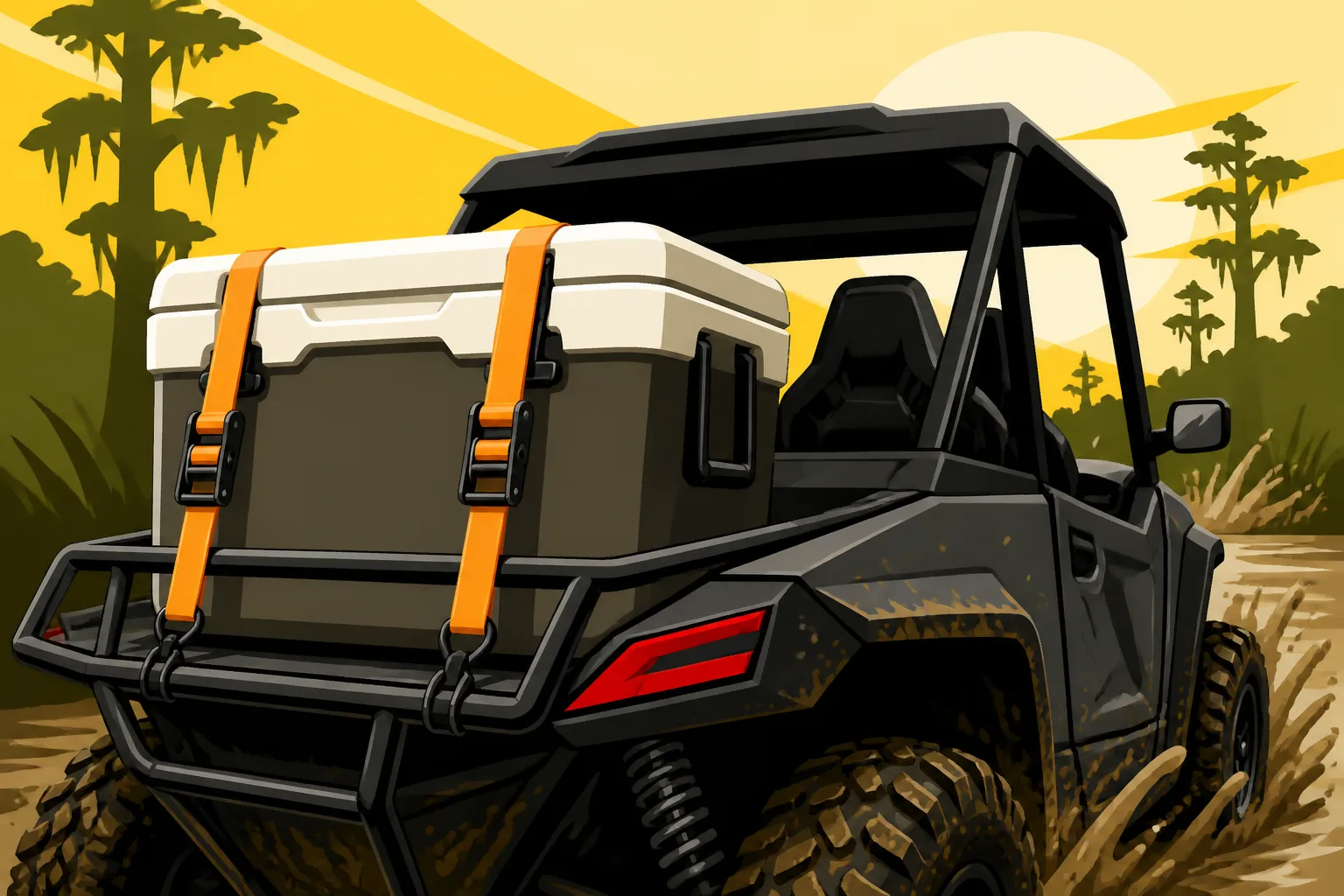
A cooler needs to be restrained so it cannot slide forward, backward, or sideways. Depending on the shape of the cargo area and the available anchors, that may mean two straps crossing over the cooler in different directions. The strap should press the cooler against a stable surface without bearing all its force on a fragile handle or lid latch.
Do not assume a lid latch will keep the cooler closed if the cooler tips. Keep the lid fully closed, and use a strap path that helps hold the body down as well as the lid. If the cooler has molded tie-down channels, follow its instructions for using them. If it does not, avoid wrapping a narrow strap over a sharp edge or a protruding handle that could break under pressure.
Tighten straps until the cooler cannot shift during a firm hand push. Then check that the cooler’s body has not buckled and that the lid still closes normally. A strap that is excessively tight can damage the cooler without making the load meaningfully safer.
Make the setup easy to inspect
Before leaving, pull on the cooler and check for movement from front to back and side to side. Look at each strap where it meets an anchor, and make sure the buckle is locked or threaded correctly. Confirm that nothing is rubbing against a sharp metal edge or pinching the strap.
Here is a practical comparison of common ways to secure a cooler:
| Method | Best use | Main concern |
|---|---|---|
| Cam-buckle straps | Coolers in a truck bed, trailer, or cargo area | Must be threaded and tightened correctly |
| Ratchet straps | Heavier loads with sturdy approved anchors | Can crush or deform a cooler if overtightened |
| Bungee cords | Very light items that pose little risk if they move | Stretch and may allow shifting; not a primary cooler restraint |
| Cargo net | Holding several small items together | May not restrain a heavy cooler by itself |
| Loose placement | None | Cooler can slide, tip, or become a dangerous projectile |
Pack for heat, bumps, and muddy conditions
Keep the contents cold and contained
Use a cooler that is clean, dry, and in good repair. Check the drain plug before filling it, and close it securely so meltwater does not leak into your cargo area. For extra protection, place the cooler on a washable mat or inside a leak-resistant tote that still allows it to sit level and be strapped securely.
Pre-chilling the cooler and its contents can help it stay cold longer. Pack drinks and food in separate containers when practical, and keep raw food sealed so it cannot leak onto ready-to-eat items. Place anything fragile in a protected spot rather than loose beside ice and cans. If you expect the cooler to be opened frequently, keep a small set of commonly used drinks near the top instead of rummaging through everything.
In Louisiana heat, a cooler left in direct sun can warm faster than one kept shaded. If the vehicle is parked for a while, choose a shaded, secure location when available. Don’t leave perishable food sitting out while unloading machines or setting up camp. The details matter: a cooler packed carefully at home can still become unsafe if it is left open during a long stretch of setup.
Prevent leaks and loose items
Use sealed containers for foods that could spill, and place napkins, utensils, and small snacks in a separate bag inside the cooler. If your cooler has a drain, check that it cannot open from contact with another item during transport. Put fragile containers toward the top and cushion them with a towel or soft bag.
Keep the exterior dry enough for straps to grip properly. Mud or water between a strap and the cooler can make it easier for the strap to creep, especially if the cooler has a slick surface. After loading, wipe off excess water and make sure the strap lies flat rather than twisted.
A cooler may also need to travel back with muddy gear after the ride. Before returning, clean heavy mud off its base and check that the straps have not picked up grit or debris that could damage their stitching. If the ride includes deep water or rough terrain, it is worth stopping after the first part of the trip to inspect the load.
Plan for access at camp
Think ahead about where you will unload. At an event weekend, the cooler might need to come out before tents, chairs, or riding equipment. Place it where you can reach the buckles without climbing over cargo, and avoid trapping it behind a machine that has to come off the trailer first.
For a large group, label the cooler or divide drinks and food into separate coolers. That can reduce the number of times one cooler is opened and make it easier to keep food separate from drinks. If you are heading to a busy event area such as Muddy Bottoms near Sarepta or a Mudfest weekend, plan your arrival and unloading so you are not trying to reorganize a packed trailer in a crowded staging area. Details such as Muddy Bottoms’ Bathhouse, Pro Shop and Amenities may help you think through what you need to bring versus what may be available at your destination.
Run a final safety check before you roll
Follow a repeatable loading routine
A simple routine prevents the common last-minute mistake of tossing the cooler in after everything else is tied down. Load it, close the lid, attach the straps, and test for movement before securing smaller items around it. Then walk around the vehicle and confirm that the cooler does not block a light, mirror, window, access door, or safety equipment.
Use this checklist:
- Set the cooler on a flat, approved cargo surface.
- Keep it low and balance its weight with the rest of the load.
- Close the lid and secure any drain plug.
- Attach straps to sound, approved tie-down points.
- Tighten the straps without crushing the cooler.
- Push the cooler in several directions to check for movement.
- Secure loose strap ends and remove nearby items that could shift into it.
- Recheck the load after the first short drive and after any major stop.
If you are hauling machines and camping supplies together, keep an eye on the whole load. A cooler can start out secure and become loose if a nearby bag or piece of equipment shifts against its straps.
Make the route part of the plan
The trip is not only about getting to the park. Check your route, trailer access, and planned stops before departure, especially if you are traveling to an unfamiliar riding area. Mapping tools such as onX Offroad can help with off-road route planning, but confirm that any route is appropriate for your vehicle and that you have permission to travel where required. A map does not replace posted signs, local rules, or the destination’s instructions.
If you are riding in a forest or unfamiliar area after unloading, plan for limited cell reception and keep your navigation options practical. onX Offroad may be useful for reviewing mapped routes before you head into an area, while a paper map or saved directions can provide a backup. Keep route planning separate from the cooler itself: the cooler should be secured for transport, not used as a surface for loose phones, maps, or other gear.
When a trip includes a mud park, forest trail, and campsite, confirm access details for each part rather than assuming that a trail or road is open. Louisiana Trail Closures and Seasons and Checking a Trail Status Page First are useful starting points for planning around changing access conditions.
Recheck after stops and before unloading
A short check at the first safe stop can catch a strap that has loosened, a buckle that has shifted, or a cooler that has moved against another item. Check again after a rough stretch, a fuel stop, or a change in the load. Do not reach into cargo while the vehicle is moving, and do not adjust straps in an unsafe roadside location.
At your destination, release straps carefully and keep the cooler steady as you unload it. If it has shifted, check the cooler, straps, and anchor points for damage before using the same setup for the return trip. A cracked handle or stretched strap may seem minor until the cooler is full and the vehicle hits another rough patch.
For a ride day, keeping water easy to access matters as much as keeping it cold. Hydration at a Mud Event offers related planning ideas, and Louisiana Riding Areas With Wash Stations can help you consider cleanup needs when choosing where to ride. If you use onX Offroad to plan the drive or riding route, make sure the cooler and other cargo are already secure before you start navigating or heading out.
Disclaimer
This article is for general informational purposes only and does not constitute professional advice. Laws, prices and regulations vary by location and change over time. Consult a qualified professional for guidance on your specific situation.