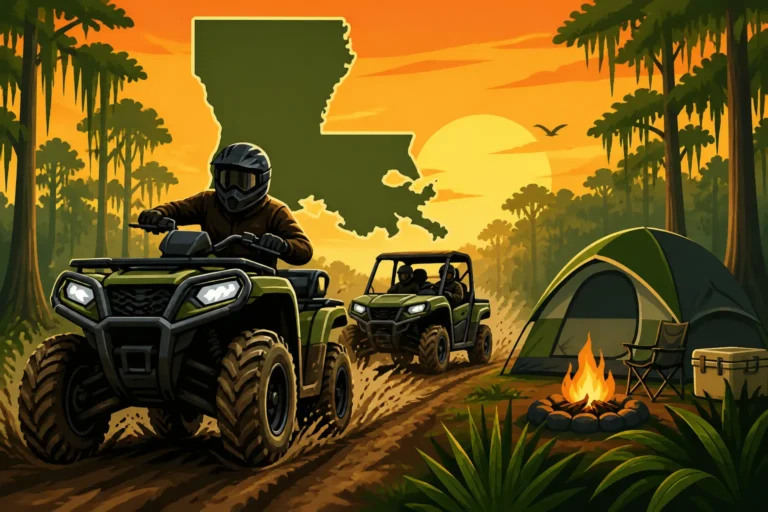
Packing for a Night of Dry Camping at Mudfest
Arriving at Louisiana Mudfest ready to ride, then realizing you forgot drinking water, a headlamp, or a dry change of clothes can turn a fun night into a miserable one. Dry camping means planning as if there’s no power or water hookup at your site. This guide covers what to pack, how to keep essentials dry, and how to make camp work after a long, muddy ride.
Plan for a Self-Sufficient Night
Check event details before you load
“Dry camping” generally means setting up without utility hookups, but the exact arrangements can differ by event and camping area. Before packing, check the event’s current instructions for campsite access, vehicle and trailer rules, permitted generators, quiet hours, fire restrictions, and available restrooms or water. Don’t assume a facility you used at another event—or at another park—will be available this time.
It also helps to clarify what your camping setup can handle without hookups. A tent, truck bed, or RV may all work, but each calls for different supplies. An RV with a full battery and charged devices still needs a plan for water, waste, and lights. A tent camper needs a weather-ready shelter and a comfortable sleeping setup that won’t become soaked if the ground is wet.
If you’re going with friends, agree on what each person is bringing before the convoy leaves. It’s easy to wind up with three camp chairs and no can opener when everyone assumes someone else packed one. A shared checklist in a group chat can divide bulky gear, food, and first-aid supplies. For a broader look at event logistics, review Louisiana Mudfest and Event Weekends and Louisiana Private Park Waivers and Rules.
Choose gear for Louisiana weather and muddy conditions
A forecast can help you prepare, but it won’t tell you exactly what the campsite will feel like after a day of riding. Louisiana heat and humidity can make ordinary camp chores tiring, while rain can leave the ground slick and muddy. Pack for warmth, moisture, and sudden changes—not just for the conditions you expect at departure.
Bring a ground tarp or footprint under your shelter, plus a separate tarp if you need a clean place to change or sort gear. A small broom, camp mat, and several old towels help keep mud from spreading into your sleeping area. If you have a tent, check its seams, stakes, and rainfly at home rather than discovering a problem after dark.
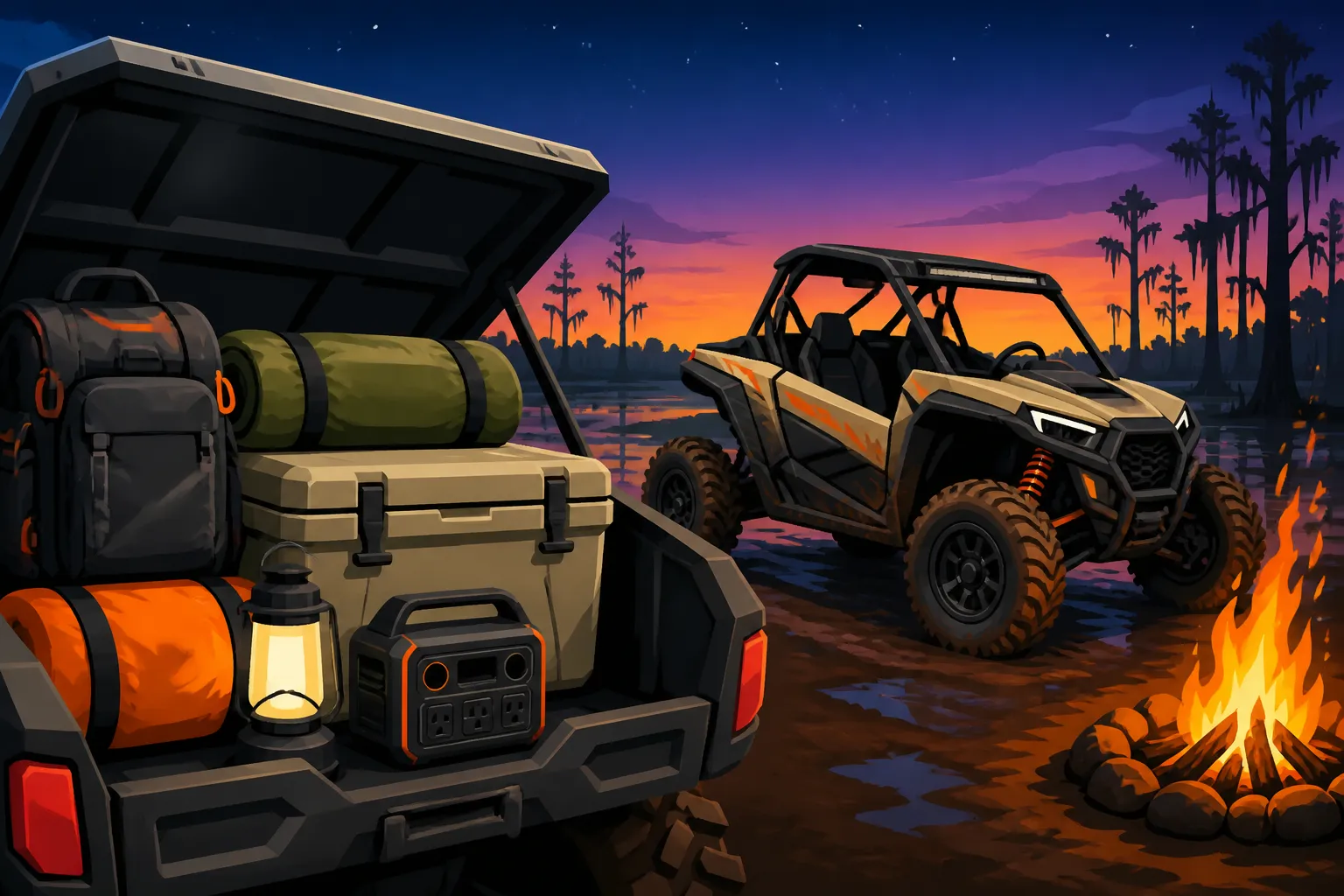
Dry camping also rewards simple gear choices. A headlamp is easier to use than a phone flashlight when you’re carrying a cooler or changing muddy clothes. A battery lantern can light the shared area, and spare batteries or a charged power bank keep essential devices usable. Pack weather-appropriate layers and a dry outfit that stays sealed away from riding clothes. For more on staying comfortable in Gulf South conditions, see Packing for Humid Heat.
Pack Water, Food, and Personal Essentials
Bring more water than you think you’ll need
Riding, unloading, cleaning up, and sitting around camp all use up water. Don’t pack only what you expect to drink during the ride. Set aside water for drinking, basic handwashing, brushing teeth, and any simple food preparation you plan to do. Keep drinking water in containers that are easy to reach, not buried beneath riding gear.
Separate drinking water from utility water if you’re bringing both. A marked jug for handwashing or rinsing muddy equipment helps prevent people from accidentally using the clean drinking supply for chores. Keep containers capped and out of direct sun where possible. If you’re traveling with a group, make sure everyone knows where the drinking water is and how much is available before opening it for cleanup.
A useful way to plan is to think through each part of the visit: the ride in, time on the trails, the evening at camp, and the following morning. Someone who arrives late, rides hard in the heat, and leaves after breakfast may need a different supply than someone staying longer or relying on a shared camp setup. For practical hydration reminders, read Hydration at a Mud Event.
Make meals easy to handle at camp
After a long ride, a complicated meal can feel like another chore. Choose food that needs little preparation and doesn’t depend on having a full kitchen. Sandwiches, fruit, shelf-stable snacks, and ready-to-eat meals can be easier to manage than ingredients that require multiple pans and cleanup. If you bring a stove or other cooking equipment, check the event rules before you pack it.
Use a cooler that can stay closed and secure it so it won’t slide around during the drive. Keep raw food separate from ready-to-eat food, and pack utensils, napkins, trash bags, and a way to wash or sanitize hands. Bring a simple breakfast plan, too. It’s frustrating to wake up hungry and discover the only food left requires a long stop or a full cooking setup.
The table below is a quick way to check whether your camp plan covers the essentials.
| Need | What to pack | Why it matters |
|---|---|---|
| Drinking and basic cleanup | Sealed water containers, cups, handwashing supplies | Keeps hydration and simple hygiene covered without relying on a hookup |
| Food | Cooler, easy meals, snacks, utensils, trash bags | Makes camp meals manageable after riding |
| Lighting | Headlamps, lantern, spare batteries or power bank | Helps with unloading, cooking, and moving around after dark |
| Dry storage | Waterproof bags, lidded bins, spare towels | Protects clothes, bedding, and electronics from rain and mud |
| Sleep | Sleeping bag or bedding, pillow, ground cover | Makes the night more comfortable if the ground is damp |
| Cleanup | Old towels, camp mat, wipes, small broom | Keeps mud from spreading into the sleeping area |
| Safety | First-aid kit, personal medication, emergency contacts | Helps you respond to small problems and find help if needed |
Keep Your Camp Dry, Safe, and Easy to Navigate
Separate clean gear from riding gear
Mud has a way of following you back to camp. Set up a simple “dirty side” for boots, helmets, gloves, and riding clothes, and keep your bedding and clean clothing on the opposite side. Heavy-duty bags or sealable bins make the distinction easier to maintain. Use one container for clean clothes and bedding, another for riding gear, and a third for shared supplies.
Pack a full change of clothes that stays untouched until you’re ready to sleep or leave. Include socks and shoes you can wear around camp; walking through a wet campsite in riding boots is uncomfortable, and wearing damp socks to bed can make the night feel much colder than expected. A towel and a plastic bag for wet clothing are small additions that can save you from sleeping beside a pile of muddy gear.
Think about where water will go if it rains. Avoid placing valuables directly on the ground, and don’t set your sleeping area where water naturally pools. If you arrive while it’s still light, take a moment to look at the ground and identify the easiest route between your shelter, vehicle, and any shared facilities. Louisiana Trail Conditions After Rain offers useful context for preparing around wet conditions.
Make a lighting and communication plan
After dark, a campsite can be harder to navigate than it looks during the day. Bring a headlamp for each person rather than expecting everyone to share one. Keep a lantern where it can be found without unpacking everything, and have a backup light in a separate bag in case the first one gets misplaced or wet.
Phone service may be unreliable in wooded or remote areas, so don’t rely on a live map or text message being available at every moment. If you use onX Offroad to help plan routes, download the relevant map area before leaving home and check that the information is available offline on your device. Save the event address and important contact details somewhere you can access without searching your messages.
Tell your group where you plan to camp and when you expect to return from riding. If people split up, agree on a simple meeting point and a check-in plan before setting out. onX Offroad can be a helpful planning aid for familiarizing yourself with an area, but follow the park’s posted directions and event staff instructions; a digital map is not a substitute for current local guidance. You can also read Cell Dead Zones in the Piney Woods and First Aid at a Mud Park when planning for communication and basic safety.
Pack for the Ride Home, Not Just the Night
Secure your machine and trailer gear
Make sure the machine, fuel containers, tools, and riding equipment are secured for the trip to and from the event. A loose item that seems harmless in the driveway can shift during travel and become damaged, dirty, or difficult to find when you arrive. Keep frequently used items—such as tie-downs, gloves, and a flashlight—in an accessible place instead of buried under bedding.
Before leaving, check that your machine is secured and that your trailer equipment is accounted for. If you use a winch, straps, or other recovery gear, inspect it before the trip rather than waiting until you need it in the mud. Keep a small tool kit and spare items suited to your machine, but don’t treat an overloaded toolbox as a substitute for checking the machine before departure.
Give yourself a plan for muddy gear after the event, too. Bring bags or bins specifically for wet clothing, dirty towels, and equipment that needs cleaning. Keep the vehicle’s clean interior protected with a mat or cover. It’s much easier to contain the mess on the drive home than to sort it out once muddy boots and wet gear have spread through the cargo area. For more on hauling and securing your setup, see Trailering to a Mud Park.
Do a final checklist before leaving home
A quick walk-through can catch the small omissions that cause the biggest inconvenience. Check the essentials first: water, medications, shelter, bedding, a light, and a clean change of clothes. Then check riding gear, food, and the supplies needed to keep mud contained. If you’re leaving after work or traveling a long distance, put the most important items on the checklist rather than relying on memory.
Before setting off, make sure your phone and power bank are charged, maps or directions are available offline if you need them, and your group knows the meeting plan. Confirm the event’s instructions and pack according to them, especially for items such as generators, cooking equipment, and fires. For route preparation and map planning, onX Offroad may help you review the area ahead of time; download maps before you lose service and keep a second way to access essential directions.
A night of dry camping doesn’t need to mean roughing it without a plan. Pack the basics that make you comfortable, protect the items that need to stay dry, and expect to manage water, light, food, and cleanup independently. That preparation leaves more energy for the reason you came: riding, spending time with your group, and enjoying the event.
Disclaimer
This article is for general informational purposes only and does not constitute professional advice. Laws, prices and regulations vary by location and change over time. Consult a qualified professional for guidance on your specific situation.