Louisiana Trails With Sand
Louisiana riders looking for sand often find a mix of loose, sandy stretches, pine-forest soil, and damp low spots rather than miles of open dunes. That can make choosing a trail tricky, especially when you’re hauling a machine from across the state. This guide explains where to look, what the riding may feel like, and how to check access and conditions before you go.
Where to Find Sandy ATV and UTV Riding in Louisiana
Sandstone Multiple-Use Trail
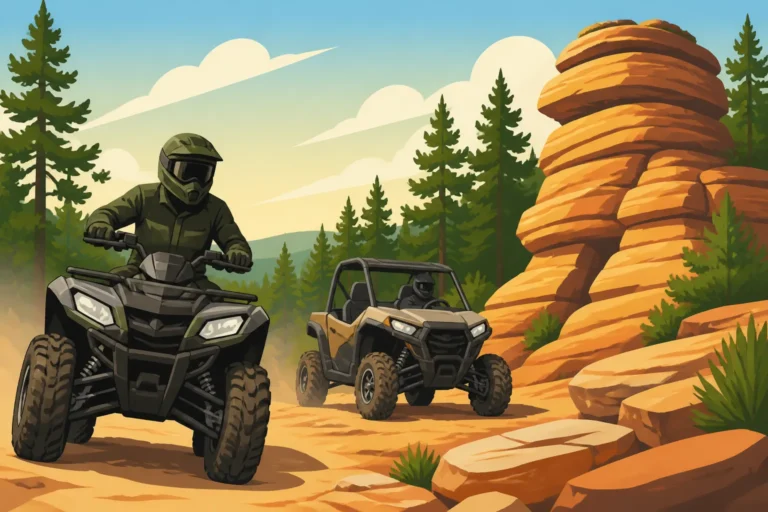
The best-known place to start looking for sandy trail riding is the Sandstone Multiple-Use Trail in Kisatchie National Forest. The name is a useful clue, but it does not mean the route is one continuous beach-like track. Expect a forest setting where the surface can change between sandy soil, firmer ground, and sections affected by rain and drainage.
That variety is part of the appeal. A sandy corner can feel loose under the tires, while a shaded or low-lying section may be softer or damp. The route can also feel different after weather changes, so a trail report from a previous visit is not a guarantee of what you’ll encounter on your ride.
Sandstone is a managed trail system, not an invitation to ride wherever the ground looks open. Stay on routes designated for your vehicle and check current access details before leaving home. Sandstone has a seasonal closure, so confirm the opening dates and any temporary restrictions before towing. The related guide [Sandstone Trail Closes to Motors January Through April] explains the seasonal closure, and [Sandstone Trail Opens to OHVs on May 1] covers the listed opening date.
Other Kisatchie-area routes
Kisatchie National Forest has several riding areas, but you should not assume every trail has the same sandy surface or permits the same machines. Routes such as the Vernon Enduro Trail and Claiborne trail system may offer forest riding, but terrain, vehicle limits, and access conditions differ. Think of those as other options to investigate—not guaranteed substitutes for a sandy ride.
If loose sand is your priority, ask the relevant land manager or check the trail information for the specific route before you make the drive. A trail can be open to motorcycles but not the ATV or UTV you plan to bring, or it may have restrictions that change the practical route available to your machine. The overview of [Kisatchie National Forest OHV Trails in Louisiana] can help you compare forest riding options, while [Louisiana's Claiborne Multi-Use Trail] and [Louisiana's Vernon Enduro Trail] are useful starting points for researching those individual areas.
Sandy trails versus sand-themed names
A trail name can set expectations that the actual ride does not meet. Sandstone is a clear example: the name points toward the area’s character, but riders should still expect a mix of surfaces and terrain rather than uninterrupted deep sand.
For practical planning, distinguish between “a trail that includes sandy sections” and “a ride made up mostly of loose sand.” The first is a realistic expectation for many forest routes. The second is a specific terrain preference that you should confirm directly with the riding area before setting out. Asking whether recent conditions are dry, rutted, or soft can help you decide whether your machine and tires are a good match.
What Sandy Louisiana Trails Feel Like
Loose sand can change how your machine handles
On loose ground, tires may drift or dig in more readily than they do on packed dirt. A quad can feel less planted in a turn, and a UTV may respond differently when one side of the trail is softer than the other. Smooth, deliberate steering is generally more comfortable than sudden inputs, especially if you are new to sand.
Try to ride at a pace that gives you time to read the trail. If the surface starts to feel loose, avoid making a sharp turn or abrupt stop without checking what is ahead. Keep a comfortable gap from the rider in front of you: dust can reduce visibility, and a sudden slowdown is easier to manage when you are not following too closely.
Tires and pressure affect how a machine behaves, but there is no single setup that suits every vehicle, rider, and trail. Use your manufacturer’s guidance as a starting point, and avoid changing tire pressure based on a guess or a setup meant for a different machine. On designated public-land trails, additional tire restrictions may apply, so check the rules for the specific area.
Forest routes bring more than sand
Sandy stretches are only one part of the ride. In pine woods, you may also encounter roots, uneven ground, ruts, standing water, and narrow sections. A trail that feels manageable on a dry morning can become more demanding after rain, while a dry spell may make loose surfaces dustier.
That mix is worth considering when choosing who rides with you. A beginner may be comfortable on a broad, firm route but feel uneasy when the trail narrows or the tires start to wander. If you are riding with children or less-experienced guests, choose a route that matches their ability and leave room to turn around rather than pushing on because the group has already started.
For broader planning help, see [Best Louisiana ATV Trails for Beginners] and [Louisiana Trail Difficulty Ratings]. Both are useful reminders to consider the rider as well as the machine when deciding whether a trail is a good fit.
Sand is not the same as deep mud
Riders sometimes use “soft ground” as a catch-all, but sand and mud call for different preparation. Sand can reduce traction and create dust; mud can conceal ruts, standing water, and obstacles. A machine that handles one surface well may still struggle on the other.
Before you go, be honest about the kind of ride you want. If your group is looking for sandy forest trails, a mud park may not deliver that experience just because it has soft ground. Conversely, if the forecast points to heavy rain, a route with sandy sections may still have muddy or waterlogged areas. For weather-related planning, [Louisiana Trail Conditions After Rain] and [Louisiana Trail Riding After Heavy Rain] provide useful context.
Compare Louisiana Riding Options Before You Tow
The table below is a starting point for deciding what to research—not a guarantee of current access, trail condition, or vehicle eligibility. Check the land manager’s information for the exact route and planned visit.
| Riding option | What to expect | Best use for planning | What to verify |
|---|---|---|---|
| Sandstone Multiple-Use Trail | Forest riding with sandy sections and changing surfaces | First place to investigate for a sand-focused public-land ride | Seasonal access, permitted vehicle types, passes, and current trail status |
| Vernon Enduro Trail | A forest trail option with its own route and riding character | Compare if you want another Kisatchie-area outing | Whether your machine is allowed and whether the route suits your group |
| Claiborne trail system | A separate multi-use trail option; do not assume its surface matches Sandstone | Consider as a different forest-riding trip | Route rules, trail conditions, vehicle access, and closures |
| Private riding areas | Conditions and facilities depend on the operator and event schedule | Consider when you want a managed recreation setting | Open dates, machine rules, admission details, and park-specific requirements |
A route may be open while a particular section is closed, or a trail may be unsuitable for a vehicle that is too wide or heavy for its restrictions. Check for those details rather than relying on a map symbol alone. A navigation app such as onX Offroad can help you review routes and orient yourself, but it should not replace the land manager’s posted rules or official status information. Use it as one planning tool, not permission to ride an unmarked route.
Plan a Sandy Trail Ride Without Unpleasant Surprises
Check access, passes, and restrictions first
Before loading your ATV or UTV, confirm that the trail is open to your vehicle on the day you plan to ride. Review any seasonal closure, permit or pass requirement, vehicle-size limit, and designated-route rule. Public-land riding rules can differ from private-park rules, so information for one riding area may not apply to another.
If your trip includes Kisatchie National Forest, review the pass requirements for the specific trail location. The guide [Louisiana Forest Trail Use Passes] explains the broader pass topic, while [How to Buy a Louisiana Forest Pass] covers the purchasing process. Check current instructions before you leave, and make sure each rider understands where the approved route begins and ends.
Do not treat a trail map as proof that every line is open to motorized riding. Some paths may be closed to machines, reserved for other users, or temporarily unavailable. If you are unsure, contact the relevant land manager or choose a clearly designated route.
Prepare for dust, heat, and limited service
Even a short forest ride can feel longer when the day is hot, the trail is dusty, or cell service is limited. Carry drinking water, basic first-aid supplies, and any items your group needs to manage a minor breakdown. Tell someone where you are riding and when you expect to be back, especially if your route takes you away from busy roads or developed recreation areas.
Navigation preparation matters too. Download or save the information you need before reaching a weak-signal area, and bring a backup way to follow your route. onX Offroad may be useful for reviewing mapped routes and keeping track of your planned ride, but save essential information ahead of time and follow posted signs on the ground. A digital map cannot tell you that a trail has just closed or that a route is blocked.
Dust can also make a group ride less comfortable. Leave extra room between machines, use eye protection, and pause somewhere safe if visibility drops. If a rider behind you cannot see clearly, slowing down or stopping in a safe place is better than continuing at the group’s original pace.
Match the route to your machine and riding group
A narrow forest route may be a poor fit for a wide side-by-side, even if the surface sounds appealing. Check vehicle restrictions and dimensions before you travel, and do not assume a UTV can use every route open to an ATV. If you are riding with a group, check the smallest or least experienced machine first; the most capable vehicle should not set the pace for everyone else.
Think through practical details before the first turn: where you can park or unload, whether facilities are available, how long the planned loop may take, and what your group will do if a machine breaks down. Bring the tools and recovery equipment appropriate for your vehicle and ability, but avoid attempting a recovery that puts a person in a dangerous position.
Finally, stay on marked routes and leave the trail as you found it. Cutting around a wet or difficult section can widen the route and damage the surrounding ground. If conditions make a section uncomfortable, turn back or choose another legal route rather than creating a new one.
A simple pre-ride checklist
- Confirm the trail is open and check for seasonal or weather-related closures.
- Verify that your specific ATV or UTV is permitted on the route.
- Review pass, permit, and trail-use requirements for that location.
- Check recent conditions and plan for a mix of surfaces, not just sand.
- Save maps and important information before entering an area with limited service.
- Bring water, eye protection, basic tools, and a communication plan.
- Keep the group on designated routes and ride at the pace of the least-experienced person.
For many Louisiana riders, Sandstone is the clearest place to begin researching a sandy forest ride. The key is to plan for variable terrain, confirm that your machine is allowed, and check access before you tow. That small bit of preparation can spare you the frustration of arriving at a closed trailhead or discovering that the route does not suit your group.
Disclaimer
This article is for general informational purposes only and does not constitute professional advice. Laws, prices and regulations vary by location and change over time. Consult a qualified professional for guidance on your specific situation.