Louisiana Rules for Riding a Pipeline Right-of-Way
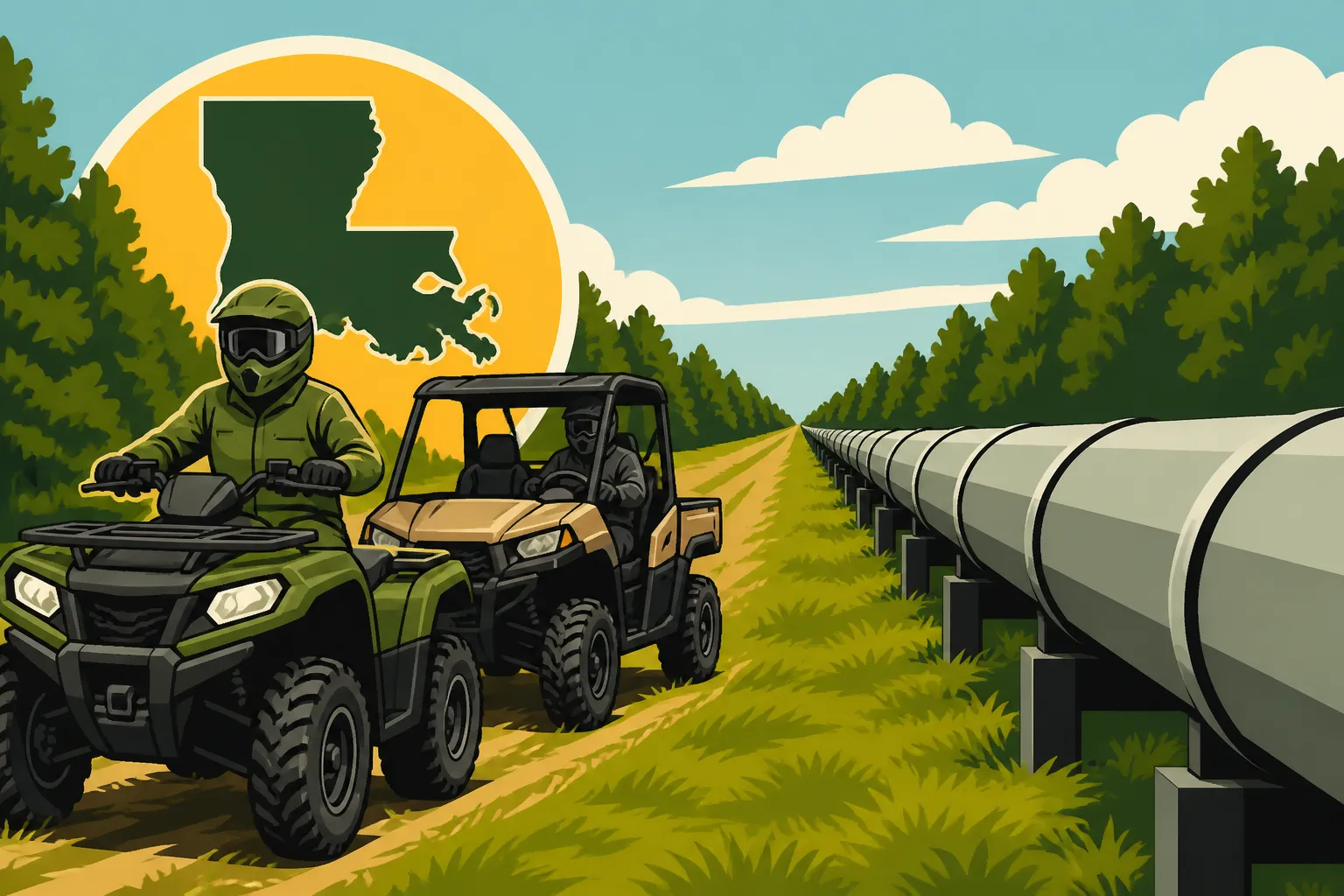
It’s incredibly tempting to look at those long, cleared corridors cutting through the Louisiana landscape – the pipeline rights-of-way. They seem like natural, ready-made trails, offering miles of open riding for your ATV or UTV. But as many riders discover, the reality of legally accessing and riding these areas is far more complicated than it appears. This guide will unravel the legalities, dangers, and essential considerations for anyone thinking about riding on a pipeline right-of-way in the Pelican State.
Understanding Pipeline Rights-of-Way in Louisiana
Those clear-cut paths you see crisscrossing rural Louisiana are critical arteries for energy and resources, designed to allow pipeline companies access for construction, maintenance, and emergency repairs. While they might look like inviting shortcuts or scenic routes, their primary purpose is industrial, and understanding their legal status is the first step toward avoiding trouble.
Who Owns the Land Under the Pipeline?
This is where the biggest misconception often lies. When you see a pipeline right-of-way, it doesn't automatically mean the pipeline company owns all the land. In most cases, pipeline companies acquire an "easement" from the private landowner. Think of an easement as a legal right to use a specific portion of someone else's property for a designated purpose – in this case, to install and maintain a pipeline. The original landowner typically retains ownership of the underlying land.
What does this mean for you as a rider? It means that even though the pipeline company has rights to access and maintain that strip of land, it's still generally considered private property. The landowner might be a farmer with vast agricultural fields, a timber company with sprawling pine forests, or a private individual with a hunting lease. Without explicit permission from the actual landowner (and sometimes the pipeline company too, depending on the easement terms), you’re essentially trespassing. This distinction is crucial, and it’s why those seemingly "open" paths aren't necessarily open to the public for recreational use.
The Illusion of "Open Access"
It's easy to see why so many riders mistakenly believe pipeline rights-of-way are fair game. They're often wide, relatively clear of dense vegetation, and sometimes connect different areas, looking like perfect lines on a map. You might even see tire tracks, leading you to think, "If others are riding here, why can't I?" This creates a powerful illusion of open access.
However, those tire tracks could belong to authorized personnel, or they could be from other riders who are also unaware of or ignoring the rules. The very nature of these corridors – their linear form and often remote locations – makes them appealing, but their appearance can be deceptive. Unlike designated public trails in places like Kisatchie National Forest, pipeline rights-of-way are not maintained for recreational riding, nor are they typically open for public enjoyment. Relying on the presence of existing tracks is a risky gamble that could lead to significant legal and financial headaches.
Navigating Louisiana Law and Private Property Rights
Louisiana takes private property rights seriously, and unauthorized access to land, even a pipeline right-of-way, can have swift and unpleasant consequences. It’s imperative to understand that simply because a piece of land doesn't have a fence doesn't mean it's public domain.
The Golden Rule: Permission is Paramount
Let’s be crystal clear: if you intend to ride on a pipeline right-of-way in Louisiana, you absolutely must obtain explicit, documented permission. This permission needs to come from the landowner – the person or entity who holds the deed to the property. In some cases, the pipeline company itself might also have specific rules about third-party recreational use on their easements, requiring their separate permission as well. This can make the process incredibly complex, as identifying the landowner, let alone getting in touch with them and securing written consent, is often a monumental task.
Imagine a scenario: you spot a beautiful, long stretch of cleared land that looks perfect for a Sunday ride. You pack up your SuperATV equipped UTV, head out, and within minutes, you're stopped by a landowner or a state trooper. Without that piece of paper, that signed permission form, you're trespassing. The penalties can range from a warning to significant fines, and in some cases, even the impoundment of your machine. It’s simply not worth the risk. Always remember the fundamental principle: if it's not a clearly designated public trail or your own private property, you need permission. This is similar to [Louisiana Trespass Law for Riders], which covers any private land you might encounter.
When Public Roads or Trails Cross a Right-of-Way
There's an important distinction to make between riding along a pipeline right-of-way and simply crossing one. If a pipeline right-of-way intersects a legally designated public road, parish road, or an authorized ATV trail, you are generally permitted to cross it as part of your ride on that public thoroughfare or trail. The key here is "crossing." You are passing over it to continue on your legal path, not extending your ride onto the right-of-way itself.
For example, if you're riding a permitted trail within a WMA or a specific road that has been designated for UTV use by a parish, and that trail or road happens to cross a pipeline corridor, you’re usually in the clear for the crossing itself. However, veering off that public road or trail to ride along the pipeline right-of-way is where you cross into illegal territory. It’s like using a crosswalk: you can walk across the street, but you can't just start walking down the middle of the street because it's convenient. Always stick to the marked, authorized paths. For more on how public roads interact with private land, check out [Louisiana Rules for Riding a Field Road].
Here's a quick comparison of perceived vs. actual access:
| Feature | Perceived Access on a Pipeline ROW | Actual Legal Access on a Pipeline ROW |
|---|---|---|
| Visibility | Clear, open path, looks like a trail. | Industrial corridor, not recreational. |
| Ownership | Assumed public or "no man's land." | Mostly private land with an easement. |
| Permission Required | Not explicitly, if others are riding. | Explicit, written consent from landowner(s) and potentially pipeline company. |
| Purpose of Area | Recreational riding. | Pipeline access, maintenance, safety zone. |
| Legal Standing | Informal, "everyone does it." | Trespassing without permission. |
Risks Beyond Legal Penalties
Beyond the immediate legal ramifications of trespassing, riding on pipeline rights-of-way carries a host of other risks that can impact your safety, the environment, and your wallet. These aren't just theoretical dangers; they are very real concerns that authorized personnel deal with regularly.
Safety Hazards on Pipeline Corridors
Pipeline rights-of-way are not designed with recreational users in mind. They are industrial sites, and that comes with inherent dangers. You might encounter hidden obstacles like stumps, rocks, or discarded construction debris that aren't marked. There could be sudden changes in elevation, deep ruts from heavy equipment, or erosion caused by rain that can easily cause a rollover or serious injury.
Consider the equipment used for maintenance: large trucks, bulldozers, excavators. These machines can appear suddenly, often operated by crews who aren't expecting recreational riders. There's also the very real danger of interacting with the pipelines themselves – though buried, there are sometimes above-ground markers, valve sites, or warning signs that indicate critical infrastructure. Damaging these could lead to catastrophic consequences, not just for you but for entire communities. Even if your machine is equipped with heavy-duty protection like SuperATV rock sliders, these areas pose risks far beyond what typical trail riding presents.
Environmental Concerns and Damage
Louisiana's diverse ecosystems, from its sprawling wetlands to its piney woods and rich agricultural lands, are sensitive. Riding ATVs and UTVs off designated trails, especially in these crucial corridors, can cause significant environmental damage. Tire ruts can lead to erosion, particularly on slopes or near waterways, washing sediment into streams and disrupting delicate aquatic habitats. Compacting soil can harm vegetation and make it difficult for new plants to grow.
Furthermore, disturbing wildlife is a major concern. Many of these areas serve as vital habitats or travel corridors for various species. Unauthorized riding can scare animals, disrupt breeding patterns, or destroy their food sources. A landowner might have invested time and resources into habitat management, and your unauthorized ride could undo years of effort. Respecting these fragile environments is not just good etiquette; it's a responsibility every rider shares.
Consequences of Unauthorized Access
Let's talk about the cold, hard facts: what actually happens if you're caught riding without permission? First and foremost, you could face legal charges for trespassing. Penalties vary, but they often include fines that can quickly add up, especially if you’re a repeat offender. Your ATV or UTV could be impounded, leaving you with the headache and expense of retrieving it from a tow yard, often with additional storage fees. [Louisiana Penalties for Illegal Road Riding] gives you an idea of the financial sting of such infractions, and trespassing carries its own set of costs.
Beyond fines and impoundment, you could also face civil lawsuits from the landowner or the pipeline company. If your actions cause any damage to the property, the pipeline infrastructure, or the environment, you could be held financially responsible for repairs, cleanup, and restoration. Imagine the cost of fixing damaged equipment or rehabilitating an eroded section of land! It's a risk that far outweighs the fleeting thrill of an unauthorized ride. Plus, having a legal record for trespassing can affect future opportunities, such as hunting leases or employment.
Best Practices for Louisiana Riders
Instead of gambling with legal trouble and your safety, there are much better ways to enjoy off-road riding in Louisiana. It all boils down to respect, research, and responsible choices.
Research and Permission First
If you are absolutely determined to explore a pipeline right-of-way, the first and only legal step is to do your homework and secure permission. This means identifying the specific land parcel, finding out who owns it, and then approaching them before you even load your machine. You can often start by checking parish assessor's maps online or visiting the parish courthouse to look up property records. This will give you the landowner's name and sometimes an address.
Then comes the challenging part: contacting the landowner. Be polite, explain your intentions clearly, and be prepared for a "no." Many landowners are hesitant to grant access due to liability concerns, past negative experiences, or simply a desire for privacy. If you can't get written permission from the landowner, you cannot ride there legally. Period. Don't forget, the pipeline company itself might also need to grant permission. Instead of this often fruitless endeavor, why not explore established, legal riding areas? Louisiana has fantastic options, from places like Muddy Bottoms ATV Park to designated trails in Kisatchie National Forest. See [Louisiana ATV Trails: Where to Ride] for some legitimate spots. Getting [Getting Written Permission From a Louisiana Landowner] is specific, but remember it's crucial. You may even need [Louisiana Landowner Permission Forms].
Equip Your Machine for Legitimate Trails
While riding illegally is always a bad idea, ensuring your ATV or UTV is properly equipped for the terrain you are legally allowed to ride on is essential. Whether you’re tackling the deep mud at a private park or navigating the winding paths of a forest trail, having the right gear enhances safety and enjoyment. Products from companies like SuperATV offer durable components such as heavy-duty axles, lift kits, and tires designed for challenging conditions. These upgrades are fantastic for legitimate adventures, providing the robustness needed to withstand real off-road abuse without leaving you stranded.
Always make sure your machine is in top condition, with functional brakes, proper tire pressure, and all necessary safety equipment. A well-maintained machine is a safe machine, regardless of where you're riding. However, remember that no amount of robust SuperATV accessories can grant you legal access to private property or compensate for ignoring trespassing laws. Safety gear, such as helmets, gloves, and appropriate riding attire, should always be worn, even on your own property or designated trails.
Respecting Landowner Rights
Ultimately, responsible off-road riding in Louisiana boils down to respecting private property rights. "No Trespassing" signs aren't just suggestions; they are legal directives. Ignoring them not only puts you at risk but also damages the reputation of the entire riding community. When landowners experience damage, litter, or nuisance from unauthorized riders, they become even more likely to post their land, lock gates, and actively enforce trespass laws, making it harder for everyone to find legal places to ride.
If you encounter posted land or signs indicating private property, turn around. Even if you don't see a sign, if you don't have explicit permission, assume it's private. Building positive relationships with landowners through respectful behavior and asking for permission can sometimes open doors to future legal riding opportunities, especially for groups or clubs. Remember that the long-term health of our sport depends on every rider acting as a good steward of the land and a respectful neighbor. Before you even think about riding, always check for [Reading Posted Land Signs on a Parish Road].
Disclaimer
This article is for general informational purposes only and does not constitute professional advice. Laws, prices and regulations vary by location and change over time. Consult a qualified professional for guidance on your specific situation.