Louisiana Rules for Riding a Rice Levee
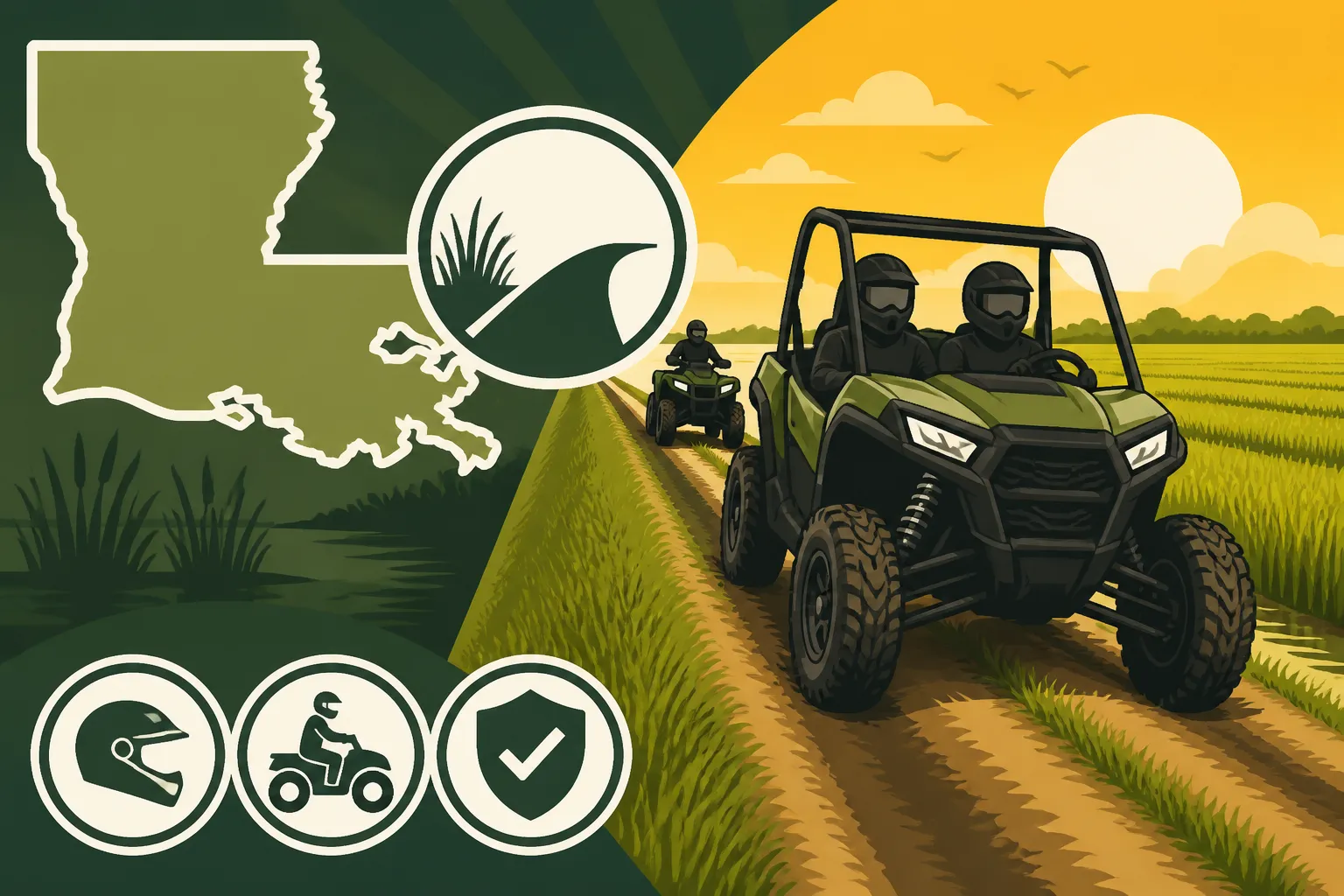
Riding an ATV or UTV across the vast, often picturesque landscape of Louisiana's rice country can seem like an idyllic escape. Many riders eye those perfectly sculpted levees, thinking they'd make for a fantastic, unique trail. However, the reality of navigating Louisiana's rules for riding a rice levee is far more complex than simply pointing your machine in a direction and hitting the throttle. This guide will cut through the confusion, explaining precisely what you need to know and do to avoid legal trouble and respect the working agricultural land that makes up so much of our beautiful state.
The Legal Landscape of Rice Levee Riding in Louisiana
It's easy to look at a wide-open expanse of fields crisscrossed by earthen levees and assume it's public domain, or at least implicitly accessible. But the truth is, the legal status of these levees is typically far from that of a public road or trail. Understanding this fundamental difference is crucial before you even consider taking your machine onto one.
Private Property vs. Public Access
The vast majority of rice levees in Louisiana are integral parts of privately owned and operated agricultural land. These aren't just scenic paths; they are working infrastructure essential to the cultivation of rice. Farmers build and maintain these levees to control water levels in their fields, a critical task for rice growth. Thinking you can simply ride on them because they look like fun trails is a common misconception, and it can lead to serious legal consequences. When you ride on a private rice levee without explicit permission, you are trespassing, plain and simple.
This isn't like finding an unmarked trail in a national forest. This is someone's livelihood, their business, and their private property. Imagine someone driving their truck through your backyard just because it looks like a shortcut; that's essentially what riding on a rice levee without permission amounts to. The farmer has invested time, money, and effort into creating and maintaining these structures, and unauthorized riding can damage them, impact irrigation systems, and disrupt their operations. The law is firmly on the side of the landowner in these situations.
The Role of Levee Districts and Drainage Authorities
Adding another layer of complexity to the mix is the involvement of various levee districts and drainage authorities throughout Louisiana. While many rice levees are solely private, some larger, more extensive levee systems that might also serve as boundaries or protect wider areas could fall under the jurisdiction of these public or quasi-public entities. These aren't necessarily "recreational" levees, but rather flood control or water management infrastructure. Even if a levee is managed by such a district, it doesn't automatically mean public access for recreational ATV or UTV riding.
Levee districts have specific mandates, primarily related to flood protection and maintaining the integrity of their structures. Recreational riding might be viewed as a liability or a potential source of damage, especially to the compaction and stability of the levee itself. Before considering any levee that seems to be part of a larger district system, you would need to contact that specific levee district or drainage authority directly to inquire about their policies. They often have strict rules, and unauthorized access can still result in significant [Louisiana Levee Trespass Penalties]. It’s a different kind of permission you'd need, distinct from a private landowner, but equally vital.
Obtaining Permission: The Only Way to Ride Legally
Given that most rice levees are on private land, the single, non-negotiable step to riding legally is obtaining explicit permission from the landowner. This isn't just about being polite; it's about respecting property rights and avoiding legal repercussions. Assuming access or relying on vague past interactions is a recipe for trouble.
Identifying the Landowner
Before you can ask for permission, you need to know who to ask. This can sometimes be the trickiest part, especially in rural areas where land ownership might not be immediately obvious. A good starting point is the local parish assessor's office. Their records are public, and you can often look up property ownership by geographic location or even by tax parcel maps. Many parishes now have online GIS (Geographic Information System) maps that allow you to pinpoint a specific levee and identify the owner of the land it traverses.
Alternatively, if you're in an active rice farming area, asking around at local farm supply stores, co-ops, or even neighboring farmers can often lead you to the right person. Approach these inquiries with respect and a clear explanation of your intentions. Be prepared to introduce yourself and state why you're asking. Remember, a landowner is much more likely to grant permission if you've done your homework and approach them thoughtfully.
The Importance of Written Permission
A handshake and a verbal "sure, go ahead" might seem sufficient, especially in friendly rural communities. However, when it comes to riding an ATV or UTV on private property, particularly a working farm levee, written permission is always, always preferable. Verbal agreements can be misinterpreted, forgotten, or challenged if an incident occurs. What if the person who gave you permission is not the sole owner, or their memory of the conversation differs from yours?
Written permission provides a clear record of the agreement, protecting both you and the landowner. It should ideally specify the dates and times you're allowed to ride, the exact areas you can access (e.g., "only the levees on the south forty acres, not the main irrigation levee"), any restrictions on your riding (e.g., "no riding during planting season"), and the type of machine allowed. A simple note signed by the landowner, or a more formal [Louisiana Landowner Permission Forms] document, can save a lot of headaches. This kind of documentation can be invaluable if questions arise from neighbors, law enforcement, or in the unfortunate event of an accident.
Building Relationships with Farmers
Beyond just getting permission, fostering a good relationship with the farming community is paramount if you hope to ride on rice levees consistently. Farmers are generally hardworking, practical people who appreciate respect and understanding for their operations. When you approach a farmer, don't just ask for a place to play; perhaps offer to help out with a task, or simply demonstrate genuine interest in their work. Show them that you understand the delicate nature of their land and their livelihood.
If granted permission, treat their property with the utmost care. Stick to the agreed-upon areas, don't leave trash, and immediately report any damage you notice, even if you didn't cause it. Farmers often use ATVs and UTVs themselves for tasks like checking fields or moving equipment, so they understand the utility of these machines. If you prove yourself to be a responsible and respectful rider, you might find yourself with a rare and cherished opportunity to ride some truly unique terrain. A little goodwill goes a long way in agricultural communities, especially when it comes to access to private land.
Practical Considerations for Rice Levee Riding
Once you have the necessary permission, riding on a rice levee isn't like hitting a dedicated off-road park. It requires a specific kind of awareness and respect for the environment and the agricultural activity happening around you. This isn't just about avoiding trouble; it's about being a responsible rider on working land.
Respecting the Agricultural Operation
This cannot be stressed enough: rice levees are not trails. They are critical components of a farming operation. Your riding must not, under any circumstances, interfere with or damage crops, irrigation systems, or farm infrastructure. This means staying strictly on the levee itself, avoiding riding into fields, even if they appear fallow or dry. Crops can be delicate, and even seemingly minor damage from tires can significantly impact a farmer's yield and income.
Be mindful of the farming calendar. During planting, growing, and harvesting seasons, there will be heavy machinery operating, and fields will be in various stages of sensitivity. Riding during these times, even with permission, might be disruptive or outright dangerous. Always check with the farmer about the best times to ride. Remember, their priority is their harvest, not your recreation. Your responsibility is to ensure your presence is unobtrusive and causes zero impact on their ability to produce food.
Machine Preparation and Responsible Riding
Riding on rice levees often means encountering soft earth, varying moisture levels, and potentially steep, narrow paths. Your machine needs to be up to the task, and your riding style must be conservative. Aggressive riding, sharp turns, or excessive speed can easily damage the levee structure, leading to erosion or breaches that are costly for the farmer to repair. Heavy machines, while powerful, can exert significant pressure on soft ground. You'll want to ensure your tires are suitable for soft conditions, possibly considering options from brands like SuperATV that offer a range of utility and mud tires designed for traction without being overly aggressive.
Carrying recovery gear is also a smart move. A winch, a tow strap, and even a shovel can be lifesaesavers if you get stuck in soft mud, preventing you from having to abandon your machine or cause further damage trying to extract it. Think about accessories like heavy-duty axles and CV boots from SuperATV if you frequently encounter demanding, wet conditions, as prevention is always better than a costly repair. Remember, if you get stuck and cause damage, you're not just in a pickle, you're potentially costing a farmer valuable time and money.
Safety and Environmental Awareness
The unique environment of rice levees presents its own set of safety concerns. Many levees run alongside irrigation canals or ditches, meaning sudden drops into water are a real possibility, especially if you veer off the narrow path. The ground can be deceptively soft and uneven, leading to rollovers or loss of control. Always scout unknown areas at a slow speed, or even on foot if necessary. Remember, the goal is to enjoy the ride safely, not to push your limits.
Beyond the immediate physical hazards, be aware of the wildlife that calls these areas home. Snakes, alligators, and various birds are common. Respect their habitat and give them space. [Louisiana DUI Law and Off-Road Machines] applies on any land, public or private, so never ride under the influence. It's also wise to ride with a buddy, especially in remote areas. Cell service can be spotty, and having someone else there in case of a mechanical breakdown or injury is crucial. Pack essentials like water, snacks, a first-aid kit, and a way to communicate in an emergency.
When a Rice Levee Is NOT the Place to Ride
Even with the best intentions and the right permissions, there are times and conditions when riding a rice levee is simply a bad idea. Knowing when to hold back is as important as knowing how to get permission in the first place. Prioritizing safety and respect for the land should always be your guiding principles.
The Dangers of Wet Conditions
Louisiana is no stranger to rain, and wet conditions are a constant factor in our climate. Riding on saturated rice levees, especially after heavy rains or during periods of prolonged moisture, is extremely dangerous and irresponsible. Muddy levees lose their structural integrity, making them prone to erosion, rutting, and even complete collapse under the weight and force of an ATV or UTV. Getting bogged down in deep, sticky mud is not just an inconvenience; it can lead to extensive damage to your machine and the levee itself.
Trying to recover a stuck machine from a muddy levee can turn a simple recreational ride into a costly, labor-intensive nightmare for both you and the landowner. The ruts left behind can impede the farmer's equipment, channel water incorrectly, and require expensive repairs. It's a situation where the desire for a "mud ride" can quickly become a significant liability. When the ground is wet, err on the side of caution and postpone your ride. There are plenty of other [Louisiana ATV Trails: Where to Ride] that are designed to handle various weather conditions better, or at least have specific rules for wet weather closures.
Designated Trails vs. Implied Access
It's vital to distinguish between a properly maintained, designated off-road trail and an informal path on private land. Places like [Muddy Bottoms ATV Park in Louisiana] are built and managed specifically for recreational riding, with trails designed to handle the impact of machines and provide a safe, enjoyable experience. Rice levees, by contrast, are not designed for recreation. Their primary purpose is water management for agriculture.
The visual appeal of a levee, winding through fields, can create an illusion of "implied access," as if it's naturally meant for riding. However, if it's not explicitly designated and signed as a recreational trail, you should always assume it's private property requiring permission. This is especially true for farm roads and levees, where the concept of public access, even for vehicles, is often extremely limited or non-existent. Without clear signage or direct, written permission, any access is unauthorized, and you could face serious repercussions.
The Legal Consequences of Unauthorized Access
Riding on private property without permission, including rice levees, falls under Louisiana's trespassing laws. This is not a minor infraction. Depending on the specific circumstances, such as damage caused or repeated offenses, the penalties can range from significant fines to the impoundment of your ATV or UTV. Law enforcement takes private property rights seriously, especially when agricultural operations are involved.
Beyond the immediate legal penalties, unauthorized access can damage your reputation in a rural community and make it impossible for you or anyone else to ever gain permission to ride responsibly in the future. The trust between landowners and the riding community is fragile, and irresponsible actions can quickly erode it. Just as [Louisiana Penalties for Illegal Road Riding] exists for public roads, specific penalties are in place for violating [Louisiana Trespass Law for Riders] on private land. It's a risk that is simply not worth taking when a polite request for permission is the appropriate and legal first step.
Here’s a quick comparison to highlight the difference in approach:
| Feature | Private Land Levee Riding (with permission) | Designated Public Riding Areas (e.g., WMA, Private Park) |
|---|---|---|
| Access Requirement | Explicit, preferably written permission from landowner/district | Permit, fee, or compliance with posted rules |
| Primary Purpose | Agricultural infrastructure, water control | Recreational riding, conservation, multi-use |
| Trail Maintenance | By farmer/district for agricultural purposes | By park/agency for rider safety and environmental protection |
| Liability | Rider assumes significant liability, landowner may limit | Park/agency may have liability waivers and insurance |
| Environmental Impact | High risk of damage to crops/levee if not careful | Trails designed to mitigate environmental impact |
| Regulatory Body | Landowner, Levee District, Parish Sheriffs | LDWF, US Forest Service, Private Park Management, State Police |
| Typical Terrain | Earthen levees, soft soil, uneven, water hazards | Varied trails, specific difficulty ratings, marked hazards |
| Machine Restrictions | At landowner's discretion | Often specific weight, width, tire, and sound limits (e.g., [Louisiana WMA Machine Size Limits]) |
Disclaimer
This article is for general informational purposes only and does not constitute professional advice. Laws, prices and regulations vary by location and change over time. Consult a qualified professional for guidance on your specific situation.