Louisiana Paperwork for a Machine Bought at a Park
Picture this: you're at a popular riding park here in Louisiana, maybe Muddy Bottoms or even a smaller, local spot. You’ve just had an epic weekend, and someone in the staging area is selling their quad or side-by-side, maybe to upgrade or because they found a sweet new deal. The price is right, the machine looks good, and you’re tempted to make a quick deal right then and there. It feels like a handshake agreement should be enough, right? But buying a machine "at the park" can present some unique challenges when it comes to getting all your ducks in a row for the Louisiana Office of Motor Vehicles (OMV). This guide is here to walk you through exactly what paperwork you need to secure, how to navigate the official process, and what to do if things aren't as straightforward as you'd hoped, ensuring your new-to-you machine gets properly titled and decaled without a headache.
The Unique Challenges of Park Purchases for Paperwork
Buying an ATV or UTV at a riding park often comes with a certain vibe – it’s casual, exciting, and sometimes a little impromptu. You're surrounded by other enthusiasts, the machines are in their element, and the energy can make you feel like you're all part of a big, trusting community. While that camaraderie is fantastic, it can also lead to overlooking some critical steps when it comes to the official documentation.
Why Park Sales Can Feel Different
Think about it: you’re not in a dealership with fluorescent lights and a stack of forms. You’re likely leaning against a truck, dirt under your boots, maybe the seller is packing up their rig. The conversation flows easily, and a deal can be struck quickly, often fueled by the excitement of the moment. People might assume that because everyone at the park knows what a title is, or what a bill of sale should look like, that the basics will be covered implicitly. Or, perhaps, they just want to sell it fast and get back to riding. This informal atmosphere, while fun, often means that crucial paperwork details might get glossed over, or worse, completely forgotten in the rush. There’s no sales manager to ensure every box is checked, no finance department to handle the transfer, and no official system to prompt you for what's needed. It's truly a buyer-beware situation, and it demands your full attention to the details.
The Immediate Risks of Incomplete Documentation
Imagine you've just shelled out a significant chunk of change for this awesome machine you bought at the park. You shake hands, load it up, and head home, excited for your next ride. Then you try to get your [Louisiana ORV Decals and Titles Explained] at the OMV, only to find you don't have the necessary proof of ownership. This is a common and incredibly frustrating scenario. Without a properly executed bill of sale or an assigned title, you essentially own a very expensive paperweight. You can’t legally title it in your name, you can’t get the required annual decal, and you definitely can’t ride it on any public land or designated shoulder without risking [Louisiana Penalties for No Decal]. The machine becomes locked in a legal limbo, and trying to track down the seller months later to get a missing signature or a proper document can be a nightmare – if you can even find them at all. This lack of proper paperwork could also mean the machine was stolen, has outstanding liens, or was part of some other murky transaction, leaving you holding the bag.
Understanding Your Post-Purchase Responsibilities
The excitement of buying a new machine sometimes overshadows the very important steps that come after the purchase. Once you've paid for that quad or side-by-side, the clock starts ticking on your responsibility to make it legally yours in the eyes of the State of Louisiana. This includes getting it officially titled in your name, which involves paying sales tax (even on private sales, it's a "use tax"), and then securing your annual off-road decal. Many riders might mistakenly believe that if it's "just for the trails," a title isn't a big deal, but the OMV does title ATVs, and a decal is mandatory for most riding. Neglecting these steps can lead to significant headaches down the road, from fines to impoundment. It’s not just about hitting the trails; it’s about making sure your investment is legally protected and compliant with state regulations.
Essential Paperwork You Must Get for Any Louisiana ATV/UTV Purchase
Whether you're buying a brand-new machine from a dealer's pop-up tent at an event or a well-loved quad from a private seller packing up their camp, the fundamental paperwork requirements don't change. These documents are your legal proof of ownership and the gateway to getting your machine titled and decaled here in Louisiana. Skimping on these steps at the point of sale will lead to untold frustration down the line at the OMV.
The Bill of Sale: Your Foundation Document
The bill of sale is, hands down, one of the most critical pieces of paper you'll exchange when buying a used ATV or UTV, especially from a private seller at a park. It's your record of the transaction, detailing who bought what, from whom, for how much, and on what date. Without it, you have little to prove you actually purchased the machine.
A good bill of sale should include:
- Buyer's Full Name and Address: Make sure it matches your driver's license.
- Seller's Full Name and Address: This should match the name on the title they're signing over to you.
- Date of Sale: Crucial for calculating tax and decal deadlines.
- Description of the Machine: Year, make, model, and most importantly, the Vehicle Identification Number (VIN). Double-check the VIN on the bill of sale against the physical VIN on the machine itself to prevent costly mistakes.
- Purchase Price: This is what you actually paid. Be honest about it, as it will be the basis for your sales tax calculation.
- Signatures of Both Buyer and Seller: This makes it a legal agreement.
- Notarization: This is where many private sales fall short. In Louisiana, for a private sale, a [Louisiana Notarized Bills of Sale] is often required by the OMV to transfer a title. This extra step helps prevent fraud and verifies the identities of the parties involved. If you’re at a park, finding a notary might be tough, but it's a non-negotiable step if you want a smooth titling process. Explain to the seller before the transaction that you'll need to meet at a notary. This simple step saves immense headaches later. Online resources like LawDepot can help you generate a robust, customizable bill of sale template that covers all the necessary legal ground, ensuring you don't miss any critical fields. Seriously, do not overlook [Why Your Bill of Sale Needs a Notary].
The Title: The Holy Grail of Ownership
Next to the bill of sale, the title is the absolute most important document. This small piece of paper is the official record of ownership for your ATV or UTV.
- For a Used Machine: If you're buying a used quad, the seller must provide you with the existing Louisiana title. This title needs to be properly "assigned" to you. This means the seller fills out the "Assignment of Title" section, signing it exactly as their name appears on the front of the title, and also filling in your name as the new owner. They should also record the odometer reading (if applicable, though less common for ATVs/UTVs) and the sale date. A title that is missing a signature or has cross-outs can be a huge problem. [What Happens When a Title Is Missing a Signature] can stop your titling process dead in its tracks, so inspect it carefully. [Louisiana Requires an Assigned Title for a Used One], and if the seller can't produce it, walk away from the deal or be prepared for a very long, difficult process to secure a new title.
- For a New Machine: If by some chance you're buying a brand-new machine at a park event directly from a dealer, you won't get a traditional title right away. Instead, you'll receive a Manufacturer's Statement of Origin (MSO). This document is essentially the "birth certificate" for the machine, and it's what the OMV uses to issue the first title in your name. Just like a used title, ensure all the fields are correctly filled out, especially your name and the VIN. [Louisiana Requires an MSO for a New Machine] for any new unit.
Proof of Sales Tax Payment
This is another area where private sales at a park can catch people off guard. Many assume that because they're buying from an individual, sales tax doesn't apply. This is a common misconception in Louisiana. Whether you buy from a dealer or a private seller, you are responsible for paying Louisiana sales tax.
- Dealer Purchase: If you buy from a legitimate dealer at a park event, they will typically collect the state and local sales tax at the time of purchase and provide you with an itemized invoice showing that tax was paid. This invoice serves as your proof. [Louisiana Requires an Itemized Dealer Invoices] if you buy from a dealer.
- Private Sale (Use Tax): When you buy from a private party, you'll pay what's called "use tax" directly to the OMV when you title the machine. The OMV will calculate this tax based on the purchase price listed on your bill of sale. [Louisiana Requires Proof of Sales Tax First] before they will issue a title. It's a non-negotiable step. They need to see that tax has either been collected by a dealer or that you're prepared to pay the use tax at the counter. Seriously, [Why Tax Proof Comes First] is a consistent message you'll hear from the OMV. If you come in with a title and bill of sale but no tax receipt for a private sale, they will send you to the tax counter to pay your use tax before completing the title transfer. This applies even if you bought it out of state and are bringing it into Louisiana; you'll be charged Louisiana use tax. [Getting a Use Tax Bill at the OMV Counter] is a routine part of the process for private sales.
Navigating the OMV Process After a Park Purchase
Once you've secured all your vital documents at the park, your next step is to visit the Louisiana OMV to finalize the ownership transfer and get your machine road-ready (for off-road use, that is!). This process can feel a bit daunting, especially if you're not sure what to expect. Being prepared is key to making it a smooth, one-trip affair.
Steps to Title and Decal Your Machine
Assuming you have a complete and notarized bill of sale, the properly assigned title (or MSO for a new machine), and either a dealer invoice showing tax paid or the cash to pay use tax, here's how the OMV visit generally breaks down:
-
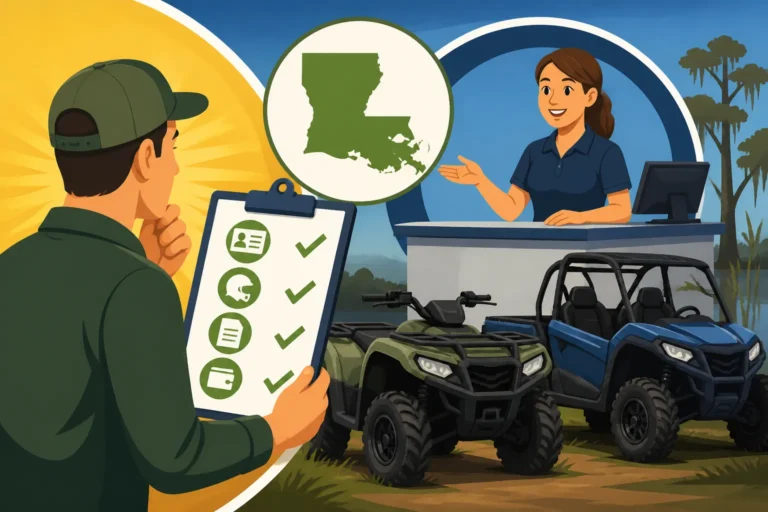
Gather Your Documents: Before you even leave your house, double-check that you have:
- The original, properly signed and notarized Bill of Sale.
- The original, properly assigned title (for used) or MSO (for new). Make sure all seller's signatures are present and correct, and your information as buyer is filled in.
- Proof of sales tax payment (dealer invoice) or be ready to pay the use tax.
- Your valid Louisiana driver's license or state ID.
- Proof of residency (utility bill, mail with your address, etc.), if your license doesn't reflect your current address.
- The necessary fees for titling and the decal. [Louisiana Title Fees for an ATV] are standardized, as is the cost for your annual decal.
-
Visit Your Local OMV: Head to your nearest OMV branch. It's often a good idea to check their website for operating hours and any specific appointment requirements.
-
Complete the Vehicle Application (Form DPSMV 1799): At the OMV, you'll need to fill out a Vehicle Application form. This form collects all the necessary information about you, the machine, and the transaction. Don't worry, the clerks are usually helpful if you have questions about specific fields.
-
Submit Documents and Pay Fees: Present all your collected documents to the OMV clerk. They will review them for completeness and accuracy. You'll then pay the applicable title transfer fee, any mortgage recordation fees if there's a lien, and the sales/use tax if not already paid. Don't forget the fee for your off-road decal. [Louisiana Title Fees for an ATV] will include a processing fee, and then you'll also pay for your decal.
-
Receive Your Temporary Registration (and eventually, your Title & Decal): Once everything is processed and paid, the OMV will often provide you with a temporary registration document. Your official Louisiana title will then be mailed to you, typically within a few weeks. The off-road decal might be issued on the spot or also mailed separately. This is [How to Get a Louisiana ORV Decal] officially! You'll receive a physical decal to affix to your machine.
It's truly worth putting in the effort for [Planning an OMV Counter Visit So It Takes One Trip]. Gather everything, call ahead if you have unique circumstances, and be patient.
What to Do If Paperwork Is Missing or Incomplete
This is where buying at a park can become a real headache. What if the seller didn't have the title, or the bill of sale wasn't notarized, or they spelled your name wrong on the assignment? Louisiana has procedures for these scenarios, but they require extra steps and can be time-consuming.
- Missing Notarization on Bill of Sale: If your private sale bill of sale isn't notarized, the OMV may require an affidavit from both you and the seller swearing to the details of the sale. This means you might need to track down the seller again, which can be difficult if they were just a fleeting acquaintance at a park. Using a legal form service like LawDepot can help you create these affidavits, but you'll still need the seller's cooperation and a notary.
- Missing Title: This is the most severe problem. [Louisiana Machines With No Paperwork] are notoriously difficult to title. The OMV generally requires a title to transfer ownership. If the seller legitimately lost their title, they should have applied for a duplicate title before selling the machine to you. If they didn't, you might have to go through a bonded title process, which involves buying a surety bond for the machine's value, proving ownership through other means (like a very detailed, notarized bill of sale and perhaps a VIN verification), and a significant waiting period. This is complex and best avoided. In many cases, if a private seller at a park cannot produce a title, it's a red flag. [Louisiana Title Without a Bill of Sale] can also lead down this path.
- Errors on Documents: Simple errors, like a misspelled name or incorrect VIN, can often be corrected with affidavits or by having the original parties initial the changes. However, major discrepancies might require new documents altogether.
The bottom line is: try to get everything perfect at the point of sale. Correcting errors or missing documents later is always harder and more stressful.
Preparing for Your OMV Counter Visit
A little preparation goes a long way in making your OMV visit efficient.
- Bring Originals and Copies: Always bring the original documents, but having a set of copies can be helpful for your own records or if the OMV needs one.
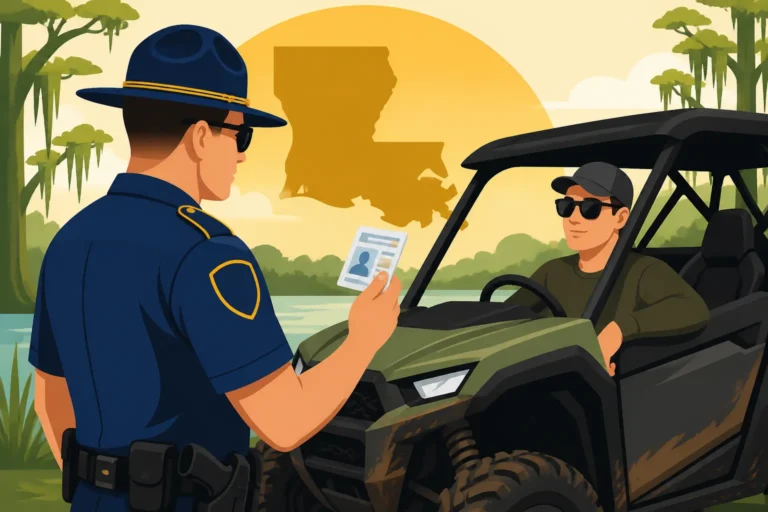
- Valid Photo ID: This seems obvious, but [Louisiana Photo ID at the Counter] is non-negotiable. Ensure your ID is current and matches the name you want on the title.
- Payment Methods: Check what payment methods your local OMV accepts. Many accept cash, checks, and debit/credit cards, but it's always good to verify to avoid a surprise. You'll be paying a few different fees, so plan accordingly.
- Know Your VIN: While it's on your documents, knowing the VIN of your machine off-hand can sometimes speed things up or help clarify details.
- Be Patient and Polite: OMV offices can be busy, especially certain times of the day or week. Go in with a patient attitude, and remember that the clerks are there to help you navigate the process.
Common Pitfalls and How to Avoid Them
When you're caught up in the excitement of buying an ATV or UTV at a riding park, it's easy to overlook crucial details. But some mistakes can lead to major headaches down the road. Being aware of these common pitfalls can help you make a smarter, safer purchase.
The "No Title, No Problem" Myth
This is perhaps the biggest misconception out there, especially in informal buying environments like a mud park. You might hear a seller say, "Oh, I don't have the title, but it's just for the trails, you don't really need one." Or, "I only ride it on my private land, so I never bothered getting a title." This is a massive red flag. In Louisiana, the OMV does title ATVs and UTVs, and having an official title is the definitive proof of legal ownership.
Why is "no title" a problem?
- Proof of Ownership: Without a title, you have no universally accepted legal proof that the machine belongs to you. A bill of sale is strong, but a title is the ultimate document.
- Theft Risk: A machine without a title is much harder to recover if it's stolen, as proving it's yours becomes incredibly difficult. It also raises the suspicion that the machine might be stolen in the first place. You should always be [Checking Whether a Used Quad Is Reported Stolen] if a title is missing or suspicious.
- Resale Value: Trying to sell a machine without a title later will drastically reduce its value and limit your potential buyers, as few informed buyers will take on that headache.
- Lien Issues: A missing title could mean there's an outstanding loan or lien on the machine that you're unknowingly inheriting. When the OMV issues a title, it records any liens, protecting the lender. No title means no official record, and you could face repossession if the previous owner defaulted.
Never, ever buy an ATV or UTV without a properly assigned title (for used) or an MSO (for new), unless you are fully prepared for a very complex and potentially costly legal battle to get one.
Overlooking Sales Tax for Private Sales
As discussed earlier, many buyers are surprised to learn they still owe sales tax on a private-party purchase. This is called "use tax," and Louisiana law requires it. If you agree to a price with a private seller at a park, remember that the OMV will collect state and local sales tax on that amount when you go to title the machine. This can add hundreds of dollars to your purchase, depending on the price of the machine and the combined sales tax rate in your parish.
Forgetting about this additional cost can quickly blow your budget. Always factor in the sales tax when considering a private sale. The OMV will not issue a title until this tax is paid, so it's a mandatory expense. This is [Why Tax Proof Comes First] at the OMV window, and it's a rule that trips up many first-time buyers or those used to states with different sales tax rules for private transactions.
Not Verifying the Seller's Identity
When you're doing a quick deal at a riding park, it's easy to focus on the machine and the price, overlooking the person standing in front of you. However, you absolutely must verify the seller's identity.
- Match ID to Title: Ask to see the seller's driver's license or state ID. The name on their ID should exactly match the name printed as the owner on the title they are signing over to you. If there's a discrepancy, stop the transaction and ask for clarification. It could be an innocent mistake, but it could also indicate a fraudulent sale.
- Match Name on Title to Signature: Ensure the seller signs the title exactly as their name appears on the front of the title. If it's "John D. Smith" on the title, they should sign "John D. Smith," not "J. Smith" or "Johnny Smith." The OMV is very particular about this.
- Be Wary of Proxies: If someone is selling a machine "for a friend" or "for their uncle," be extremely cautious. The person whose name is on the title is the only one who can legally sign it over. If they aren't present, you'll need a very specific power of attorney, which adds another layer of complexity and potential for fraud.
- Stolen Machines: If the seller cannot produce a title, or their ID doesn't match the title, there's a higher risk the machine is stolen. [Checking Whether a Used Quad Is Reported Stolen] is a critical step, which often can be done through a VIN check service, though that process can be tricky and isn't foolproof. The best defense is to only buy machines with clear, verifiable titles from sellers whose identity matches the title.
By being diligent about these common pitfalls, you can protect yourself from significant financial loss, legal trouble, and the frustration of owning a machine you can't legally register or title.
Disclaimer
This article is for general informational purposes only and does not constitute professional advice. Laws, prices and regulations vary by location and change over time. Consult a qualified professional for guidance on your specific situation.