Swearing an Affidavit That a Quad Is Farm-Only
Navigating the ins and outs of ATV and UTV registration in Louisiana can feel like slogging through a mud bog after a heavy rain – confusing, messy, and you're never quite sure if you're going to get stuck. A common point of confusion for many off-road enthusiasts, especially those living and working in rural areas, revolves around the "farm-only" exemption. This guide is here to untangle the complexities of swearing an affidavit that your quad is exclusively for farm use, helping you understand the requirements, process, and what it means for your machine in the Pelican State.
Understanding Louisiana's Farm Exemption for Off-Road Machines
Louisiana offers specific exemptions for off-road vehicles that are used exclusively for agricultural purposes. This isn't just a casual suggestion; it's a legal designation that impacts how your ATV or UTV is titled, registered, and even operated. Many folks assume that because they live on a farm, any quad they own automatically falls under this umbrella, but that's not always the case. There are clear lines drawn, and crossing them can lead to unexpected fines and headaches.
What Qualifies as "Farm-Only" Use?
When the state talks about "farm-only" use, they're not just thinking about a quad you use to check fences or move hay bales once a month. This exemption is designed for machines that are genuinely integral to the day-to-day operations of a farm. This means tasks like:
- Crop Management: Inspecting fields, spreading seed or fertilizer (when equipped to do so), or pulling small implements for cultivation.
- Livestock Care: Herding animals, transporting feed, or moving equipment around pens and pastures.
- Property Maintenance: Hauling tools for fence repair, clearing brush, or maintaining access roads within the farm's boundaries.
- Movement of Farm Products: Transporting harvested goods or supplies strictly on private farm land.
The key word here is "exclusively." If your machine is used for recreational rides with the kids on the weekends, taken to a local mud park, or even occasionally used to run to the corner store, it likely does not qualify for the farm-only exemption. It needs to be a dedicated workhorse, not a weekend warrior. This strict definition is where many riders get tripped up, and it's essential to be honest about your machine's primary purpose. Think of it this way: if a state trooper saw you riding it off your farm for anything other than a very specific, limited road crossing, would they question its "farm-only" status?
Why the Affidavit Is Crucial for This Exemption
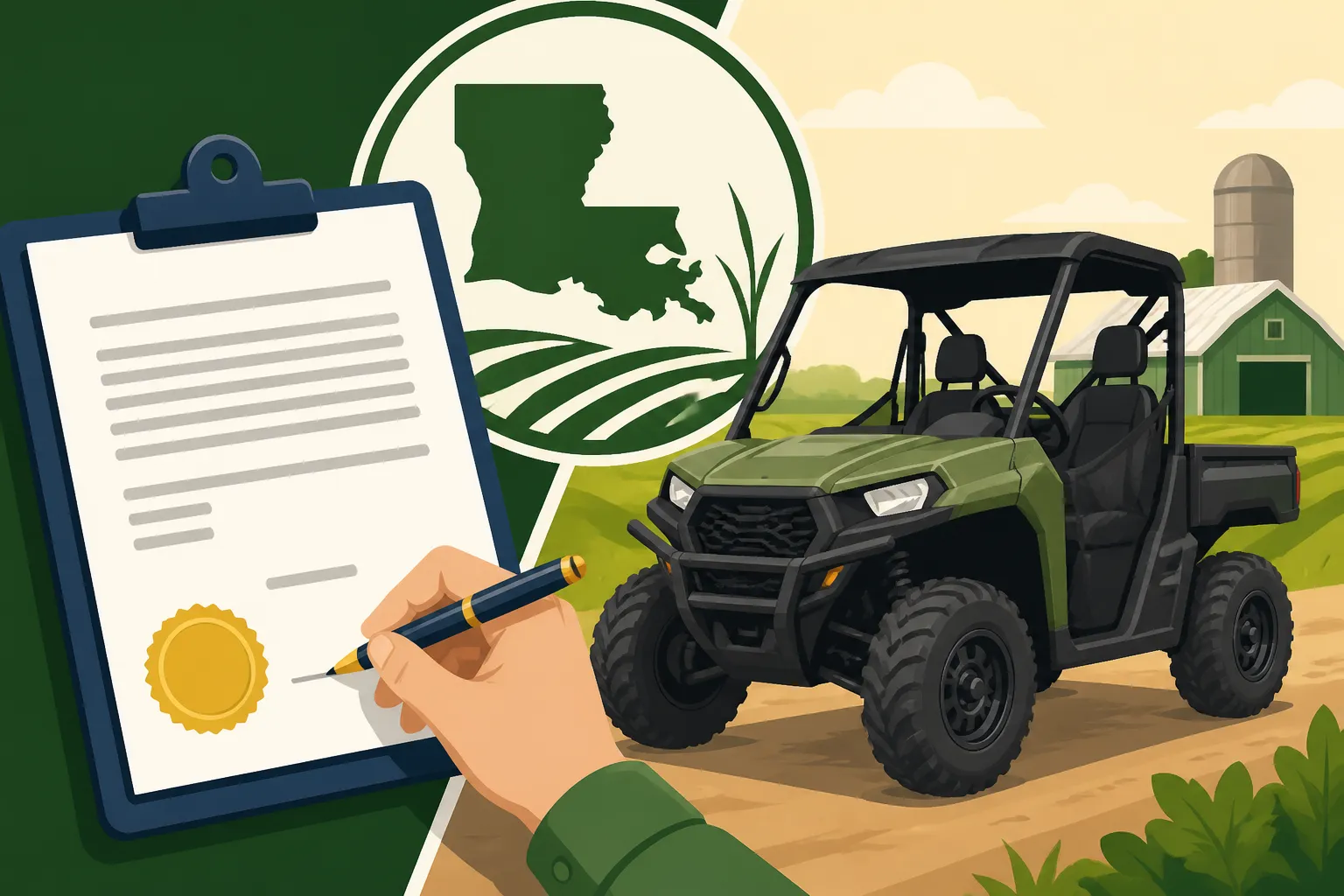
An affidavit is more than just a piece of paper; it's a sworn statement, made under penalty of perjury, that your ATV or UTV is used solely for agricultural purposes. This document is absolutely crucial because it serves as your official declaration to the Louisiana Office of Motor Vehicles (OMV) that your machine meets the criteria for this specific exemption. Without it, the OMV has no way of knowing your intent, and they'll proceed with standard titling and registration requirements, which include decals and other fees.
The affidavit effectively tells the OMV, "Hey, this machine is a farm tool, not a recreational vehicle." It allows you to bypass certain registration steps that are typically mandatory for other off-road machines. It's the lynchpin of the entire process for this particular exemption. Without a properly executed affidavit, you might find yourself facing the full slate of standard fees and requirements, completely missing out on the benefits designed for genuine farm equipment. This is where getting it right the first time can save you a lot of grief. [Louisiana Agricultural Affidavits for an ATV] explains more about the specifics.
The Difference Between Farm-Only and Road Use Affidavits
It's really important not to confuse the "farm-only" affidavit with other affidavits that allow limited road use. While both deal with agricultural activities, their scope and purpose are quite different. The "farm-only" affidavit primarily addresses the titling and registration status with the OMV, asserting that the machine is exempt from certain requirements because it never leaves the farm for general use. It's about its identity as a piece of farm equipment.
On the other hand, there's a separate affidavit that farmers can use to permit limited road use for their ATVs or UTVs. This affidavit, covered in more detail under [Louisiana Farm Affidavits for Road Use], allows a farmer to cross a public road or travel on the shoulder for up to 5 miles between parts of their farm, or to access agricultural land. Even then, the machine still needs a current off-road decal. The key distinction is that the farm-only affidavit concerns its overall status as an exempt machine, while the road-use affidavit grants a specific, limited privilege for an already titled and decaled machine. Trying to use one when you need the other will only lead to trouble.
The Step-by-Step Process of Swearing a Farm-Only Affidavit
Getting this affidavit sworn correctly isn't overly complicated, but it does require attention to detail and following the proper legal steps. It's not something you can just scribble on a napkin and expect the OMV to accept. Think of it like any other official document: precision matters.
Obtaining the Correct Form or Template
First things first, you need the right document. While the OMV doesn't typically provide a specific pre-printed "farm-only" affidavit form, you can often find templates online or through legal resources. Reputable sites like LawDepot offer customizable affidavit templates that can be adapted for your specific declaration of farm-only use. These templates usually cover the necessary legal language and formatting required for a sworn statement. You'll need to fill in your personal information, the details of your ATV or UTV (including the VIN), and clearly state that the machine will be used exclusively for agricultural purposes on private land.
Make sure the template you choose is comprehensive and leaves no room for ambiguity. It should clearly identify you as the owner, describe the machine, and unequivocally declare its intended use. If you're unsure, it's always a good idea to consult with the OMV directly or a legal professional to ensure your chosen template will be accepted. Remember, the goal is to make it crystal clear to the state that your machine fits the exemption. You can also refer to [What to Fill In on the OMV Vehicle Application] for general guidance on OMV paperwork.
Key Information Required on the Affidavit
A complete and accurate affidavit will need several critical pieces of information to be valid. Missing even one detail can cause your application to be rejected and send you back to square one. Here’s a rundown of what you’ll typically need to include:
- Your Full Legal Name and Address: This identifies you as the owner making the sworn statement.
- Contact Information: Phone number and email, in case the OMV needs to reach you for clarification.
- ATV/UTV Information: This is paramount. You’ll need the make, model, year, and most importantly, the Vehicle Identification Number (VIN). The VIN is how the OMV definitively identifies your specific machine. Double-check that VIN – one wrong digit can invalidate everything.
- A Clear Declaration of Exclusive Farm Use: This is the core of the affidavit. You must state, in no uncertain terms, that the ATV or UTV will be used solely for agricultural purposes on private land and will not be operated on public roads or for recreational activities.
- Signature Line for You (the Affiant): Your signature is what legally binds you to the truthfulness of the statement.
- Notary Public Information: Space for the notary's signature, printed name, commission number, and seal. This validates that you truly swore the statement.
Ensure all names and addresses match other identification documents you'll be presenting, like your driver's license. Consistency is key when dealing with official paperwork.
The Notary Public: Why They Are Essential
You can’t just sign the affidavit yourself and call it good. For it to be legally recognized, it must be notarized. A notary public is an impartial third party who verifies your identity and witnesses your signature, ensuring that you are indeed the person signing the document and that you are doing so willingly. They don’t vouch for the truthfulness of your statement, but rather the authenticity of your signature.
To get your affidavit notarized, you’ll need to:
- Locate a Notary Public: Notaries are widely available. You can find them at banks, credit unions, law offices, real estate offices, parish clerk of court offices, and sometimes even at shipping stores. Websites like LawDepot also often provide guidance on finding local notaries.
- Bring Valid Photo ID: The notary will need to verify your identity. A current driver's license or state ID is usually sufficient.
- Do Not Sign Ahead of Time: Wait to sign the affidavit in front of the notary. They need to witness your signature directly.
- Pay Any Fees: Notaries typically charge a small fee for their services.
The notary's seal and signature on your affidavit are what transform it from a simple piece of paper into a legally recognized sworn statement. Without it, the OMV will not accept your affidavit for the farm-only exemption. Think of the notary as the official stamp of approval on your declaration. This process is similar to what's required for other important documents, as discussed in [Why Your Bill of Sale Needs a Notary].
What Happens After You Swear the Affidavit?
Once you have your duly sworn and notarized farm-only affidavit in hand, the journey isn't quite over. There are still steps to take and responsibilities to uphold to ensure your machine remains compliant with Louisiana law.
Presenting the Affidavit to the OMV
With your notarized affidavit, you're ready to make your official presentation to the Louisiana OMV. You’ll typically do this when you are titling your ATV or UTV for the first time or if you are trying to change its registration status to farm-exempt.
Here’s what you should expect and prepare for:
- Gather All Required Documents: In addition to your farm-only affidavit, you'll need your manufacturer's statement of origin (MSO) for a new machine, or the properly assigned title for a used one. Don’t forget proof of sales tax payment or the sales tax receipt – this is a non-negotiable step before any title will issue in Louisiana. [Louisiana Requires Proof of Sales Tax First] delves into this crucial requirement. You will also need your photo ID.
- Visit a Local OMV Office: Find the nearest OMV location or a public tag agent that handles off-road vehicle titling.
- Explain Your Purpose Clearly: When you approach the counter, state that you are there to title (or register) your ATV/UTV and are claiming the farm-only exemption using your sworn affidavit.
- Submit Your Paperwork: Hand over your affidavit along with all other necessary documents to the OMV clerk. They will review everything to ensure it’s complete and accurate.
Once processed, the OMV will note the farm-only exemption on your vehicle's record. This is a critical step, as it formally recognizes your machine's status and exempts it from certain ongoing registration requirements.
Ongoing Compliance and Potential Pitfalls
Swearing the affidavit is just the beginning. The "farm-only" status comes with strict rules that you must continue to follow. The biggest pitfall is using the machine for anything other than declared agricultural purposes.
- No Recreational Use: Taking your "farm-only" quad for a joyride through the woods, to a friend's camp, or even for casual recreation on your own property (if it's not directly related to farm work) can jeopardize its exempt status.
- Strict Road Use Limitations: Unless you also have the separate affidavit allowing limited farm-related road crossings (and a decal!), your farm-only machine generally cannot be operated on public roads, streets, or highways at all. Even with the road-use affidavit, the use is highly restricted to connecting farm properties, as detailed in [Louisiana's Shoulder-Only Farm Exception].
- Penalties for Misuse: If you’re caught using your farm-exempt ATV or UTV for non-farm purposes without the proper registration and decal, you could face significant penalties. This might include fines for operating an unregistered or undecaled vehicle, similar to [Louisiana Penalties for No Decal], and potentially even impoundment of your machine, as outlined in [Louisiana Impoundment for No Decal]. It’s simply not worth the risk.
Staying compliant means consistently adhering to the "exclusive farm use" declaration you made under oath. Periodically review your usage habits to ensure they align with the affidavit.
When the Exemption Changes
Life happens, and sometimes your needs change. What if you decide to start using your "farm-only" quad for recreational riding on designated trails, or you sell it to someone who intends to use it for recreation?
- Updating OMV Records: If your ATV or UTV's use shifts away from strictly agricultural, you must proactively inform the OMV. This will likely involve getting a standard title and registering the machine, including obtaining the required annual off-road decal. Failure to do so would mean you are operating an unregistered and undecaled recreational vehicle, opening you up to penalties.
- Selling a Farm-Exempt Machine: When you sell an ATV or UTV that was previously exempt as "farm-only," the new owner will need to title and register it according to their intended use. If they also plan to use it exclusively for farm purposes, they would need to swear their own farm-only affidavit. Otherwise, they'll go through the standard titling and decal process. It's essential to communicate the machine's current status and the implications to any potential buyer. [Selling a Titled Machine in Louisiana] covers the general process for selling.
Being transparent with the OMV and any future owners about the machine's status is crucial for avoiding legal issues down the road. The "farm-only" exemption is a privilege, not a permanent blanket over your machine.
Common Questions and Misconceptions About Farm-Only Quads
The farm-only exemption can be a bit of a maze, leading to a lot of questions and sometimes persistent misconceptions among riders. Let's clear up some of the most common ones.
Does a Farm-Only Quad Need a Decal?
This is perhaps the most common question about farm-only machines, and the answer, for the true "farm-only" exemption, is nuanced. Generally, a machine used exclusively on private farm land and never leaving it for public road use (even limited crossings) does NOT need the standard annual off-road decal. The affidavit is precisely for this purpose: to exempt it from typical registration and decal requirements.
However, there's a critical exception: if you utilize the agricultural exemption that allows for limited road crossings or riding on the shoulder between farm properties (the 5-mile rule), then your machine does need the [The Decal a Farm-Exempt Quad Still Has to Carry]. This is because that specific exemption for road use is a privilege granted to an otherwise registered off-road vehicle. The "farm-only" affidavit is about the machine's primary existence as a piece of farm equipment, while the decal for limited road use is about permitting specific road travel for that farm equipment. So, if your machine never touches a public road, no decal. If it occasionally touches a public road for farm work as legally allowed, then yes, it needs the decal. This distinction often trips people up. For clarity, refer to [Does a Farm-Only Quad Need a Louisiana ORV Decal?].
Can I Ride a Farm-Only Quad on Public Roads?
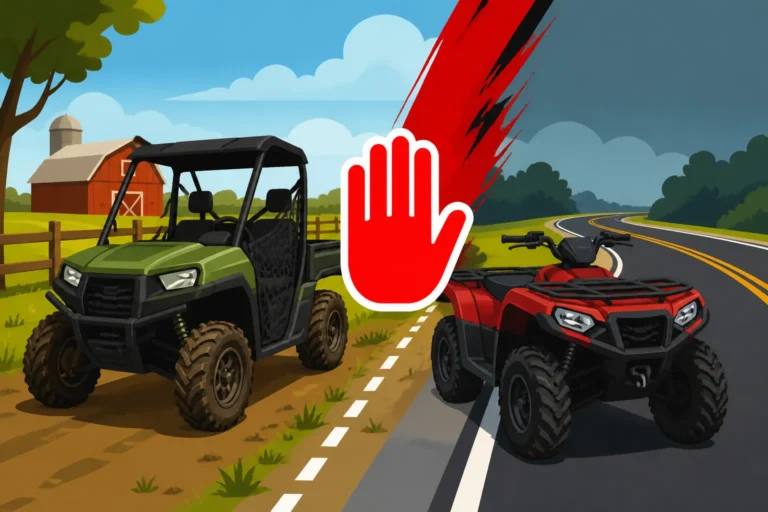
This is another area where misunderstanding can lead to trouble. The short answer for a machine strictly covered by the farm-only affidavit (the one exempting it from regular titling/decal requirements) is: NO, you generally cannot ride it on public roads. The very essence of the "farm-only" designation means its operation is confined to private agricultural land.
The only exception, as mentioned before, is if you have fulfilled the separate requirements for [Louisiana's Shoulder-Only Farm Exception], which involves a specific affidavit for limited road crossing or shoulder use between farm properties. Even then, that's not general road riding; it's a very narrow, purpose-driven allowance for agricultural operations, and again, requires a decal. If your machine is just "farm-only" in the sense of avoiding regular registration, keep it off public roads entirely. Violating this can lead to penalties and impoundment.
What if I Sell a Farm-Only Quad?
Selling a machine that has been operating under a "farm-only" affidavit is a common scenario. As the seller, your main responsibility is to provide the buyer with a clear and notarized bill of sale, and the properly signed-over title (if one was issued, even if marked "farm-exempt"). You should also make it abundantly clear to the buyer that the machine's current status is "farm-only" and that this exemption is tied to your sworn affidavit and your specific use.
The new owner will then need to decide how they intend to use the machine.
- If the New Owner Also Uses it for Farm-Only: They would need to complete their own farm-only affidavit, swear it before a notary, and present it to the OMV when they go to title the machine in their name. This ensures their declaration of farm-only use is on record.
- If the New Owner Uses it for Recreation or General Use: They will need to go through the standard titling and registration process with the OMV, including paying sales tax, the title fee, and purchasing the annual off-road decal. The previous "farm-only" status will be removed from the vehicle's record during this process.
It's crucial that as the seller, you don't imply that the "farm-only" status automatically transfers or that the buyer can just continue operating it the same way you did without their own paperwork. Every owner is responsible for their own compliance with OMV regulations. For general advice on selling, see [Selling a Titled Machine in Louisiana].
| Feature | Farm-Only Affidavit | Limited Road Use (Farm) Affidavit |
|---|---|---|
| Primary Purpose | Exempts machine from standard titling/decal for farm use. | Allows specific, limited road travel for farm work. |
| Where Used | Exclusively on private agricultural land. | On private land AND public shoulders/crossings (limited). |
| OMV Documentation | Sworn affidavit presented during titling. | Sworn affidavit + valid off-road decal. |
| Decal Required? | No (if truly never leaves private land). | Yes, a current off-road decal is mandatory. |
| Road Travel Allowed | No, unless a separate road-use affidavit is also obtained. | Yes, for agricultural purposes within 5-mile radius. |
| Penalties for Misuse | Fines, impoundment if used off-farm without registration. | Fines, impoundment if used outside defined parameters. |
Ultimately, understanding and correctly utilizing the farm-only exemption in Louisiana is about being honest and diligent with your paperwork. It's a valuable benefit for genuine farmers, but it comes with clear boundaries that must be respected. Taking the time to swear your affidavit properly and maintain compliance will save you from potential legal headaches and keep your agricultural operations running smoothly.
Disclaimer
This article is for general informational purposes only and does not constitute professional advice. Laws, prices and regulations vary by location and change over time. Consult a qualified professional for guidance on your specific situation.