Using a Texas Sales Tax Receipt at the OMV
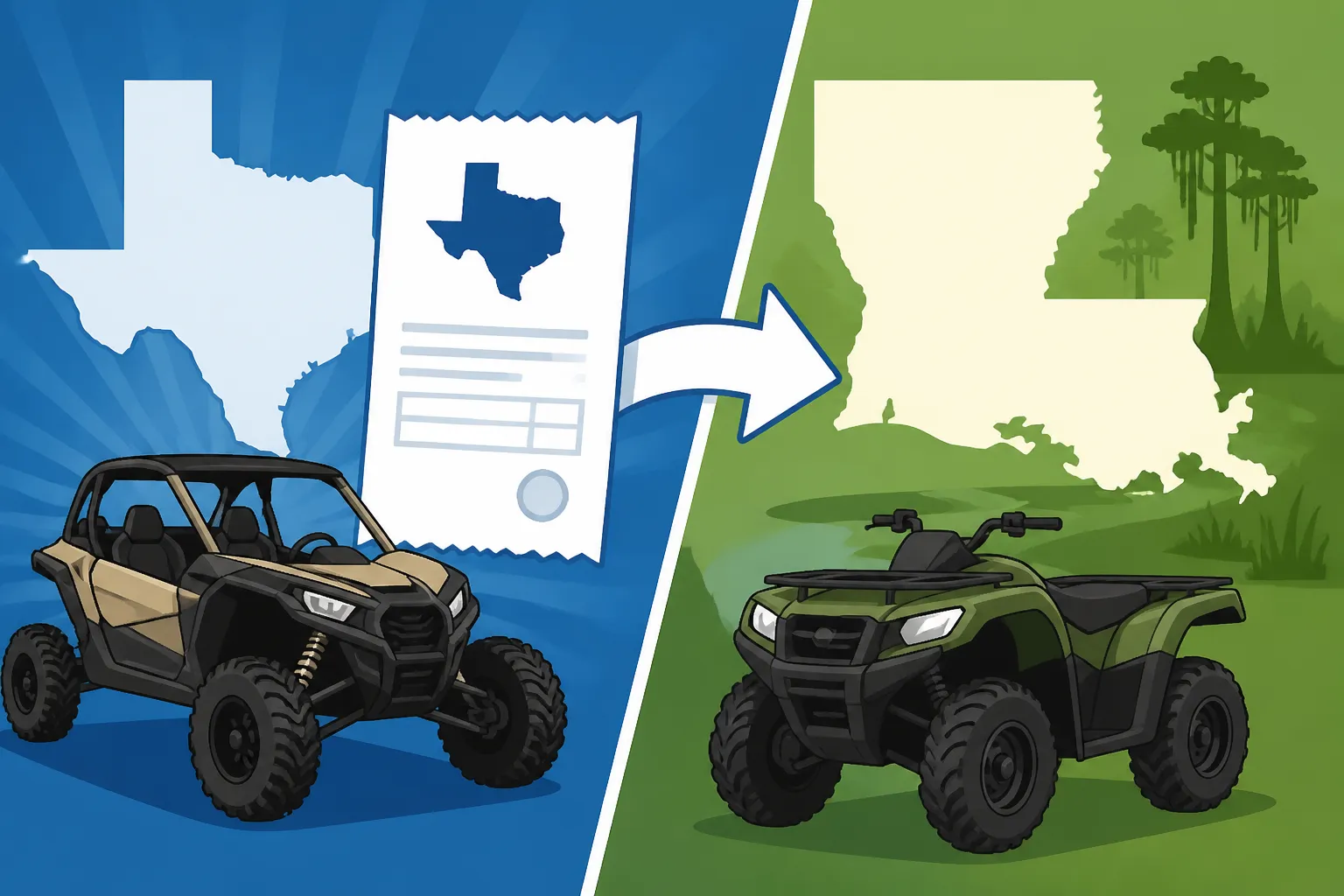
Bringing home a new-to-you off-road machine from a neighboring state, especially Texas, can feel like navigating a swamp in the dark when it comes to getting it titled and registered here in Louisiana. You've already paid sales tax in Texas, so why should you pay it again? This guide is here to untangle the confusion, explaining exactly how your Texas sales tax receipt can be used at the Louisiana Office of Motor Vehicles (OMV) and what to expect during the process.
Understanding Louisiana's Sales Tax Requirements for Out-of-State Purchases
It’s completely understandable to feel a pang of frustration when you realize that buying an ATV or UTV in Texas might not entirely exempt you from Louisiana sales tax. Many folks assume that once tax is paid, it’s paid. But different states have different rules, and Louisiana has its own approach to ensuring it collects its fair share while also trying to avoid unfairly double-taxing its residents.
The Core Principle: Avoiding Double Taxation
Louisiana isn't out to make you pay sales tax twice on the same item. The core principle behind how the OMV handles out-of-state sales tax receipts is reciprocity – they acknowledge that you've already contributed to another state's coffers. However, this acknowledgment comes with a big caveat: Louisiana wants to make sure that the tax paid in Texas meets, or at least comes close to, what you would have paid if you had bought the machine within our state lines.
Imagine you found an incredible deal on a used side-by-side from a private seller just across the Sabine River in Texas. You complete the transaction, get a bill of sale, and head back to Louisiana, thinking you’re all set. The moment you step into the OMV to get your machine titled, the question of sales tax will inevitably come up. The OMV's goal is to ensure that Louisiana receives the sales tax it's legally owed, but it will credit you for any sales tax already legitimately paid in Texas. It's a balancing act, and understanding how that balance works is key to a smooth process.
When a Texas Receipt Actually Counts
For your Texas sales tax receipt to count at the Louisiana OMV, it needs to clearly show that sales tax was, in fact, paid, and on what amount. This is generally straightforward if you purchased from a licensed dealer in Texas. They will issue an itemized invoice that explicitly lists the sales price and the sales tax collected. A typical scenario might involve you buying a new ATV from a dealership in Longview, Texas. The dealer collects Texas state sales tax and any applicable local Texas sales taxes, and this is itemized on your purchase agreement. When you bring that paperwork to a Louisiana OMV office, they will examine the receipt.
The critical factor here is the sales tax rate. Louisiana's state sales tax rate applies, and on top of that, your specific parish and any local taxing districts will add their own rates. If the combined sales tax rate you paid in Texas is equal to or higher than the combined Louisiana state and local sales tax rate for your parish of residence, then congratulations! You likely won't owe any additional sales tax to Louisiana. However, this is where many people run into surprises because Texas's sales tax rates might be different from what we're used to here. The OMV will meticulously compare the total sales tax percentage you paid in Texas to the total percentage that would be due in your Louisiana parish.
What Happens If Texas's Rate Was Lower?
This is the most common scenario for Louisiana residents buying machines in Texas. Let's say you bought that side-by-side from a dealer in Texas, and they collected a 6.25% state sales tax, plus a few local percentage points, for a total of 7.5%. You live in a Louisiana parish where the combined state and local sales tax rate for ATVs and UTVs is 9.5%. In this case, your Texas receipt does count, but it doesn't cover the full amount Louisiana expects.
The OMV will calculate the difference between what you paid in Texas and what you owe in Louisiana. This difference is known as "use tax." You will be required to pay this use tax at the OMV counter before they will process your title application. For example, if you paid $1,000 in sales tax on a $15,000 machine in Texas, but based on your Louisiana parish's combined rate, you should have paid $1,425, then you'll owe Louisiana the difference of $425. This ensures that Louisiana receives its due without you paying the full sales tax amount again. You can see why [Louisiana Requires Proof of Sales Tax First] before they'll even consider issuing a title. It's all about ensuring the tax ledger is balanced.
Navigating the OMV with Your Texas Sales Tax Receipt
So, you've done your homework and understand the tax implications. Now comes the actual visit to the OMV. Being prepared with all your documents is absolutely crucial to making this a one-trip success, rather than a frustrating series of back-and-forths.
Essential Documents to Bring Beyond the Receipt
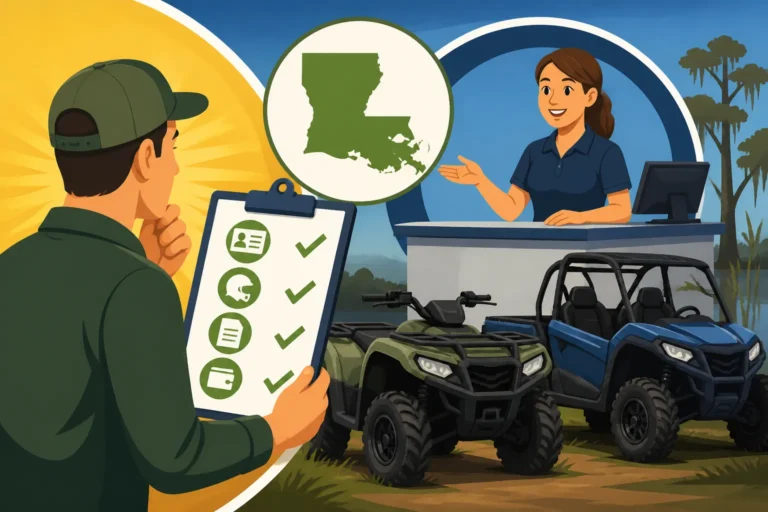
Your Texas sales tax receipt is important, but it's just one piece of the puzzle. To title and register your ATV or UTV that you bought in Texas, you'll need a comprehensive set of documents. Think of it like a checklist for a successful mission.
Here’s a breakdown of what you'll need:
- Texas Sales Tax Receipt/Dealer Invoice: This is your star document for this particular situation. Make sure it's original, clearly itemized, and shows the amount of sales tax paid.
- Manufacturer's Statement of Origin (MSO) or Certificate of Origin (MCO): If your machine is brand new, this document, provided by the dealer, is critical. It's essentially the birth certificate of your ATV or UTV. The OMV will definitely require [Louisiana Requires an MSO for a New Machine].
- Assigned Title: If you bought a used machine, you'll need the original Texas title, properly signed over to you by the previous owner. This means the seller must have completed the "assignment of title" section on the back of the title, clearly indicating you as the new owner. Missing a signature or having an incorrect name can cause significant delays. Keep in mind, [Louisiana Requires an Assigned Title for a Used One] for any used machine.
- Bill of Sale: Even if you have an MSO or an assigned title, a detailed bill of sale is always a good idea, especially for private sales. It corroborates the purchase price. For private sales, particularly of used machines, a [Louisiana Notarized Bills of Sale] can prevent headaches down the road by proving the authenticity of the transaction.
- Application for Vehicle Registration (Form DPSMV 1799): You'll fill this out at the OMV, or you can often download and complete it beforehand.
- Proof of Louisiana Residency and Identification: Bring your valid Louisiana driver's license or state ID. They’ll also need proof of your current Louisiana address, like a utility bill. You'll definitely need [Louisiana Photo ID at the Counter].
- Lien Release (if applicable): If there was a lien on a used machine you purchased, you'll need documentation proving that the lien has been satisfied.
It might seem like a lot, but having everything in order before you go will save you immense frustration.
Presenting Your Texas Sales Tax Receipt at the Counter
When you finally get to the OMV counter, take a deep breath. The clerk will ask for your paperwork. Present your complete packet, highlighting your Texas sales tax receipt. The clerk will carefully review your documents, specifically focusing on the purchase price and the sales tax paid in Texas. They'll use their internal systems to determine the combined state and local sales tax rate for your specific Louisiana parish.
Here’s what they’ll be looking for in that receipt:
- Clear Seller Information: Was it a legitimate dealership or a private seller?
- Date of Sale: This helps them understand the context of the tax rates at the time.
- Purchase Price: The total amount you paid for the ATV or UTV.
- Itemized Sales Tax: This is critical. It must explicitly state the amount of sales tax collected. An invoice that just shows a "total paid" isn't enough; it needs to break down the cost components. This reinforces why [What an Itemized Dealer Invoice Must Show] is so important.
If the sales tax paid in Texas is less than what's owed in Louisiana, the clerk will inform you of the exact "use tax" amount due. They will explain the calculation, showing you the Louisiana rate applied to the purchase price, less the amount of sales tax credited from your Texas payment. Don’t hesitate to ask questions if something isn't clear, but remember, the clerks are there to enforce state regulations.
Dealing with a Use Tax Assessment
If you do end up owing use tax, the OMV clerk will provide you with a specific amount and instructions on how to pay. This payment must be made before your title application can be fully processed. You won't be able to walk out with a Louisiana title for your Texas-purchased machine until this tax is settled.
The good news is that the OMV typically offers several convenient payment methods. You can usually pay with cash, a money order, a cashier's check, or sometimes even a debit or credit card, though card transactions might incur a small processing fee. Always check with your local OMV office beforehand about their accepted [Louisiana Title Payment Methods] to avoid any last-minute surprises. Once the use tax is paid, the clerk will continue with the rest of your titling and decal application process.
Common Hurdles and How to Overcome Them
Even with the best intentions and careful preparation, sometimes unexpected issues can pop up. Understanding these common hurdles beforehand can help you anticipate and address them proactively.
Incomplete or Missing Documentation
This is perhaps the most frequent roadblock. You might have a bill of sale from a private seller in Texas, but it's just a handwritten note that doesn't detail the sales tax or even the full purchase price clearly. Or maybe you've lost the original MSO.
For private sales from Texas, where no sales tax was collected (as is often the case with individual sellers), Louisiana will expect you to pay the full applicable sales tax based on the purchase price you declare. This is why a robust bill of sale is so important. If you’re buying from a private seller, you need a detailed document that includes:
- The full names and addresses of both buyer and seller.
- The date of the sale.
- A complete description of the ATV or UTV, including make, model, year, and crucially, the Vehicle Identification Number (VIN).
- The agreed-upon purchase price.
- A statement that the machine is sold "as-is" (if applicable).
- Signatures of both buyer and seller.
Having this document notarized, even if Texas doesn't require it, can lend it significant weight at the Louisiana OMV. While Louisiana doesn't always mandate a notarized bill of sale for private sales within the state, for an out-of-state private purchase where sales tax wasn't collected, it adds a layer of credibility. Services like LawDepot can provide excellent, customizable templates for a bill of sale, ensuring you don't miss any critical information. Creating one using a reputable service like LawDepot can give you peace of mind and simplify your OMV visit.
If an MSO or an assigned title is missing, that's a bigger problem. You generally cannot title a machine without proof of previous ownership. You would need to contact the seller to obtain a duplicate MSO from the dealer, or a duplicate title from the Texas Department of Motor Vehicles (TxDMV). This can be a lengthy process, so always ensure you have these critical documents in hand before you finalize your purchase.
Discrepancies in Machine Value
Sometimes, the OMV might question the declared value of a used machine, especially if the purchase price on your bill of sale seems unusually low. Louisiana assesses sales tax based on the "fair market value" of the vehicle, which isn't always identical to the sale price, particularly in private transactions. For instance, if you bought a nearly new, pristine ATV for a significantly reduced price from a friend, the OMV might use a recognized valuation guide to determine a more typical market value for tax purposes.
If this happens, you might be asked to provide additional evidence to support your purchase price, such as photos of the machine’s condition, advertisements for comparable sales, or even an appraisal. It’s always best to be truthful about the sale price. Attempting to understate the value to reduce sales tax can lead to penalties and further complications. The OMV has ways of cross-referencing values and can flag unusually low sales prices.
The Private Sale Predicament
Buying an ATV or UTV from a private seller in Texas presents a specific set of challenges for Louisiana titling. As mentioned, private sellers typically don't collect sales tax. This means that when you bring that machine to Louisiana, you will almost certainly be responsible for paying the entire Louisiana state and local sales tax amount at the OMV.
The key to a smooth private sale experience, beyond confirming the seller has a clear title, is a meticulously drafted bill of sale. Without a dealer invoice, this document serves as your primary proof of purchase and the declared value. Ensure it includes all the essential details mentioned above, including the VIN, purchase price, and contact information for both parties. Consider using a template from a reputable online service like LawDepot to ensure all legal bases are covered and the document will be accepted by the Louisiana OMV. A well-prepared bill of sale, especially if notarized, demonstrates the legitimacy of your purchase and helps the OMV process your transaction efficiently. This step is particularly important to protect yourself and provide all necessary documentation to the OMV.
After the Sales Tax is Settled: The Titling and Decal Process
Once the sales tax (or use tax) issue is resolved and paid, the rest of the titling and decal process is relatively straightforward. You’ve overcome the biggest hurdle, and now you’re on the home stretch to legalizing your machine in Louisiana.
Securing Your Louisiana Title
With the sales tax handled, the OMV clerk will process your application for a Louisiana title. They will verify all your ownership documents, ensuring the VIN matches and there are no outstanding liens or issues. You will be required to pay the [Louisiana ATV Title Cost], which includes the [Louisiana Title Fee of $68.50] and an [Louisiana Handling Fee of $8]. These fees are standard for any titling transaction in the state.
After all fees are paid, the OMV will begin the process of issuing your title. You typically won't walk out with the physical title in your hand that day. Instead, it will be mailed to you. The [Louisiana Title Processing Time] can vary, but generally, you can expect to receive your title in the mail within a few weeks. It’s a good idea to keep copies of all your submitted documents and the OMV receipt as proof that your application is in progress.
Getting Your ORV Decal
In addition to a title, your off-road machine will also need a Louisiana Off-Road Vehicle (ORV) decal if you plan to ride it on any state or federal lands, or even cross parish roads where permitted. The decal is how the state knows you've paid your annual usage fee. This is a separate, but equally important, registration step. You can read more about the overall process in [Louisiana ORV Decals and Titles Explained].
You’ll pay a small, yearly fee for this decal; currently, [Louisiana Charges $3 a Year for a Decal]. The OMV clerk can usually process this simultaneously with your title application. They will issue you a temporary paper decal on the spot, and the permanent sticker will be mailed to you. It's crucial to affix this decal to your machine as soon as you receive it, as [Louisiana's 30-Day Decal Deadline] means you only have a short window to do so after purchase before potential penalties kick in. Having the decal prominently displayed ensures you're compliant with Louisiana's off-road vehicle laws.
Planning Your OMV Visit
To truly make your trip to the OMV as efficient as possible, proactive planning is key. Nobody wants to spend their whole day waiting in line only to be turned away because of missing paperwork. This is why [Planning an OMV Counter Visit So It Takes One Trip] is not just a dream, it's an achievable goal with the right preparation.
Before you even leave your house:
- Double-check every document: Lay everything out and use this guide as a checklist. Do you have the original Texas sales tax receipt, MSO/assigned title, bill of sale, your ID, and proof of residency?
- Make copies: Scan or photocopy everything. This way, if anything gets misplaced or if the OMV needs to retain a document, you have a backup.
- Call ahead (optional but recommended): If you have any unusual circumstances or want to confirm the exact payment methods accepted, a quick call to your local OMV can save a lot of grief.
- Go during off-peak hours: Mid-week, mid-morning or mid-afternoon, are often the best times to avoid the longest lines.
By following these steps, you’ll be well-equipped to use your Texas sales tax receipt effectively at the Louisiana OMV and successfully title and decal your ATV or UTV, getting you one step closer to hitting our fantastic Louisiana trails.
Disclaimer
This article is for general informational purposes only and does not constitute professional advice. Laws, prices and regulations vary by location and change over time. Consult a qualified professional for guidance on your specific situation.