What a Louisiana State Trooper Can Ask to See
Riding your ATV or UTV across Louisiana's beautiful landscapes, whether for work or play, is a deeply ingrained part of our lifestyle. But sometimes, especially when you're near or crossing public roads, the thought of what might happen if a State Trooper pulls you over can be a real worry. This guide will walk you through exactly what a Louisiana State Trooper is legally entitled to ask for and inspect during an ATV or UTV stop, helping you understand your rights and responsibilities so you can ride with confidence and peace of mind.
Understanding the Context of a Trooper Stop on an ATV or UTV
It's easy to feel a knot in your stomach when those blue lights flash behind you, especially if you're on a machine typically associated with off-road adventures. But understanding why you might be stopped and whose authority you're under can make all the difference in how you handle the situation. Louisiana's laws regarding ATVs and UTVs on public roads can be a bit of a maze, leading to common misunderstandings on both sides.
Why You Might Be Stopped in the First Place
Let's face it, most of us aren't out there trying to break the law. Often, a stop happens because of a simple misunderstanding of where you can and cannot ride. Maybe you were just crossing a parish road to get from one section of your property to another, or perhaps you thought that gravel path counted as private land. Troopers are often looking for machines that appear to be operating outside of the legal framework. This could mean riding on a designated public road without the proper UTV registration, operating an ATV in a travel lane (which is almost always prohibited), or simply having an expired or missing off-road decal.
Sometimes, it's not even about illegal activity, but rather a "check-up" to ensure everyone is operating safely and legally. For instance, if you're seen on a shoulder or crossing a road, even if it's legally permissible under a farm exemption, a Trooper might still initiate a stop to verify your paperwork. It can feel like an inconvenience, especially when you know you're within your rights, but their job is to ensure public safety and compliance with the state's very specific ORV statutes. They're often just confirming that your seemingly innocent act isn't actually a violation, and the best way to handle it is to be prepared.
The Trooper's Role and Jurisdiction
In Louisiana, various law enforcement agencies have jurisdiction over off-road vehicles, and it's important to know who you're dealing with. A Louisiana State Trooper, as their name suggests, operates statewide and enforces state laws, including those specific to ATVs and UTVs. This means if you're on any public road, highway, or even the shoulder, they have the authority to pull you over. Parish Sheriffs and local police departments also have jurisdiction within their respective parishes and municipalities, enforcing both state laws and any local ordinances that might apply to ATVs and UTVs on local roads.
Then there are Game Wardens, officially known as Louisiana Wildlife and Fisheries agents. While they primarily focus on hunting, fishing, and boating regulations, they also enforce laws pertaining to the use of ATVs and UTVs on Wildlife Management Areas (WMAs) and other state-managed lands. If you're riding on a WMA, a Game Warden might be the one to stop you and check for proper permits, machine compliance (like tire size or weight limits), or adherence to seasonal closures. While a Trooper generally has broader road-use authority, all these agencies work to ensure the safe and legal operation of your off-road machine, especially when it ventures beyond purely private property.
Essential Documents a Trooper Can Request
When a State Trooper stops you, their primary concern is usually ensuring that both you and your machine are legally permitted to be where you are. This means they'll likely ask for a few key documents. Having these readily accessible and in order can significantly streamline the interaction and help you get back to your ride quickly.
Proof of Ownership and Identity
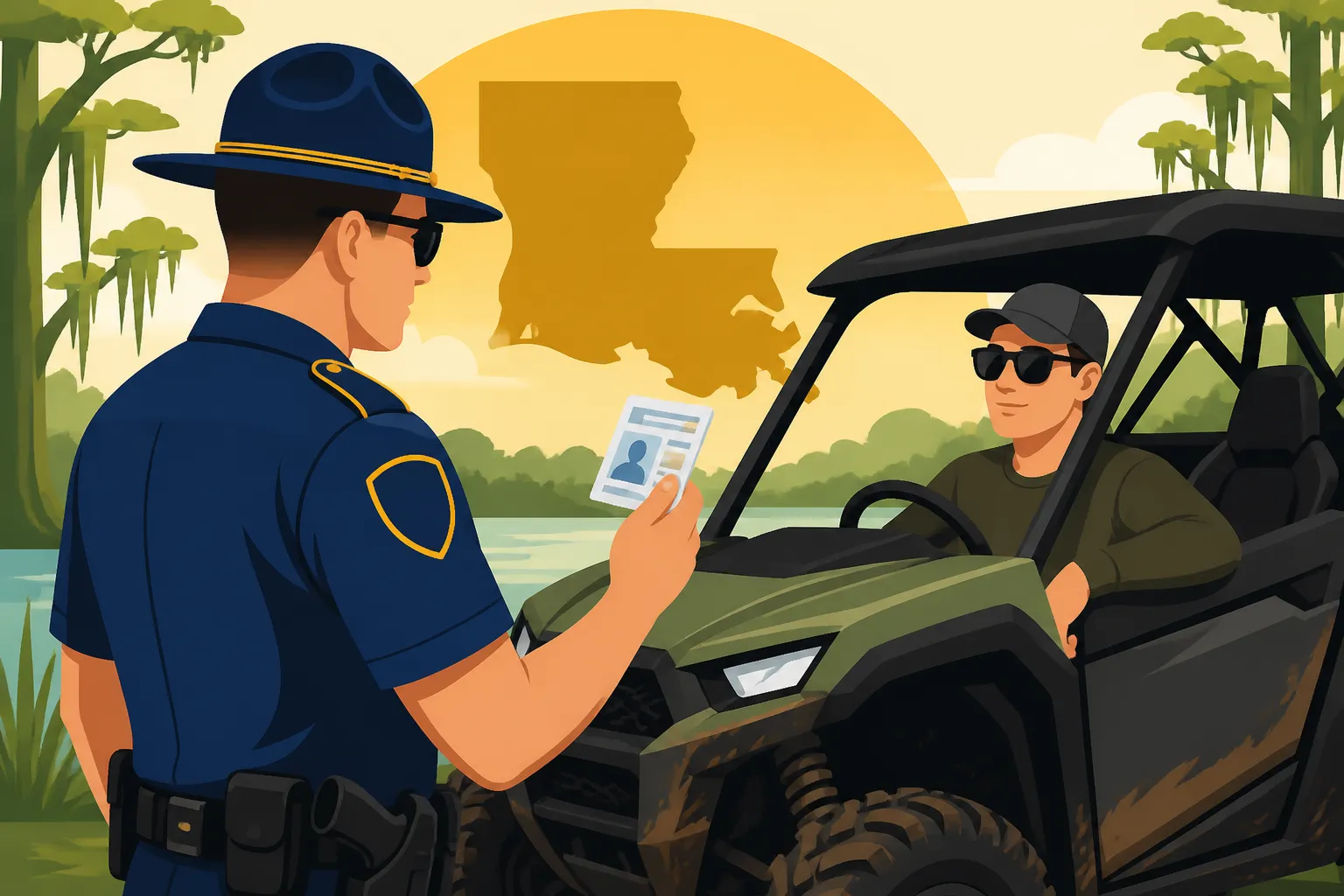
First and foremost, a Trooper will want to confirm your identity and that you are the rightful owner, or at least authorized operator, of the ATV or UTV. This means you should always have a valid photo ID, such as your driver's license, with you. Even if you're not driving on a public road, law enforcement has the right to identify individuals they interact with.
For the machine itself, you'll need to provide proof of ownership. This typically comes in the form of a title issued by the Louisiana Office of Motor Vehicles (OMV). If you bought your machine new from a dealer, it would have come with a Manufacturer's Statement of Origin (MSO) until you complete the titling process. Remember, [Louisiana Requires an MSO for a New Machine] to get your first title. If you bought it used, you'll need the signed-over title from the previous owner. [Louisiana Requires an Assigned Title for a Used One] when you purchase a pre-owned machine, ensuring a clear chain of ownership. If you've just made a private sale and are still in the process of titling, a properly executed bill of sale, especially one notarized (a service LawDepot can assist with by providing customizable templates), can serve as temporary proof of ownership. This documentation helps prevent the sale of stolen machines and verifies that you have legitimate possession.
Decal and Road Use Documentation
Louisiana has very specific rules about when and where ATVs and UTVs can be operated, especially on or near public roads, and these rules often come with corresponding documentation requirements. For most off-road machines, a current Louisiana ORV decal is mandatory for riding on designated public lands or crossing public roads. [Louisiana's Yearly Off-Road Decal] is a small sticker that signifies you've paid your dues and your machine is registered for off-road use. A Trooper will certainly look for this decal, which costs just a few dollars a year—[What the $3 Yearly Off-Road Decal Buys] is essentially your legal right to ride where permitted.
Beyond the decal, if you are operating a UTV on a designated parish road, you'll need more. Louisiana UTV street legal rules dictate that the driver must hold a Class E license (a standard driver's license)—[Louisiana Requires a Class E License] for UTV operation on public roads. You’ll also need proof of insurance that meets the state’s minimum requirements, and your UTV must be properly equipped with things like headlights, taillights, brake lights, and turn signals. For ATVs, road use is far more restricted, primarily limited to crossing or using the shoulder under very specific conditions, such as for agricultural purposes. In such cases, [Louisiana Farm Affidavits for Road Use] might be necessary to prove your exemption from the general road-use ban. Always carry these documents; it’s much easier to present them than to try and explain your situation without proof.
What a Trooper Can Inspect on Your Machine
Beyond your paperwork, a Louisiana State Trooper is also authorized to inspect various aspects of your ATV or UTV to ensure it meets safety standards and is not illegally modified. This is about protecting not only you but also other road users.
Safety Equipment and Compliance
When stopped, a Trooper will often do a quick visual check of your machine's safety features. This includes ensuring your lights are functional. [Louisiana Lighting Rules on a Machine] dictate that if you're operating near or on a road, especially during low light, your headlights and taillights must be working. They might also check your brakes to ensure they're in good working order, and they may even cast an eye over your tires. While there aren't strict state laws on lug height for general trail riding, extreme modifications could draw attention if they appear unsafe for road crossings.
Another common point of inspection, particularly for UTVs, might be helmet usage and passenger capacity. While [Is a Helmet Required on a Louisiana UTV?] is a common question, generally, adults in a UTV are not required to wear helmets unless local ordinances dictate otherwise, provided the UTV meets certain safety standards. For ATVs, however, [Louisiana ATV Helmet Rules] are often stricter, especially for younger riders. If your machine is producing excessive noise, they might also question your exhaust system, as aftermarket modifications sometimes exceed legal sound limits. It's all about ensuring your machine is safe and doesn't pose a hazard or nuisance.
Vehicle Identification Number (VIN) Verification
One of the most critical inspections a Trooper will perform is verifying your machine's Vehicle Identification Number, or VIN. The VIN is essentially your ATV or UTV's unique fingerprint, and it’s crucial for tracking ownership and identifying stolen vehicles. A Trooper will compare the VIN on your machine to the VIN listed on your title or other ownership documents. They'll look for any signs of tampering, such as grinding marks, re-stamping, or alterations.
Ensuring your VIN is clearly visible and unaltered is paramount. If a VIN is obscured, damaged, or appears to have been tampered with, it can lead to a much more involved investigation, including potential impoundment of the machine. The OMV has very specific requirements for what constitutes an acceptable VIN on a title, and [Serial Numbers the OMV Will Accept on a Title] must be intact and legible. Having your VIN easily accessible for inspection, perhaps by keeping your machine clean around that area, can make this process much smoother. This check is a vital part of law enforcement's efforts to curb vehicle theft, so cooperation here is always in your best interest.
Common Misconceptions and Best Practices During a Stop
Dealing with law enforcement can be nerve-wracking, but knowing what to expect and how to act can de-escalate potential tension and ensure a smoother process. Many riders have misconceptions about what a Trooper can and cannot do, and understanding these can help you navigate the situation effectively.
What You Are (and Aren't) Required to Do
When a Trooper stops you, your first and most important job is to remain calm and cooperative. You are required to provide your identification, as well as the necessary ownership and registration documents for your ATV or UTV. Trying to evade or argue won't help your case; it will only complicate the situation and potentially lead to more serious charges. If you're riding on a parish road and are stopped, for instance, a Trooper will expect you to be able to produce your documents. [Carrying Papers on a Parish Road] is a simple but vital step to ensure you're compliant.
However, you are not required to incriminate yourself. You have the right to remain silent if asked questions beyond basic identification and documentation. While it's always best to be polite and respectful, you don't have to engage in lengthy conversations about where you're going or what you've been doing unless you're comfortable doing so. The Trooper can inspect your machine for visible safety equipment and VIN, but they cannot conduct a full search of your person or your machine without probable cause or your consent. Knowing your rights, but also understanding your obligations, is key to a fair and efficient interaction. Remember, [Louisiana Penalties for Illegal Road Riding] can be substantial, so if you suspect you're in violation, cooperating and being honest is usually the best approach.
Preparing for an Encounter: Tips for Riders
The best defense is a good offense, and when it comes to Trooper stops, that means being prepared. First, always ensure your documentation is up-to-date and easily accessible. Consider laminating copies of your title, registration, and insurance cards, or keeping them in a waterproof pouch on your machine. While originals are ideal, a good copy can often suffice for initial verification. If you're frequently engaging in private sales or need legal forms, services like LawDepot can provide reliable, customizable templates for bills of sale or affidavits, ensuring all necessary fields are included for legal validity.
Beyond paperwork, make sure your machine is always in compliance with basic safety standards. Check your lights, brakes, and tires regularly. If you plan to use a UTV on designated public roads, ensure it meets all the equipment requirements for street legality, including mirrors and turn signals. For farm use exemptions, have your affidavit sworn and ready. Understanding the specific laws in the parishes you ride through, especially regarding local UTV ordinances, is also critical. A quick online search for "Louisiana Parish Ordinance Lookups" can often yield valuable information. By taking these proactive steps, you can significantly reduce the chances of a stressful encounter and ensure that your time on Louisiana's trails and roads is enjoyable and trouble-free.
Disclaimer
This article is for general informational purposes only and does not constitute professional advice. Laws, prices and regulations vary by location and change over time. Consult a qualified professional for guidance on your specific situation.