What to Fill In on the OMV Vehicle Application
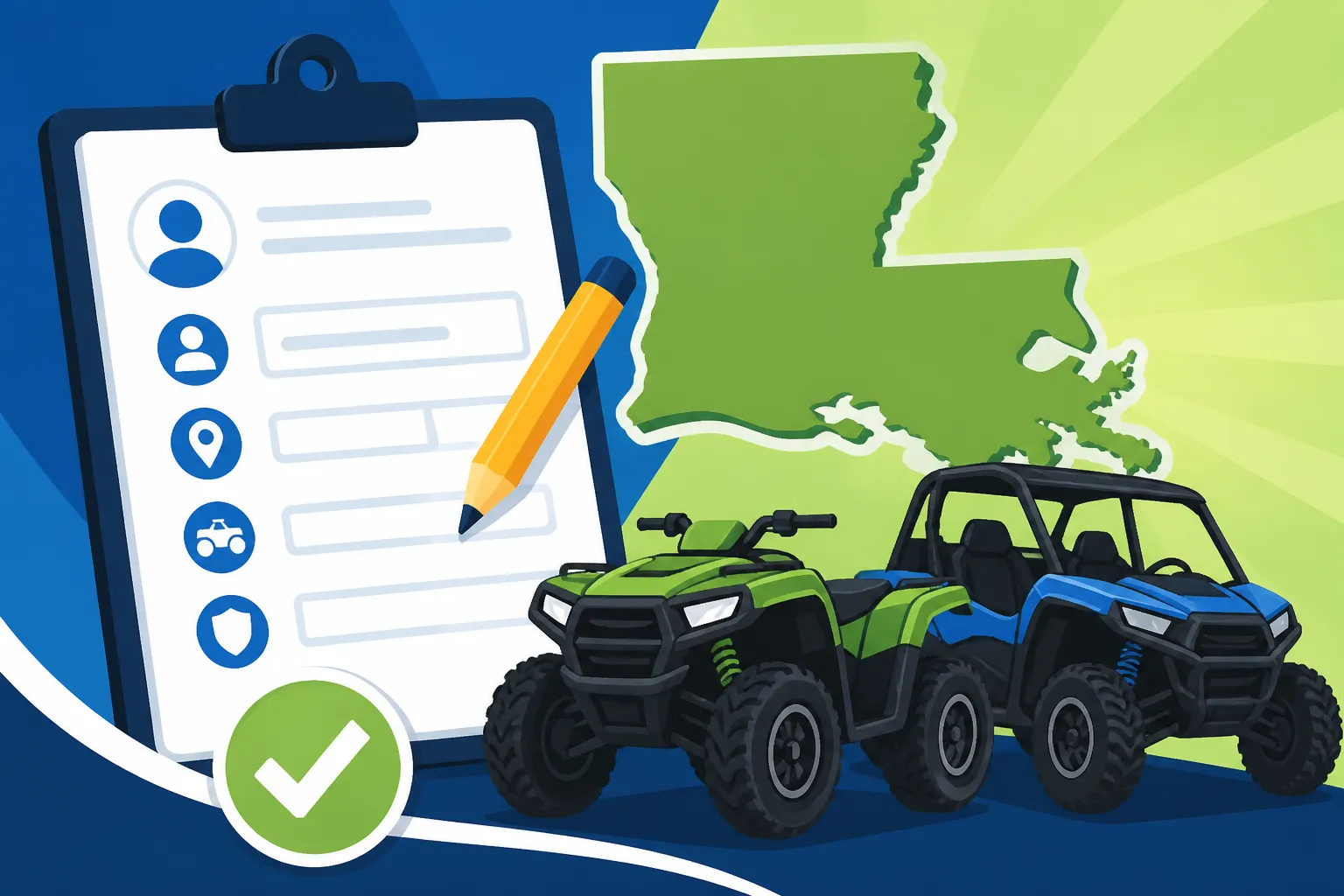
Staring at the Louisiana Office of Motor Vehicles (OMV) Vehicle Application form, often referred to as DPSMV 1799, can feel like trying to decipher an ancient scroll when all you want to do is hit the trails on your new (or new-to-you) ATV or UTV. Many riders get frustrated, wondering exactly which blanks pertain to their off-road machine and what seemingly irrelevant questions they can safely skip. This guide will walk you through each critical section of the OMV Vehicle Application, helping you understand precisely what information you need to provide to successfully title your quad or side-by-side in Louisiana, ensuring a smooth visit to the OMV.
Deciphering the OMV Vehicle Application Form
The OMV Vehicle Application, officially known as Form DPSMV 1799, is the cornerstone document for nearly every vehicle transaction in Louisiana, from cars and trucks to motorcycles and, yes, your beloved ATVs and UTVs. While much of it might seem geared towards street-legal vehicles, several sections are absolutely vital for correctly titling your off-road machine. Understanding this form is key to avoiding delays, frustrating return trips to the OMV, or even penalties for incorrect registration. It's not just about filling out blanks; it's about providing accurate information that the state needs to identify your machine, establish ownership, and ensure all taxes and fees are properly handled. Many people mistakenly think off-road vehicles fly under the radar, but Louisiana has clear rules for titling these machines.
Why This Form is Crucial for ATVs and UTVs
Even though your ATV or UTV might spend its entire life off public roads, Louisiana law still requires it to be titled. This form serves as the official record of your ownership with the state. Without a proper title, proving ownership can become a nightmare if your machine is ever stolen, needs to be sold, or if you ever need to settle an estate. The OMV uses the information on this application to process your title, record any liens, and ensure you've paid the necessary sales tax. Think of it as your machine's birth certificate and deed rolled into one. It’s also the first step towards getting your annual [Louisiana ORV Decals and Titles Explained] and getting ready for the trails.
Navigating the Document's Sections
The DPSMV 1799 is a multi-page document, and not every single box will apply to your ATV or UTV. The trick is knowing which sections are mandatory and which you can leave blank or mark as "N/A" (Not Applicable). We'll break it down section by section, but generally, you'll focus on providing accurate vehicle identification, personal owner details, and financial transaction information. Don't be intimidated by the sheer number of fields; with a little guidance, you'll realize it's more straightforward than it first appears. One of the most common reasons for an OMV application to be rejected is incomplete or inaccurate information, so taking the time to understand each part is well worth it.
Detailing Your ATV or UTV's Identity
The core of your OMV Vehicle Application will revolve around identifying your specific ATV or UTV. This means providing precise information about the machine itself, ensuring there's no confusion about what you're titling. Accuracy here is paramount, as even a single digit off on a VIN can cause significant headaches and delay the entire process. The OMV needs to clearly link the title to the exact machine you own, and this section is where you make that connection.
Vehicle Identification Number VIN
This is arguably the most critical piece of information on the entire form. The Vehicle Identification Number (VIN) is your machine's unique identifier, much like a social security number for people. For ATVs and UTVs, the VIN is typically 17 characters long, a combination of letters and numbers. You'll usually find it stamped on the frame of your machine, often near the front suspension, under the seat, or on the engine casing. Double-check this number against your Manufacturer's Statement of Origin (MSO) for new machines or the assigned title if you're buying a used one. [Louisiana Requires an MSO for a New Machine] and [Louisiana Requires an Assigned Title for a Used One] are essential documents for this very reason. Make sure the VIN on your application matches these documents exactly.
Make, Model, Year, and Type of Vehicle
Beyond the VIN, you'll need to specify the make (e.g., Honda, Polaris, Can-Am), the specific model (e.g., Foreman, RZR, Maverick), and the year your machine was manufactured. The form will also ask for the "Vehicle Type." For an ATV, you'll likely select "ATV" or "All-Terrain Vehicle." For a side-by-side, you might choose "UTV" or "Utility Task Vehicle." This helps the OMV categorize your machine correctly. Be as specific as possible. If there's a specific sub-model or edition, include that detail if space allows or if it's listed on your MSO or title. This information helps the OMV confirm the correct classification for titling purposes and ensures you're applying for the right type of vehicle title.
New or Used Status and Odometer Reading
The application will ask if the vehicle is "New" or "Used." This distinction is important because the required supporting documentation often differs. A new machine will require the MSO, while a used one needs a properly assigned title from the previous owner. You'll also encounter a field for "Odometer Reading." While most ATVs and UTVs track hours rather than miles, you should enter the current hour meter reading if that's all your machine has, or leave it blank if neither is present. If your machine does have an odometer, record the mileage accurately. Make sure to note if the reading is in miles or hours if there's an option. This information helps establish the condition of the machine at the time of purchase or titling.
Providing Your Personal and Ownership Details
This section is all about you – the owner (or owners!) of the ATV or UTV. The OMV needs to know who is legally responsible for the machine, where they reside, and how to contact them. Accuracy in these fields is just as important as the vehicle details, as any discrepancies can lead to delays or issues with receiving your title in the mail. Have your government-issued photo ID ready, as the information on the form should match it exactly. [Louisiana Photo ID at the Counter] is a must-have when you visit the OMV.
Applicant Information and Contact Details
You'll need to fill in your full legal name, current residential address, mailing address (if different), date of birth, and driver's license number. It’s also wise to include your phone number and email address, as these can be invaluable if the OMV needs to contact you regarding your application. If there are multiple owners, each owner will need to provide their information. For instance, if you and your spouse are buying a side-by-side together, you’ll both be listed. [Louisiana Title With Two Owners] has specific requirements, and this form is where those details are first captured. Ensure that the address you provide is where you currently reside, as this is used for official correspondence, including sending you your new title.
Joint Ownership and Legal Structures
If your ATV or UTV will be owned by more than one person, the application provides space for additional owners. You'll typically need to specify how the ownership is structured, such as "with rights of survivorship" if you want the machine to automatically pass to the co-owner upon your death. If the machine is being titled in the name of a business, trust, or other legal entity, you'll need to provide the entity's full legal name, tax identification number (EIN), and the name and title of the authorized signatory. This can sometimes require additional supporting documentation, so it's always best to check with the OMV beforehand if you're titling under a non-individual name.
Signature and Certification
Before submitting the form, you (and any co-owners) must sign and date the application. By signing, you're certifying that all the information provided is true and accurate to the best of your knowledge. This is a legal declaration, so always double-check everything before putting your pen to paper. In some cases, particularly for certain affidavits or bills of sale submitted alongside the application, a notary public might be required. If you're using a private bill of sale, for example, remember that [Louisiana Notarized Bills of Sale] can offer an extra layer of protection and verification. Services like LawDepot can help you generate professional and legally sound documents, including notarized bills of sale or affidavits, which can then be submitted with your OMV application.
Sales, Tax, and Lien Information
This section covers the financial aspects of your ATV or UTV acquisition. Louisiana has specific rules regarding sales tax and how it's collected, as well as how liens from financing companies are recorded. Incorrectly completing this part can lead to significant delays, as the OMV will not issue a title until all sales tax obligations are met. This is often the most confusing part for new owners, but it’s crucial.
Purchase Price and Sales Tax Details
You'll need to list the total purchase price of your ATV or UTV. This amount is used to calculate the sales tax owed to the state and parish. The application will ask for details about where and when the machine was purchased. If you bought it from a licensed dealer, they typically collect and remit the sales tax on your behalf, and you'll present a dealer invoice as proof. If you purchased it from a private seller, you are responsible for paying the sales tax directly to the OMV when you apply for the title. [Louisiana Requires Proof of Sales Tax First] before a title will be issued, so don't overlook this critical step.
Proof of Sales Tax Payment
Whether you paid the sales tax to a dealer or directly to the OMV, you must provide proof of payment. For dealer purchases, an itemized dealer invoice clearly showing the sales tax collected is usually sufficient. For private sales, the OMV will assess and collect the sales tax at the counter when you submit your application. It’s important to understand that the sales tax is based on the purchase price, and you’ll want to be prepared to pay it. [Why Tax Proof Comes First] is a common question, and it's because the state wants its revenue before officially recognizing your ownership with a title.
Lienholder Information (If Applicable)
If you financed your ATV or UTV, the bank, credit union, or financing company will hold a lien on your machine until the loan is paid off. The OMV application has a specific section to record this lien. You’ll need to provide the full legal name of the lienholder, their address, and possibly their OMV lien code. Your lender should provide you with this information. Once the lien is recorded on your title, it serves as public notice that another party has a financial interest in your machine. This protects the lender and is a standard part of vehicle titling with financing. [Louisiana Title and Lien Records] are meticulously maintained, and accurate information on this form is crucial for that process. There is also typically an additional fee to record a lien, often separate from the title fee.
Avoiding Common Mistakes and Ensuring a Smooth Process
Navigating government paperwork can be daunting, and the OMV Vehicle Application is no exception. However, by being prepared and double-checking your work, you can significantly reduce the chances of encountering frustrating delays. The goal is to make your OMV visit a one-trip success story, so you can spend less time in line and more time on the trails. [Planning an OMV Counter Visit So It Takes One Trip] is definitely achievable with the right preparation.
Checklist of Required Documents
Before you even step foot in an OMV office, create a checklist of all necessary documents. This will typically include:
- The completed OMV Vehicle Application (DPSMV 1799).
- Your Manufacturer's Statement of Origin (MSO) if new, or the properly assigned title if used.
- A bill of sale, especially for private party purchases. This should include the buyer and seller's names, the VIN, purchase price, and date of sale. Using a template from a service like LawDepot can ensure all necessary details are included.
- Proof of sales tax payment (dealer invoice or be prepared to pay at the OMV).
- Your valid Louisiana driver's license or state ID.
- Proof of residency (e.g., utility bill, if your address on the application differs from your ID).
- Any lienholder information (if financed).
- Payment for title fees, handling fees, and any applicable sales tax.
- Cash, check, or card to cover the [Louisiana Title Fees for an ATV], [Louisiana Handling Fee of $8], and other related costs.
Double-Checking Your Information
Before you hand over your application, take a moment to review every single field you've filled out.
- VIN: Does it match your MSO/title exactly? One wrong character can invalidate the entire application.
- Names and Addresses: Do they match your photo ID and proof of residency?
- Purchase Price: Is it accurate and consistent with your bill of sale or dealer invoice?
- Signatures: Have all required parties signed and dated the form?
- Supporting Documents: Are all necessary attachments present and accounted for?
A simple mistake, like a transposed number or a missed signature, is one of the most common reasons for an application to be rejected, forcing you to start over or return another day.
Submitting Your Application and Payment
Once you’re confident your application is complete and accurate, you can submit it to the OMV. You can generally do this in person at your local OMV office. Be prepared to pay the necessary fees, including the title fee, handling fee, and any remaining sales tax. The OMV generally accepts various [Louisiana Title Payment Methods], including cash, checks, or major credit/debit cards, but it's always a good idea to confirm with your specific office beforehand. Once processed, you'll typically receive a temporary registration, and your official Louisiana title will be mailed to you within a few weeks. Remember, [Louisiana Titles ATVs Through the OMV], not the Department of Wildlife and Fisheries, so ensure you're at the correct agency.
Disclaimer
This article is for general informational purposes only and does not constitute professional advice. Laws, prices and regulations vary by location and change over time. Consult a qualified professional for guidance on your specific situation.