Bringing a Dog to a Private Mud Park
A dog may be welcome at one Louisiana mud park and barred from another, even during the same kind of event. Before you load the machine, confirm the park’s current pet policy and decide whether the noise, heat, crowds, and muddy conditions are manageable for your dog. A little planning can prevent a denied entry or an unsafe day.
Confirm the park’s pet policy before you leave
Private parks set their own rules for pets. A dog-friendly campground or event does not necessarily mean dogs can go near riding areas, staging zones, or spectator spaces. Policies can also differ between ordinary riding days and busy event weekends. Check the specific park’s current rules before setting out, rather than relying on a social media comment or an old visit report.
Ask the park directly if its written policy leaves anything unclear. Useful questions include:
- Are dogs allowed on the property, and are they allowed in the camping area, spectator areas, or riding zones?
- Must dogs remain on a leash, and are there restrictions on leash length?
- Are there breed, size, or number-of-pets limits?
- Does the park require proof of vaccinations or a particular type of identification?
- Are dogs permitted in cabins, RV sites, bathhouses, shuttle vehicles, or other facilities?
- Are there designated places for walking dogs and disposing of waste?
- Does the pet policy change during events or when the park is crowded?
- What happens if a dog is loose, aggressive, or disruptive?
Get clear answers about the areas where you plan to spend time. “Pets allowed” is not detailed enough if your plan depends on bringing the dog to the trailhead or watching from a particular spot. Some parks may allow leashed dogs in camp but prohibit them from riding areas. Others may not allow pets at all. Don’t assume an animal can stay in a vehicle or trailer as a workaround; ask the park and plan for the dog’s welfare as well as its entry.
The park’s own rules matter more than what another visitor says was allowed on a previous trip. If you are attending with a group, make sure the person who booked the site or event has checked the pet policy, too. For a broader look at the conditions a private facility may set, see Louisiana Private Park Waivers and Rules. For pet-specific questions, Louisiana Private Park Pet Rules is the more focused reference.
| Before the trip | What to confirm |
|---|---|
| Entry | Whether dogs are permitted on the property and whether there are event-specific restrictions |
| Access | Which areas a dog may enter, including campsites, spectator areas, and riding zones |
| Restraint | Leash requirements and any rules about tethering or unattended pets |
| Health | Whether the park asks for vaccination records or other documentation |
| Facilities | Whether dogs may enter cabins, restrooms, or other buildings |
| Cleanup | Where dogs may be walked and how waste must be handled |
| Backup plan | Where the dog can safely stay if conditions or the policy make attendance unsuitable |
A private park’s pet permission is not a special riding permit, and it does not change rules that apply to public land or public roads. The park decides what it allows on its property; separate land-access and riding rules still apply elsewhere. If your trip includes public riding areas as well as a private park, check the rules for each destination rather than assuming one permission covers the whole outing.
Decide whether the setting is safe for your dog
Even when a park welcomes dogs, the setting may not suit every animal. Mud parks can be loud and busy, with engines revving, machines moving through camp, music, crowds, and sudden changes in activity. Deep mud, standing water, rough ground, and hot weather can add risks. Think about your dog’s temperament, fitness, age, and health—not only whether the park will admit it.
Noise and crowds are a serious consideration. A dog that is comfortable at home may become frightened by engine noise or a large gathering. A frightened dog can bolt, pull free, or move toward machines or other dogs. If your dog is reactive, easily startled, or not accustomed to crowds, leaving it at home with a trusted caregiver may be the safer choice.
Heat needs special attention in Louisiana. Dogs can overheat during a hot, humid day, particularly when they are exercising, anxious, or unable to rest in shade. Make sure there will be reliable access to cool shade and fresh water, and be ready to leave if your dog is struggling. Panting heavily, weakness, confusion, vomiting, or collapse can signal an emergency; seek veterinary help promptly if you are concerned. For broader warm-weather planning, Packing for Humid Heat covers conditions riders should prepare for.
Mud and water also deserve caution. A dog may slip on a slick surface, get tangled in equipment, or tire quickly while trying to follow people around a large property. Don’t assume that a pond, ditch, or muddy pool is safe for swimming or drinking. Keep your dog away from unknown water and from places where machines are entering or leaving. If your dog gets coated in mud, rinse it off before it can lick mud or grit from its coat and paws.
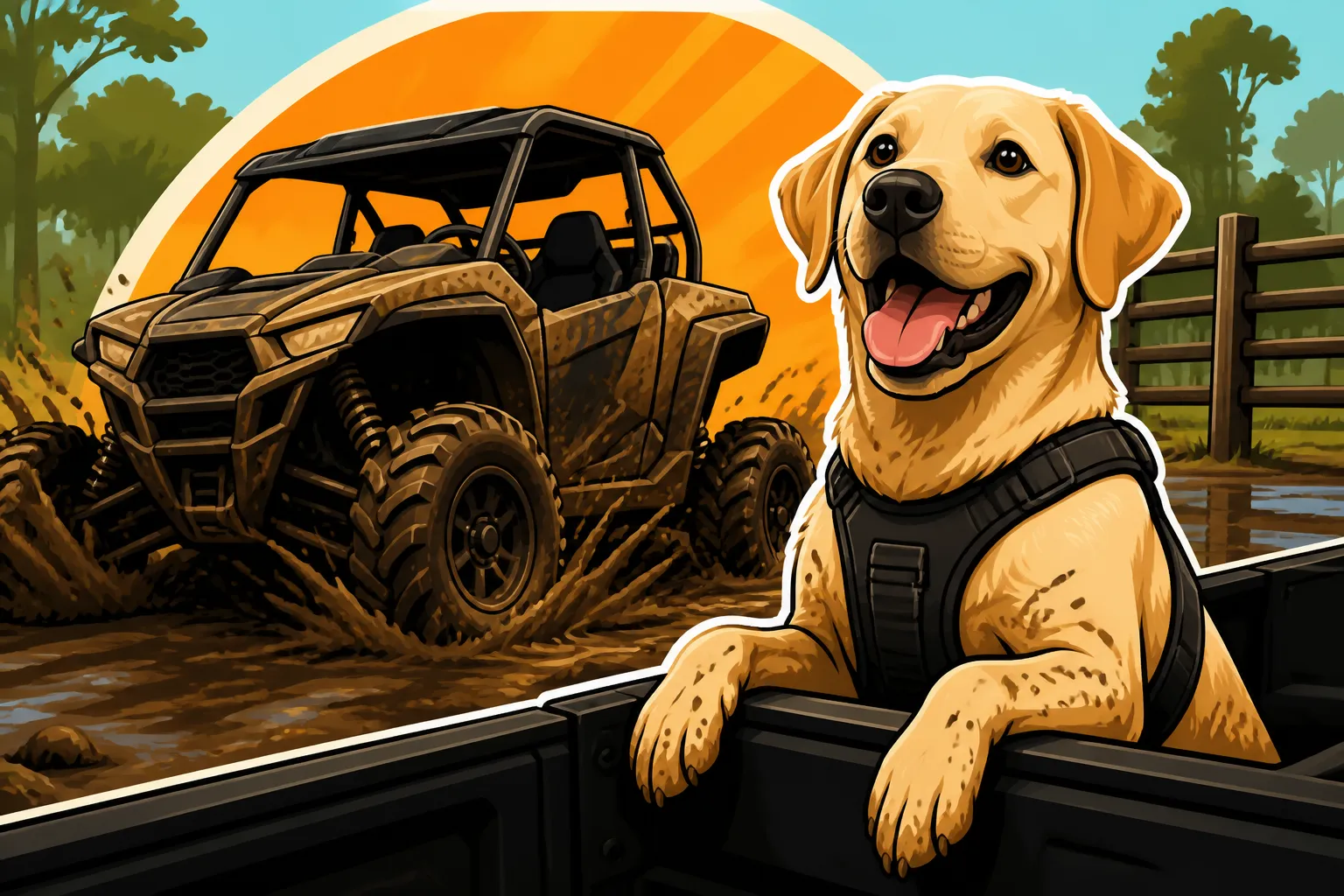
Keep the dog out of the riding area unless the park explicitly says dogs may be there and you can control the situation safely. A leash does not make it safe for a dog to stand beside a moving ATV or UTV. Don’t bring a dog along as a passenger on a machine unless the vehicle and park rules explicitly allow it and you have a safe, appropriate restraint arrangement. A lap, a cargo rack, or a loose tether is not a dependable way to protect an animal during a sudden stop or rollover.
A dog should not be left alone in a parked vehicle while people ride. A vehicle can heat up quickly, and a dog in distress may not be noticed in time. An open window is not a reliable substitute for safe temperature control and supervision. If your plan leaves no one available to stay with the dog, or no suitable place for it to rest, reconsider bringing it.
Prepare for the visit and keep your dog under control
If the park confirms that dogs are allowed and the environment seems suitable, prepare as carefully as you would for any busy outdoor outing. Bring a sturdy leash and a well-fitted collar or harness with current identification. Carry enough fresh water for the dog and a portable bowl. Pack waste bags, towels, a cleanup plan, and any regular food or medication your dog needs. Bring a secure way to keep the dog in a shaded resting area that meets the park’s rules.
Before leaving, make sure your dog’s identification is readable and that you can reach the phone number linked to it. Keep a recent photo on your phone in case the dog gets separated from you. If the park asks for vaccination records, have them available in the format it accepts. Don’t assume that being vaccinated removes the need to keep your dog away from unfamiliar animals or shared water sources.
On arrival, take time to check the surroundings before letting the dog out. Look for nearby traffic routes, machine staging and loading areas, crowds, loose dogs, and places where the dog could slip or escape. Keep the dog with a responsible adult rather than tying it up and walking away. A tether can become tangled, and a dog left without supervision may be frightened, approached by another animal, or exposed to conditions you haven’t noticed.
Follow the park’s directions for walking and waste disposal. Pick up waste promptly and dispose of it as instructed. Keep your dog from approaching riders, children, other pets, and people who may not want contact. Don’t let it wander through campsites or sniff food, coolers, or gear without permission. Good manners matter at a shared event: Riding Etiquette at a Mud Event offers related guidance for making room for other visitors.
Check your dog often instead of waiting for it to show obvious distress. Look for limping, excessive panting, unusual quietness, repeated attempts to escape, or reluctance to move. Offer water and a break in a calm, shaded spot. If the dog is uncomfortable, move away from the noise and activity; if it does not settle, end the visit. Don’t keep it at the park just because entry has already been paid for.
It can help to have a simple plan with everyone in your group:
- Choose one adult who is responsible for the dog at all times.
- Agree on a safe, permitted place for the dog to rest.
- Keep the dog out of machine traffic and away from moving equipment.
- Set a check-in routine for water, shade, and signs of stress.
- Decide in advance who will take the dog home if conditions are not working.
The person watching the dog should not also be expected to ride, spot machines, or handle other tasks that make constant supervision difficult. If nobody can take that role, it may be better not to bring the dog.
Make a backup plan and know when to leave
A good plan includes an option other than bringing the dog into an unsuitable setting. Arrange a trusted caregiver, boarding option, or other safe place before travel if the park’s rules are uncertain or your dog may not tolerate the event. This is especially helpful for a long drive: discovering at the entrance that pets are not allowed can leave you with few safe choices.
If you bring the dog, agree on a clear point at which you will stop the visit. That might be when the dog cannot settle, when the shade is inadequate, when the grounds become too crowded, or when weather turns uncomfortable. Don’t wait for an emergency before deciding the outing is over. If your dog appears overheated, injured, disoriented, or unusually weak, move it to a safer place and contact a veterinarian or emergency veterinary service as appropriate.
Camping overnight adds more considerations. Confirm whether the dog may stay at your site, whether it must be leashed there, and whether quiet-hour rules apply. Keep barking and roaming under control, and don’t leave the dog alone at camp while you go riding. Review the facility’s camping conditions in advance; Louisiana Private Park Camping Rules and Louisiana Private Park Quiet Hours can help you think through questions to ask.
A dog-friendly outing can work when the park allows it, the dog is comfortable around the setting, and a person can supervise it throughout the visit. But permission is only the starting point. A dog’s safety depends on distance from machines, access to shade and water, control around crowds, and the willingness to leave if the conditions are wrong. Confirm the policy directly, pack for the dog rather than just the riders, and keep a backup plan ready.
Disclaimer
This article is for general informational purposes only and does not constitute professional advice. Laws, prices and regulations vary by location and change over time. Consult a qualified professional for guidance on your specific situation.