Night Riding Inside a Private Mud Park
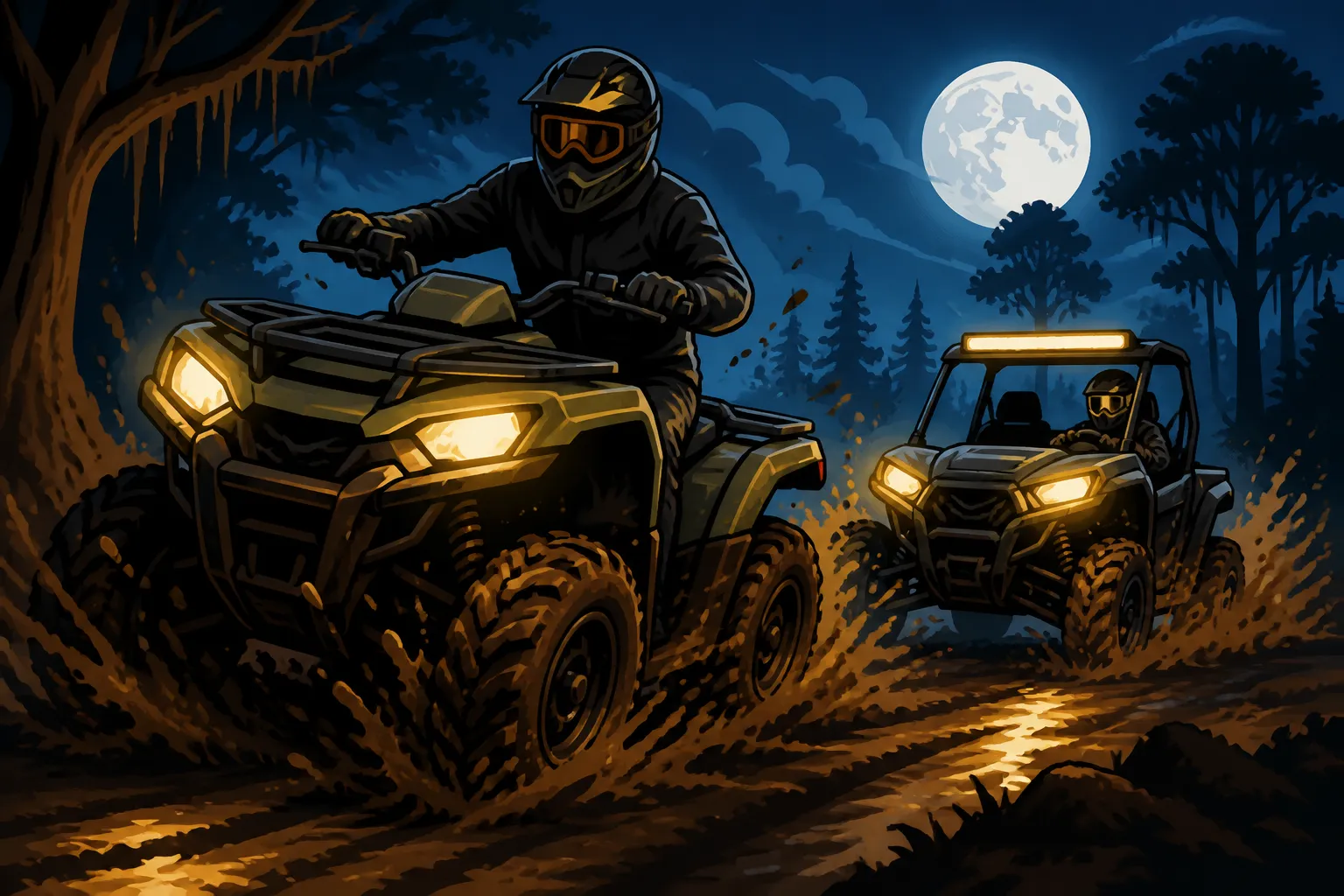
Night riding at a private mud park can be a different experience from riding in daylight, but darkness changes what you can see, how quickly you can react and how easily other riders can spot you. The park’s rules matter as much as your equipment. Before unloading, confirm when night riding is allowed, which areas stay open and what the park requires of riders and machines.
Confirm that night riding is allowed
A private park can set its own operating rules, including whether riders may use trails after dark, which routes are open and when riding must stop. Do not assume that an event listing, campground access or an open gate means every trail is available at night. Rules can vary between parks and may change for a particular event or because of conditions.
Check the park’s current rules before you tow, and ask staff if anything is unclear. Useful questions include:
| Ask the park | Why it matters |
|---|---|
| Is riding allowed after dark tonight? | Some parks permit it only during certain events or hours. |
| Which trails or areas remain open? | A route that is open during the day may close at night. |
| Are headlights and tail lights required? | The park may have equipment rules beyond what you normally use. |
| Are there restrictions on passengers or vehicle types? | Rules may differ for ATVs and side-by-sides. |
| Are there quiet hours or limits on revving? | Campground and event rules may restrict noise. |
| What should riders do after a breakdown or crash? | Know how to reach staff and where to wait safely. |
| Are there special rules for children or new riders? | Age, supervision and helmet policies are park-specific. |
Look for the park’s written rules, not just an informal answer from another visitor. If the park has a waiver, event information sheet or posted trail map, read it before riding. Louisiana Private Park Waivers and Rules can help you think through the rules to review before entering a private riding area.
Night access is also different from permission to ride anywhere nearby. A private park’s authorization applies to the areas it makes available; it does not give you permission to use a neighboring property, a public road or a closed trail. Public-road rules still matter if your route involves leaving the park or crossing a road. For background, see Louisiana UTV Street Legal Rules by Parish.
Prepare your machine and gear for darkness
Your main goal is to see the riding surface and be seen by others. Mud, standing water, branches and vehicle traffic can make nighttime visibility worse than it appears from the parking area. Check lights before riding, and do not rely on a phone screen or a small handheld light as your only source of illumination.
Check lighting before you leave camp
Test the headlights, tail lights and brake lights, if your machine has them. Look for loose connections, cracked lenses, mud over the light, or a beam that points too high or low. A light can switch on but still provide poor visibility if its lens is dirty or its mounting has shifted.
Ask the park what it expects for a machine without factory lighting, or if you are considering an auxiliary light. Extra brightness is not automatically safer: a poorly aimed or excessively bright lamp can impair the view of riders coming toward you. Secure any added light so it cannot rotate, snag on brush or come loose over rough ground.
Carry a backup light, but keep it in addition to working machine lights, not instead of them. A headlamp can help with a minor repair or with walking back to camp, while a small flashlight can help you check a tire or find equipment. If you shop for replacement lighting or straps through a retailer such as Amazon, confirm the product’s fit, water resistance and mounting method before relying on it at the park.
Wear gear that helps others see you
A helmet and suitable protective clothing are important in low light, but dark gear can make a rider harder to pick out against trees, mud and shadows. Reflective details or high-visibility panels can help others notice your body position. Keep reflective material clean enough to work, and avoid attaching loose items that might catch on the machine.
Follow the park’s helmet and passenger rules rather than assuming they match another riding area’s policies. See Louisiana Private Park Helmet Rules and [Louisiana Private Park Age Minimums] for related questions to check with the park.
Carry a charged phone in a protected pocket or case, but do not count on reliable cell service. Before setting out, find out whether staff use a phone number, radio channel, check-in point or another method to respond to problems. Tell someone in your group where you plan to ride and when you expect to return.
Ride differently after dark
A familiar route can feel unfamiliar at night. The light beam shows only part of the terrain, and deep ruts or branches may be harder to recognize until you are close. Reduce speed enough to stop within the distance you can clearly see. If the trail is too muddy, crowded or unfamiliar to ride safely, turn back rather than trying to keep up with a faster group.
Use a pace that leaves room for sudden stops. Keep extra distance behind the rider ahead, especially in dust, spray or thick mud. A machine’s lights can illuminate the ground for its driver while leaving a following rider with glare and shadows, so avoid riding close to another vehicle’s rear lights.
Stay on routes the park has designated as open. Do not cut through a closed area to avoid a bottleneck, and do not assume that a trail you know from daylight is still safe after rain or heavy use. Ask staff about hazards such as steep banks, water crossings, soft shoulders, active equipment or areas being closed for recovery work.
Make group riding easy to follow
Agree on a simple plan before leaving camp. Choose a lead rider who knows the route and a sweep rider who stays behind the group. Decide on a regroup point, a way to signal a stop and what the group will do if someone becomes separated. Keep the group small enough that riders can stay in sight without pressuring anyone to ride faster.
When you stop, move fully out of the travel path if the area allows it. Avoid waiting just beyond a rise, corner or muddy turn where an approaching rider may not see you in time. If you need to get off the machine, make sure the rest of the group knows before anyone walks into the trail.
If a rider breaks down, have the group pause in a safe location and contact park staff using the method the park provides. Do not leave a rider alone in an unfamiliar area, and do not attempt a difficult recovery in darkness without the right equipment and experience. A tow strap or winch is useful only when used safely and in a location where recovery is permitted.
Keep noise and campsite rules in mind
Night riding can carry sound farther across a quiet campground. Avoid unnecessary revving, repeated engine starts and loud music, and follow the park’s quiet-hour policy. Louisiana Private Park Quiet Hours explains why a riding area’s campground rules can be important even when the trails remain open.
Alcohol can also affect judgment, balance and reaction time. Do not ride impaired, and make sure riders in your group understand that a party or event atmosphere does not remove the need to follow park rules. For more on the subject, see Louisiana Private Park Alcohol Rules.
Know when to stop and what to do next
Stop riding if your lights fail, visibility becomes poor, you are unsure which route is open or conditions exceed your ability. Tell the group, move to a safe place away from other traffic and contact park staff if needed. Continuing to ride because the machine still runs is not a good substitute for being able to see the trail and communicate with other riders.
A nighttime crash or mechanical problem can be harder to manage if nobody knows your route. Keep your phone charged, carry basic first-aid supplies, and know where the park office, gate or staffed area is. If someone is injured, prioritize immediate safety and contact emergency services when appropriate; let park staff know as well.
Before each ride, use a short check:
- Confirm that night riding is permitted and identify open trails.
- Test lights and inspect the machine for loose parts or mud-covered lenses.
- Wear a helmet and gear suitable for the conditions and park rules.
- Set a group pace, lead and sweep rider, regroup point and contact plan.
- Turn back if the trail, visibility or your equipment is no longer safe.
Night riding can be enjoyable when the park allows it and everyone is prepared, but it is not a reason to push past your limits. The safest plan is to check the rules, ride a known open route at a controlled pace and stop when you cannot see or communicate well enough to continue.
Disclaimer
This article is for general informational purposes only and does not constitute professional advice. Laws, prices and regulations vary by location and change over time. Consult a qualified professional for guidance on your specific situation.