What the $30 Kisatchie Annual Pass Covers
A Kisatchie annual pass can simplify repeat visits, but it is easy to mistake a recreation-fee pass for an all-access permit. The key is knowing which fees it covers, where it works, and what still needs to be arranged separately before you unload an ATV or UTV.
What the $30 Kisatchie annual pass covers
The Kisatchie annual forest pass is intended to cover recreation-use fees at participating fee sites in Kisatchie National Forest. Instead of paying a daily fee at each covered site, you use the annual pass according to its terms. The useful point for frequent visitors is that one pass can apply across Kisatchie fee sites rather than being limited to just one location.
That does not mean every trailhead, campground, or riding area in the forest charges a fee or accepts the pass. Some places may be free, while others may have separate charges or rules. Look for fee information for the specific trailhead or recreation site you plan to use, and check that the pass covers that site before setting out. The forest’s Louisiana Forest Trail Use Passes can be a helpful starting point for understanding the different pass and fee arrangements.
| What you’re planning to do | What the annual pass may cover | What to check separately |
|---|---|---|
| Visit a participating Kisatchie fee site | The covered recreation-use fee, subject to the pass terms | Whether the site accepts the pass and how it must be displayed |
| Ride an OHV route | A site fee where the route’s access point is a participating fee site | Whether the route is open, whether your machine is allowed, and any additional requirements |
| Use a free trailhead or recreation area | Usually no fee is due at a free site | Whether another pass or permit applies |
| Camp overnight | Not necessarily the camping charge | Reservation rules, campsite fees, and stay limits |
| Ride on a Louisiana Wildlife Management Area | Not automatically covered by a forest pass | WMA permits, designated routes, and seasonal restrictions |
| Ride at a private park | No, unless the park specifically says otherwise | The park’s admission, waiver, and operating rules |
The pass is about eligible recreation fees. It does not replace an OHV’s paperwork, authorize riding on every forest road, or grant permission to travel on land outside the fee site. Riders looking for route details can also review Kisatchie National Forest OHV Trails in Louisiana and the broader Louisiana ATV Trails: Where to Ride.
The pass’s value depends on where and how often you go. If you make more than one visit to covered sites, it may be more convenient than paying a daily charge each time. If you ride only once, compare the pass’s current cost with the applicable daily fee before buying. The listed annual pass amount is $30, while the listed daily forest fee is $5 per vehicle; fees and terms can change, so confirm the current amounts and coverage with the official forest information before you travel.
What the pass does not cover
An annual pass is not a general ATV or UTV permit. It does not make a closed trail open, convert a road into an OHV route, or remove vehicle restrictions. The forest may restrict access by season, weather, maintenance work, fire conditions, or other site-specific rules. Check Louisiana Forest Trail Status Pages before towing to a trailhead, and review Louisiana Trail Closures and Seasons when planning a visit.
It also does not automatically pay for services that have their own charges. Overnight camping, reservations, special events, and other optional uses may have separate conditions or costs. Even if you have a valid annual pass, check the individual site’s current rules rather than assuming that every forest activity is included.
The pass does not replace these other requirements:
- Machine ownership and paperwork: A recreation pass is separate from Louisiana title and off-road decal requirements. See Why an ATV Needs Both a Title and a Decal if you need to sort out that distinction.
- Route and vehicle eligibility: A trail’s rules may limit which types, sizes, or configurations of machines can use it.
- WMA access rules: Wildlife Management Areas have their own permits, designated routes, and seasonal restrictions. A Kisatchie forest pass should not be treated as a WMA permit.
- Private-land permission: A forest pass does not authorize riding across private property or on a private road.
- Local road-use rules: It does not make an ATV or UTV street legal or authorize riding on a public road.
That distinction matters because riders sometimes use “pass,” “permit,” and “registration” as if they mean the same thing. They do not. The annual forest pass addresses recreation fees at eligible sites. A machine’s title and decal address separate state requirements, and public-land or road access may involve still other rules.
If your route includes land outside Kisatchie National Forest, check the rules for each land manager. A pass that is valid at a forest fee site does not automatically work at another federal, state, parish, or privately operated recreation area.
How to use the pass without a wasted trip
Before buying or relying on the pass, match it to the place you intend to visit. The pass name alone is not enough; check the site’s fee information and the current pass terms. Some sites may not charge an entrance or day-use fee at all, while some locations may have separate charges. The annual pass is most useful when you know that the fee you would otherwise pay is one the pass actually covers.
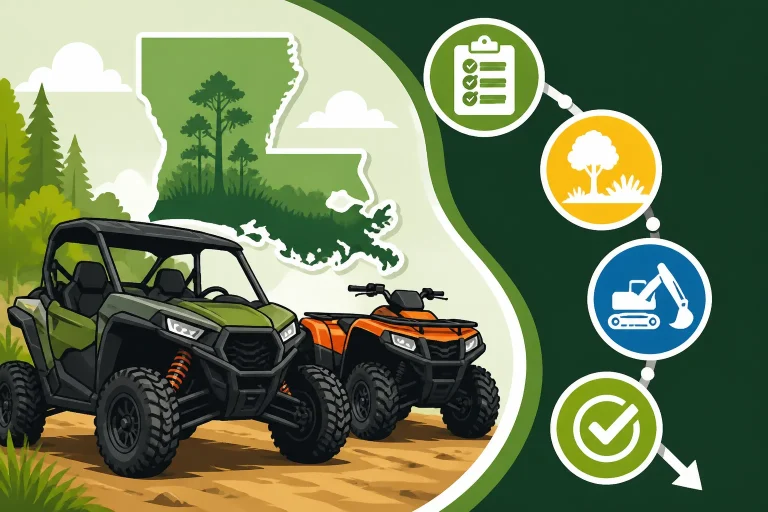
A practical planning sequence is:
- Choose your destination and trailhead. Identify the exact access point, not just the forest or parish. A large forest can include multiple recreation sites with different access details.
- Check the current site information. Confirm whether the location charges a fee, accepts the annual pass, and has any vehicle or activity restrictions.
- Check trail status. Look for closures, seasonal limits, weather-related notices, and route-specific rules.
- Review the pass terms. Confirm its validity period, eligible sites, display instructions, and whether it applies to your visit or vehicle in the way you expect.
- Keep proof accessible. Follow the instructions for displaying or presenting the pass. Keep any confirmation or receipt available in case it is needed.
- Check other land rules. If the planned route reaches a WMA, a private area, or a public road, verify those separate requirements before riding.
For purchase and validity details, see How to Buy a Louisiana Forest Pass and Your Annual Pass Runs From the Month You Buy. Annual and daily options do not work the same way, so Louisiana Daily vs Annual Forest Fees can help you decide which fits your plans. If you are going for a single day, check the payment method at the trailhead and whether the daily charge is assessed per vehicle. The related Paying the $5 Day Fee at a Forest Trail explains why it is worth checking the payment setup before arrival.
A pass does not guarantee that a trail is open or that a particular machine can use it. Before loading, check the latest route information and machine restrictions. If a trailhead is closed or a route is unsuitable for your vehicle, having a pass will not solve the access problem.
Is the annual pass worth it for ATV and UTV riders?
It can be worthwhile for people who expect to visit participating fee sites repeatedly, especially if the covered daily charges would add up to more than the annual pass cost. It may also make visits simpler because you do not have to handle a separate daily payment every time, provided you follow the pass’s use and display instructions.
It may not be the best choice for a rider planning one visit, someone who mostly uses free access points, or a group whose members expect one pass to cover multiple people or machines without checking the terms. Do not assume a pass purchased for one vehicle automatically covers an entire group. Confirm who or what the pass applies to, and make sure each person in the group understands which site fees remain due.
Use this simple comparison:
- A few visits to covered fee sites: Compare the total daily charges with the current annual pass cost.
- One visit: Check the daily fee first; buying an annual pass may not save money.
- Mostly free trailheads: A pass may provide little financial benefit, though it could still be useful for other covered sites.
- A mixed trip: Check each stop separately. A forest pass may cover a fee at one location but not a campground, WMA, private park, or other destination.
- Uncertain riding plans: Wait until you have chosen your destinations, then confirm whether they accept the pass.
The best approach is to treat the pass as a way to pay eligible recreation fees, not as a blanket permission slip. Verify the current fee, eligible sites, and pass instructions through official forest information before leaving home. Then separately confirm your trail is open and your machine meets its rules. That small check can prevent both an unnecessary purchase and a frustrating arrival at a closed or non-participating site.
Disclaimer
This article is for general informational purposes only and does not constitute professional advice. Laws, prices and regulations vary by location and change over time. Consult a qualified professional for guidance on your specific situation.