When a Quad Is Only Part-Time Farm Equipment
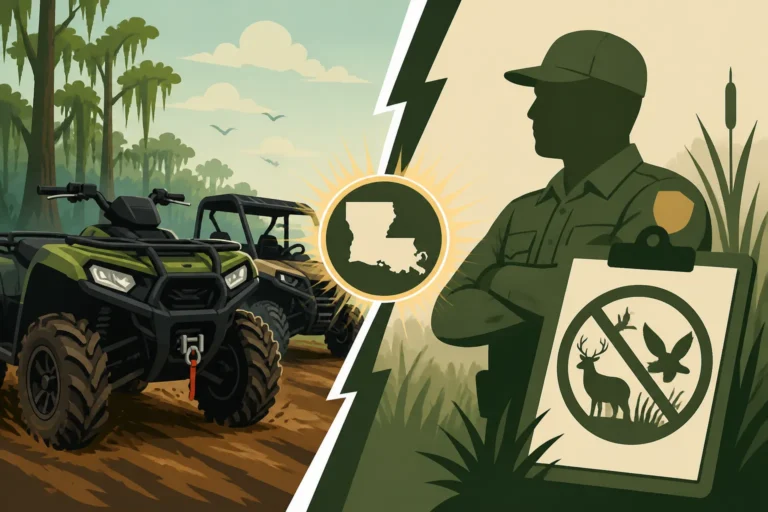
It's a common scenario for many folks across Louisiana: you've got an ATV or UTV that's a workhorse on the farm, helping with chores, checking livestock, or getting crops in. But then, on the weekends, that same machine might pull double duty, taking you out hunting, exploring a local mud park, or simply riding trails with the family. This dual life often leaves owners scratching their heads, wondering if their "part-time farm equipment" still qualifies for the agricultural exemptions they've heard about. This guide is here to untangle that confusion, helping you understand when your multi-purpose quad needs to be titled and decaled, and when it might truly be exempt.
The Nuance of "Farm Equipment" in Louisiana: More Than Just a Field Machine
Let's be real, the lines can get blurry when you use your quad for both work and play. It's easy to assume that because a machine spends most of its time on farm duties, it's automatically exempt from other rules. However, Louisiana's regulations have a very specific view of what constitutes "farm equipment" for exemption purposes, and that view is often much narrower than what we might personally consider "mostly farm use."
Defining "Bona Fide Agricultural Purposes"
When the state talks about "farm equipment" in the context of exemptions, they're generally referring to machines used solely for what they call "bona fide agricultural purposes." This isn't just a fancy phrase; it means direct, legitimate involvement in farming operations. Think activities like planting and cultivating crops, harvesting, tending to livestock, managing irrigation systems, or maintaining farm infrastructure exclusively on the farm property itself. The spirit of these laws is to support actual farming operations, making it a little easier for those who depend on their land for a living.
For example, if you have a quad that you only use to drive out to your pastures to check on your cattle, haul feed, or spray a field for pests, and it never leaves your property for recreational purposes, it's much more likely to fall squarely within this definition. The state isn't trying to burden working farmers with unnecessary red tape for machines that are genuinely integral to their livelihood.
When the Farm Line Blurs: The "Part-Time" Predicament
Here's where the rubber meets the road for many Louisiana quad owners. It's incredibly common for a machine to pull triple duty: helping with farm chores, serving as a hunting vehicle in deer season, and maybe even making an appearance at a charity poker run or a local mudfest. The phrase "it's mostly for the farm, but…" is something the OMV and law enforcement hear all the time. That "but" is the critical turning point where the farm exemption often starts to unravel.
The core frustration here is understandable. You've invested in a robust machine that can handle tough tasks, and naturally, you want to get the most out of it. However, once your quad starts to serve these other, non-agricultural purposes—even occasionally—it typically steps outside the strict definition of a purely farm-exempt vehicle. Assuming a full farm exemption simply because the majority of its use is agricultural can unfortunately lead to unexpected fines, impoundment, or other penalties down the line if you're ever stopped or questioned. It's a tricky balance, but understanding these nuances upfront can save you a lot of headache.
The Decal Dilemma: When Your Farm Quad Needs an ORV Sticker
Many Louisiana quad owners think if their machine is used for farm work, it's completely exempt from decals. While there are some very narrow exceptions, the moment your ATV or UTV leaves the strict confines of farm-only use, or even just touches certain public areas, an ORV decal becomes a must-have.
Shoulder Riding and the Farm Exemption's Limits
This is one of the most common misunderstandings in rural Louisiana. You might use your quad daily on your property, but occasionally you need to ride the shoulder of a public road to get from one section of your farm to another, or to reach a neighboring field. While Louisiana law does offer a limited [Louisiana's Shoulder-Only Farm Exception] for agricultural purposes, it's not a blanket pass. This exception often comes with specific stipulations, such as needing an agricultural affidavit sworn before a notary, proving the machine is used solely for farm work within a [Louisiana's 5-Mile Farm Radius] of the farm property. Even then, the law often still requires the machine to display a valid off-road decal if it's operating on a public right-of-way, even for legitimate farm use.
The nuance here is crucial: simply being a "farm machine" doesn't automatically mean you can ride any public shoulder without a decal. For that limited farm-related road use, you'll still need to ensure you meet all criteria, including often having the proper documentation like [Louisiana Agricultural Affidavits for an ATV] and, yes, that off-road decal. Failing to meet these specific requirements means you're technically riding illegally, even if your intent is purely agricultural.
Recreational Use and the Mandatory ORV Decal
Here's the simpler rule: if your quad sees any recreational use, it absolutely needs an ORV decal. This includes taking it to a friend's camp for a hunting weekend, joining a club ride on designated trails, or hitting up one of Louisiana's many popular mud parks. The moment your ATV or UTV is used for anything beyond direct agricultural production on your own land, it sheds its "farm-exempt" status and falls under the general off-road vehicle regulations.
The decal itself is more than just a sticker; it signifies that you've registered your machine with the state and contributed to the fund that helps maintain and create riding opportunities across Louisiana. It's proof that you're operating your machine legally when it's off the farm and engaged in recreational activities. The cost of a [Louisiana ORV Decal Cost] is minimal compared to the [Louisiana Penalties for No Decal] you could face if you're caught riding without one. Ensuring your machine displays its decal correctly, typically on the front fender or a visible location as outlined in [Louisiana Decal Placement on a Machine], is a simple step to avoid trouble when you're out enjoying the trails.
Titling Your Multi-Use Quad: Establishing Clear Ownership
Beyond the annual decal, the question of a title is often a major source of confusion for owners of part-time farm equipment. Many assume that if a machine mostly stays on private land, a formal title isn't really necessary. However, for any ATV or UTV that isn't exclusively used for bona fide agricultural purposes, obtaining a title is not just a good idea—it's often a legal requirement and a critical step in proving ownership.
Why a Title is Essential Even for Part-Time Farm Machines
While it's true that a machine used 100% of the time, 100% exclusively on private land for farm operations might not always be pursued for titling by all owners, the moment your quad steps into the realm of recreational use, is bought or sold, or crosses property lines for non-farm activities, a title becomes incredibly important. The title is your legal proof of ownership, a document that links you directly to your specific vehicle through its unique VIN. Without it, selling your machine becomes difficult, proving it's yours if it's stolen is nearly impossible, and even dealing with insurance claims can be a nightmare.
In Louisiana, the Office of Motor Vehicles (OMV) is the agency responsible for issuing these titles for off-road vehicles. It’s important to remember that [The OMV Titles ATVs, Not the Wildlife Department]; the OMV handles vehicle registration, including off-road machines. Even if your quad spends most of its time hauling feed, if it also takes you on hunting trips or trail rides, having a clear, legal title is essential for protecting your investment and ensuring you can legally transfer ownership down the road. The [Louisiana ATV Title Cost] is a one-time fee, a small price for clear proof of ownership.
Paperwork for the Road Ahead: Sales Tax, Bills of Sale, and the OMV
Getting your multi-use quad titled involves a few key pieces of paperwork, and understanding them before you head to the OMV can save you a world of time and frustration. One of the most critical steps is providing proof that sales tax has been paid. Louisiana is very firm on this: [Louisiana Requires Proof of Sales Tax First] before a title will be issued. Whether you bought your machine new from a dealer or used from a private seller, you'll need to show evidence that the state and local sales taxes have been accounted for. If you purchased it out-of-state or in a private sale where tax wasn't collected, be prepared to pay use tax at the OMV counter.
Another cornerstone of the titling process, especially for used machines, is a comprehensive bill of sale. For private sales, the OMV generally requires a [Louisiana Notarized Bills of Sale]. This document serves as legal proof of the transaction, detailing who sold the machine to whom, the purchase price, the date, and crucially, the vehicle identification number (VIN). A well-drafted bill of sale protects both the buyer and the seller. Many people find resources like LawDepot incredibly helpful for generating a robust, legally sound bill of sale that includes all the necessary details and prompts for notarization, ensuring it meets OMV requirements and protects your interests. When you go to the OMV, you'll also need to complete forms like [What to Fill In on the OMV Vehicle Application] and present a valid [Louisiana Photo ID at the Counter]. Gathering all these documents meticulously beforehand is key to a smooth process.
Navigating the OMV Process and Avoiding Costly Mistakes
The rules around ATVs and UTVs in Louisiana can feel like a maze, especially when your machine straddles the line between farm work and recreation. Making sure you understand when your part-time farm equipment needs to be formally registered and titled is paramount to avoiding fines, legal trouble, or even having your machine impounded.
When to Transition from "Farm-Exempt" to "Registered ORV"
My advice to any owner of a quad or UTV that sees any use beyond strict, bona fide agricultural purposes on their own land is this: plan for the decal and the title. Even if you only occasionally take your machine off the farm for a recreational ride, a hunting trip, or to a designated riding area, that’s enough to negate the full farm exemption. It’s far better to be proactive and compliant than to risk encountering law enforcement and facing unexpected consequences. The state’s definition of "farm-exempt" is quite narrow, and it’s always safer to assume your multi-purpose machine falls under the standard ORV rules if there's any ambiguity in its use.
Consider the potential headaches: getting pulled over on a parish road for simply crossing to a different part of your property, only to find you're facing [Louisiana Penalties for Riding Without a Decal]. Or worse, an incident where your machine is impounded for being unregistered, leading to the hassle and cost of retrieving it, as outlined in [Louisiana Impoundment for No Decal]. These situations can turn a fun day of riding or a productive day on the farm into a stressful and expensive ordeal. If you're honest with yourself about your machine's diverse roles, the choice to register and title it becomes much clearer.
Preparing for Your OMV Visit
A trip to the OMV doesn't have to be a multi-day saga of forgotten documents. With a little preparation, you can often make it a one-and-done visit. Here’s a checklist to help you get everything in order for your title and decal application:
- Proof of Ownership: For a new machine, you'll need the Manufacturer's Statement of Origin (MSO). For a used machine, you'll need the previous owner's properly assigned title.
- Bill of Sale: If you bought your machine from a private seller, make sure you have a detailed, [Louisiana Notarized Bills of Sale]. This is where a resource like LawDepot can be invaluable, helping you create a robust bill of sale that covers all the necessary legal ground and includes spaces for notarization, ensuring it’s accepted by the OMV.
- Proof of Sales Tax Payment: As we discussed, [Louisiana Requires Proof of Sales Tax First]. Have your dealer invoice showing tax collected, or be ready to pay use tax at the counter.
- Valid Photo ID: Don't forget your [Louisiana Photo ID at the Counter], like your driver's license.
- Payment for Fees: Be prepared to pay for your title, decal, and any other associated fees (e.g., handling fees). Check current rates before you go.
- Completed Application: While you can often fill this out at the OMV, having reviewed [What to Fill In on the OMV Vehicle Application] beforehand can speed things up.
Remember, the OMV clerks are there to help, but they can only process your request if you have all the required documentation. Understanding [Louisiana Title Processing Time] can also help manage your expectations. By gathering everything meticulously, you’ll be much more likely to have a smooth and efficient experience, allowing you to get your quad legally ready for both its farm duties and its recreational adventures. For more tips on making your visit efficient, check out [Planning an OMV Counter Visit So It Takes One Trip].
What Your Part-Time Farm Quad Needs
To clarify the requirements for your quad that serves both farm and recreational purposes, here's a quick comparison of what's generally needed versus a machine used strictly for farm work.
| Feature / Requirement | Purely Farm-Only Use (on private land) | Part-Time Farm Use (with recreational or limited road use) |
|---|---|---|
| OMV Title | Not always strictly enforced if never leaves private land/sold | Required for clear ownership and resale. [Louisiana ATV Title Cost] applies. |
| Louisiana ORV Decal | Not typically required if solely for farm work on private land | Required for any recreational use or shoulder riding beyond strict farm-exempt zones. [Louisiana ORV Decal Cost] applies. |
| Proof of Sales Tax | Required for titling the machine. | Required for titling the machine. [Louisiana Requires Proof of Sales Tax First]. |
| Bill of Sale | Good practice for proof of ownership, even if not titled. | Required for titling. [Louisiana Notarized Bills of Sale] recommended, LawDepot can help. |
| Agricultural Affidavit | May be needed for limited public road shoulder access (even if exempt from decal). [Louisiana Agricultural Affidavits for an ATV] | Potentially needed for specific, limited farm-related shoulder use, but decal usually still needed. |
| Photo ID at OMV | Not applicable if not titling/decaling. | Required for any OMV transaction. [Louisiana Photo ID at the Counter]. |
| Public Road Use (Shoulder) | Highly restricted; specific farm exemption applies, but decal often needed if on public right-of-way. | Generally allowed only on designated parish roads, with decal and often additional requirements. [Louisiana's Shoulder-Only Farm Exception] |
Disclaimer
This article is for general informational purposes only and does not constitute professional advice. Laws, prices and regulations vary by location and change over time. Consult a qualified professional for guidance on your specific situation.