Louisiana Trails That Allow Dirt Bikes
Finding a Louisiana dirt-bike trail can be harder than loading the bike: a route may be marked for off-highway vehicles but still have seasonal closures, access rules, or limits on which machines can use it. This guide explains where to start, how Louisiana’s main riding areas differ, and what to check before you haul your bike to a trailhead.
Louisiana trails and riding areas to check for dirt-bike access
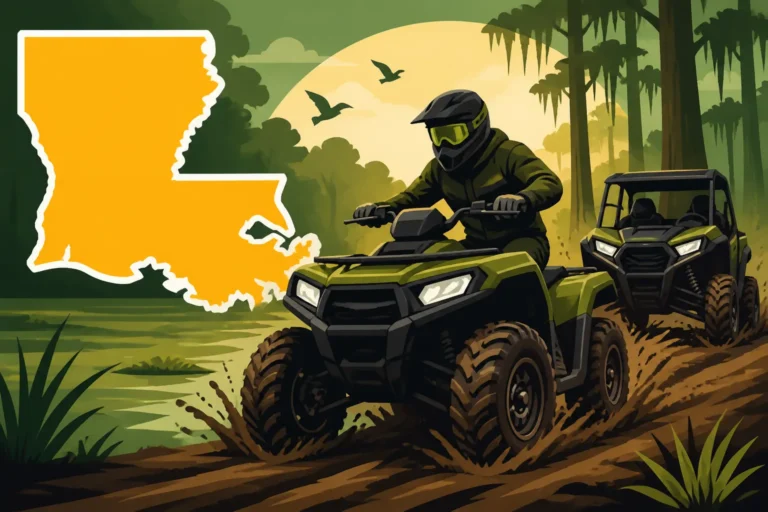
Louisiana’s best-known public off-highway riding is concentrated in the Kisatchie National Forest. Several trail systems there are commonly associated with motorized recreation, including motorcycle riding. Still, a trail name or an OHV label is not a substitute for checking the specific route’s current designation and posted rules.
The options below are useful starting points, not a promise that every segment is open to every bike on every day. Before heading out, confirm that dirt bikes are allowed on the route you plan to ride, that it is open, and that your machine meets any applicable requirements.
Sandstone Multiple-Use Trail
The Sandstone Multiple-Use Trail is in the Kisatchie National Forest’s Calcasieu Ranger District, in the forested area near Forest Hill. It is a popular place to investigate if you want a dedicated motorized trail experience rather than a ride that depends on private-land access. Its wooded setting and connected trail routes can make it appealing to riders looking for a full day outside.
Sandstone is not an all-season, arrive-whenever destination. Seasonal closures can affect motorized access, and wet weather or maintenance may change what is rideable. Check the forest’s current trail information before making the drive, especially if you are travelling from Alexandria, Lafayette, or farther away. For more detail on this area, see [Louisiana's Sandstone Multiple-Use Trail] and [Sandstone Trail Closes to Motors January Through April].
Plan for the practical parts of the day, too. Bring water, a charged phone, basic tools, and a way to navigate if you lose cell coverage. A mapping app such as onX Offroad can help with trip planning and understanding the surrounding area, but it should not replace official signs or trail-closure notices. If a barrier or posted notice says a route is closed, follow it even if a digital map still shows the trail.
Vernon Enduro Trail
The Vernon Enduro Trail is another Kisatchie-area option worth checking if you ride a dirt bike. It is associated with the forest near Leesville and offers a different setting from Sandstone. Riders coming from western Louisiana may find it a more convenient starting point, while visitors from elsewhere should compare the drive, trail status, and access requirements before choosing a destination.
Do not assume that the word “enduro” means every section is open or suitable for every rider. Trail conditions, closures, and difficulty can vary, and a route that feels manageable in dry weather may become more demanding after rain. Review the current information and ride within your ability. The dedicated overview [Louisiana's Vernon Enduro Trail] is a useful place to start your research.
If this is your first visit, keep the day flexible. Identify the trailhead and parking area in advance, tell someone where you are riding, and agree on a check-in time if you are travelling with a group. Riders using onX Offroad or another navigation tool should download or save the information they need before entering areas with unreliable service. A map is useful; it is not a reason to leave marked trails or ignore closures.
Claiborne Multi-Use Trail
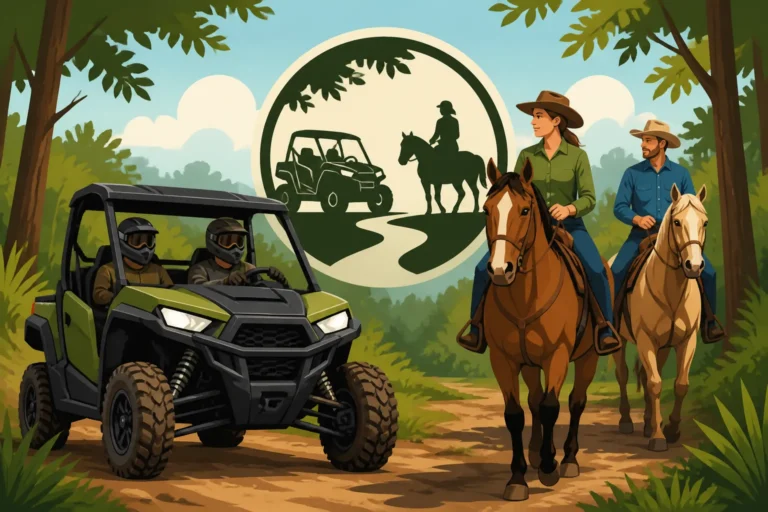
The Claiborne Multi-Use Trail system near Homer is another Louisiana forest-trail option to investigate. Because it is described as a multi-use system, expect to share space where permitted with other trail users, and pay attention to signs that identify the route and the kinds of use allowed. Do not assume that one trail designation automatically applies to every nearby road or track.
A good visit starts with checking current access information and identifying exactly where you intend to ride. If a map shows several connected routes, verify that each segment is open to motorized use before treating it as one continuous ride. The overview [Louisiana's Claiborne Multi-Use Trail] can help you understand the area, while [Louisiana Forest Trail Status Pages] is relevant when you need to check for changing access conditions.
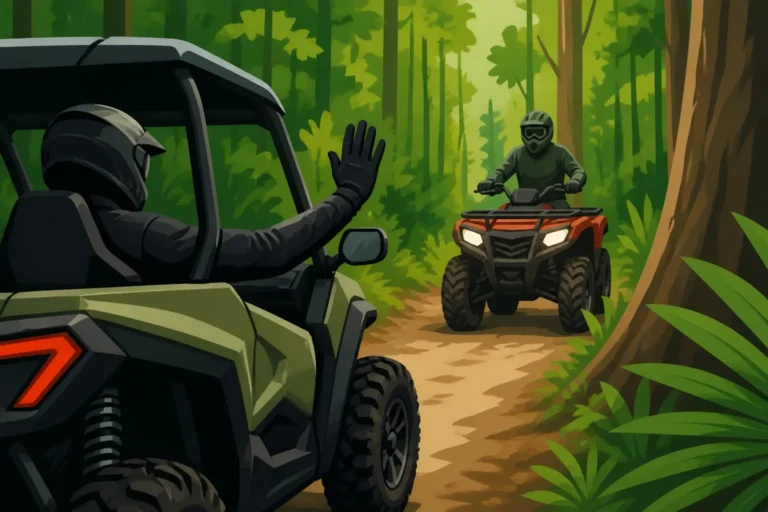
Multi-use trails call for a little extra courtesy. Slow down near other users, avoid roosting dirt onto people or vegetation, and leave enough room to pass safely. If you cannot see around a bend, ease off the throttle. A ride is much more enjoyable when you are not surprising a hiker, horse, or another rider on a narrow section.
| Riding area | General location | What to confirm before riding |
|---|---|---|
| Sandstone Multiple-Use Trail | Near Forest Hill in the Calcasieu Ranger District | Seasonal access, current closures, route designation, and any machine requirements |
| Vernon Enduro Trail | Kisatchie area near Leesville | Open status, trail conditions, route designation, and access requirements |
| Claiborne Multi-Use Trail | Near Homer | Which routes allow motorized use, current closures, and shared-use expectations |
| Private mud parks | Varies by park and event location | Whether dirt bikes are allowed, event dates, age and safety rules, and park-specific restrictions |
How to verify a trail allows dirt bikes
The frustrating part of planning is that “OHV trail” can sound like a clear answer when it may not tell you whether a particular trail segment is open to your type of machine. Take a few minutes to confirm access using more than one clue: the official land manager’s information, signs at the trailhead, and current closure notices.
Check the exact route, not just the recreation area
Start with the forest or park’s official trail information. Look for the trail name, the managing district, motorized-use designations, seasonal restrictions, and alerts about maintenance or weather. If information is unclear, contact the relevant office before loading the bike. Ask specifically whether dirt bikes are permitted on the route you intend to ride, not merely whether the area has OHV trails.
At the trailhead, read the posted signs before unloading. They may identify allowed vehicle types, closed routes, speed expectations, or other conditions that are easy to miss during online planning. If a sign conflicts with an older map or a third-party app, follow the sign and seek clarification from the land manager rather than guessing.
Navigation tools can make it easier to organize a route, but they do not grant access. onX Offroad may help you review an area and keep track of a planned ride; confirm legal access and current conditions separately. That distinction matters on forest roads and adjoining property, where a line on a screen can cross into a route that is not open to motorized riding.
Look for closures, permits, and machine restrictions
Trail access can change with the season, maintenance work, weather, or land-management decisions. Read [Louisiana Trail Closures and Seasons] and check official updates close to your departure date. If heavy rain has recently passed through the area, expect muddy sections, standing water, or temporary closures. Riding around a closed gate can damage the trail and may create problems for other riders.
Some public riding areas require a pass or other access steps. Check the requirements for the particular forest site before travelling; do not assume a pass for one location automatically covers every trail or activity. The guides [Louisiana Forest Trail Use Passes] and [Louisiana's $30 Annual Forest Pass] can help you understand the kinds of access requirements to investigate. Confirm the current process with the managing agency before your trip.
Also check whether your bike is allowed under any vehicle restrictions that apply at your destination. Rules may address vehicle class, size, equipment, or other conditions. If you are considering a wildlife management area rather than a designated forest trail, take particular care: public-land riding rules can be much narrower than riders expect. Start with [Louisiana WMA Designated Trails Only] instead of assuming that a trail shown on a map is open to dirt bikes.
Public forest trails versus private riding parks
Public forest trails and private mud parks offer different kinds of rides. Public systems are often a better fit for riders who want a marked route through forest terrain, while private parks may offer event-based riding, mud features, and amenities. Neither option should be treated as universally open: access, machine rules, and conditions depend on the specific location.
What to expect on public forest trails
On public trails, the main advantages are a natural setting and the chance to ride designated routes through forest land. You will need to plan around trail status, seasonal closures, access rules, and whatever services are available nearby. Carry your own water and basic repair supplies, and do not count on having reliable phone coverage throughout the ride.
Public trails also come with a responsibility to stay on approved routes. Cutting around a closure, making a new track, or riding onto a nearby road because the trail looks blocked can harm the area and undermine access for everyone. If you are unsure where a route goes, stop and check your map or ask the land manager rather than following tire tracks off-trail.
For a broader overview of options, [Louisiana ATV Trails: Where to Ride] can help you compare areas. If you are planning with a digital map, onX Offroad can be one part of your preparation, alongside official trail-status information and posted instructions. Treat those sources as complementary, not interchangeable.
What to ask a private park before you go
Private parks set their own rules, and those rules may differ from public forest requirements. Before travelling, check whether the park allows dirt bikes specifically. Some parks may focus on particular vehicle types or open only during organized weekends, so a park being known for ATV or UTV riding does not guarantee that motorcycles are welcome at every event.
Ask about the date and hours of access, rider and passenger rules, helmets or other required gear, noise restrictions, camping, parking, and any waiver or check-in process. If you are bringing a group, make sure everyone knows the rules before arrival. A quick call or review of the park’s official information can prevent the unpleasant surprise of reaching the gate with a bike that is not allowed.
Private riding areas can be a good choice if you want facilities or an event atmosphere, but the experience may be more structured than a forest ride. Compare the park’s terrain and rules with what you want from the day. For more planning context, see [Louisiana Private Mud Parks Compared] and [Louisiana Trail Etiquette Locals Expect].
A practical checklist for your dirt-bike ride
Good preparation is not complicated, but it saves time and reduces the chance of arriving at a closed trail or discovering that your bike does not meet the site’s rules. Before leaving, confirm access, prepare for changing conditions, and make a plan for what you will do if the group gets separated or a machine needs attention.
Before you load the bike
- Choose a specific trail system and identify the exact route or area you plan to ride.
- Check the managing agency’s current notices for closures, seasonal limits, and access requirements.
- Confirm that dirt bikes are permitted; do not rely on a general OHV label alone.
- Review any machine, equipment, pass, or permit requirements that apply to that destination.
- Check the weather and recent conditions, especially after heavy rain.
- Save your route information for offline use and tell someone where you are going.
- Pack water, food, basic tools, a first-aid kit, and suitable riding gear.
At the trailhead and on the trail
Take a moment to read signs before riding. Confirm that you are starting on the intended route and that no temporary closure has been posted. If a sign is unclear, pause and contact the land manager or park staff rather than interpreting it in the most convenient way.
Ride at a speed that lets you stop within the distance you can see. On a shared trail, slow down around blind corners and give other users room. Stay on the designated route, avoid damaging wet or soft ground, and pack out anything you brought in. If conditions become unsafe or a route is closed, turning back is the sensible choice—not a wasted trip.
Louisiana has worthwhile dirt-bike riding options, particularly in its Kisatchie National Forest trail systems, but access depends on the particular trail and the conditions on the day. Checking the route designation, current status, and site rules before you go is the simplest way to avoid a long drive ending at a closed gate.
Disclaimer
This article is for general informational purposes only and does not constitute professional advice. Laws, prices and regulations vary by location and change over time. Consult a qualified professional for guidance on your specific situation.