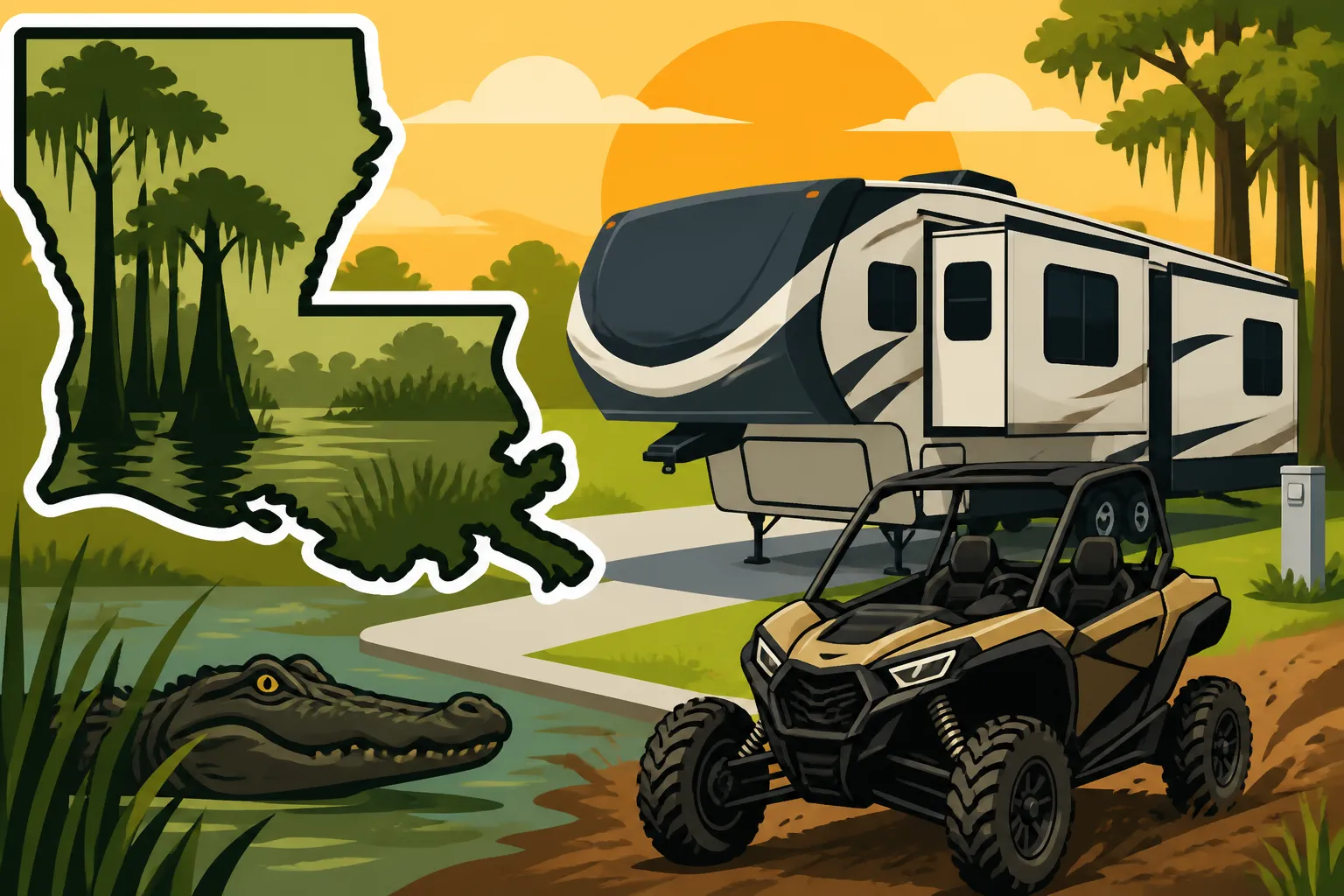
A $700 Premium Pull-Thru RV Site at Muddy Bottoms
A premium pull-thru RV site can make a Muddy Bottoms weekend easier, especially when you’re towing a large rig, hauling muddy machines, or arriving with family. But “premium” doesn’t tell you exactly what’s included. This guide walks through what to confirm before booking, how to plan around an event weekend, and how to decide whether a pull-thru site suits your crew.
What to know about an RV stay at Muddy Bottoms
Why a pull-thru site can make arrival easier
Backing a trailer into a tight campsite after a long drive is nobody’s idea of a relaxing start. A pull-thru layout can reduce the need to reverse into a space, which may be especially helpful if you’re towing a large RV, arriving after dark, or traveling with someone who isn’t comfortable guiding a trailer. It can also make departure simpler when you’re packing up muddy gear and trying to get on the road.
Still, “pull-thru” doesn’t tell you the exact site dimensions, turning clearance, parking arrangement, or whether your tow vehicle can remain alongside the RV. Before reserving, ask for the site’s length and width, the approach direction, and any restrictions on extra vehicles or trailers. If you have a long fifth wheel or a separate machine trailer, give the park those measurements rather than relying on a general description.
Start with the park’s event calendar, because the timing of your trip affects both availability and the feel of the stay. Muddy Bottoms operates around event weekends rather than a typical daily trail-park schedule, so check the dates before committing to a long tow. Why Muddy Bottoms Opens Only on Event Weekends and Checking Dates Before You Tow are useful reminders to verify that your chosen weekend matches your plans.
What “premium” should prompt you to ask
The word “premium” is a description, not a complete list of amenities. Ask what the site includes and what is available elsewhere at the park. Confirm the type of utility connections, their locations, whether the site has a defined parking pad, and whether there are any rules about generators, extension cords, or outdoor equipment. Don’t assume every premium site has the same layout or features.
It also helps to ask how close the site is to event activity, wash areas, restrooms, or other shared facilities. A location near the action may be convenient when you’re carrying supplies back and forth, but it can be noisier or busier. A site farther away may offer a calmer place to settle in, but could mean more walking. The park can clarify the trade-offs for the specific site you’re considering.
Use Muddy Bottoms’ RV Sites in Louisiana as a starting point for thinking about the available RV options, then confirm the details for your dates directly with the park. If you’re comparing a full-hookup stay with a simpler setup, What Primitive RV Camping Gets You at Muddy Bottoms can help you frame the questions. Ask whether the site assignment is guaranteed or whether it may change, and find out what happens if your rig won’t fit the space when you arrive.
Decide whether a premium pull-thru suits your trip
Match the site to your RV and riding setup
A site that works for a compact travel trailer may not work for a long motorhome, fifth wheel, or RV towing a separate trailer. Measure the complete setup you expect to bring: the RV, tow vehicle, machine trailer, and anything that needs to remain parked beside you. Be clear about whether you plan to detach the trailer and use it during the weekend.
A pull-thru can be especially practical for a group that wants to unload and get settled without repeatedly rearranging vehicles. But convenience on arrival is only one part of the decision. Consider where muddy machines will be parked, how you’ll carry wet riding gear into the RV, and whether you’ll have enough room to keep clean items separate from mud-covered boots, helmets, and tie-downs.
If you’re towing machines to the park, plan the haul as carefully as the campsite. Check your route, secure the machines, and leave time to handle an unexpected stop without rushing. Trailering to a Mud Park covers the kind of preparation that can prevent a tired arrival from turning into a stressful one.
| What to check | Why it matters | Question to ask before booking |
|---|---|---|
| Site length and width | A rig can fit on paper but still leave too little room for the tow vehicle or trailer | What are the usable dimensions of this specific site? |
| Pull-thru access | Approach angles and turning space vary | Can my RV enter and exit without backing? |
| Utility connections | Connection type and placement affect setup | Which hookups are included, and where are they located? |
| Parking rules | Extra vehicles may need separate space | Can my truck and machine trailer stay at the site? |
| Nearby facilities | Convenience can come with extra noise and traffic | How far is the site from shared amenities and event activity? |
| Reservation terms | Event weekends can involve different procedures | Is this exact site assigned, and what are the change or cancellation rules? |
Compare convenience with the way your group actually camps
A premium site is most valuable when its features solve a real problem for your group. If you have a large RV, children who need a comfortable place to rest, or passengers who prefer indoor facilities after a day in the mud, an upgraded site may make the trip feel more manageable. It can also be worthwhile if a simpler campsite would require a complicated parking arrangement or extra setup work.
On the other hand, a premium site may not add much if you’re traveling in a small rig, spend most of the weekend away from camp, and are comfortable with a basic setup. Compare the site’s confirmed features with what your group will use—not just with the label. A family that values easy access to the RV may have different priorities from a group of riders who mainly need space to park machines and sleep.
If your group includes people who would rather not stay in an RV, consider whether a cabin is a better fit for part of the crew. The option discussed in Booking a Six-Person Cabin for an Event Weekend may be relevant if you’re coordinating riders and non-riders. Whichever arrangement you choose, confirm occupancy limits, check-in details, and what’s provided before packing.
Plan for an event weekend, not just a campsite
Check dates, access, and site details before you tow
A campsite reservation is only useful if the park is open for your intended visit and your group understands the event schedule. Confirm arrival and departure windows, gate procedures, parking rules, and whether you need to check in before heading to your site. If you expect to arrive late, ask what to do if the office or check-in point is closed.
Plan your route with the RV and trailer in mind. A route that looks shorter on a phone may involve roads or turns that feel awkward with a long rig. onX Offroad can be one tool for organizing your trip and reviewing mapped routes, but treat any digital map as a planning aid rather than proof that a road is appropriate for your RV or open to public travel. Confirm the final approach and access instructions with the park.
Build a little flexibility into your arrival day. Fuel stops, traffic, a slow-moving trailer, or a last-minute supply run can all push back your arrival. If you’re traveling with a group, agree on a meeting point before you lose cell service or get separated. You may also want to check Cell Dead Zones in the Piney Woods before relying on a single phone for directions and coordination.
Pack for mud, heat, and a crowded camp
At a mud event, camp can get messy quickly. Bring a plan for separating clean clothes from wet riding gear, and pack bags or tubs that can contain muddy gloves, boots, and straps. A towel or washable mat by the RV entry can make it easier to keep mud from spreading through the living area. If you’re bringing children, give them a specific place for dirty shoes rather than letting them wander in and out.
Think through water, shade, food, and charging needs before leaving home. The weather can make a ride feel much longer than expected, and a busy weekend may leave little time for a relaxed supply run. Secure loose items before driving, and keep essential medication, keys, and paperwork somewhere dry and easy to find. Strapping Down a Cooler for a Mud Weekend offers a practical angle on keeping camp supplies in place while traveling.
After riding, rinse equipment where permitted and avoid bringing a thick layer of mud back to your site. Ask the park about wash-area locations and rules, including whether there are restrictions on washing machines, vehicles, or trailers at the campsite. Washing a Machine After a Mud Weekend is a helpful related read for planning the cleanup. A little preparation can protect your RV floor, keep walkways safer, and make the trip home less unpleasant.
A simple booking and arrival checklist
Before you reserve
Write down the details of your RV and towing setup, then contact the park with specific questions. Ask about the site dimensions, hookups, parking limits, arrival instructions, and what “premium” means for that particular reservation. Confirm whether your preferred dates fall on an event weekend and whether the event schedule affects access, noise, or check-in.
Next, decide what your group needs most. If easy entry and exit are the priority, make sure the site’s pull-thru layout works for your actual rig. If quiet or proximity to facilities matters more, ask about the location rather than choosing based on the site category alone. Keep a note of the answers so everyone in the group is working from the same plan.
Use onX Offroad or another mapping tool to help organize your approach, but verify road suitability and the park’s final directions with the venue. Don’t assume a machine trail shown on a map is a legal route for a road-going RV, or that a public road is suitable for a large combination vehicle. The campsite reservation and the route to reach it are separate parts of the trip plan.
On arrival and during the stay
Before pulling into the site, check that the space is clear and that your planned entry path is open. If anything looks different from what you were told—such as a blocked approach or a site that appears too short—pause and contact park staff rather than trying a difficult maneuver in a crowded area. Once parked, keep tow vehicles and trailers within the permitted area so neighboring campers can move around safely.
Set up a basic mud-management routine early. Put dirty gear in a designated container, keep walking paths clear, and check the park’s rules before washing equipment or using a generator. If you’re sharing the weekend with friends, agree on quiet hours, parking expectations, and where machines will be staged. Small conversations at the start of the trip can prevent bigger frustrations when everyone is tired.
Before checkout, give yourself more time than you think you’ll need to pack and secure the RV. Mud, wet gear, and a loaded trailer can slow departure. Check the site for forgotten tie-downs, trash, and personal items, and follow the park’s instructions for leaving the space. A well-planned pull-thru stay should make the camping side of the weekend easier—not add one more rushed task to the ride home.
Disclaimer
This article is for general informational purposes only and does not constitute professional advice. Laws, prices and regulations vary by location and change over time. Consult a qualified professional for guidance on your specific situation.