Carrying a Rifle on a Quad During Deer Season
The crisp air of a Louisiana fall, the promise of a big buck, and the roar of your ATV or UTV – it's a feeling many of us live for. But nothing can put a damper on a hunting trip faster than realizing you've accidentally broken a regulation when it comes to carrying your rifle. It's a common point of confusion for hunters across the state, and this guide is here to clear up the rules, ensuring your deer season is legal, safe, and stress-free.
Understanding Louisiana's General Hunting & ATV Regulations
Navigating the rules for hunting with your ATV or UTV in Louisiana can feel like reading a legal textbook, and let's be honest, who has time for that when you're busy scouting for deer? The key is understanding that different types of land have different rules, and how you transport your firearm is just as important as where you're riding. It's not just about common sense; it's about following the letter of the law to avoid any headaches with the game wardens.
General Rules for Carrying Firearms on ATVs/UTVs
When it comes to carrying a firearm on your off-road machine in Louisiana, whether it’s a rugged ATV or a versatile UTV, the overarching principle revolves around safety and responsible transport. The general rule of thumb, especially when moving between hunting areas or across different parcels of land, is that firearms should be unloaded and cased. This isn't just a suggestion; it's a critical safety measure that can prevent accidental discharges and ensure compliance with many regulations, particularly on public lands. A loaded, uncased rifle bouncing around on the back of your quad is a recipe for disaster and can land you in serious trouble. Think about the terrain – the bumps, the jostles, the quick stops. All these can potentially lead to an accident if your firearm isn't properly secured and made safe.
The specific nuances often depend on whether you are actively hunting or merely transporting the weapon. If you are actively engaged in hunting on private land where it's explicitly permitted, you might have more leeway regarding the loaded status, but the casing recommendation often still applies for transport. It’s always best to err on the side of caution and maintain that unloaded and cased status unless you are absolutely certain of the specific regulation for your exact location and situation. Remember, ignorance of the law is rarely an excuse that holds up.
Hunting Seasons and Designated Areas
Deer season in Louisiana isn't a single, uniform event across the entire state. It's broken down into various zones, with different opening and closing dates, and regulations that can vary greatly. Before you even think about loading up your ATV with your hunting gear, you need to be intimately familiar with the current year's hunting regulations for the specific area you plan to hunt. This includes understanding the bag limits, legal methods of take, and, crucially, any restrictions on vehicle use in that particular zone.
Beyond the seasonal dates, knowing whether you're on private land or a Wildlife Management Area (WMA) is paramount. Each type of land comes with its own set of rules, and what's perfectly acceptable on one might be a serious violation on another. For example, [Louisiana Hunting Season and Trail Access] varies significantly, with some WMAs having specific dates when ATVs are permitted, often to retrieve game, and strict prohibitions on their use at other times. Always check the Louisiana Department of Wildlife and Fisheries (LDWF) regulations handbook or website for the most current information. A quick check before you head out can save you from a citation or, worse, losing your hunting privileges.
Specific Scenarios: Private Land vs. Public Land (WMAs)
The distinction between private and public land is perhaps the most critical factor when it comes to carrying a rifle on your ATV or UTV during deer season in Louisiana. What's permissible on your own property or land you have explicit permission to hunt can be drastically different from the stringent rules governing state-managed areas. Understanding these differences isn't just about avoiding a ticket; it's about respecting land management efforts and ensuring the safety of all outdoor enthusiasts.
Private Land Considerations
When you're hunting on private land, whether it's your own acreage, a family farm, or land leased from a timber company, the rules surrounding ATV use and firearm transport tend to be more lenient. On private property, the landowner's rules generally take precedence, provided they don't contradict state or federal laws. This often means you might be able to transport your rifle uncased, or even loaded, while actively hunting or moving between stands, especially if the ATV is essential for navigating the terrain to your hunting spot.
However, even on private land, safety should always be your top priority. An uncased, loaded rifle is always more prone to accidental discharge, especially when bouncing over rough trails. Many experienced hunters still opt for a secure gun boot or scabbard, like those offered by SuperATV, to protect their firearm from dirt, debris, and impacts, even on private land. This keeps your valuable equipment in prime condition and minimizes risk. Always ensure you have clear [Louisiana Landowner Permission Forms] if you're not the owner, detailing exactly what activities are permitted. This helps prevent any misunderstandings or potential issues with [Louisiana Trespass Law for Riders].
Wildlife Management Areas (WMAs) Regulations
Wildlife Management Areas (WMAs) are a completely different ballgame. These areas are managed by the state to conserve wildlife and provide public recreation, and as such, they come with a comprehensive set of regulations designed to protect both the environment and visitors. When it comes to ATVs, UTVs, and firearms, WMA rules are almost universally stricter.
Most WMAs will require that all firearms transported on an ATV or UTV be unloaded and cased. This rule is often strictly enforced to prevent poaching, reduce the risk of accidents in areas with multiple users, and ensure that hunters are using their vehicles for transport, not for actively pursuing game. There are often specific regulations concerning [Louisiana WMA Trail Riding], dictating which trails are open to ATVs/UTVs and sometimes imposing [Louisiana WMA Seasonal Riding Ban] during sensitive times or wet conditions. You'll likely encounter rules regarding [Louisiana WMA Machine Size Limits] and [Louisiana WMA Designated Trails Only], so riding off-trail is usually prohibited. Always check the specific WMA’s regulations before you go, as they can vary slightly from one area to another. Disregarding these rules can lead to significant penalties, including fines, confiscation of equipment, and loss of hunting privileges.
Crossing Public Roads with a Firearm on an ATV/UTV
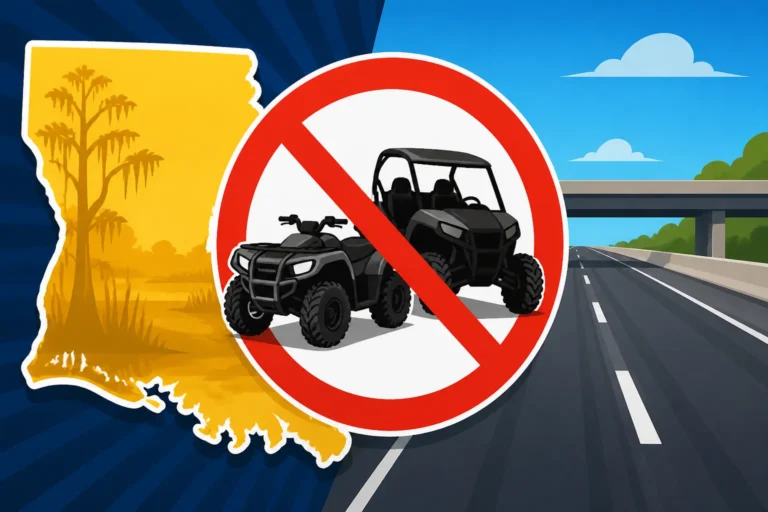
This is a frequently misunderstood area and can lead to immediate legal trouble. While Louisiana law does allow for some limited use of ATVs and UTVs on public roads – such as for agricultural purposes or crossing at designated points – the rules become even more stringent when you add a firearm into the mix. Generally, if you are crossing a public road, parish road, or highway, even for a short distance to get from one section of private land to another, your firearm must be unloaded and properly cased.
This rule exists because, while on a public thoroughfare, your off-road machine is subject to different laws than when it's on private land. The risk of an accident involving a public road user, or simply the appearance of irresponsible firearm transport, is taken very seriously. Don't assume that because you have a hunting license and are "just going to the next field" that you're exempt. Any time your ATV or UTV, with a firearm, touches a public road, assume the strictest interpretation of the law applies. For specific guidance on allowable road use, you should review information like [Louisiana Rules for Crossing a Highway] or [Louisiana Rules for Riding a Parish Road]. Violations in these situations can fall under [Louisiana Penalties for Illegal Road Riding], which can be severe.
Best Practices for Safe and Legal Transport
Beyond simply knowing the rules, actively practicing safe and legal transport of your rifle on your ATV or UTV is crucial for a successful and trouble-free deer season. It's about protecting yourself, your gear, and respecting the hunting community.
Securing Your Rifle on an ATV/UTV
Properly securing your rifle is non-negotiable. Bouncing down a rutted trail with your rifle sliding around can damage your scope, scratch the stock, or even worse, cause an accidental discharge. The best solution is a purpose-built gun boot or scabbard that mounts securely to your ATV or UTV. These systems are designed to cradle your firearm, protecting it from dust, moisture, and impacts.
When choosing a system, look for durable, weather-resistant materials. Many hunters swear by hard cases that fully enclose the rifle, offering maximum protection. Brands like SuperATV offer a variety of gun mounts and scabbards that are rugged enough to withstand the demanding conditions of Louisiana's hunting grounds, from the deep mud to thick brush. Ensure the mount itself is sturdy and won't wobble or loosen during your ride. Always double-check the fasteners before each trip, as vibrations can work things loose over time. A well-secured rifle allows you to focus on navigating the terrain and scanning for game, rather than worrying about your valuable firearm.
Keeping Your Firearm Unloaded and Cased
This is a rule worth repeating: always transport your rifle unloaded and cased when on an ATV or UTV, especially on public land or WMAs. An unloaded firearm means there are no rounds in the chamber or magazine. A cased firearm means it is fully enclosed in a gun case, not just wrapped in a blanket or placed loosely in a rack.
This practice is rooted in both safety and law. An uncased, loaded firearm is a significant hazard. Imagine hitting a sudden bump, or having to swerve unexpectedly – the chances of an accidental discharge increase dramatically. From a legal standpoint, many jurisdictions and all WMAs consider a cased and unloaded firearm as "transported" rather than "in possession for immediate use," which often changes how regulations apply. It demonstrates responsible gun ownership and respect for the regulations, making any interaction with game wardens far more positive. Always ensure the case is locked or secured if required by specific WMA rules.
Essential Gear and Pre-Trip Checks
Beyond your rifle and ATV, a few other items and checks are essential for a safe hunting trip:
- Proper Documentation: Always carry your hunting license, relevant WMA permits ([Louisiana WMA Access Permits] or [Louisiana Self-Clearing Permits]), proof of ATV registration (if applicable), and a valid ID. For those on private land, a copy of your [Louisiana Landowner Permission Forms] is smart.
- First Aid Kit: Accidents happen, especially in remote areas. A well-stocked first aid kit can be a lifesaver.
- Communication: A fully charged cell phone is a start, but consider a satellite messenger or two-way radio for areas with no service.
- Navigation: A GPS device or a reliable map and compass are crucial, even if you think you know the area well.
- ATV Maintenance: Before heading out, do a quick check of your ATV or UTV. Ensure tires are properly inflated, brakes work, lights are functional, and you have enough fuel. Carrying a small toolkit for minor repairs can prevent being stranded.
- Weather Appropriate Gear: Louisiana weather can be unpredictable. Pack layers, rain gear, and plenty of water to stay hydrated.
By having these essentials and performing these checks, you're not just preparing for the hunt; you're preparing for the unexpected, ensuring a safer and more enjoyable experience overall.
Avoiding Common Mistakes and Penalties
Even the most seasoned hunters can sometimes make mistakes when it comes to ATV and firearm regulations, often due to misunderstandings or outdated information. Avoiding these pitfalls is key to a smooth and penalty-free deer season.
Misinterpreting Regulations
One of the most common errors is misinterpreting what "unloaded" or "cased" means, or assuming that private land rules apply everywhere. For instance, some hunters might believe that removing the magazine constitutes "unloaded," even if a round remains in the chamber. Legally, an unloaded firearm means no ammunition in the chamber and no ammunition in any attached magazine. Similarly, a soft case that doesn't fully enclose the firearm may not meet the "cased" requirement in some regulations.
Another frequent misstep is ignoring the specific rules for [Louisiana WMA Seasonal Riding Ban] or [Louisiana WMA Designated Trails Only]. Just because you can ride your ATV to retrieve game on one WMA doesn't mean you can do it on another, or that you can ride during different times of the year. The best defense against misinterpretation is to always consult the most current LDWF regulations for the specific area you plan to hunt. Never rely on hearsay or what "everyone else does."
Potential Fines and Consequences
The penalties for violating ATV and firearm regulations in Louisiana can range from costly fines to more severe consequences, depending on the nature and severity of the offense. For instance, illegal road riding with an ATV, especially with a firearm, can result in significant fines and court costs, as outlined in [Louisiana Ticket Costs for Road Riding]. Transporting a loaded, uncased firearm on a WMA can lead to fines, confiscation of your weapon, and potentially the suspension of your hunting license. In extreme cases, repeated offenses or particularly egregious violations could even lead to your ATV or UTV being impounded, as can happen under [Louisiana Impoundment for No Decal] for other types of violations.
Imagine the frustration and financial hit of having your rifle or ATV seized, or losing your hunting privileges for a season or more. These consequences are far more than an inconvenience; they can put a serious dent in your passion for hunting and your wallet. By understanding and adhering to the rules, you protect your rights, your equipment, and your ability to enjoy Louisiana's rich hunting heritage for years to come.
Here’s a quick overview of how rules for carrying a rifle often differ between private and WMA land in Louisiana:
| Feature | Private Land (with permission) | Wildlife Management Area (WMA) |
|---|---|---|
| Firearm Status | Often more lenient, but unloaded & cased recommended for transport. | Strictly Unloaded & Cased. |
| ATV/UTV Use | Generally permitted as per landowner's rules. | Restricted to designated trails; often seasonal bans. |
| Active Hunting from ATV | May be permitted by landowner, check local ordinances. | Generally Prohibited. Vehicles for transport only. |
| Crossing Public Roads | Unloaded & Cased is mandatory. | Unloaded & Cased is mandatory. |
| Permits Required | Hunting license, landowner permission form. | Hunting license, WMA access permit or self-clearing permit. |
| Primary Oversight | State law, local ordinances, landowner rules. | LDWF Regulations, state law. |
Disclaimer
This article is for general informational purposes only and does not constitute professional advice. Laws, prices and regulations vary by location and change over time. Consult a qualified professional for guidance on your specific situation.