Staying Visible on a Parish Road After Dark
It's a common scenario for many of us who love the freedom of off-road machines: the sun starts to dip, you're still miles from camp or home, and suddenly, those familiar parish roads feel a whole lot more daunting. Riding your ATV or UTV on Louisiana parish roads after dark, even where legally permitted, can be incredibly risky if you're not properly prepared. This guide is all about equipping you with the knowledge and practical steps to ensure you and your machine are as visible as possible, significantly boosting your safety when the stars come out.
The Unique Dangers of Louisiana Parish Roads After Dark
Riding an off-road machine on any public road always carries risks, but when darkness falls on a Louisiana parish road, those risks multiply dramatically. It’s not just about what you can see; it’s about what others can’t see, and that includes you.
Low Visibility and Unexpected Obstacles
Imagine a typical rural Louisiana parish road: it might be paved, gravel, or even dirt. Streetlights are a luxury, and often, you're driving through corridors of dense trees or open fields where the only light comes from the moon or your machine. This low-light environment makes everything harder to perceive. Overgrown shoulders can hide deep ruts, drainage ditches, or fallen limbs that could cause an accident. Wildlife, from deer to armadillos, becomes significantly harder to spot until you're right on top of them.
Then there are other road users. Farm equipment, often moving slowly and without adequate lighting, might suddenly appear around a bend. Other drivers, perhaps not expecting to encounter an ATV or UTV on the road, might be distracted or simply miss your machine in the gloom. The size and speed difference between your quad or side-by-side and a full-size truck can lead to devastating consequences if visibility is compromised. Every shadow can hide a potential hazard, and what looks like a minor dip in daylight can become a dangerous pitfall after dark.
The Legal Landscape of Riding After Sunset
While Louisiana law does permit limited ATV and UTV use on parish roads in certain circumstances, such as for agricultural purposes or in parishes that have specifically designated roads, this permission doesn't waive the need for extreme caution and adherence to visibility standards. The statute on [Louisiana Daylight Riding Window] specifically notes restrictions on riding after dark unless certain conditions are met, usually relating to the purpose of the ride and required lighting.
Even if you're riding legally, a state trooper or local deputy can pull you over for an [Louisiana Equipment Checks by Troopers] at any time, day or night. If your lighting isn't up to par, or if you lack other essential safety equipment, you could face penalties. It’s not just about avoiding a ticket; it’s about preventing a collision. The law is designed to protect all road users, and adequate lighting is a non-negotiable part of that. Understanding that [Louisiana Traffic Law Still Applies] to off-road machines on these roads is crucial, especially regarding signaling and proper illumination.
Essential Lighting Upgrades for Night Riding
If you plan on riding even occasionally on parish roads after dark, you absolutely need to think beyond the basic factory-installed lights. Stock lighting is often designed for minimal use or low-speed trail riding, not for sharing roads with other vehicles at night.
Headlights and Tail Lights: Beyond Basic Compliance
Your factory headlights and tail lights might meet the minimum legal requirements to switch on, but "legal" doesn't always equate to "safe" or "visible." The stock halogen bulbs on many ATVs and UTVs produce a yellowish light that doesn't cut through the darkness effectively, especially on unlit rural roads. Upgrading to brighter LED headlights and tail lights is one of the most impactful changes you can make. LEDs offer a whiter, more intense light that illuminates the path ahead far better, allowing you to spot obstacles sooner. They also consume less power, which is a bonus for your machine's electrical system.
When choosing upgrades, look for lights with different beam patterns. A good set of LED headlights will often feature a combination beam, offering both a broad flood pattern for peripheral vision and a more focused spot beam for distance. For tail lights, ensure they are bright and easily visible from a significant distance. Some aftermarket tail lights even incorporate integrated turn signals or brake light flashers for added attention-grabbing capability. This investment isn't just about seeing better; it's about being seen.
Auxiliary Lighting: Light Bars and Pods
To truly turn night into day and ensure you're impossible to miss, auxiliary lighting like LED light bars and individual LED pods are your best friends. These aren't typically street-legal for constant use on public roads due to their intensity, but they are invaluable for illuminating the path on private land or during quick crossings where you need maximum visibility for a short period. Many riders swear by aftermarket lighting kits from brands like SuperATV, which offer significantly brighter and more durable options than factory-installed lights.
Light bars come in various lengths and can be mounted on the roof, bumper, or grill of your UTV, or on the handlebars or front rack of your ATV. Pod lights are smaller, more versatile, and can be placed almost anywhere – on the A-pillars, rear bumper, or even as rock lights to illuminate the ground immediately around your tires. These provide a much wider and deeper field of illumination than standard headlights alone. Whether you're looking for a compact set of LED pods for focused illumination or a massive light bar to turn night into day, companies like SuperATV have an extensive catalog designed specifically for ATVs and UTVs. Just remember that if you're using these on a parish road, you should typically only activate them when absolutely necessary and when there's no oncoming traffic, as they can be blinding to other drivers.
Turn Signals, Brake Lights, and Running Lights
While some ATVs might only come with basic head and tail lights, UTVs often have more sophisticated lighting systems. However, for any road use, especially after dark, having functional turn signals and bright, obvious brake lights is paramount. These are your primary ways of communicating your intentions to other drivers. If your machine doesn't have factory turn signals, consider adding an aftermarket kit. There are many universal kits available that are relatively easy to install.
Running lights, which are on whenever your machine is operating, add another layer of constant visibility. These could be integrated into your headlights, or you might add small, low-power LED strips to the sides or front of your machine. The goal here is constant illumination that defines the edges and dimensions of your vehicle, making it easier for others to gauge your distance and trajectory. Remember, every flicker of light, every illuminated edge, is a cue to other drivers that you are there. [Louisiana Lighting Rules on a Machine] dictate specific requirements you must meet.
Reflective Gear and Markings: Making Yourself Seen
Even with the brightest lights, there's always the risk of an electrical failure or simply being in an awkward position where your lights aren't directly facing an approaching vehicle. This is where passive reflective elements become your lifesaver.
Reflective Apparel for Riders and Passengers
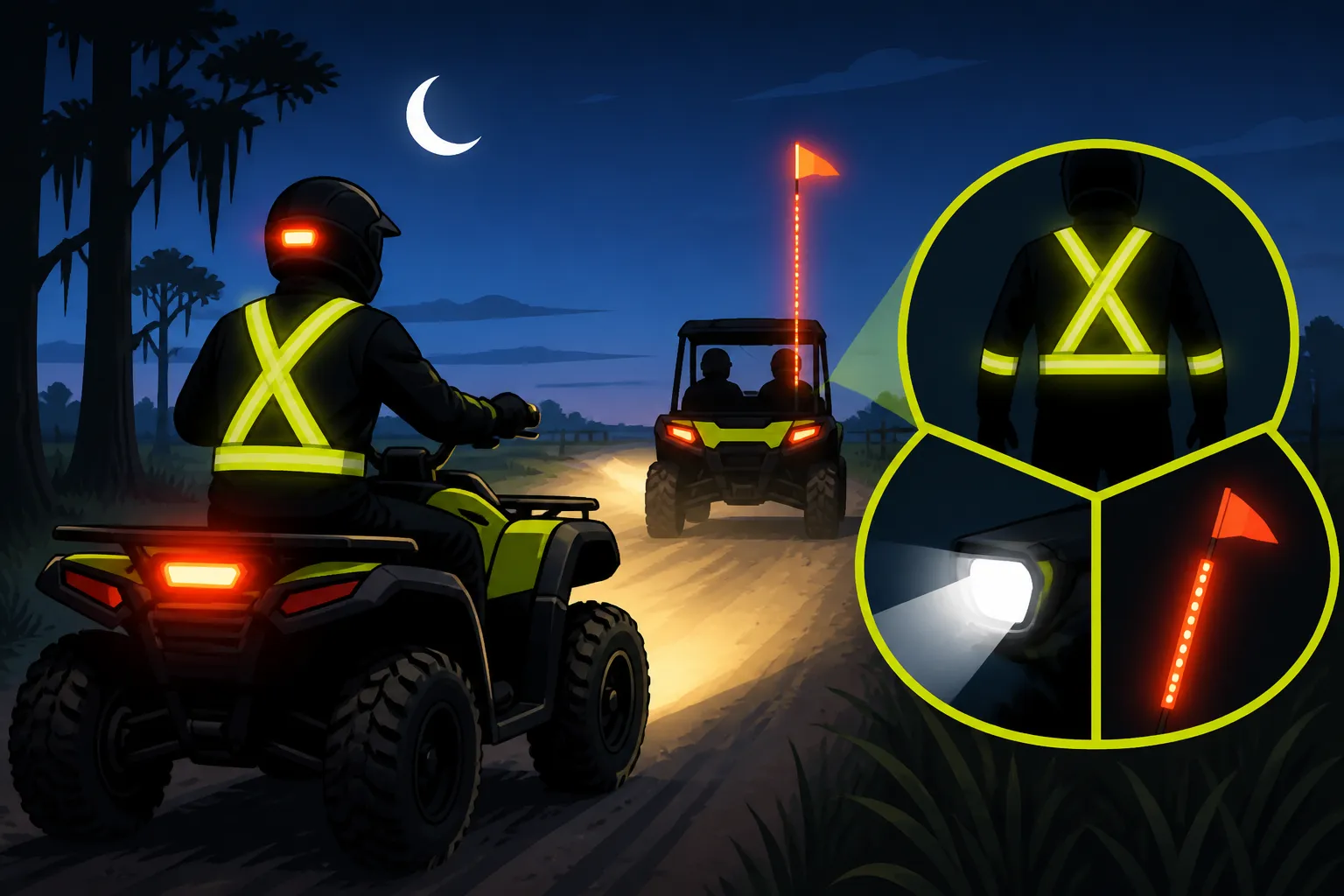
Don't just think about your machine; think about yourself and any passengers. High-visibility apparel is not just for construction workers. Wearing a reflective vest or jacket, especially one in a neon color like lime green or orange, can make a huge difference. These materials reflect light directly back to its source, meaning they glow intensely when caught in another vehicle's headlights.
Beyond vests, look for helmets with reflective decals, or add your own. Reflective gloves and even reflective strips on your boots can also contribute. The more surface area you have that reflects light, the better. This is especially critical if you ever have to dismount your machine on the side of a dark road for any reason – you want to remain visible even when you're standing next to it. It’s an easy, relatively inexpensive step that provides a significant safety boost.
Adding Reflective Elements to Your Machine
Just as important as reflective clothing is adding reflective tape to your ATV or UTV itself. Think 360-degree visibility. Apply high-quality, automotive-grade reflective tape to the front bumper, rear bumper, fenders, side panels, and even the wheels if possible. This tape comes in various colors, but white, red, and amber are the most effective. Red should be reserved for the rear, amber for the sides, and white for the front, mirroring standard vehicle lighting conventions.
Consider outlining the perimeter of your machine with reflective tape. This helps other drivers understand the size and shape of your ATV or UTV, rather than just seeing a single point of light. If you’re hauling a small trailer for hunting or farm work, it's absolutely crucial to add reflective tape to that as well. A small utility trailer often blends into the background on dark roads, and outlining it effectively can prevent it from being struck. For more specific guidance, check out articles like [Reflective Tape Worth Adding to Your Quad].
Flags and Whips with Lights
While often associated with dune riding or crowded off-road parks, lighted flags and whips can be incredibly effective for increasing visibility on certain parish roads after dark. These are tall, flexible poles typically mounted to the rear of your machine, extending several feet into the air. Many models now incorporate LED lights that run the length of the whip, creating a brightly illuminated vertical marker.
The advantage of a lighted whip is its height. It can be seen over hills, over other vehicles, or through light dust that might obscure your machine's lower lights. This vertical visibility is particularly useful if you're navigating undulating terrain or if there's any chance of reduced atmospheric clarity. They make your machine stand out in a way that traditional lights alone cannot, effectively raising your profile and making it harder for other drivers to miss you.
Riding Strategies for Enhanced Nighttime Safety
All the lights and reflective gear in the world won't fully protect you if you don't adopt a safety-first mindset and adjust your riding habits for the unique challenges of darkness.
Slow Down and Increase Following Distance
This is perhaps the simplest yet most crucial strategy: reduce your speed. Your reaction time and visual perception are significantly diminished at night, even with excellent lighting. By slowing down, you give yourself more time to identify hazards, react to unexpected movements (whether from wildlife or other vehicles), and brake safely if necessary. Think about the range of your headlights – can you stop within that range if an obstacle suddenly appears? If not, you’re going too fast.
Similarly, increase your following distance from any vehicle ahead of you. Their tail lights might give you a general idea of their presence, but they won't illuminate the road in front of them effectively for you. A greater following distance allows you to respond to sudden stops, swerves, or debris that the vehicle in front might kick up or reveal. It's not about trying to keep up; it's about staying safe.
Situational Awareness and Defensive Riding
Defensive riding means assuming other drivers don't see you and being prepared for their mistakes. At night, this mindset is even more critical. Constantly scan the road ahead, to the sides, and behind you. Look for subtle reflections that might indicate an animal's eyes in the bushes, or the faint glow of distant headlights approaching. Pay attention to sounds as well; the hum of an approaching vehicle or the rustle of leaves could be a warning.
Avoid distractions at all costs. Put away your phone, don't fiddle with your GPS, and keep conversations with passengers to a minimum. Your full attention needs to be on the road and your surroundings. Remember that even if you're riding in a parish that has designated specific roads for UTVs, for example, [Louisiana Parish Ordinance Lookups] will show that you are still sharing the road with regular vehicle traffic. You should always expect the unexpected and be ready to react.
Pre-Ride Checks and Maintenance
Before embarking on any night ride on a parish road, perform a thorough pre-ride check. This isn't just a suggestion; it's an absolute necessity. Test all your lights: headlights (high and low beam), tail lights, brake lights, turn signals, and any auxiliary lighting. Ensure all bulbs are working, lenses are clean, and electrical connections are secure. Even the most robust lighting systems, like those from SuperATV, need regular checks to ensure all connections are secure and lenses are clean.
Check your reflective tape to ensure it's clean and firmly adhered. If you're using lighted whips, ensure they are working properly and securely mounted. Beyond lighting, check your tires for proper inflation, ensure your brakes are functioning correctly, and that all fluid levels are good. A mechanical failure in broad daylight is an inconvenience; a mechanical failure on a dark parish road can quickly become a dangerous situation. A little time spent on maintenance before you leave can save you a lot of trouble – or worse – later.
Here’s a quick comparison of various visibility enhancers for night riding:
| Visibility Enhancer | Purpose | Pros | Cons |
|---|---|---|---|
| LED Headlights/Tail Lights | Primary illumination & rear visibility | Brighter, whiter light; better road coverage; energy efficient | Can be expensive; requires installation |
| Auxiliary Light Bars/Pods | Extreme forward/side illumination | Dramatically improves vision; intimidating presence for others | Often not street-legal for constant use; can blind oncoming traffic |
| Reflective Tape | Passive visibility; outlines machine | Always "on"; inexpensive; durable; defines machine's shape | Only effective when light shines on it; needs to be clean |
| Reflective Apparel | Makes rider/passenger visible | Direct reflection to light source; essential if dismounted | Can be bulky; needs to be worn consistently |
| Lighted Whips/Flags | Increases vertical visibility | Visible over obstacles; stands out in dusty conditions | Can be damaged; might snag on low branches; adds to machine profile |
Riding after dark on Louisiana's parish roads is a serious undertaking that demands respect for the environment and other road users. By prioritizing lighting, reflective elements, and smart riding strategies, you can transform a potentially hazardous journey into a much safer experience. Remember, being visible is just as important as being able to see.
Disclaimer
This article is for general informational purposes only and does not constitute professional advice. Laws, prices and regulations vary by location and change over time. Consult a qualified professional for guidance on your specific situation.