Sharing a Road With Cane Trucks
Rural roads in Louisiana, particularly during the intense sugarcane harvest season, can transform into a challenging environment for ATV and UTV riders. It’s not uncommon to find yourself sharing narrow, often unpaved paths with colossal cane trucks, a situation that can be intimidating, dust-choked, and, frankly, dangerous if you’re not prepared. Many riders feel a knot in their stomach when they see a plume of dust signaling an approaching rig, worrying about visibility, braking distances, and simply being seen. This guide is dedicated to helping you understand the dynamics of sharing the road with these agricultural behemoths, offering practical safety strategies, legal insights, and tips to ensure your excursions through the cane fields are as safe and stress-free as possible.
The Reality of Rural Louisiana Roads: More Than Just Potholes
If you've spent any time riding an ATV or UTV in rural Louisiana, you know that our roads aren't just for cars and pickups. They're vital arteries for agriculture, and during specific times of the year, that means they become heavily trafficked by specialized, heavy-duty equipment like cane trucks. It's easy to get frustrated when a slow-moving, dust-spewing rig holds you up, or worse, when you feel like your smaller machine is invisible next to these giants. But understanding why they're there, and the unique challenges they present, is the first step toward safer riding.
Why Cane Trucks Dominate the Landscape During Harvest
The sugarcane industry is a cornerstone of Louisiana's agricultural identity, especially in the southern parishes. When harvest season kicks into high gear, typically from late summer through early winter, it’s a non-stop operation. Farmers are racing against the clock, and the weather, to get their crops from the fields to the mills. This means an exponential increase in the number of large trucks on rural roads, often operating from before dawn until well after dusk, sometimes even around the clock. These aren't just any trucks; they're massive vehicles, sometimes pulling multiple trailers, designed to haul immense loads of freshly cut cane.
For us riders, this translates into a dramatically different road environment. What might have been a quiet gravel path yesterday could be a constant thoroughfare for these heavy haulers today. The sheer volume of traffic, coupled with the time-sensitive nature of their work, means drivers are focused on their task, and they aren't always expecting a smaller, off-road machine in their path. It’s a reality we have to acknowledge and adapt to, rather than just grumble about.
The Unique Challenges They Present to Off-Road Riders
Sharing the road with cane trucks isn't like sharing it with another pickup. Their size and weight differences create significant hazards that require a different mindset from ATV and UTV operators. First, there's the crushing differential in mass; an ATV or UTV is utterly dwarfed by one of these trucks. This means stopping distances are incredibly long for the truck, and any impact would be catastrophic for the off-road machine. You simply don't want to test the physics there.
Then there's the infamous dust cloud. On dry, gravel, or dirt roads, these trucks kick up incredible amounts of dust, which can instantly reduce visibility to zero for everyone behind them, and sometimes even for oncoming traffic. A sudden gust of wind can whip this dust right into your face, obscuring your vision at a critical moment. Furthermore, the speed differential can be tricky; while cane trucks are slow-moving compared to highway traffic, they're often faster than an ATV or UTV might travel on a rough backroad. This can lead to misjudgments when trying to gauge closing distances. Finally, and perhaps most critically, these trucks have enormous blind spots. Their drivers, perched high above the road, simply may not see a smaller machine directly beside or behind them, especially if you get too close. Your small profile means you can easily disappear from their mirrors or peripheral vision, creating a dangerous situation if they need to change lanes or turn.
Navigating the Giants: Safe Practices Around Cane Trucks
When you're out riding and find yourself in the vicinity of cane trucks, safety has to be your absolute top priority. It's not enough to rely on the truck driver seeing you or adhering to typical road courtesies. You need to adopt a proactive, defensive riding style that accounts for their limitations and the unique environment.
Defensive Riding Strategies
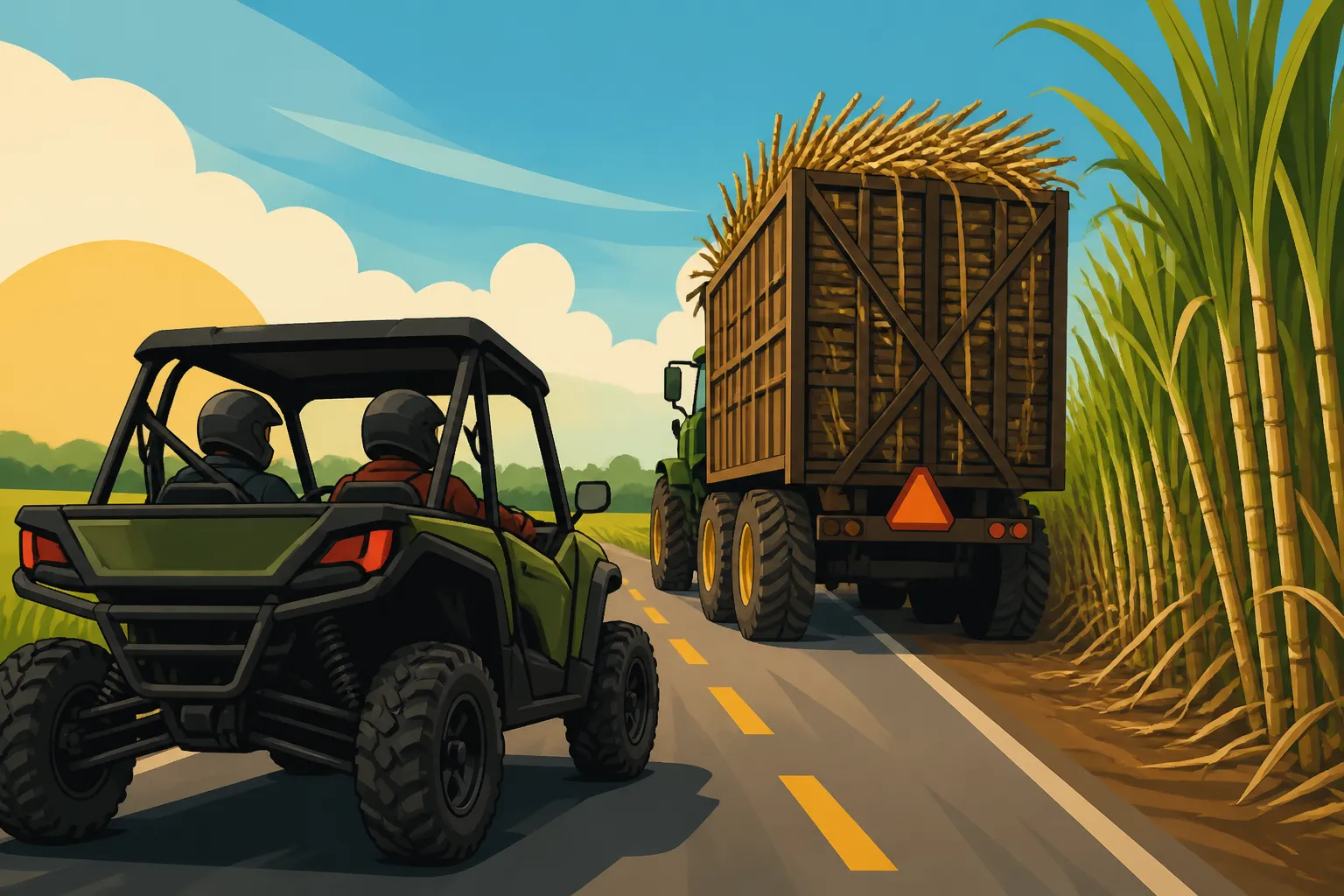
The golden rule when encountering any large vehicle, especially a cane truck, is to assume they don't see you. This isn't meant to be pessimistic, but realistic. Their focus is often on the road ahead, their immense load, and their tight schedule. Always maintain a significant following distance – and by significant, I mean enough space to see the truck's entire rear end, plus a buffer that accounts for sudden stops, debris, or a massive dust cloud. If you can't see their mirrors, they likely can't see you.
Anticipate their movements, especially when you're nearing fields, intersections, or sugar mills. Cane trucks are frequently turning into or out of fields, often making wide turns that might not seem obvious from a distance. If you see a field entrance or a mill ahead, expect a turn and position yourself accordingly. Never, under any circumstances, attempt to pass a cane truck on the shoulder, especially if it's on a public road where [The Statute Allows the Shoulder and Nothing More] for your ATV. Passing a slow-moving giant in conditions where visibility is compromised, or you're riding outside the established lane of travel, is a recipe for disaster. Be patient, wait for a safe, clear passing zone, or simply let them go ahead.
Enhancing Your Visibility to Others
Because ATVs and UTVs are so much smaller than cane trucks, making yourself as visible as possible is paramount. Think of it like wearing bright colors when hunting; you want to stand out. Bright, high-contrast clothing is a must, and if you have reflective gear, wear it, especially if there's any chance you'll be riding around dawn, dusk, or in foggy conditions when cane trucks are often still running.
Beyond your attire, your machine's lighting plays a crucial role. Even during daylight hours, having your headlights and taillights on can make a huge difference in alerting truck drivers to your presence. Consider aftermarket lighting solutions; a powerful SuperATV light bar mounted on the front of your UTV, or even bright LED whip lights on the rear, can drastically improve your visibility to other motorists, especially when navigating dusty roads or low-light conditions. These additions aren't just for looking cool on the trails; they're vital safety equipment for road sharing. You should also be familiar with [Louisiana Lighting Rules on a Machine] to ensure compliance and maximize safety, particularly when riding at certain times of the day or night. If you're going to be riding when it's dark, knowing [Louisiana Rules for Riding After Dark] is essential. Don't forget simple hand signals for turns or stops, which can communicate your intentions clearly even when your turn signals might be hard to see.
Understanding the Law: Where ATVs and UTVs Stand
It’s easy to feel like you have a right to be on rural roads, especially if you’re using your machine for agricultural purposes or simply trying to get from one point to another in a sparsely populated area. However, Louisiana has specific laws governing where and how ATVs and UTVs can operate on public roads, and these rules become even more critical when sharing with heavy machinery like cane trucks.
Louisiana's Road Riding Regulations for Off-Road Vehicles
Louisiana law is pretty clear on the general prohibition of ATVs and UTVs on public roads, but it does carve out some specific exceptions, particularly for agricultural use. For ATVs, [Louisiana ATV Road Rules Under 32:299] generally restrict them to the shoulder of public roads for agricultural purposes, and only within a [Louisiana's 5-Mile Farm Radius] of the owner's property. The key takeaway here is that it's typically "shoulder only" and tied directly to farm work. You can't just cruise down the highway on your quad to get groceries.
UTVs have slightly more flexibility under [Louisiana UTV Road Rules Under 32:299.3], which allows individual parishes or municipalities to pass ordinances designating specific roads or streets for UTV use. However, even on these designated roads, there are usually speed limits, age restrictions (often 21 and up for the driver), and requirements for insurance and equipment like headlights, taillights, and turn signals. For both ATVs and UTVs, if you're operating on a parish road, even for legitimate farm use, you should be prepared to provide proof of your right to do so. This often means having a [Louisiana Farm Affidavit Requirements] in your possession, and generally [Carrying Papers on a Parish Road] is a good idea. Also, be aware that an officer may ask for [Louisiana Insurance Proof on Demand] if you’re on a public road, even if your machine is typically used off-road. These are not "suggestions"; they are legal mandates.
The Fine Print on Farm Exemptions
The agricultural exemption for ATVs and UTVs is often misunderstood. It's not a blanket permission slip to ride wherever you want just because you own a farm or have some land. The intent is to facilitate necessary farm operations, such as moving between fields, checking irrigation, or retrieving equipment. The phrase "farm use" is quite specific and doesn't extend to recreational riding, even if that recreation happens to take place near agricultural land.
For the exemption to apply, you typically need to complete and carry a [Louisiana Farm Affidavits for Road Use], sworn before a notary, attesting to the agricultural purpose of your road use. This affidavit confirms that your machine is primarily used for farming. Furthermore, the allowance for road use is usually limited to short distances or crossings, focusing on situations where it is "incidental" to your farm work. It doesn't grant you the right to travel long distances on the main thoroughfares. Essentially, the law allows the shoulder and nothing more for ATVs in many circumstances, and for UTVs, it's about designated roads and strict compliance. Understanding these nuances is crucial to avoid citations or, more importantly, a dangerous encounter with a cane truck when you're operating illegally.
Preparing Your Machine and Yourself for Dusty Encounters
Even with the best defensive riding strategies and a clear understanding of the law, encountering cane trucks on rural roads can be challenging. Proper preparation of both your machine and yourself can significantly reduce risks and make the experience less stressful.
Machine Maintenance and Modifications for Road Safety
Before you head out, especially if you anticipate being on or near public roads during harvest season, give your machine a thorough check-up. Your brakes, above all else, must be in top condition. You need to be able to stop quickly and reliably, especially if a cane truck suddenly slows down or kicks up an unexpected dust cloud. Ensure your tires are properly inflated for any road segments you might encounter; this will improve handling and braking performance compared to overly soft off-road pressures.
Crucially, all your lights need to be fully functional. This includes headlights, taillights, and brake lights. Consider supplementing your factory lighting. As mentioned before, adding aftermarket LED lights, like those from SuperATV, to both the front and rear of your machine can dramatically increase your visibility to truck drivers. Rear-facing amber or red lights can be particularly effective in dusty conditions. A working horn is also an often-overlooked safety feature that can be invaluable for quickly signaling your presence to a truck driver who might not see you. Finally, think about dust protection for your machine. A full or even half windshield, readily available from manufacturers like SuperATV, can prevent a lot of dust and small debris from hitting you directly, improving your comfort and visibility. A roof will also offer some protection from overhead debris.
Rider Preparedness and Gear
Your personal gear and readiness are just as important as your machine's condition. Eye protection is non-negotiable. Whether it's goggles or a full-face helmet with a clear visor, you need to shield your eyes from the inevitable dust, dirt, and potential debris that cane trucks kick up. Without clear vision, you're a hazard to yourself and others.
Beyond eye protection, consider a dust mask, bandana, or neck gaiter to cover your mouth and nose. Breathing in heavy dust for extended periods isn't good for your lungs and can lead to discomfort or coughing fits that distract you from riding. Hydration is also key, especially in Louisiana's heat and humidity; heavy dust can be drying, so keep water on hand. Most importantly, maintain a heightened state of awareness. Avoid distractions, keep your focus on the road, the truck, and your surroundings. Constantly scan for potential hazards, and be prepared to react quickly. Regularly review safety guidelines like [Louisiana Rules for Riding a Parish Road] and be ready for potential [Louisiana Equipment Checks by Troopers] if you're pulled over. Being prepared and visible makes sharing the road with cane trucks much safer for everyone.
| Safety Measure | Benefit | Specific Example/Product |
|---|---|---|
| Increased Visibility | Reduces blind spots, alerts truck drivers | SuperATV LED Light Bar, Reflective Vest |
| Dust Protection | Maintains rider vision and respiratory comfort | Full-face helmet, goggles, dust mask, SuperATV windshield |
| Defensive Riding | Anticipates truck movements, maintains safe distance | Constant scanning, ample following room |
| Legal Compliance | Avoids penalties, ensures rightful road presence | Carrying [Louisiana Farm Affidavits for Road Use], proof of insurance |
| Machine Readiness | Ensures reliable control and communication | Tested brakes, working horn, proper tire pressure |
Disclaimer
This article is for general informational purposes only and does not constitute professional advice. Laws, prices and regulations vary by location and change over time. Consult a qualified professional for guidance on your specific situation.