Louisiana Rules for Riding a Sugarcane Road
Oh, the allure of those long, winding sugarcane roads! If you've spent any time driving through rural Louisiana, especially during harvest season, you know exactly what I'm talking about. They stretch out, often unpaved, tempting you to take your ATV or UTV for a scenic spin. But here’s the sticky truth many riders face: what looks like a public road might actually be a private pathway, and riding on it without proper understanding can land you in a heap of trouble. This guide is here to clear up the confusion and lay out the real Louisiana rules for riding a sugarcane road.
The Lure and the Law: Why Sugarcane Roads Are Different
There’s something undeniably captivating about the vast expanse of sugarcane fields, with those narrow roads cutting through them. They whisper promises of peaceful rides, open air, and a taste of authentic Louisiana landscape. But that very lure often blinds riders to the underlying legal realities. These aren't just any dirt roads; they're integral to a massive agricultural industry, and they operate under a very specific set of rules that often surprise and frustrate recreational riders.
Understanding the Landscape of Louisiana's Sugarcane Country
Imagine the sheer scale of sugarcane farming in Louisiana. We're talking about massive operations that span thousands of acres, often owned by families who have been cultivating this land for generations or by large corporations. These roads you see winding through the fields are not built for public access or recreational cruising. They are the arteries of the farm, specifically designed and maintained for heavy agricultural equipment—tractors, cane wagons, harvesters, and irrigation systems. They’re used year-round for planting, tending, and especially during the intense harvest season, when huge machines are constantly on the move, often at slow speeds and with limited visibility. The very nature of this landscape, deeply intertwined with private agricultural endeavors, makes these roads fundamentally different from the public roads you might encounter elsewhere.
The Core Legal Principle: Private Property and Trespass
Here’s the absolute bottom line that every rider needs to understand: most, if not all, sugarcane roads are located on private property. This isn't a suggestion; it's a fact. Unless explicitly designated otherwise by clear, official signage from a public entity like the parish or state, you should always assume these roads are private. What does that mean for you and your machine? It means that riding on them without explicit permission from the landowner is considered trespassing. [Louisiana Trespass Law for Riders] is quite clear on this. And while many people assume "no signs, no problem," that's simply not true in Louisiana. A landowner does not have to post "No Trespassing" signs for their land to be considered private property. The burden is on you, the rider, to know whose land you're on and to have permission to be there. Imagine the frustration of a farmer trying to move heavy equipment only to find recreational riders in the way or, worse, damaging private roads. It's a real and frequent concern that leads to strict enforcement.
Navigating Access: Permission is Your Golden Ticket
So, if these roads are mostly private, does that mean they’re entirely off-limits for good? Not necessarily. But gaining access isn't as simple as just rolling up and riding. It requires proactive effort, respect for landowners, and understanding the specific conditions under which you might be granted permission. In a state where agriculture is so vital, the default position is always to protect farm operations, not to facilitate recreational riding.
Securing Written Permission from Landowners
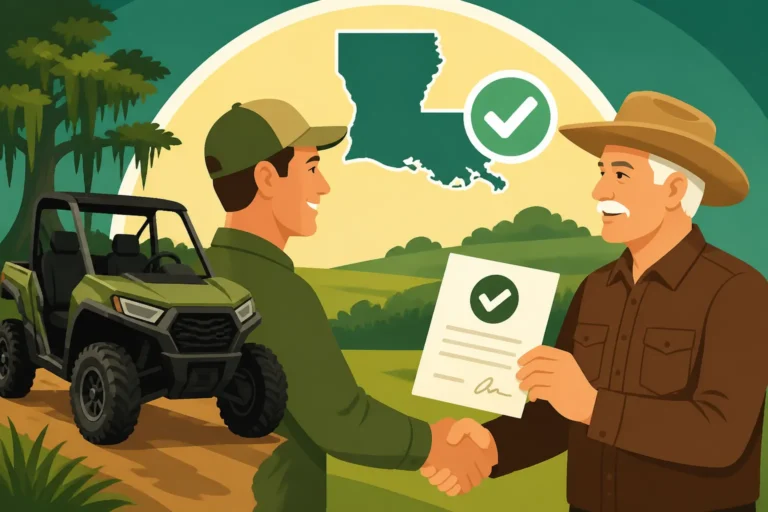
Let me tell you, when it comes to riding on private land in Louisiana, a handshake agreement just isn't going to cut it if you run into trouble. If you’re serious about wanting to ride a sugarcane road, your absolute best bet is to secure written permission from the landowner. This isn't just about covering your own hide; it shows a level of respect and seriousness that landowners appreciate. What should this written permission include? Ideally, it should specify the dates you're allowed to ride, the specific areas or roads you have access to, the types of machines permitted, and who, specifically, is authorized to ride. Think of it like this: if a local farmer, Mr. Boudreaux, allows you to ride his property, a quick note that says "John Doe can ride my sugarcane roads on Nov 12th, 2024" signed by Mr. Boudreaux, makes all the difference if a sheriff's deputy pulls you over. This formal approach protects both you and the landowner. It’s about building trust and clarity. For more on this, check out [Getting Written Permission From a Louisiana Landowner].
Farm Operations and the "Incidental" Use Dilemma
Now, Louisiana law does have some very narrow exceptions for ATVs and UTVs on public roads, particularly for agricultural purposes. For instance, you might know about [Louisiana's 5-Mile Farm Radius] rule, which allows farm vehicles (including ATVs and UTVs used for farming) to operate on the shoulder of certain public roads to move between fields within a certain distance of the farm. You can also get [Louisiana Farm Affidavits for Road Use] to clarify this. However, and this is a huge "however," these exemptions are strictly for legitimate farm-related activities. They are not, I repeat, not a loophole for recreational riding on private sugarcane roads or even on public road shoulders. The key word here is "incidental." Moving a sprayer from one field to another is incidental to farming. Cruising for fun, even if you happen to be in the general vicinity of a farm, is not. The moment your activity is no longer directly supporting a bona fide farm operation, you lose any protection these agricultural exemptions might offer. Furthermore, riding a recreational machine among active farm equipment is incredibly dangerous for everyone involved. Those cane trucks and harvesters have huge blind spots and can't stop on a dime.
What to Expect When Riding (Even With Permission)
Even if you’ve done your homework, secured that golden ticket of written permission, and are legally allowed to be on a sugarcane road, your responsibilities don’t end there. Riding on these unique pathways comes with its own set of challenges and demands an even higher level of caution and respect than typical trail riding. These aren't designated recreational trails; they're working roads that are essential to someone's livelihood.
Safety First: Sharing the Road with Farm Equipment
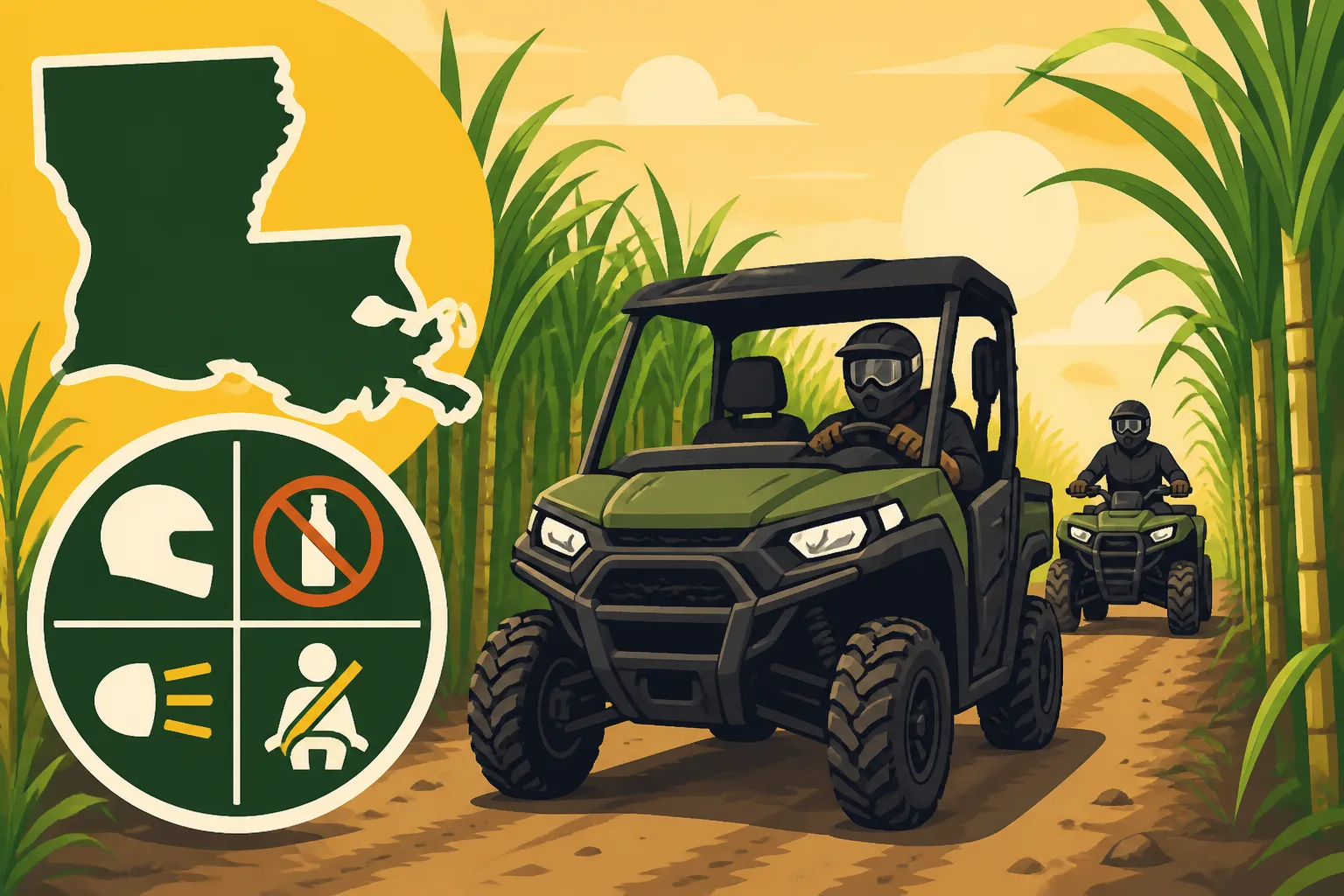
Let me be absolutely frank: riding an ATV or UTV on a sugarcane road, even with permission, means you are sharing the space with some of the biggest, slowest, and most dangerous equipment on the road. We're talking about massive cane trucks, tractors with wide implements, and harvesters that can be as wide as a house. These machines make wide turns, they have huge blind spots, and their operators are focused on getting their work done, not on looking out for small recreational vehicles. The noise of their engines alone can drown out your approach. For a deep dive into these specific hazards, you might want to read [Sharing a Road With Cane Trucks]. Visibility is key, both for you and for the farm equipment operators. Consider upgrading your machine with bright LED lighting, like some of the robust options from SuperATV, not just for night riding but for daytime visibility too. Wear bright colors, and assume you are invisible. These roads are often dusty, reducing visibility further, and they can be rough, with unexpected ruts or bumps created by heavy machinery. Always proceed with extreme caution, slow speeds, and be prepared to stop or pull over at a moment's notice to let farm equipment pass.
Respecting the Environment and Farm Operations
Beyond safety, a significant part of riding on sugarcane roads, even with permission, is about respecting the environment and the ongoing farm operations. This isn't a free-for-all. You're riding on private land that is actively being used to produce a crop. This means staying strictly on the designated roads – absolutely no cutting through fields, even if they appear barren or freshly harvested. Driving through a field, even a fallow one, can compact soil, spread weeds, or damage irrigation systems. Remember, these roads can quickly become muddy and rutted, especially after rain, and deep ruts can impede farm equipment, costing farmers valuable time and money. Leave gates exactly as you found them; if it was closed, close it behind you. If it was open, leave it open. Noise can also be an issue; loud exhausts might disturb livestock or even the focus of equipment operators. The goal is to be a ghost: ride respectfully, leave no trace, and ensure your presence doesn't in any way hinder the crucial work being done on the farm. Your actions directly reflect on the entire ATV/UTV community, and responsible behavior helps ensure that limited access remains possible for others.
Consequences of Disregarding the Rules
Ignoring the rules for riding on sugarcane roads isn't just a minor infraction; it can lead to serious legal and financial headaches, not to mention damaging the reputation of all responsible ATV and UTV riders. It’s crucial to understand that law enforcement in rural parishes takes these matters very seriously, especially given the economic importance of agriculture in Louisiana.
Potential Legal and Financial Repercussions
Let’s not sugarcoat it: riding without permission on private sugarcane roads can absolutely lead to trespass charges. A landowner has every right to call the sheriff, and deputies are well-versed in enforcing property rights. A trespass charge can result in hefty fines, and in some cases, particularly with repeat offenses or property damage, it could even lead to your ATV or UTV being impounded. Imagine the hassle and expense of trying to get your machine back from an impound lot, on top of court costs and fines. This isn’t a hypothetical scenario; it happens. [Louisiana Penalties for Illegal Road Riding] can be quite steep, and trust me, nobody wants to spend their weekend in a courtroom explaining why they thought a private sugarcane road was fair game. Beyond trespass, if your machine causes any damage—whether it's tearing up a freshly graded road, damaging irrigation pipes, or creating deep ruts that impede farm equipment—you could be held financially liable for the repairs. That quick joyride could turn into a bill for thousands of dollars.
Damaging Relationships and Future Access
Beyond the immediate legal and financial pain, unauthorized riding carries a broader, more significant consequence: it erodes trust and makes it harder for everyone to enjoy access to private lands. When a landowner experiences problems with trespassers—like gates being left open, ruts being torn into roads, or even litter being left behind—their natural reaction is to shut down access entirely. This means that even well-meaning, responsible riders who would seek permission might find doors slammed shut because of the actions of a few irresponsible individuals. It creates a negative perception of ATV and UTV riders as a whole, making landowners less likely to consider allowing any recreational use on their property. So, if you're out there, even if you think you’re being careful, remember that your actions could impact the entire community of riders. We all need to be ambassadors for our sport, showing respect for private property and the livelihoods of our neighbors.
Here's a quick comparison to help you visualize the difference:
| Feature | Riding with Written Permission on a Sugarcane Road (Private) | Unauthorized Riding on a Sugarcane Road (Private) |
|---|---|---|
| Legality | Legal (conditional) | Illegal (trespass) |
| Risk of Penalties | Minimal, as long as you adhere to permission terms | High (fines, impoundment, charges under [Louisiana Trespass Law for Riders]) |
| Landowner Relationship | Positive; builds trust, potential for future access | Negative; fosters distrust, leads to stricter bans |
| Shared Road Use | Requires extreme caution for farm equipment; your responsibility to avoid interference | Extremely dangerous; high risk of collision with farm equipment |
| Environmental Impact | Expected to be minimal; stay on roads, respect crops | High risk of damaging fields, irrigation, causing ruts |
| Insurance Coverage | May apply, depending on your policy and specific permission terms | Likely voided due to illegal activity (trespass) |
| Community Perception | Positive; responsible, respectful rider | Negative; contributes to negative stereotypes of riders |
| Equipment & Gear | Essential to have good visibility (e.g., SuperATV lighting) and safety gear | Even with good gear, risks are amplified due to illegality and potential confrontations |
Ultimately, the beauty of riding in Louisiana's sugarcane country is best appreciated through legal and respectful means. Do your homework, get that permission, and always prioritize safety and respect. For more on similar topics, you can also check out [Louisiana Rules for Riding a Field Road] or [Louisiana Rules for Riding After Dark] if you're ever out on private land. If you're stopped by a trooper, they'll want to see your paperwork and possibly check your machine's safety features; knowing [Louisiana Equipment Checks by Troopers] and [Louisiana Lighting Rules on a Machine] can save you a lot of hassle.
Disclaimer
This article is for general informational purposes only and does not constitute professional advice. Laws, prices and regulations vary by location and change over time. Consult a qualified professional for guidance on your specific situation.