Louisiana Rules for a Visiting Texas Rider
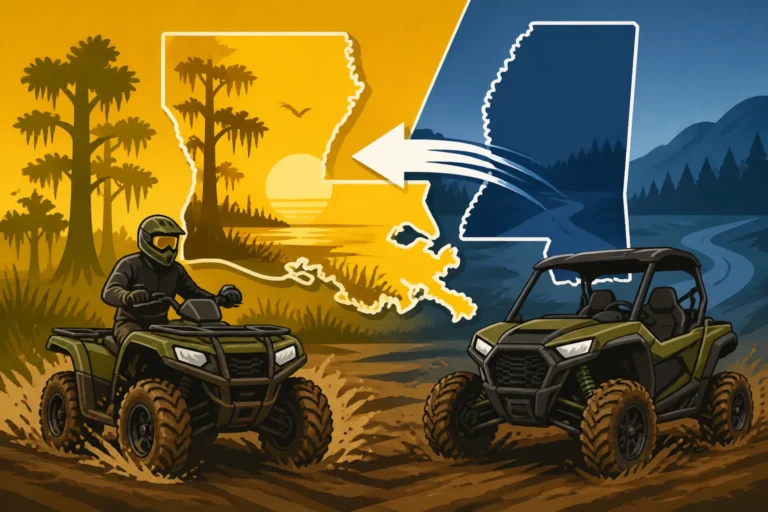
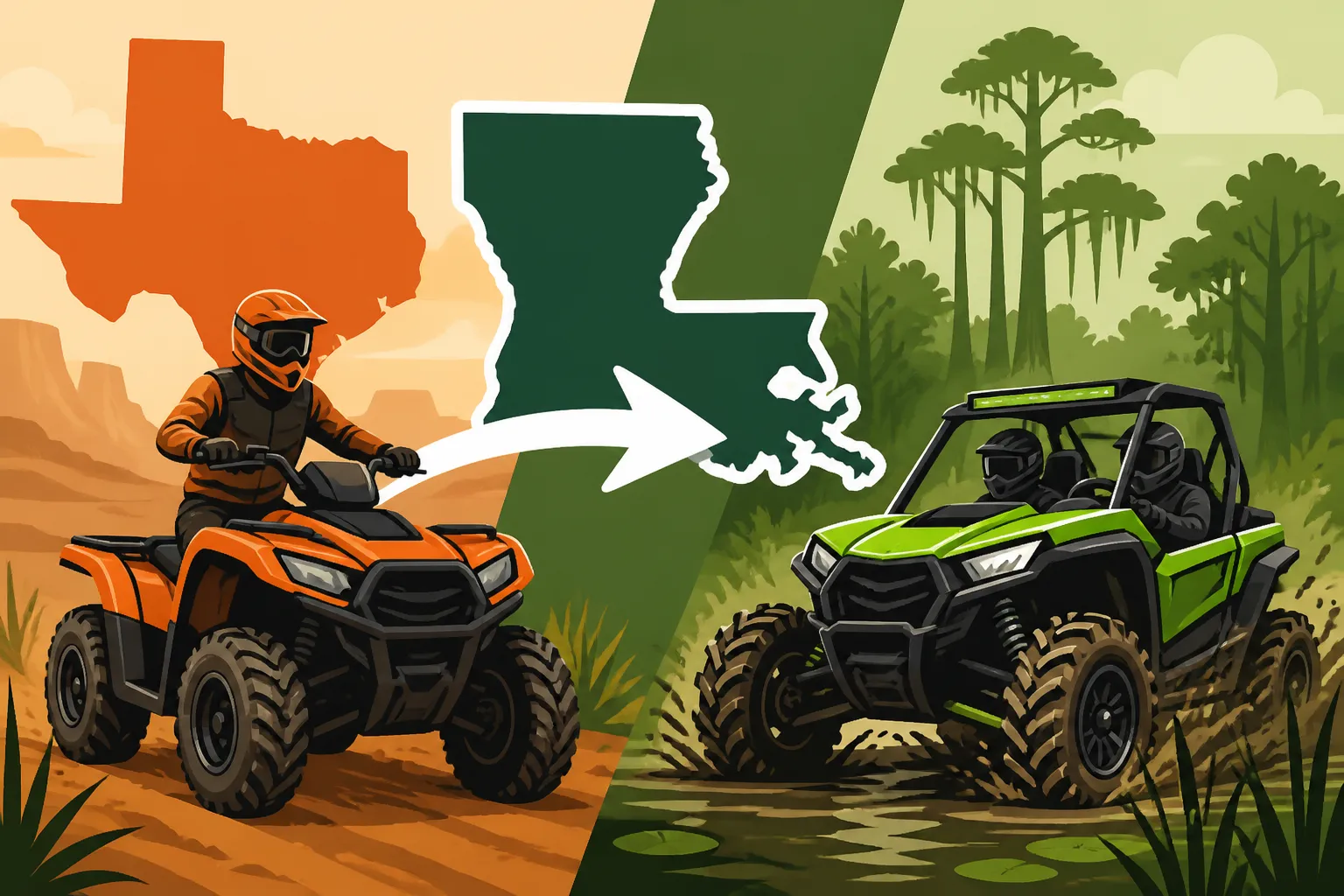
Crossing the Sabine River from Texas into Louisiana with your off-road machine can feel like a seamless transition, but if you're not careful, it can quickly lead to a frustrating encounter with local law enforcement or park rangers. Many riders assume the rules are similar to back home, only to discover Louisiana has its own unique set of regulations for ATVs and UTVs. This guide is here to help visiting Texas riders understand the essential Louisiana rules, ensuring your bayou adventures are fun and citation-free.
Understanding Louisiana's Off-Road Decal System
One of the biggest differences Texas riders encounter when they bring their ATV or UTV to Louisiana is our state's mandatory off-road decal system. In Texas, you might not be accustomed to a statewide decal requirement for general off-road use, but here, it's a critical piece of paperwork you'll need if you plan to ride anywhere off private land. This isn't just a suggestion; it's a legal requirement enforced by the Louisiana Office of Motor Vehicles (OMV) and local authorities.
You see, Louisiana treats off-road vehicles a bit differently than some other states. Instead of just relying on a title, which is also required, the decal acts as your permit to operate the machine on designated public lands and, in very specific circumstances, on certain parish roads. It’s a way for the state to keep track of off-road vehicles and fund trail maintenance and safety initiatives. For a Texas rider, this means you can't just roll off your trailer at a trail park or WMA without first getting this decal. Ignorance of the law, as they say, is no excuse, and a friendly state trooper won't make an exception just because you're from across the border. You'll want to read up on [Louisiana ORV Decals and Titles Explained] before you even hitch up your trailer.
The process of getting this decal involves the OMV, not the Department of Wildlife and Fisheries, which often surprises folks. You'll typically need your proof of ownership, like a title, and potentially proof of sales tax payment, even if you paid it in Texas. The decal itself is a small sticker that needs to be affixed to your machine in a visible location. It's an annual renewal, so don't just get it once and forget about it if you're a frequent visitor. The good news is, the cost isn't prohibitive, but the hassle of not having it can certainly ruin a weekend trip.
Decal Requirements for Visitors
Even as a visiting Texas rider, if you plan to ride your ATV or UTV on any public land in Louisiana, you generally need to comply with the state's decal requirements. There isn't a blanket exemption for out-of-state machines that mirrors all Texas registration types. The intent of the Louisiana law is to ensure all machines operating on public land contribute to the system that manages and maintains those areas. Think of it as a user fee that helps keep our trails open and safe.
The simplest approach for a Texas visitor who plans on frequent trips to Louisiana is to obtain a Louisiana off-road decal. This means you’ll be subjecting your machine to Louisiana’s title and decal process, which involves presenting ownership documents at a Louisiana OMV office. If your machine is already titled in Texas, you'll generally need that title, along with a bill of sale if it's a recent purchase, to register it here. Sometimes, clerks at the OMV may have questions if your out-of-state paperwork looks different from what they usually see, so be prepared for a few extra questions. It's often helpful to bring a copy of the specific Louisiana statutes regarding ORV decals with you to the OMV just in case there are any misunderstandings.
Another consideration is how long you plan to stay. For very short, isolated trips, some private parks might have their own specific rules or temporary permits, but these are exceptions and usually don't apply to state or federal lands. It's always best practice to assume you need the Louisiana decal if you're hitting public trails. You wouldn't want to get a citation just for trying to have some fun, especially when the decal is designed to be affordable. For a detailed breakdown of costs, check out [Louisiana ORV Decal Cost].
Navigating Louisiana's Road Riding Restrictions
This is where things get really tricky for Texas riders, because what might be permissible in some Texas counties or municipalities is often strictly prohibited in Louisiana. Generally speaking, riding ATVs and UTVs on public roads, highways, or shoulders in Louisiana is illegal. This isn't a grey area; it's a hard and fast rule with very specific, narrow exceptions. Many Texans are used to more lenient road access in rural areas, or even specific designated roads within certain counties, but Louisiana's approach is far more restrictive.
The state statute, [Louisiana ATV Road Rules Under 32:299], clearly outlines these restrictions. The intention is to keep these off-road machines, which aren't designed for on-road safety standards, off of busy thoroughfares where they could pose a hazard to themselves and other motorists. This means no quick runs to the convenience store, no riding down the highway to get to the next trail, and definitely no cruising through residential neighborhoods on your quad, even if you feel like you're being careful. Louisiana takes this seriously, and fines for illegal road riding can be steep, not to mention the potential for impoundment of your machine.
However, there are a few very limited exceptions, primarily for agricultural purposes and some municipal designations. These are not broad permissions, but rather highly specific conditions that must be met. For instance, ATVs and UTVs may be used on the shoulder of public roads for agricultural purposes, but only within a five-mile radius of the farm property, and only during daylight hours. And even then, you need an affidavit and the necessary decal. This is a far cry from casually riding public roads. For UTVs, the rules are slightly different, and parishes can designate roads, but this requires specific local ordinances and signage, which are rare. It's crucial to understand [Can You Ride an ATV on the Road in Louisiana?] before you ever consider putting a tire on a paved surface.
Farm Use Exceptions and Limitations
For many Texas riders who use their machines for ranch work, the farm use exception in Louisiana might seem like a straightforward solution. However, it's essential to understand that this exception is incredibly narrow and comes with strict requirements. It is not a general permission to ride your farm quad on any road whenever you want. Instead, it's specifically designed to allow farmers to move their equipment for legitimate agricultural tasks.
Under Louisiana law, an ATV or UTV can be operated on the shoulder of a public road for farm purposes, but only within a five-mile radius of the farm. This means if you’re using your machine to check fences, transport feed, or access different parts of your land that are bisected by a public road, you might qualify. However, you must also carry a notarized affidavit stating that the machine is used exclusively for farm purposes, and even then, it still needs a Louisiana ORV decal. This is definitely not the "anything goes" attitude you might find in some Texas rural areas. And remember, the exception is for the shoulder only—you cannot ride in the travel lanes. Any deviation from these rules, like riding at night or venturing beyond the five-mile radius for non-farm activities, will put you squarely in violation of the law.
Furthermore, these machines cannot be used for recreational purposes under this exception. Taking your farm-exempt UTV to town to pick up groceries, even if it's within five miles, is likely a violation. Law enforcement officers are well-versed in these distinctions and can tell the difference between a legitimate farm operation and someone trying to bend the rules for convenience. If you are operating a machine for agricultural use, ensure you have your [Louisiana Agricultural Affidavits for an ATV] in order and readily available. Many riders outfit their utility UTVs with accessories from companies like SuperATV to enhance their farm capabilities, but those modifications don't grant road legality.
Designated UTV Roads and Parish Ordinances
While ATVs are largely banned from public roads in Louisiana, UTVs have a slightly different, though still very limited, pathway to road legality. Louisiana's UTV statute (RS 32:299.3) allows parish governing authorities to designate certain roads under their jurisdiction for UTV use. This is a crucial distinction: it's not a statewide free pass for UTVs; it's a decision made at the local level.
For a Texas rider, this means you can't assume that because you see a UTV on a road in one parish, you can ride on any road in the next. Each parish must explicitly designate and post signs on roads where UTVs are permitted. Without that specific designation and signage, UTVs are still generally prohibited from public roads. This can be incredibly frustrating for visitors trying to figure out where they can and can't ride. Imagine planning a trip to a certain area, only to find out the local parish council hasn't bothered to designate any roads. You'd be stuck trailering everywhere.
When a parish does designate a road for UTV use, there are typically additional requirements. These often include a minimum driver age (usually 21), a valid Class E driver's license, proof of insurance, and specific equipment requirements like headlights, taillights, brake lights, mirrors, and even turn signals. So, while you might have a tricked-out side-by-side from your Texas ranch, you might need to ensure it meets Louisiana’s street-legal equipment standards for designated roads. It's always best to check the local parish ordinances before you go, as there’s no central database of all designated roads. You'll also want to look up [Louisiana UTV Street Legal Rules by Parish] for the full details.
Accessing Louisiana's Public and Private Riding Areas
Louisiana offers some fantastic riding opportunities, from the dense pine forests of Kisatchie National Forest to the sprawling mud parks that are legendary among off-road enthusiasts. However, like road riding, accessing these areas comes with specific rules and permit requirements that a Texas rider might not be familiar with. It's not as simple as just showing up and unloading.
For federal lands like Kisatchie National Forest, you'll generally need a Forest Pass. These can be daily or annual passes and cover the fees associated with trail use and maintenance. The money goes directly back into keeping those trails open and in good condition for everyone to enjoy. Louisiana Wildlife Management Areas (WMAs) have their own set of rules, which often include a requirement for a self-clearing permit that you fill out at the trailhead, along with potentially needing a Louisiana hunting or fishing license for access, depending on the WMA and time of year. These regulations are designed to manage wildlife, habitat, and visitor impact, so they can be quite detailed and restrictive regarding machine size, tire types, and even seasonal closures.
Private mud parks, on the other hand, are often more straightforward, though they each have their own unique set of regulations. Places like Muddy Bottoms ATV Park or Louisiana Mudfest attract riders from all over the country, including many Texans. These parks typically charge a gate fee, require waivers to be signed, and have their own internal rules regarding helmets, passenger limits, and sometimes even noise levels. It's always a good idea to check their websites or call ahead to understand their specific requirements before you make the drive, especially for major event weekends that might have different pricing or restrictions. For more on navigating these trails, see [Louisiana ATV Trails: Where to Ride].
Permits for Kisatchie National Forest
Kisatchie National Forest is a gem for off-road enthusiasts in Louisiana, boasting miles of scenic trails through its diverse landscape. However, to access these trails, visiting Texas riders will need to purchase a Kisatchie National Forest Pass. This isn't just a nicety; it's a mandatory requirement to ensure proper funding for trail maintenance, signage, and oversight by forest rangers. For many Texans used to more informal access on vast private lands, this permit system can be a new concept.
You can usually purchase these passes at local vendor locations, such as sporting goods stores near the forest, or sometimes at designated forest offices or trailheads. Both daily and annual passes are available, so if you plan on making multiple trips throughout the year, an annual pass often makes more economic sense. It's important to remember that this pass is typically per vehicle (the one hauling the ORV), not per rider or per ATV/UTV, but it's always best to verify the current policy. Keep the pass visible on your tow vehicle or readily available if asked by a forest ranger. It’s a simple system, but one that can lead to a citation if overlooked.
Before heading out, always check the Kisatchie National Forest website or call a district office for current trail conditions and any temporary closures. Trails can be shut down due to weather, logging operations, or environmental concerns, especially after heavy rains or during periods of high fire danger. Showing up only to find your favorite trail closed is a major disappointment, so a quick check beforehand can save you a wasted trip. Many riders who enjoy exploring often also look into [Louisiana Forest Trail Status Pages] before they hit the road.
WMA Access for Out-of-State Riders
Wildlife Management Areas (WMAs) in Louisiana offer a unique opportunity to ride, often within areas managed for hunting, fishing, and conservation. However, WMA rules are notoriously strict and complex, and for a visiting Texas rider, they can be particularly confusing. Unlike Kisatchie, which primarily requires a Forest Pass, WMAs often have a layered permit system, and specific rules that can vary from one WMA to another.
Firstly, if you intend to ride an ATV or UTV on a designated WMA trail, you will almost certainly need a [Louisiana WMA Access Permits]. This usually involves purchasing a Louisiana hunting or fishing license, even if you’re not there to hunt or fish, as these licenses often include the recreational access permit for WMAs. Additionally, many WMAs require a "self-clearing permit" which you fill out by hand at the trailhead. You typically tear off one portion to keep with you and deposit the other in a drop box. This helps the state track usage and ensures compliance with specific entry and exit times.
Beyond permits, WMAs also have very specific regulations regarding machine type, size, weight, and even tire specifications. For example, some WMAs have limits on ATV/UTV width, weight, or even lug height on tires to minimize trail damage. There are often seasonal closures for off-road vehicles, especially during certain hunting seasons or during wet periods when trails are vulnerable. What's perfectly acceptable for your Texas rig on your private land might not meet WMA standards. Before you even think about loading up your machine, you must consult the specific regulations for the WMA you plan to visit. Overlooking these details is a surefire way to get a ticket or, worse, have your access revoked.
Private Parks and Event Weekends
For many Texas riders, the easiest and often most enjoyable way to experience Louisiana's off-road scene is through its private mud parks and event weekends. Places like Muddy Bottoms ATV Park and Louisiana Mudfest are legendary for their vast acreage, challenging terrain, and lively atmosphere. These parks generally cater to a national audience and often have clearer, more consistent rules than public lands.
When planning a trip to a private park, the first thing to do is check their website for event schedules, gate fees, and park-specific rules. Many of these parks operate on an event-based calendar, meaning they might only be open to the public on specific weekends throughout the year, rather than having daily operating hours. Gate fees can vary significantly based on the event and whether you pre-purchase tickets or pay at the gate. Often, these fees cover several days of riding and camping, and sometimes even live music or other entertainment.
Private parks typically require every rider and passenger to sign a liability waiver. They will also have their own rules regarding helmet use, age restrictions for riders and passengers, alcohol consumption, and pet policies. While some might be more relaxed than public lands, they still prioritize safety and maintaining a family-friendly environment. For instance, while SuperATV might provide excellent aftermarket parts for your machine, make sure any modifications still adhere to the park's safety guidelines. It’s also wise to check for camping availability, as many riders come for the whole weekend, and RV sites or cabins can book up quickly, especially for popular events. You'll find a lot of information on these specific types of locations by looking at [Muddy Bottoms ATV Park in Louisiana].
Essential Equipment and Safety Considerations
When you're riding in Louisiana, especially coming from Texas, you might encounter different terrain and environmental conditions that necessitate specific equipment or safety practices. The humid climate, prevalence of deep mud, and dense vegetation in many riding areas mean that being prepared is key to a safe and enjoyable trip. Louisiana's off-road trails and parks are known for their challenging mud holes, and if your machine isn't properly equipped, you could quickly find yourself stuck or in need of recovery.
Beyond the specific legal requirements for decals and road use, there are practical considerations. For deep mud riding, which is a staple of the Louisiana off-road experience, a robust winch is almost a necessity. Many Texans come prepared with good tires, but a winch is often the difference between getting yourself unstuck and waiting hours for a recovery. Snorkels for your engine and CVT can also be a wise investment if you plan on tackling water crossings that might exceed your machine's stock capabilities. Companies like SuperATV offer a wide range of accessories designed specifically for these conditions, from lift kits and heavy-duty axles to winch kits and snorkel systems, all of which can significantly enhance your machine's capability and your safety in challenging Louisiana terrain.
Safety gear is also paramount. While Louisiana doesn't have a statewide mandatory helmet law for all ATV/UTV riding on private land, many private parks and all public lands (like WMAs and Kisatchie) often have their own helmet requirements, especially for younger riders. Always wear appropriate riding gear, including long pants, long sleeves, gloves, and over-the-ankle boots, to protect against scrapes, thorns, and insect bites. Given Louisiana's hot and humid climate, staying hydrated is crucial, so always carry plenty of water. And never, ever ride alone, especially in remote areas or when attempting difficult terrain.
Lighting and Visibility for Designated Roads
If you happen to find yourself in one of the rare Louisiana parishes that has designated specific roads for UTV use, understanding the lighting and visibility requirements is non-negotiable. These aren't just suggestions; they are legal mandates designed to make your UTV as visible as possible to other road users, greatly reducing the risk of accidents. Unlike off-road trails where minimal lighting might suffice, public roads demand a higher standard of illumination.
Typically, a UTV permitted on a designated road must have functional headlights, taillights, and brake lights. These must be visible from specific distances, both day and night. Additionally, turn signals are often required, allowing you to clearly signal your intentions to other drivers. A rearview mirror and potentially side mirrors are also common requirements, ensuring you have a full view of traffic behind you. These are the basic safety features that allow your UTV to integrate more safely with conventional traffic, even if it's on a low-speed, designated parish road.
Many UTVs, especially those primarily used off-road, might not come stock with all these features. For a Texas rider looking to comply with Louisiana’s road-legal requirements, aftermarket accessories can be invaluable. Companies like SuperATV offer kits that include turn signals, horns, and mirrors, designed to bring off-road machines into compliance with various state and local road laws. Before you hit that designated road, double-check every light, every mirror, and ensure they are all fully functional and meet any specific local ordinances. A burnt-out bulb might seem minor, but it could lead to a citation or, worse, a dangerous situation.
Helmets, Passengers, and Age Restrictions
While Texas has specific helmet laws for riders under 15, Louisiana's rules, especially concerning public lands and private parks, can be a bit more varied and often more restrictive, especially for youth. It's crucial for visiting Texans to understand these differences to ensure everyone in their riding party stays safe and avoids penalties.
Generally, on Louisiana WMAs and in Kisatchie National Forest, helmets are usually required for all ATV and UTV riders, regardless of age. This is often a condition of entry to these public riding areas. Private mud parks will have their own specific helmet policies, some requiring them for all riders, some only for minors, and some for specific types of riding activities. The safest bet is always to wear a helmet, especially for high-speed riding or technical terrain, regardless of the explicit rule. Your brain bucket is your most important piece of safety gear! For more on specific requirements, you can check [Louisiana ATV Helmet Rules].
Passenger rules also differ. While many Texas riders might carry a passenger on a single-rider ATV, this is generally illegal in Louisiana, as ATVs are designed for a single operator. UTVs, on the other hand, are designed for multiple passengers and are allowed to carry as many people as there are manufacturer-installed seats and seatbelts. However, age restrictions for UTV drivers are very important. If you’re coming from Texas, be aware that Louisiana law states that drivers of UTVs on designated public roads must be at least 21 years old. This is a significant difference from ATV age requirements or private property rules, so if you have a younger, licensed driver in your group who plans to operate a UTV on any public road, they need to meet this age threshold. Always check the specific rules of the riding area or local parish ordinance regarding age, helmets, and passengers to ensure full compliance.
Table: Key Differences for Texas Riders in Louisiana
| Feature | Texas (General Tendencies) | Louisiana (General Rules & Exceptions) | Implications for Texas Riders |
|---|---|---|---|
| ORV Decal/Registration | No statewide ORV decal for general off-road use. | Mandatory statewide ORV decal for public land use (annual). | You likely need a Louisiana decal. |
| Road Riding – ATVs | Varies by county/municipality; some rural road access. | Generally prohibited on public roads/shoulders. | Assume ATVs are NOT street legal. |
| Road Riding – UTVs | Varies by county/municipality; some rural road access. | Prohibited, unless parish designates specific roads (rare). | Check specific parish ordinances; high age limit (21) for UTV drivers. |
| Farm Use on Roads | More flexible in rural areas. | Very limited: shoulder only, 5-mile radius, notarized affidavit, decal. | Strictly follow specific Louisiana farm exemption rules. |
| Public Trail Permits (Federal) | Federal land permits (e.g., National Forests) required. | Kisatchie National Forest requires a specific Forest Pass (daily/annual). | Purchase a Louisiana Forest Pass. |
| Public Trail Permits (State) | State parks/WMA permits vary. | WMAs require hunting/fishing license for access + self-clearing permit. | Obtain appropriate Louisiana WMA permits/licenses. |
| Private Parks | Park-specific rules, often similar to Louisiana. | Park-specific rules; check websites for events, fees, waivers. | Always check park's website before visiting. |
| Helmet Requirements | Often mandatory for riders under 15, varies otherwise. | Generally required on public lands; private park rules vary. | Assume helmets are required, especially for youth and public lands. |
| ATV Passenger Rules | Varies, but single-rider ATVs common. | Generally no passengers on single-rider ATVs. | No passengers on ATVs. |
| UTV Driver Age (Roads) | Varies, usually standard driver's license age. | 21 years old required for UTV drivers on designated public roads. | Younger UTV drivers (under 21) cannot drive on designated roads. |
Disclaimer
This article is for general informational purposes only and does not constitute professional advice. Laws, prices and regulations vary by location and change over time. Consult a qualified professional for guidance on your specific situation.