Louisiana Trespass Law for Riders
Louisiana is a rider's paradise with its vast open lands, sprawling forests, and intricate waterways, but the joy of tearing through trails or exploring new paths comes with a significant responsibility: knowing where you can and cannot ride. Nothing ruins a fantastic day of off-roading faster than finding yourself on someone else's land without permission, which can lead to hefty fines, an impounded machine, and even criminal charges. This guide will walk you through the ins and outs of Louisiana's trespass laws, helping you understand how to identify legal riding areas, obtain necessary permissions, and ultimately protect yourself and your machine from the costly consequences of unintentional trespass.
Understanding Louisiana's Basic Trespass Laws for Off-Road Riders
Trespass might sound like a straightforward concept, but in the real world of Louisiana's diverse landscapes, it can be surprisingly complex for ATV and UTV riders. The line between public and private land isn't always marked by a clear fence or an obvious sign, especially in rural areas where field roads disappear into forests or bayou banks blur into private property. As riders, it’s our responsibility to know whose land we're on, and that often means doing a bit of homework before we ever turn the key.
Defining Trespass on Private Land
At its core, trespass in Louisiana means entering or remaining on private property without the consent of the owner or lawful occupant. For us off-road enthusiasts, this usually boils down to riding your ATV or UTV where you haven't been given explicit permission. This can be a farmer’s field, a timber company’s forest, or even a seemingly abandoned piece of land that someone still owns.
The law generally assumes that if land isn't clearly public (like a designated state park trail), it's private. This means the burden of proof is often on the rider to demonstrate they had permission, rather than on the landowner to prove they didn't give it. Imagine you’re cruising down what looks like an old logging road. It feels public, no signs, no gates. But suddenly, you're confronted by a landowner who claims it’s his private access road. Without explicit permission, you could be in a heap of trouble. Common scenarios include following a deer trail that leads you off public land and into a private hunting lease, or simply riding along a drainage ditch that appears to be fair game but actually runs through someone's backyard or agricultural property.
Navigating Public vs. Private Land Boundaries
One of the biggest headaches for riders in Louisiana is simply figuring out where one property ends and another begins. Our state's unique geography, with its winding rivers, expansive battures, and countless bayous, makes this especially challenging. Who truly owns the sandy bank of a river when the water is low, or the marshy land along a bayou? It's often not as simple as it seems. [What the Batture Is and Who Controls It] can be a murky area, for instance, with various entities claiming jurisdiction or ownership.
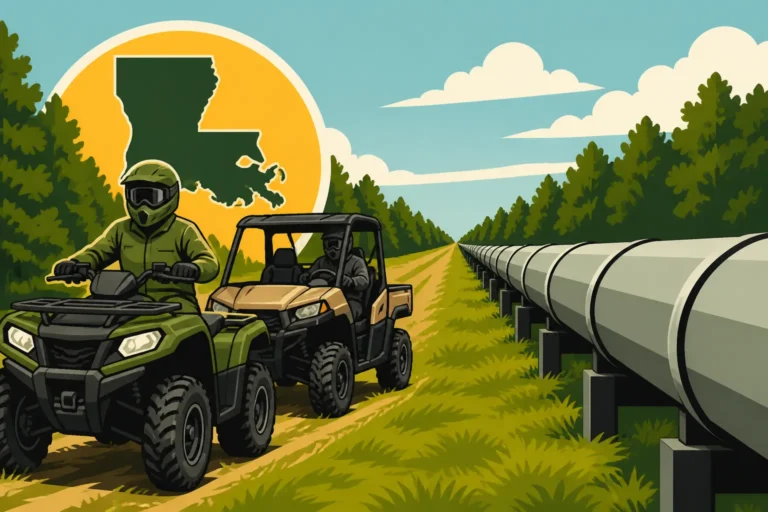
Then there are easements and rights-of-way—those strips of land granted for specific purposes like power lines or pipelines. While these might seem like public access points, they are almost always private property where the landowner has simply granted limited access to utility companies. Riding your machine along a pipeline right-of-way, for example, often constitutes trespass unless you have direct permission from the underlying landowner. [Louisiana Rules for Riding a Pipeline Right-of-Way] are clear on this: these aren't public trails. Many riders get caught out thinking that because a utility company has access, they do too. Sadly, that's rarely the case. It’s crucial to distinguish between a utility company’s right to access for maintenance and your right to recreational riding.
This is where preparation becomes paramount. Relying on outdated maps or hearsay can lead you astray. Today, many riders use GPS and specialized mapping apps on their phones or dedicated devices to overlay property lines onto satellite imagery. While these tools are invaluable, they’re only as good as their data and don’t replace direct permission. Even with technology, some boundaries can be ambiguous, making it essential to err on the side of caution.
Penalties and Consequences of Trespassing in Louisiana
When you're out riding, the last thing you want to think about is legal trouble, but ignoring trespass laws can land you in a serious bind. Louisiana takes property rights seriously, and the consequences for riding on private land without permission can range from a stern warning to significant fines, legal battles, and even losing your beloved machine. It's a risk that no responsible rider should take.
Legal Repercussions and Fines
In Louisiana, trespass can be both a civil and a criminal matter, depending on the severity and intent. Criminal trespass typically involves intentionally entering or remaining on private property without authorization, especially if the property is posted with "No Trespassing" signs, fenced, or clearly marked. Even if it's not explicitly marked, if it's clearly private land (like a cultivated field or someone's yard), you're usually on thin ice.
Fines for trespass can vary widely. A first offense for simple trespass might result in a moderate fine, but repeat offenses or trespass that causes damage to property (like tearing up a field or fence) can escalate quickly, leading to much higher penalties. Beyond the initial fine, you could also face civil charges if the landowner decides to sue for damages, which could include the cost of repairing fences, replanting crops, or rehabilitating damaged land.
One of the most immediate and painful consequences for a rider is the potential impoundment of your ATV or UTV. If law enforcement determines you were trespassing, they have the authority to seize your machine. Getting it back isn't cheap or easy. You’ll be looking at impoundment fees, storage fees, and potentially a lengthy legal process. [How to Get an Impounded Quad Released] is a journey nobody wants to take, often involving more money and time than you might imagine, on top of any fines or court costs. Imagine your pride and joy sitting in an impound lot for weeks, racking up fees, all because of an accidental wrong turn. It's a truly frustrating experience that can put a huge dent in your wallet and your riding season.
The Damage to Relationships and Reputation
Beyond the legal and financial hits, trespassing has another, often overlooked, cost: the damage it does to relationships and the reputation of the entire off-road community. When landowners repeatedly find riders on their property without permission, it naturally creates animosity and distrust. This can lead to more "No Trespassing" signs going up, more gates being locked, and ultimately, less access for everyone.
Every time a rider trespasses, it reinforces negative stereotypes about ATV and UTV riders being disrespectful, destructive, or inconsiderate. This can make it incredibly difficult for responsible riders and organized clubs to forge positive relationships with landowners, get permission for group rides, or advocate for new legal riding areas. Think about the impact on local communities; a single incident of trespass can turn a welcoming rural resident into someone who actively campaigns against any off-road vehicle presence.
Building a positive image for the sport requires every rider to be an ambassador for responsible riding. When you actively seek permission, respect private property, and leave no trace, you’re not just protecting yourself; you’re helping to ensure future access for everyone who loves to ride. A single act of carelessness can have ripple effects that last for years, affecting access to private lands that could otherwise be available to courteous riders.
Proactive Steps to Avoid Trespass and Ride Legally
Nobody wants to trespass, but without proper knowledge and preparation, it can happen all too easily. The good news is that there are many proactive steps you can take to ensure your rides are not only thrilling but also fully legal and respectful of private property. It all comes down to prevention, communication, and leveraging the right resources.
Securing Permission from Landowners
The absolute best way to avoid trespassing is to obtain explicit permission from the landowner before you ride. This might sound obvious, but many riders assume implied permission or simply hope for the best. Don't leave it to chance. A simple conversation can make all the difference.
When approaching a landowner, be respectful, clear, and prepared. Explain what you want to do (e.g., "ride my ATV on your old logging roads for recreational purposes"). Offer to show them proof of insurance for your machine. It’s often best to get this permission in writing, especially if you plan to ride regularly or with a group. A written agreement doesn't need to be fancy; it can be a simple note outlining:
- Who has permission (your name, number of riders).
- What kind of machines (ATV, UTV).
- Where they can ride (specific trails, fields, etc., perhaps marked on a map).
- When they can ride (specific dates, times of day).
- Any specific rules or restrictions (e.g., no riding near certain areas, closing gates).
[Getting Written Permission From a Louisiana Landowner] is a golden ticket that offers protection for both you and the landowner. It shows you’re a responsible rider and gives them peace of mind. Remember, a polite request is far more effective than an apology after the fact. Many landowners are happy to grant access to respectful riders, especially if they know who you are and what you’re doing.
Utilizing Maps, Technology, and Local Resources
In today's world, there's no excuse for getting lost or accidentally straying onto private land without at least attempting to check your route. Technology has put powerful mapping tools right in our pockets, allowing us to overlay property lines onto satellite imagery in real-time. Apps that display parcel maps and landowner information can be invaluable for identifying exactly whose land you're on. While I can't recommend specific brands or apps here, a quick search for "property line maps" or "land ownership apps" for Louisiana will yield many options. Always cross-reference with actual physical signs or local knowledge where possible, as digital maps can sometimes have inaccuracies.
Beyond apps, don't underestimate the power of local knowledge. Talk to people who live in the area, ask at local feed stores, or even consult with your parish's tax assessor's office for property boundary information.
Another fantastic resource is joining an established ATV or UTV club in Louisiana. These clubs often have members with extensive local knowledge, access to private lands through organized events, and a network of contacts with landowners. They can share insights on legal riding areas, safe routes, and how to approach landowners effectively. [Louisiana ATV Clubs Worth Joining] often champion responsible riding and can be a great way to find new, legal places to explore.
Finally, ensure your machine is equipped to handle the terrain responsibly. If you're navigating challenging landscapes where boundary markers might be few and far between, having a robust machine is key to staying on track. Equipping your UTV with durable aftermarket parts, like heavy-duty A-arms or skid plates from a brand like SuperATV, can give you the confidence that your machine can handle unexpected obstacles without breaking down. A breakdown in a remote area can force you to seek alternative, potentially unauthorized, routes for recovery. Similarly, good lighting is crucial for spotting subtle "No Trespassing" signs or property markers, especially if you're riding in varied light conditions. Powerful LED light bars, like those offered by SuperATV, can significantly improve visibility on less-traveled paths. Investing in quality components ensures your machine is reliable, minimizing scenarios where you might be forced to stray onto private property to get unstuck or back to civilization.
Special Considerations for Louisiana's Unique Landscapes
Louisiana’s landscape is unlike almost anywhere else, and that uniqueness comes with its own set of rules and challenges for off-road riders. Our intricate bayou systems, expansive agricultural fields, and critical levee networks all have specific regulations and ownership nuances that every rider needs to understand to avoid inadvertently trespassing.
Levees, Battures, and Waterways
Riding along Louisiana's levees might seem like a natural fit for an ATV or UTV – after all, they're often wide, relatively clear paths. However, this is one of the most common areas where riders unknowingly trespass. The general rule is simple: [Louisiana Levee Riding Is Prohibited] unless you have explicit permission from the levee district or landowner responsible for that specific section. Levees are critical infrastructure, vital for flood protection, and they are typically not open for recreational off-road vehicle use. Tampering with or damaging a levee can have severe consequences and is usually a serious offense.
It’s crucial to understand [Who Really Owns the Top of a Levee] and the adjacent land. Often, levee districts or state agencies maintain control, and their primary concern is flood control, not recreation. Getting permission isn’t impossible, but it usually involves contacting the local levee district board and making a formal request. [Louisiana Levee District Permissions] are specific and usually require a legitimate reason beyond just wanting to joyride.
Then there are the waterways themselves, and the lands surrounding them. The term "batture" refers to the land between a river's low-water mark and its levee. The legal status and access rules for these areas can be incredibly complex. [Louisiana Rules for Riding a Batture] often depend on specific local ordinances, historical claims, and whether the batture is above or below the ordinary high-water mark. Similarly, [Louisiana Rules for Riding a Sandbar] on a river often depend on whether it's submerged at high water and who owns the adjacent land. It’s rarely a free-for-all, and assuming access can lead to trespass. When in doubt, assume it's private or restricted.
Agricultural and Timber Lands
Louisiana boasts vast stretches of agricultural fields and working timberlands, which often feature tempting-looking field roads, access lanes, and open areas perfect for riding. However, these are almost universally private property. The deceptive nature of [Louisiana Rules for Riding a Field Road] often catches riders off guard. Just because a road isn't paved and runs through a field doesn't make it public. These roads are vital for farmers and timber operators to access their crops or forests, and riding on them without permission is a direct interference with their livelihood.
Riding through a farmer's field, even if it appears to be fallow, can cause soil compaction, damage irrigation systems, or disturb future planting areas. On timberland, you might interfere with logging operations, damage young trees, or simply be in an area with active heavy machinery, creating a dangerous situation. It's not uncommon for hunting clubs to lease vast tracts of timberland. If you're on land covered by [What a Hunting Lease Says About Quad Use], you're not just trespassing on the landowner, but potentially interfering with a paying hunting club. [What a Locked Gate on a Timber Road Means] is unequivocally clear: Do Not Enter. These gates are there for a reason, signaling private property and often active operations. Respect these boundaries, even if the land appears deserted.
This table provides a general overview of land access types in Louisiana for off-road riders. Always seek explicit permission when in doubt.
| Type of Land Access | General Rule for ORVs | Key Considerations for Riders | Potential Consequences of Misjudgment |
|---|---|---|---|
| Private Land | Prohibited without explicit consent | Assumed private unless clearly marked public or explicit permission granted. Look for fences, gates, "No Trespassing" signs. | Fines, impoundment of machine, civil lawsuit for damages, criminal charges. |
| Public Land (Designated Trails) | Permitted only on marked trails | Examples: Kisatchie National Forest, specific WMA trails. Check specific rules and permit requirements (e.g., [Louisiana Forest Pass Cost]). | Fines, impoundment, loss of future access, damage to public land reputation. |
| Levees | Prohibited without Levee District permission | Critical infrastructure. Often managed by specific levee boards. [Louisiana Levee Riding Is Prohibited] in most cases. | Heavy fines, criminal charges, impoundment, liability for damages. |
| Battures/Sandbars | Highly restricted; often private or regulated | Ownership can be complex, often tied to adjacent private land or state. [Louisiana Rules for Riding a Sandbar] vary. | Fines, impoundment, conflict with landowners or authorities. |
| Field/Timber Roads | Almost always private; prohibited without permission | Used for farming/logging. Assuming access is a common trespass error. [Louisiana Rules for Riding a Field Road] are strict. | Fines, damage claims, interference with agricultural/timber operations. |
| Easements/Rights-of-Way | Generally private for recreational riding | Owned by landowner, limited access for utilities. [Louisiana Rules for Riding a Pipeline Right-of-Way] mean no recreational use. | Fines, impoundment, conflict with utility companies or landowners. |
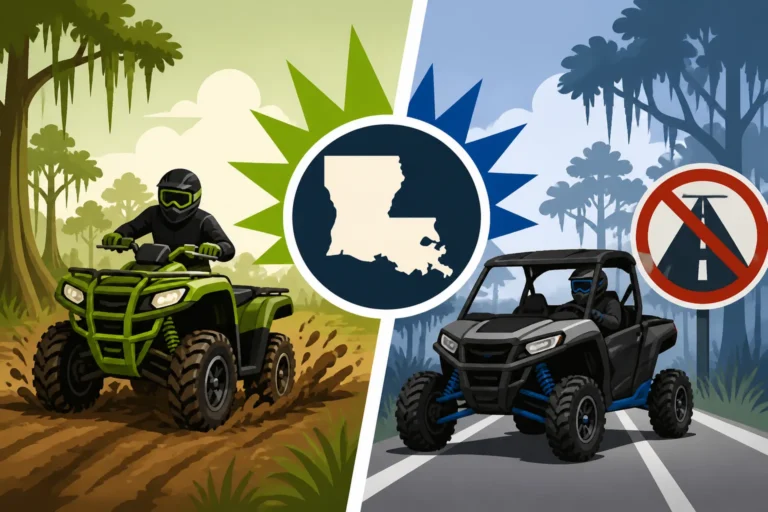
| Parish Roads (Shoulders) | Limited specific exceptions for farm use only | Generally illegal to ride ATVs on public roads. Special farm exemptions apply, often with a 5-mile radius and proper decals. [Louisiana ATV Road Rules Under 32:299]. | Tickets, fines, impoundment, loss of license, insurance issues. |
Disclaimer
This article is for general informational purposes only and does not constitute professional advice. Laws, prices and regulations vary by location and change over time. Consult a qualified professional for guidance on your specific situation.